Save the Date: Agile Camp Berlin 2019
The Agile Camp Berlin 2019 will happen from April 26 to April 27, 2019 and the Agile Camp Berlin 2019 venue will be the Evangelische Schule Berlin Zentrum right in the middle of Berlin.
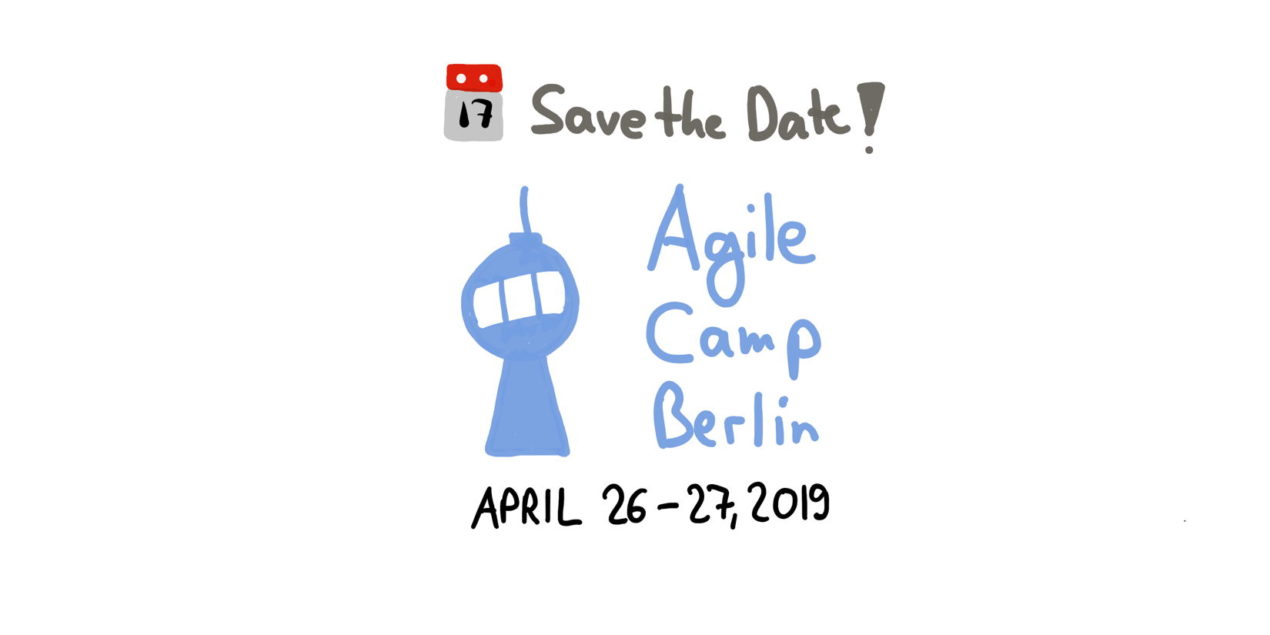
The Agile Camp Berlin 2019 will happen from April 26 to April 27, 2019 and the Agile Camp Berlin 2019 venue will be the Evangelische Schule Berlin Zentrum right in the middle of Berlin.
Food for Agile Thought’s issue #171—shared with 20,122 peers—focuses on pushing agile, or better its futility as ‘agile’ needs to be pulled, we analyze current trends in corporate transformation efforts, and we ask: how safe did the attendees of your last workshop feel?
We also try to learn from Netflix’ failures, we come back to technical debt and its influence on product creation once more, and we compare our problems to the most pressing issues Marty Cagan has identified in today’s product-driven companies.
Lastly, we appreciate a great recipe on how to run a team charter creation workshop.
Have a great week!
Did you miss last week’s Food for Agile Thought’s issue #170?
Food for Agile Thought’s issue #170—shared with 20,108 peers—focuses on agile transformation lessons. We learn that becoming ‘agile’ is one but not the only answer, that agile teams are no causation for business agility, and that the 10,000-hour rule applies to agile practitioners, too.
We also remind ourselves that user research is always a team sport, that NPS detractors are not necessarily bad-mouthing your product, and why there is a difference between cooperation and collaboration.
Lastly, we go back to Scrum basics and revisit the idea of delivering a ‘done’ product increment every single Sprint—without making excuses.
Have a great week!
Did you miss last week’s Food for Agile Thought’s issue #169?
Food for Agile Thought’s issue #169—shared with 20,091 peers—focuses on agile trust, or the lack thereof, how to disagree but commit effectively, and why a big change initiative may be advantageous in some cases.
We also dive deep into how to engage effectively in communication with your stakeholders without burning bridges, why idea velocity and execution velocity are two critical factors for a healthy product roadmap, and speaking of which: what continuous alignment with your stakeholders is all about.
Lastly, the good folks at Rootstrap made an epic ebook on customer development or product discovery publicly available. Kudos!
Have a great week!
Did you miss last week’s Food for Agile Thought’s issue #168?
Food for Agile Thought’s issue #168—shared with 20,064 peers—focuses on the importance of the product backlog, how to create an experimentation culture to verify product hypotheses, as well as on the process of how to create a decent product vision in the first place.
We also learn about the differences and similarities of LeSS and Nexus, the two Scrum scaling frameworks appealing to purists, and enjoy CB Insights guide to moron-proof corporate innovation.
Lastly, we join Marty Cagan when he reveals the secrets to building outstanding product organizations with folks like you and me.
Have a great week!
Did you miss last week’s Food for Agile Thought’s issue #167?
The eighth Hands-on Agile webinar Scrum Master Anti-Patterns addresses twelve anti-patterns of your Scrum Master—from ill-suited personal traits and the pursuit of individual agendas to frustration with the team itself.