Food for Agile Thought’s issue #175—shared with 20,249 peers—focuses on agile pipe dreams: from the absence of complexity in software development to the management-free organization to abundant team capacity.
We also identify more product management problem areas, how to create a shared understanding about your product within your organization, and how you can engage your engineers beyond churning out code.
Lastly, we can put the fuzziness of the #NoEstimates concept to rest once and for all—there is a new animation explaining everything in merely six minutes.
Food for Agile Thought’s issue #174—shared with 20,147 peers—focuses on making sense of feedback with the epic new EPIQ model; we talk about a Scrum value that also applies to managers, and we reflect on the prime directive and the magic it provides.
We also address the importance of product design principles; we add systems thinking to our product management toolbox, and we learn how best exploit the opportunity of a rewrite.
Lastly, we appeal to efficiency freaks to finally realize that slowing down speeds up everything in software development.
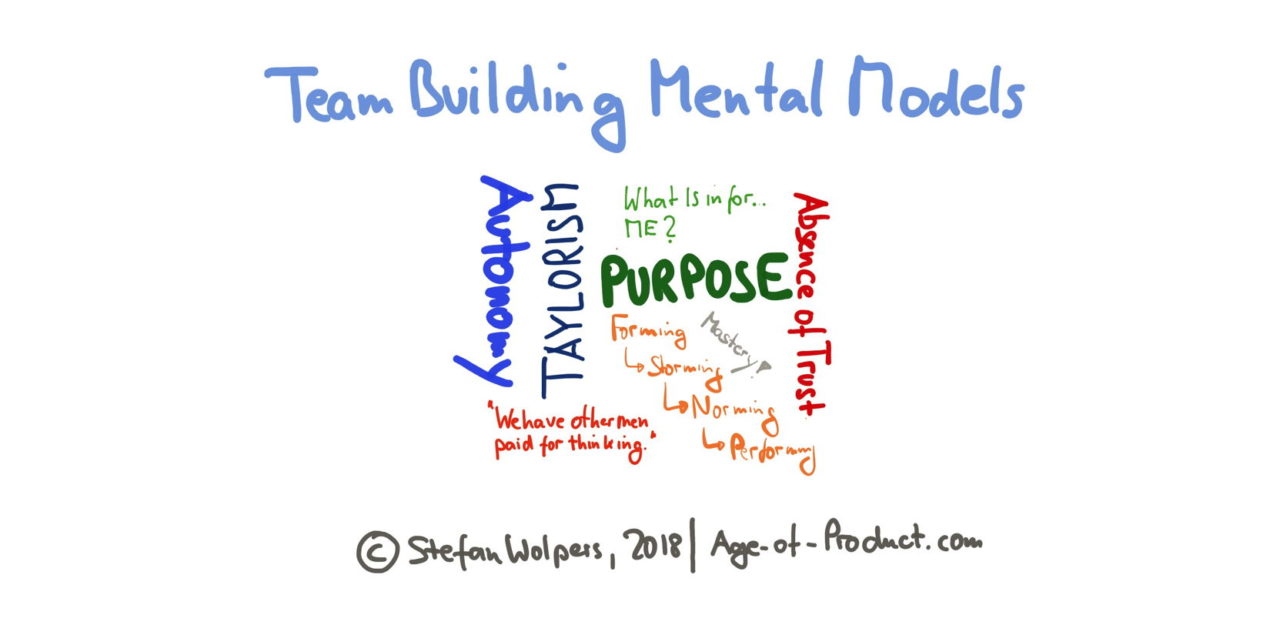
Team building has always been a challenge, not just since the advent of agile frameworks and the resulting emphasis on self-organization, engagement, and achieving a valuable objective. This post covers four team building mental models — or concepts — that have proven useful in understanding the context of creating agile teams: from Taylorism to Tuckman to Lencioni to Dan Pink.
Food for Agile Thought’s issue #173—shared with 20,138 peers—focuses on agile common sense as we learn more about the history of ‘agile’ and what defines the learning space that makes it successful.
We also get better at cycle time scatterplot diagrams, what conditions product teams require to support hypergrowth, and why leadership is not always about having a plan.
Lastly, we learn five encouraging ways how to engage the engineers in creating the product beyond its mere coding.
Food for Agile Thought’s issue #172—shared with 20,138 peers—focuses on Taylorism Agility and its contribution to imposing ‘agile,’ why agility and governance do not have to be mutually exclusive, and busts several agile planning myths.
We also refresh our memory why the engineers need to participate in product discovery, how you prepare for product experiments, and what this whole customer journey mapping is about.
Lastly, we learn what good leadership has to do with intrinsic motivation in the trenches.
This is the last edition of the ‘Food for Agile Thought’ newsletter in 2018. Thank you so much for your feedback and continued support; we will be back on January 6th, 2019, with issue #173.
by Stefan Wolpers|Agile and ScrumAgile TransitionWebinars
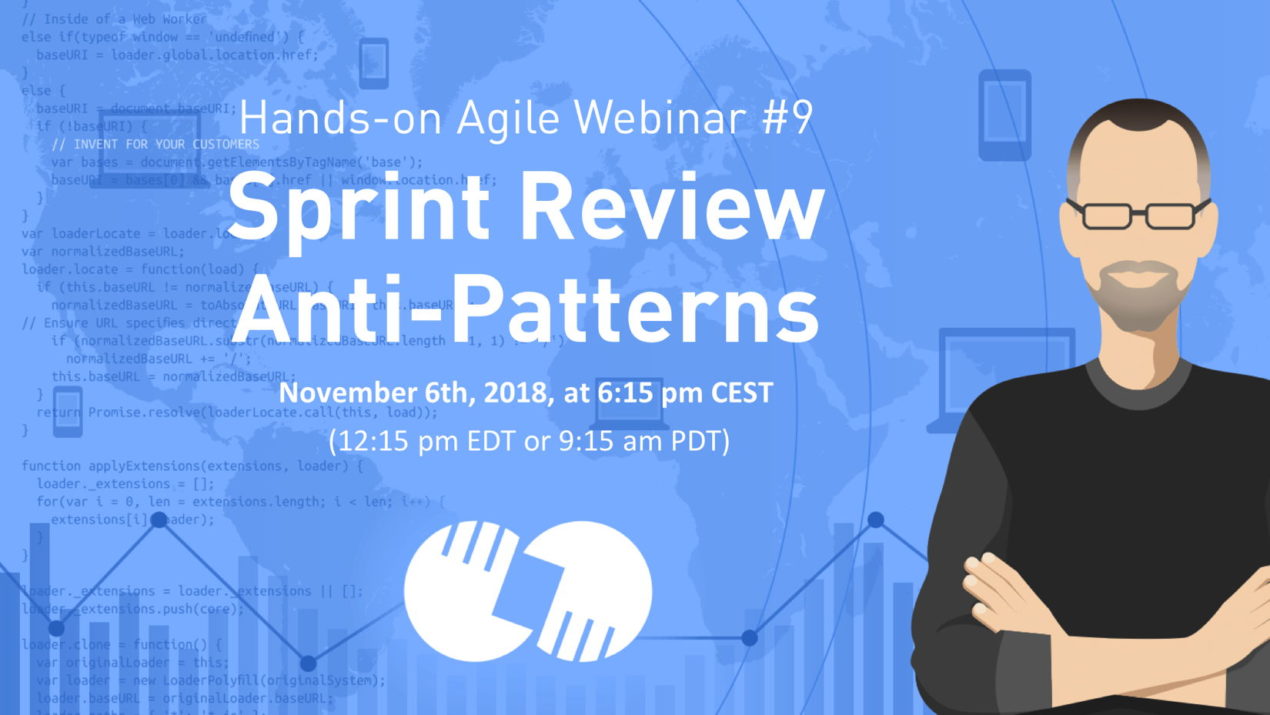
TL;DR: Webinar Sprint Review Anti-Patterns
The ninth Hands-on Agile webinar Sprint Review anti-patterns addresses twelve anti-patterns of the sprint review—from death by PowerPoint to side-gigs to none of the stakeholders cares to attend.