

TL; DR: The Real Value Journey — Food for Agile Thought #528
Welcome to the 528th edition of the Food for Agile Thought newsletter, shared with 35,758 peers. This week, John Cutler presents a five-act narrative exploring how organizations evolve from delivery-focused work toward product-centricity through a messy, iterative value journey, while Stephanie Leue identifies an “alignment tax” that slows growing organizations and requires systemic redesign. Turning to AI, Christina Wodtke explores how Claude Code enables “(product) discovery coding” through conversation. Addy Osmani offers guidance on writing AI agent specs, and Allan Kelly warns that AI coding will unleash shadow IT alongside security risks.
Next, Rich Mironov suggests executives ask whether products earn their keep by trusting engineering judgment over ticket-level ROI math. Bandan Singh proposes filters before reacting to competitors. Also, Lenny Rachitsky interviews Zevi Arnovitz on how nontechnical PMs ship products using Cursor, while Jing Hu warns that AI assistants may weaken desire by removing anticipation-building friction. Additionally, Mike Cohn proposes that soft skills persist and compound, unlike technical skills, which have a shrinking half-life.
Then, Teresa Torres demystifies how large language models work, explaining tokenization, embeddings, and attention mechanisms. David Burkus suggests effective delegation requires giving ownership rather than tasks, while Anthropic releases Claude’s new constitution, prioritizing safety, ethics, and helpfulness. Lastly, PwC’s 29th Global CEO Survey reveals 56% of CEOs report no AI financial return yet, and Simon P. Couch estimates Claude Code sessions consume 138 times more energy than typical queries, calling for transparency from frontier labs.

🎓 🇬🇧 🤖 The AI 4 Agile Online Course v2 at $149 — March 2, 2026
I developed the self-paced AI 4 Agile Online Course for agile practitioners, including Product Owners, Product Managers, Scrum Masters, Agile Coaches, and delivery professionals who want to integrate artificial intelligence into their workflows with clarity, ethics, and purpose.
You don’t need to become an AI expert. However, you do need to understand how LLMs like ChatGPT, Claude, or Gemini can support real agile work and where their limitations lie. As Jim Highsmith said, AI isn’t just a tool, but a new context for agility.
This course shows you how to do that precisely .
The latest Version 2 will be released on March 2 and comes with an introductory price of $149 instead of $249—don’t miss this opportunity to save $100!
👉 Don’t like to wait until March 2? Go shopping now at $199. (The upgrade to version 2 is included.)
Join 400-plus Peers — What Is Included:
- 10+ hours of self-paced video modules: Hacks, Skills, Agents
- A cohort-hardened, proven course design
- Learn to 10x your effectiveness with AI; your stakeholders will be grateful
- Delve into classic agile use cases of AI
- Help your team create more customer value
- All texts, slides, prompts, graphics; you name it
- Access custom GPTs, including the “Scrum Anti-Patterns Guide GTP”
- Enjoy community access for peer learning
- Guaranteed: Lifetime access to all course updates and materials; there is a lot more to come
- The AI4Agile Foundation Certificate.

👉 Please note: The course will only be available for sign-up at $149 until March 9, 2026! 👈
🎓 Join the Waitlist of the AI 4 Agile Online Course v2 Now: Master AI Integration for Agile Practitioners—No AI Expertise Required!
Did you miss the previous Food for Agile Thought issue 527?
🗞 Shall I notify you about articles like this one? Awesome! You can sign up here for the ‘Food for Agile Thought’ newsletter and join 35,000-plus subscribers.
🎓 Join Stefan in one of his upcoming Professional Scrum training classes!
🏆 The Tip of the Week:The Real Value Journey
: The Real-World Journey to Value and Product-Centricity
John Cutler presents a five-act narrative exploring how organizations evolve from delivery-focused work management toward product-centricity. He traces shifting mental models: from prioritizing predictable throughput to outcome-oriented goals to converging on shared value models. His model is not a linear maturity model but a messy, iterative journey with no final destination.
🎯 Product
: I’ll Know It When I Build It
Christina Wodtke explores how AI coding tools like Claude Code enable “discovery coding,” letting creators build software the way artists sketch: through conversation and iteration rather than upfront specification, revealing what you want by making it.
: The Hidden Tax Slowing Your Product Org
Stephanie proposes that growing product organizations suffer from an “alignment tax” of misaligned priorities and coordination overhead, which delays time-to-value and requires systemic redesign, not just motivation.
: Earning Our Keep
Rich Mironov suggests that executives ask whether products earn their keep, which means trusting engineering judgment. He rejects ticket-level ROI math, proposing portfolio conversations about investment and accountability over time.
: Three Questions, Before You React To Competition
Bandan Singh proposes filters before reacting to competitors: confirm the feature solves your users’ problem, fits strategy and economics, and is a capability, not PR. Choose build, improve, ignore, or monitor.
🧠 Artificial Intelligence
: How to write a good spec for AI agents
Addy Osmani proposes writing AI agent specs with a clear high-level vision, structured sections covering six core areas, modular prompts for focused context, three-tier boundaries, and continuous iteration through testing.
and : The non-technical PM's guide to building with Cursor
Lenny Rachitsky interviews Zevi Arnovitz on how nontechnical PMs ship real products in Cursor using AI model routing, slash-command templates, and cross-model code reviews, turning planning into executable steps safely.
: The Wizard of Oz Knew Why AI Shopping Would Fail
Jing Hu suggests AI assistants optimize efficiency but weaken desire. Browsing, comparison, and friction build anticipation and surface latent needs. Chat interfaces miss serendipity and may lean on parasocial bonds, making commerce a long game.
: How Does ChatGPT Work? A Guide for the Rest of Us
Teresa Torres demystifies how large language models work, explaining tokenization, embeddings, and transformer blocks in accessible terms. She walks through how attention mechanisms add context, enabling models to predict meaningful next tokens.
🖥 💯 🇬🇧 AI for Agile BootCamp #6 — March 19 to April 16, 2026
The job market’s shifting. Agile roles are under pressure. AI tools are everywhere. But here’s the truth: the Agile pros who learn how to work with AI, not against it, will be the ones leading the next wave of high-impact teams.
So, become the one who professional recruiters call first for “AI‑powered Agile.” Be among the first to master practical AI applications for Scrum Masters, Agile Coaches, Product Owners, Product Managers, and Project Managers.
The class is in English. 🇬🇧
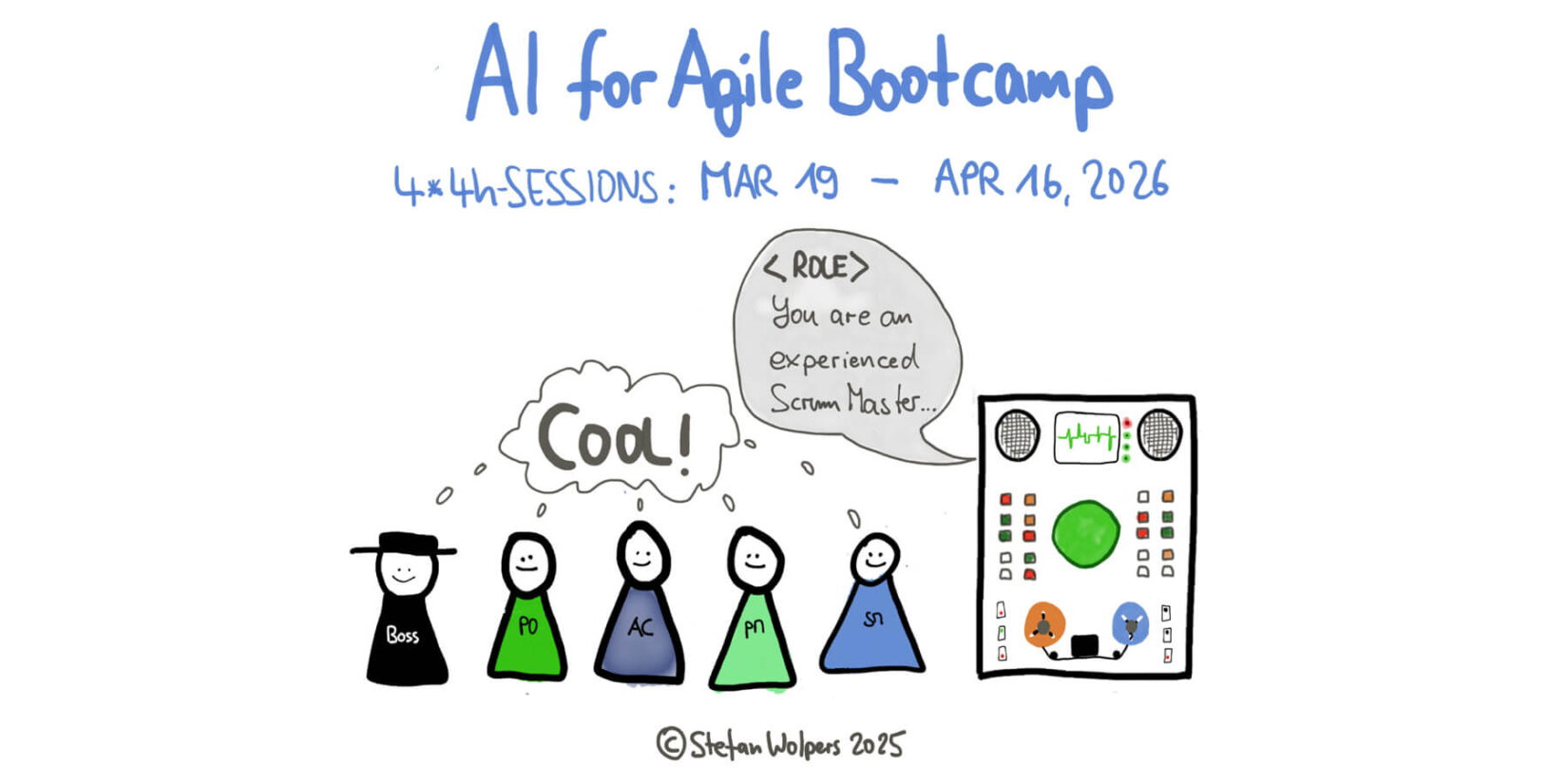
Learn more: 🖥 💯 🇬🇧 AI for Agile BootCamp #6 — March 19 to April 16, 2026.
Customer Voice: “The AI for Agilists course is an absolute essential for anyone working in the field! If you want to keep up with the organizations and teams you support, this course will equip you with not only knowledge of how to leverage AI for your work as an Agilist but will also give you endless tips & tricks to get better results and outcomes. I thoroughly enjoyed the course content, structure, and activities. Working in teams to apply what we learned was the best part, as it led to great insights for how I could apply what I was learning. After the first day on the course, I already walked away with many things I could apply at work. I highly recommend this course to anyone looking to better understand AI in general, but more specifically, how to leverage AI for Agility.” (Lauren Tuffs, Change Leader | Business Agility.)
➿ Agile & Leadership
: The Shadow IT hanging over AI
Allan Kelly warns that AI coding will unleash end-user shadow IT. Innovation rises, but security gaps, testing debt, duplicated workflows, compliance risks, and productivity dips follow. Keep governance and testing.
: How To Delegate Without Losing Control
David Burkus suggests that effective delegation requires giving ownership rather than tasks, matching responsibility to readiness, establishing checkpoints, sharing real authority, and closing the loop with structured reflection.
: Why Soft Skills Matter More Than Technical Skills in Agile Teams
Mike Cohn proposes that while technical skills have a shrinking half-life of four years, soft skills persist and compound over time, benefiting entire teams and proving most valuable under pressure.
📯 Ralph Wiggum Ships Code While You Sleep. Agile Asks: Should It?
Generative AI removes the natural constraint that expensive engineers imposed on software development. When building costs almost nothing, the question shifts from "can we build it?" to "should we build it?" The Agile Manifesto's principles provide the discipline that these costs used to enforce. Ignore them at your peril when Ralph Wiggum meets Agile.
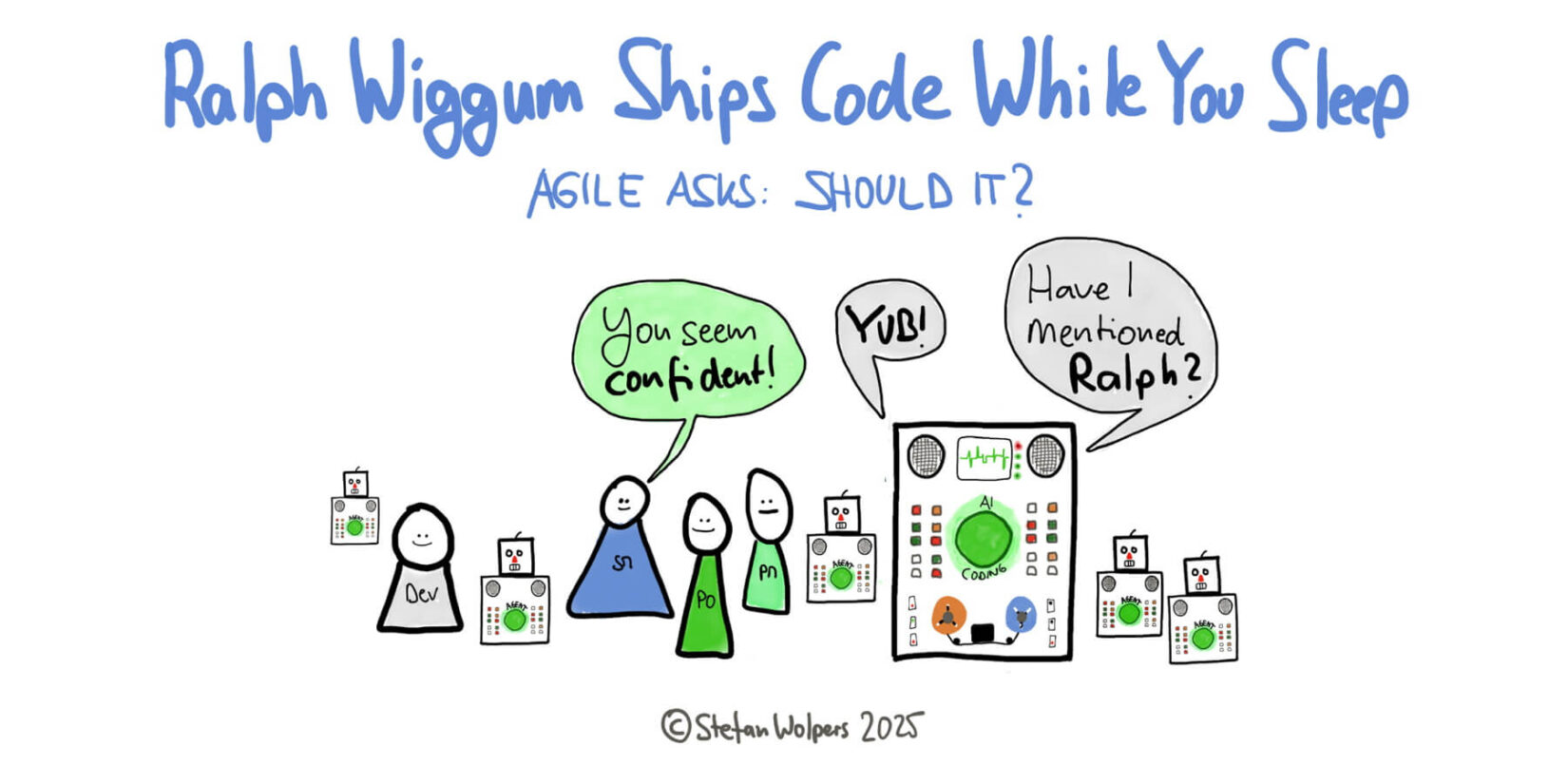
Learn more: Ralph Wiggum Ships Code While You Sleep. Agile Asks: Should It?
🛠 Concepts, Practices, Tools & Measuring
(via Anthropic): Claude's new constitution
Anthropic releases Claude’s new constitution, a foundational document explaining the values and behaviors they want Claude to embody. Written primarily for Claude itself, it prioritizes safety, ethics, and genuine helpfulness.
(via PwC Global): 29th Global CEO Survey: Leading through uncertainty in the age of AI
PwC’s 29th Global CEO Survey reveals declining confidence in short-term growth. While 56% of CEOs report no financial return from AI yet, those that have achieved enterprise-scale deployment are outperforming peers.
Most CEOs say their companies aren’t yet seeing a financial return from investments in AI.
: Electricity use of AI coding agents
Simon P. Couch estimates his median Claude Code session consumes 0.041 kWh, about 138 times more than a typical query, comparable to running a dishwasher daily, and calls for more transparency from frontier labs.
📅 Scrum Training & Event Schedule
You can secure your seat for Scrum training classes, workshops, and meetups directly by following the corresponding link in the table below:
| Date | Class and Language | City | Price |
|---|---|---|---|
| 🖥 🇬🇧 November 27, 2026 | GUARANTEED: AI4Agile Online Course v4 (AI4Agile Certificate; English; Online Course) | Online Course | $149 incl. 19% VAT (If applicable.) |
| 🖥 🇬🇧 December 3-17, 2026 | A3 Delegation System Pilot Workshop 2 (English; Live Virtual Class) | Live Virtual Class | $149 incl. 19% VAT (If applicable.) |
| 🖥 🇩🇪 December 8-9, 2026 | Professional Scrum Product Owner Training (PSPO I; German; Live Virtual Class) | Live Virtual Class | €1189 incl. 19% VAT (If applicable.) |
| 🖥 🇬🇧 December 15-16, 2026 | Professional Scrum Master – Advanced Training (PSM II; English; Live Virtual Class) | Live Virtual Class | €1189 incl. 19% VAT (If applicable.) |
| 🖥 🇩🇪 February 16-17, 2027 | Professional Scrum Product Owner Training (PSPO I; German; Live Virtual Class) | Live Virtual Class | €1189 incl. 19% VAT (If applicable.) |
See all upcoming classes here.

You can book your seat for the training directly by following the corresponding links to the ticket shop. If the procurement process of your organization requires a different purchasing process, please contact Berlin Product People GmbH directly.
📺 Join 6,000-plus Agile Peers on Youtube
Now available on the Age-of-Product YouTube channel to improve learning, for example, about the Real Value Journey:
- Hands-on Agile #68: How to Analyze Unstructured Team Interview Data with AI.
- Fabrice Bernhard: The Lean Tech Manifesto.
- Maarten Dalmijn: The 5 Obstacles to Empowered Teams.
- Roman Pichler: The Top Reasons Why a Product Strategy Fails.
- Johanna Rothman: How to Instill Agility, not Agile Practices.
- Hands-on Agile EXTRA: How Elon Musk Would Run YOUR Business with Joe Justice.
✋ Do Not Miss Out: Learn more about the Real Value Journey — Join the 20,000-plus Strong ‘Hands-on Agile’ Slack Community
I invite you to join the “Hands-on Agile” Slack Community and enjoy the benefits of a fast-growing, vibrant community of agile practitioners from around the world.

If you would like to join, all you have to do now is provide your credentials via this Google form, and I will sign you up. By the way, it’s free.
Help your team to learn about Career Success Factors by pointing them to the free Scrum Anti-Patterns Guide: