There has never been a shortage of articles claiming that Agile is either dead, failing, disrespectful, or useless, with authors ranging from respected signatories of the Agile Manifesto to click baiters to people who never experienced the real thing in the first thus lacking a standard for comparison. (See the links below.)
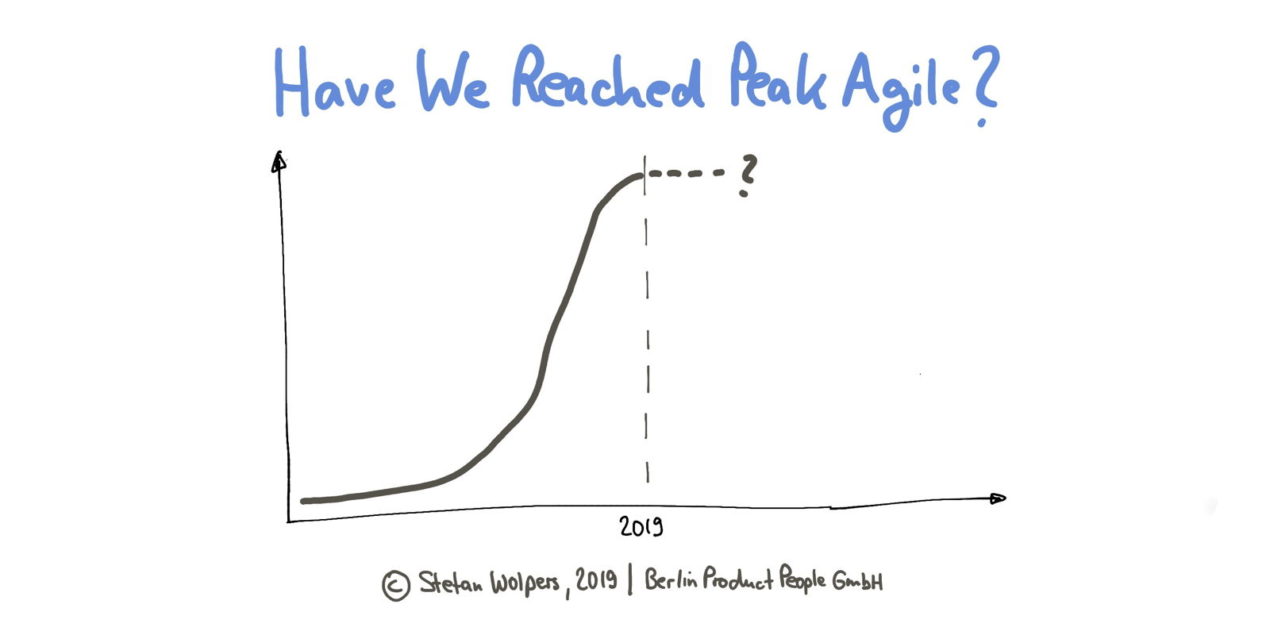
The question from my perspective, though, is: Have we finally have reached peak agile?
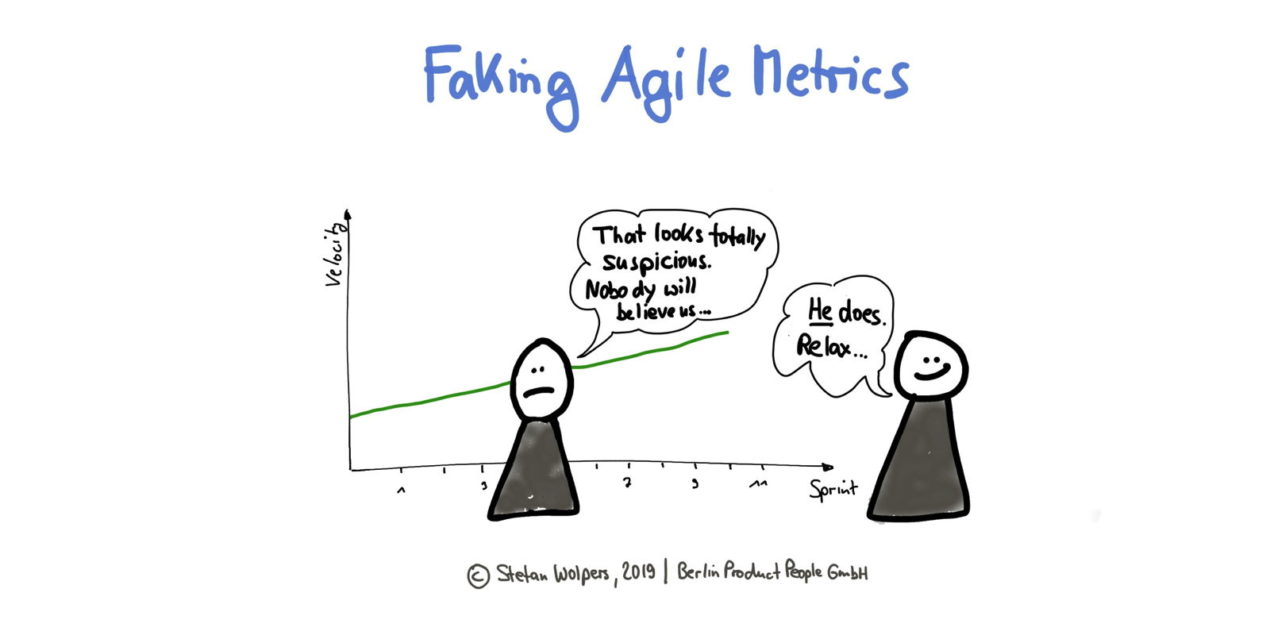
TL; DR: Faking Agile Metrics — An Eye-Opening Exercise
Imagine you’re a Scrum Master and the line manager of your team believes that the best sign for a successful agile transformation is a steady increase in the Scrum Team’s velocity. Moreover, if the team fails to deliver on that metric something is wrong with the Scrum Team. Alternatively, something is wrong with you as you are the Scrum Master and hence responsible for the team’s performance. (Apparently, not faking agile metrics, or being transparent in this case, does not seem to be valued here.)
Learn more about how to coach these kinds of line managers and help them overcome their preference for the industrial past with a simple exercise on how to cook the agile books.
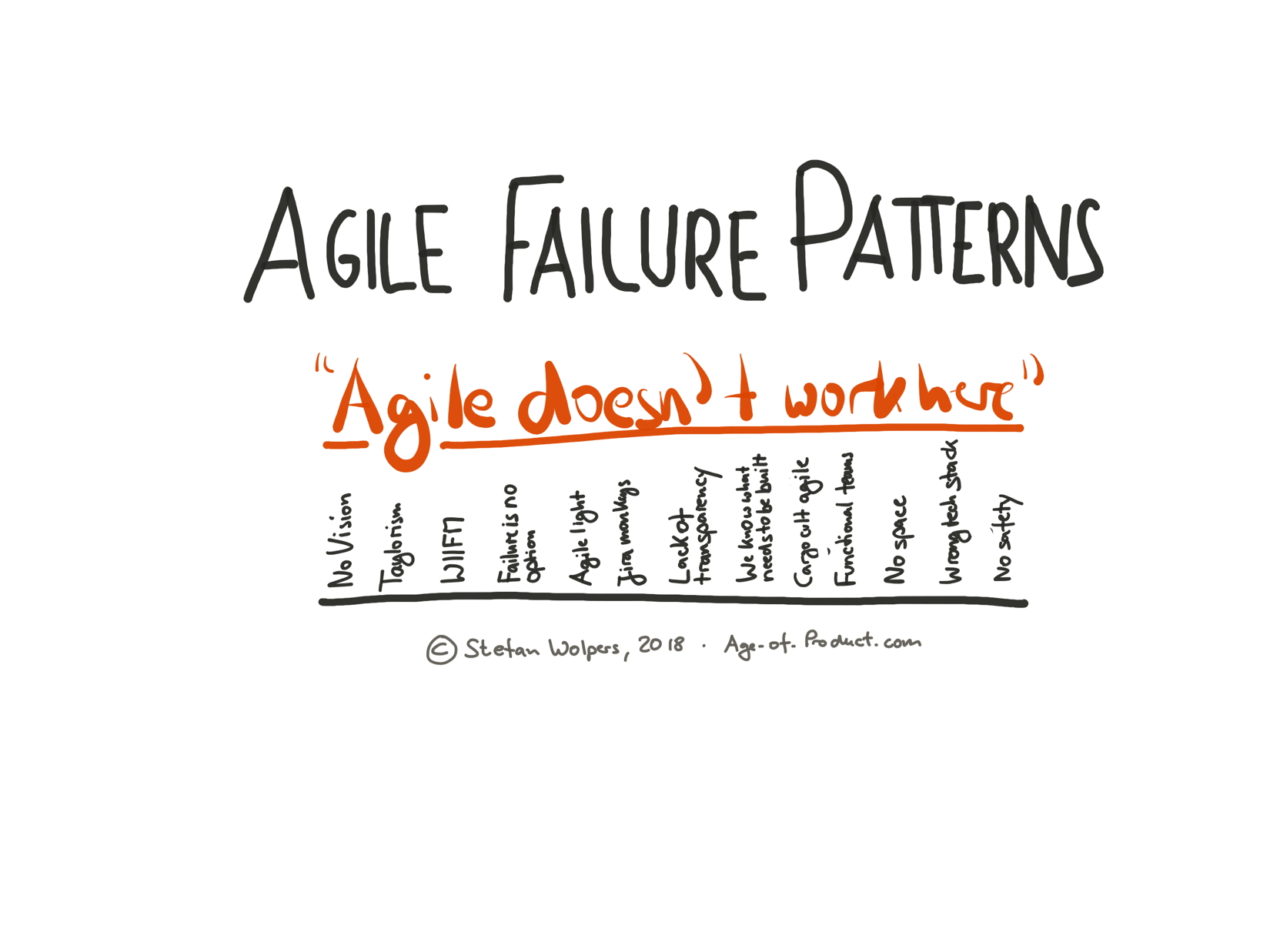
TL;DR: Agile Failure Patterns — Why Agile is Simple and Complex at the Same Time
Agile failure seems to be increasingly more prominent nowadays despite all the efforts undertaken by numerous organization embarking on their journeys to become agile.
The funny thing is: Who would disagree that the four core principles of the Agile Manifesto —
Individuals and interactions over processes and tools
Working software over comprehensive documentation
Customer collaboration over contract negotiation
Responding to change over following a plan
— are derived from applying common sense to a challenging problem? Moreover, the application of those principles might be suited to fix numerous organizational dysfunctions and reduce an error-prone and complex social setting to maybe just a complicated one?
by Stefan Wolpers|Agile and ScrumAgile TransitionWebinars
TL;DR: Webinar Sprint Review Anti-Patterns
The ninth Hands-on Agile webinar Sprint Review anti-patterns addresses twelve anti-patterns of the sprint review—from death by PowerPoint to side-gigs to none of the stakeholders cares to attend.
by Stefan Wolpers|Agile and ScrumAgile TransitionWebinars
TL;DR: Webinar Scrum Master Anti-Patterns
The eighth Hands-on Agile webinar Scrum Master Anti-Patterns addresses twelve anti-patterns of your Scrum Master—from ill-suited personal traits and the pursuit of individual agendas to frustration with the team itself.
by Stefan Wolpers|Agile and ScrumAgile TransitionWebinars
TL;DR: Webinar #7: Scrum Sprint Anti-Patterns
The seventh Hands-on Agile webinar Scrum Sprint Anti-Patterns analyzed 12 ways a Scrum team can improve its effectiveness by avoiding typical sprint anti-patterns. Learn more about gold-plating, delivering Y instead of X, absenteeism, side-gigs, and organizing people instead of the flow of work.