Food for Agile Thought #535: AI’s Labor Market Impact, Killing Your Darlings, Discovery Failures, Learned Helplessness

TL; DR: AI’s Labor Market Impact — Food for Agile Thought #535

Welcome to the 535th edition of the Food for Agile Thought newsletter, shared with 35,669 peers. This week, Ethan Mollick explores AI’s shift from co-intelligence to managing autonomous agents, urging organizations to experiment now. Jing Hu counters the “AI is bigger than Covid” panic by exposing the gap between theoretical and actual AI adoption, while Massenkoff and McCrory back this up with data on AI’s labor market impact showing no systematic rise in unemployment yet. Teresa Torres and Petra Wille warn that mediocre product success traps teams, Johanna Rothman offers team-based approaches to shaping unclear backlogs, and Joost Minnaar shows why removing hierarchy fails without investing in human capability.

Next, Aatir Abdul Rauf identifies seven headwinds AI product teams face after shipping, from margin erosion to trust gaps. At the same time, Sasha Rogelberg reports on BCG’s “AI brain fry” study, which shows that piling on AI tools hurts productivity and drives turnover. On a practical note, Ruben Hassid walks you through setting up Claude as your primary AI tool. Itamar Gilad traces product discovery failures to “must-have” features that bypass validation and to weak goals, and Tim Harford warns that quantified metrics quietly strip away context, autonomy, and genuine judgment.

Then, Olivia Moore tracks the intensifying race for the “default AI” in her sixth edition of the top 100 gen AI consumer apps. Jeff Gothelf proposes that customer relationships, not features, are the last defensible advantage, and Chris Walker identifies “context engineering” as a durable bottleneck preserving a role for local domain expertise. Justin Jackson examines how AI coding tools blur the roles of engineers, PMs, and designers, and suggests pair programming as a remedy. Lastly, David Burkus wraps things up with practical advice on leading difficult conversations with curiosity rather than accusation.
Food for Agile Thought #535: AI's Labor Market Impact, Killing Your Darlings, Discovery Failures, Learned Helplessness - Age-of-Product.com
Continue reading Food for Agile Thought #535: AI’s Labor Market Impact, Killing Your Darlings, Discovery Failures, Learned Helplessness

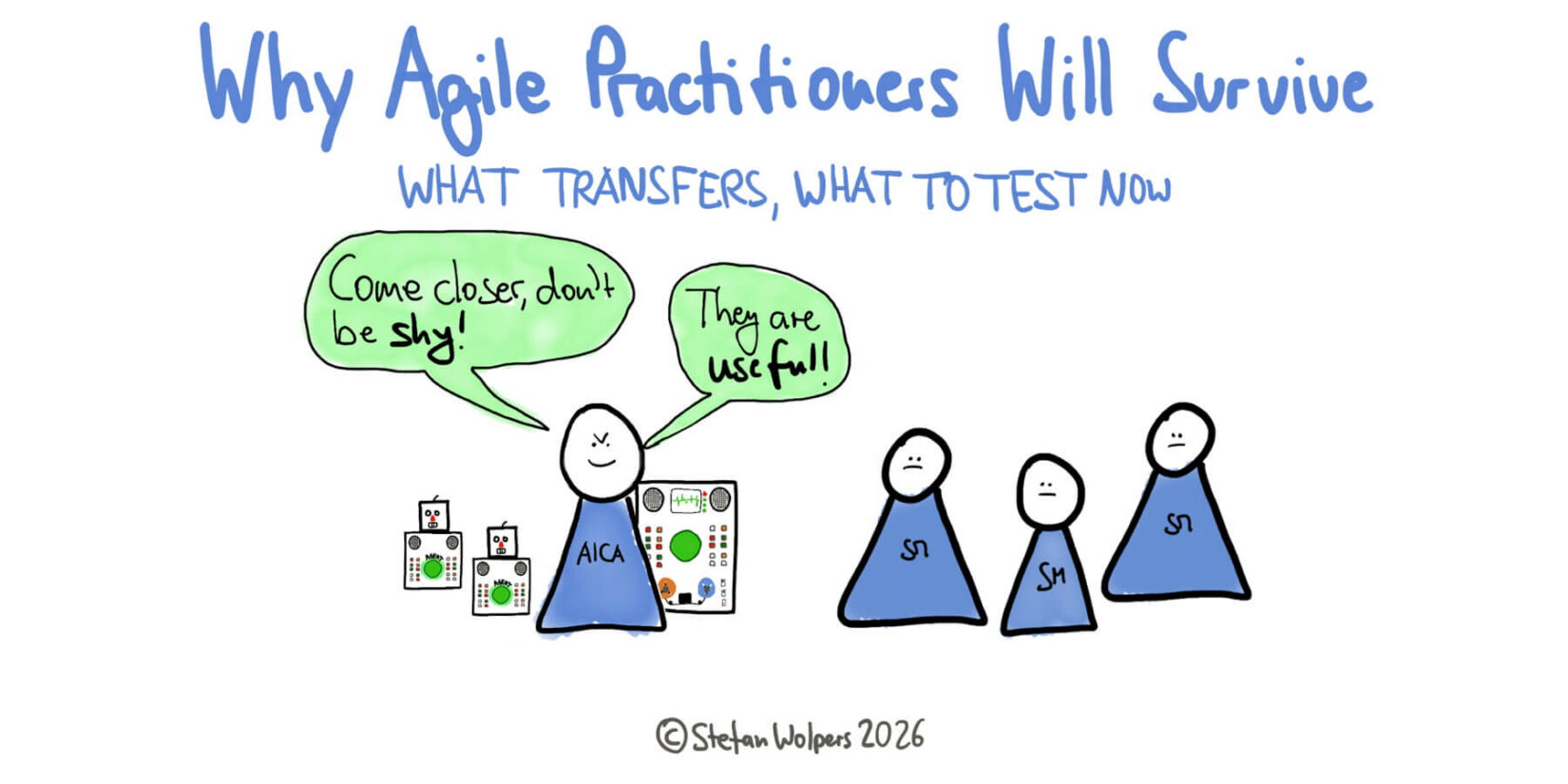
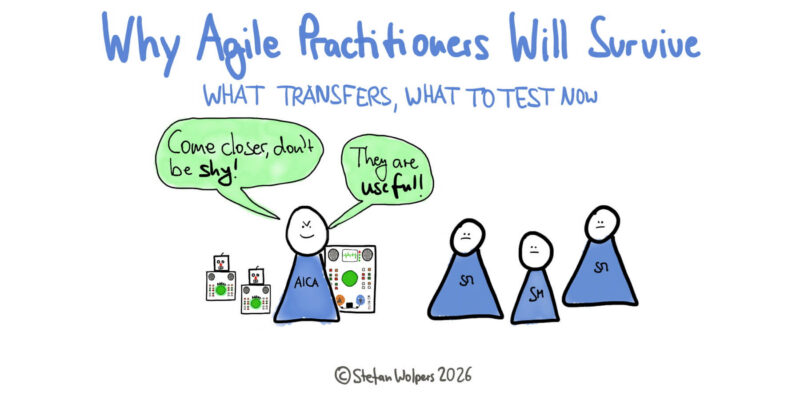
Why Agile Practitioners Should Be Optimistic for 2026 (Part 2): AI for Agile Practitioners

TL; DR: What to Do About It

Your anxiety about AI is a signal, not a verdict. Here is why AI for Agile Practitioners matters and how:

  1. What transfers: Organizational change expertise, empirical process control, and cross-functional translation. The hard parts of AI adoption are the parts you have been practicing for years.
  2. What does not: Framework expertise as a standalone value proposition, process facilitation without outcome ownership, and tool-agnosticism as a point of pride.
  3. What to do this week: Run one small experiment that integrates AI into your actual work. Before you prompt, categorize the task: Assist, Automate, or Avoid.

What would remain of your professional value if you removed every framework name and certification from your resume? Whatever that is: Invest there.

Why Agile Practitioners Should Be Optimistic for 2026 (Part 2): AI for Agile Practitioners - Age-of-Product.com
Continue reading Why Agile Practitioners Should Be Optimistic for 2026 (Part 2): AI for Agile Practitioners

Food for Agile Thought #534: Stakeholder Management, Empowerment, The Last Analog Generation, Onboarding AI Agents

TL; DR: Stakeholder Management — Food for Agile Thought #534

Welcome to the 534th edition of the Food for Agile Thought newsletter, shared with 35,693 peers. This week, Venkatesh Rao explores how AI coding clears intention debt and frees people to take on new creative work. Janna Bastow shares stakeholder management practices, and Teresa Torres pushes product teams to tie decisions to evidence, outcomes, and visible discovery. Grant Harvey reports GPT 5.4’s leap in coding and knowledge work, while Cornelia C. Walther urges human-centered AI leadership. Also, Michael Lopp names the workplace behaviors that quietly drain leaders’ attention.

Next, Chad McAllister shares Mike Hyzy’s view of Taylor Swift as a model for product strategy, and Martin Eriksson reframes empowerment as a spectrum of decision ownership. Steve Newman examines how AI agents shift work toward goals and feedback; Tom Wojcik warns that AI coding can weaken engineering judgment, and Paweł Huryn maps product frameworks into AI workflows. Moreover, Maarten Dalmijn uses Force Mapping to help teams tackle root causes instead of symptoms.

Then, Shreyas Doshi argues that as AI tools become commodities, product sense will separate strong product leaders from the rest. Peter Yang shows how AI-native companies treat agents as teammates, and Andi Roberts reminds leaders that systems shape behavior more than slogans do. Also, Mike Cohn challenges the old cost of change curve. Finally, Yuri Vonchitzki warns that poor data, not AI, is often the driver of disappointing results.

Food for Agile Thought #534: Stakeholder Management, Empowerment, The Last Analog Generation, Onboarding AI Agents - Age-of-Product.com
Continue reading Food for Agile Thought #534: Stakeholder Management, Empowerment, The Last Analog Generation, Onboarding AI Agents

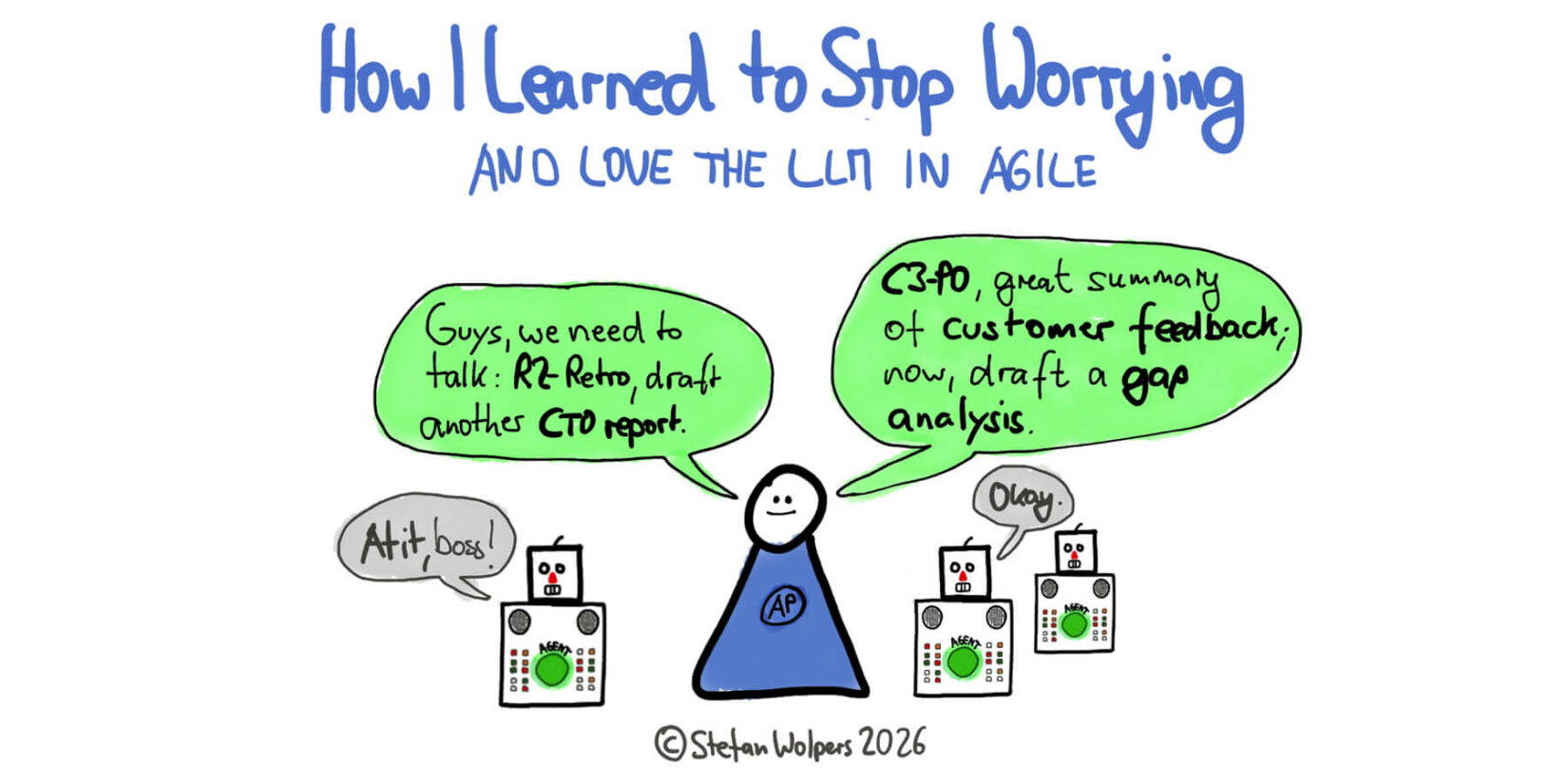
How I Learned to Stop Worrying and Love the LLM in Agile

TL;DR: The LLM in Agile

Most agile practitioners are still debating whether AI matters. I stopped debating and started using it. Over two-plus years, AI went from proofreading my book manuscript to designing Retrospectives based on team data, to running an entire product development process for a new course, to working with autonomous AI agents. Each phase revealed what the previous one could not teach. Finally, I went Kubrick and started loving the LLM in Agile.

The window of opportunity to build this competence is open now, but it will not remain open indefinitely. Start acting.

How I Learned to Stop Worrying and Love the LLM in Agile: A two-and-a-half year AI journey of an agile practitioner — Age-of-Product.com
Continue reading How I Learned to Stop Worrying and Love the LLM in Agile

Food for Agile Thought #533: Autonomous AI Agents & the Economy, PM-Dev Boundary, Not Outcome But Potential, 2nd Brain Trends

TL; DR: Autonomous AI Agents — Food for Agile Thought #533

Welcome to the 533rd edition of the Food for Agile Thought newsletter, shared with 35,708 peers. This week, Ezra Klein interviews Anthropic’s Jack Clark on autonomous AI agents that act, not just chat, and they warn about specs, oversight, and security as senior judgment grows in value. Teresa Torres and Petra Wille draw a hard line between product outcomes and engineering quality, and Jing Hu shows domain insiders can beat coders at AI hackathons. Also, Andreas Horn, Daniel Nest, and Pavel Samsonov argue for durable instructions, a living context, and real customer signals before speed.

Next, John Cutler reminds us that shipping creates potential, not outcomes, so treat each release as a hypothesis and trace causal chains from near-term effects to long-term results. Paweł Huryn describes Claude Cowork, a desktop agent that plans work, runs parallel sub-agents, and writes real files with plugins, skills, and MCP, while Benedict Evans questions OpenAI’s moat, and Elena Verna urges an AI native weekly build cadence. Deb Liu ties it together with collaboration habits that widen options.

Then, Dror Poleg warns of a jobless boom where GDP rises while hiring stalls, pushing cities toward flexible zoning, conversions, and fiscal tools that spread gains. Zapier frames AI transformation as leadership, culture, tools, and governance that multiply into impact, while Nicole Koenigstein shows multi-agent handoffs compound errors unless you add gates and schemas. Also, Andi Roberts urges friction-based team charters with review cadences. Finally, Anthropic links AI fluency to iteration and tougher evaluation.

Food for Agile Thought #533: Autonomous AI Agents & Economy, PM-Dev Boundary, Not Outcome But Potential, 2nd Brain Trends—Age-of-Product.com
Continue reading Food for Agile Thought #533: Autonomous AI Agents & the Economy, PM-Dev Boundary, Not Outcome But Potential, 2nd Brain Trends

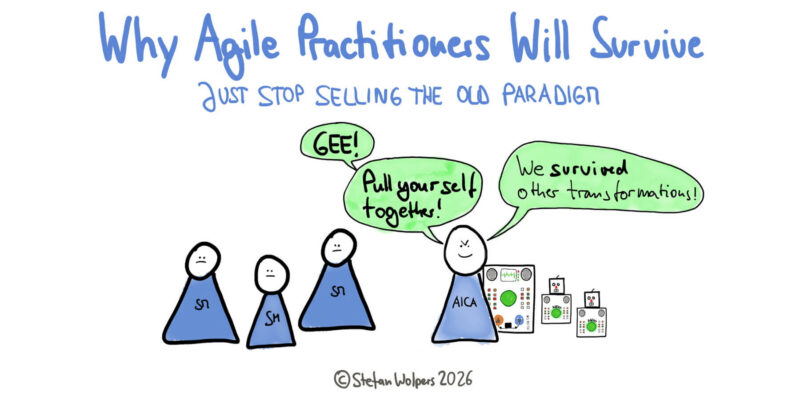
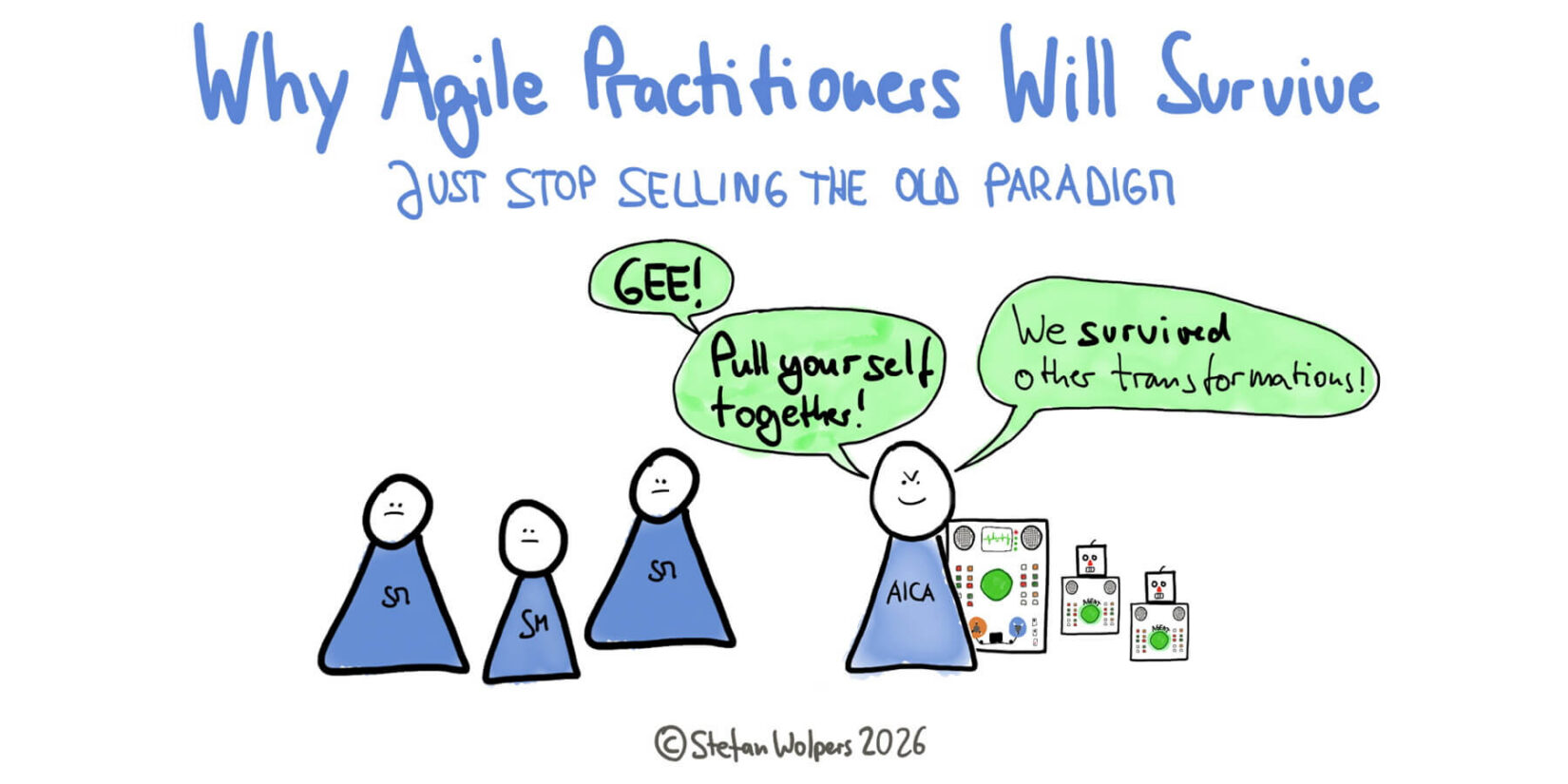
Why Agile Practitioners Should Be Optimistic for 2026 (Part 1): You Have Already Survived This

TL; DR: The Survival of Agile Practitioners

It is February 2026, and your LinkedIn feed oscillates between two narratives:

  1. Narrative #1: AI will replace agile practitioners such as Scrum Masters, Agile Coaches, and everyone whose job description includes “facilitate” or “coach.”
  2. Narrative #2: Stay calm, get another certification, and wait it out.

Both are wrong, and for the same reason: They treat AI adoption as a technology event when it is an organizational transformation. And you have already survived one of those.

Why Agile Practitioners Should Be Optimistic for 2026 (Part 1): You Have Already Survived Other Transformations — Age-of-Product.com
Continue reading Why Agile Practitioners Should Be Optimistic for 2026 (Part 1): You Have Already Survived This