
TL; DR: AI’s Labor Market Impact — Food for Agile Thought #535
Welcome to the 535th edition of the Food for Agile Thought newsletter, shared with 35,669 peers. This week, Ethan Mollick explores AI’s shift from co-intelligence to managing autonomous agents, urging organizations to experiment now. Jing Hu counters the “AI is bigger than Covid” panic by exposing the gap between theoretical and actual AI adoption, while Massenkoff and McCrory back this up with data on AI’s labor market impact showing no systematic rise in unemployment yet. Teresa Torres and Petra Wille warn that mediocre product success traps teams, Johanna Rothman offers team-based approaches to shaping unclear backlogs, and Joost Minnaar shows why removing hierarchy fails without investing in human capability.
Next, Aatir Abdul Rauf identifies seven headwinds AI product teams face after shipping, from margin erosion to trust gaps. At the same time, Sasha Rogelberg reports on BCG’s “AI brain fry” study, which shows that piling on AI tools hurts productivity and drives turnover. On a practical note, Ruben Hassid walks you through setting up Claude as your primary AI tool. Itamar Gilad traces product discovery failures to “must-have” features that bypass validation and to weak goals, and Tim Harford warns that quantified metrics quietly strip away context, autonomy, and genuine judgment.
Then, Olivia Moore tracks the intensifying race for the “default AI” in her sixth edition of the top 100 gen AI consumer apps. Jeff Gothelf proposes that customer relationships, not features, are the last defensible advantage, and Chris Walker identifies “context engineering” as a durable bottleneck preserving a role for local domain expertise. Justin Jackson examines how AI coding tools blur the roles of engineers, PMs, and designers, and suggests pair programming as a remedy. Lastly, David Burkus wraps things up with practical advice on leading difficult conversations with curiosity rather than accusation.
🎓 🇬🇧 🤖 The Claude Cowork BootCamp — $149
Cowork turns Claude into an autonomous AI agent who works on your tasks independently; no coding required.
In this hands-on founding cohort, you will build your own AI agents from scratch, using your real work challenges:
- Three Wednesday sessions, three hours each, April 15 to 29, 2026, at 3 pm CEST / 9 am ET. Limited spots.
- Prerequisite: Claude Pro subscription and the Claude Desktop app on macOS or Windows.
👉 Start Building Agents: Claude Cowork BootCamp: Build Your Own AI Agent, No Coding Required.
Did you miss the previous Food for Agile Thought issue 534?
🗞 Shall I notify you about articles like this one? Awesome! You can sign up here for the ‘Food for Agile Thought’ newsletter and join 35,000-plus subscribers.
🎓 Join Stefan in one of his upcoming Professional Scrum training classes!
🏆 The Tip of the Week: AI’s Labor Market Impact
(via Anthropic): Labor market impacts of AI: A new measure and early evidence
Massenkoff and McCrory introduce "observed exposure," a new measure combining theoretical AI capability with actual usage data, and find no systematic rise in unemployment among exposed workers yet. However, hiring younger workers into those roles may be slowing. Pair with Jing Hu's article below.
🎯 Product: Stakeholder Management
and : Kill Your Darlings
Teresa Torres and Petra Wille discuss why mediocre product success can be more dangerous than failure, sharing practical advice on sunsetting profitable but stagnating products to free up discovery capacity for better opportunities.
: How Good is Your Backlog? How to Shape the Work for Product Success, Part 2
Johanna Rothman explores why product backlogs break down when work is too large or unclear, and proposes team-based approaches to shaping work, from workshops to spikes, so that teams can learn and deliver incrementally.
: Coding got easier. Winning with AI products didn't. Here's why.
Aatir Abdul Rauf identifies seven structural headwinds AI product teams face after shipping, from margin erosion to trust gaps, proposing that the real challenge has moved from building to winning customer attention and monetizing value.
: 5 Common Product Discovery Failure Modes
Itamar Gilad identifies two key reasons product discovery breaks down: "must-have" features that bypass validation and weak goals that leave teams optimizing for output instead of outcomes, both rooted in systemic organizational issues.
🧠 Artificial Intelligence
(via Medium): AI vs. Your Job: 3 Mistakes 80M People Are Making
Jing Hu challenges the viral "AI is bigger than Covid" panic by highlighting the massive gap between what AI could theoretically do and what it actually does, warning leaders against cutting staff, lacking direction, and chasing tools over problems.
: The Shape of the Thing: Where we are right now, and what likely happens next
Ethan Mollick explores how AI has shifted from co-intelligence to the management of autonomous agents, driven by exponential capability gains. He proposes that organizations must experiment now to shape AI's impact on work, markets, and governance before the window closes.
(via Fortune): 'AI brain fry' is real — and it's making workers more exhausted, not more productive, new study finds
Sasha Rogelberg reports on a BCG study that coined the term "AI brain fry," finding that using four or more AI tools decreases productivity, increases mental fatigue, and drives employee turnover, suggesting that companies must redesign roles rather than just pile on AI.
: Claude: How to set up Claude the right way (so you actually stop going back to ChatGPT)
Ruben Hassid explains how to set up Claude as your primary AI tool, covering Cowork, model selection, Excel integration, plugins, artifacts, and projects, with practical install steps and first prompts for each.
(via Andreessen Horowitz): The Top 100 Gen AI Consumer Apps — 6th Edition
Olivia Moore presents the sixth edition of the top 100 gen AI consumer apps, tracking ChatGPT's lead. At the same time, the race for the "default AI" intensifies across creative tools, agents, and embedded experiences.
🖥 💯 🇬🇧 AI for Agile BootCamp #6 — March 19 to April 16, 2026
The job market’s shifting. Agile roles are under pressure. AI tools are everywhere. But here’s the truth: the Agile pros who learn how to work with AI, not against it, will be the ones leading the next wave of high-impact teams.
So, become the one who professional recruiters call first for “AI‑powered Agile.” Be among the first to master practical AI applications for Scrum Masters, Agile Coaches, Product Owners, Product Managers, and Project Managers.
The class is in English. 🇬🇧
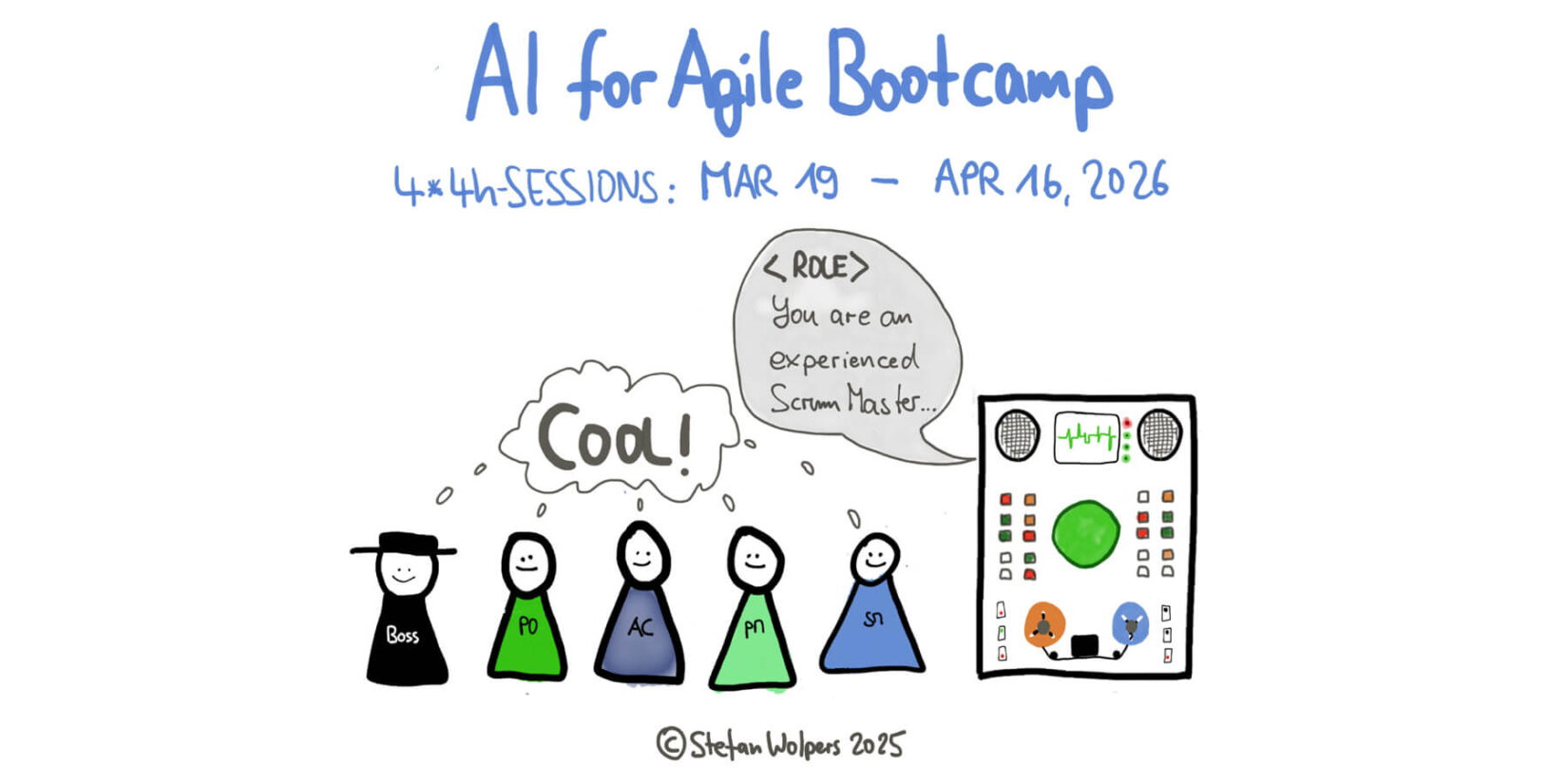
Learn more: 🖥 💯 🇬🇧 AI for Agile BootCamp #6 — March 19 to April 16, 2026.
Customer Voice: “The AI for Agilists course is an absolute essential for anyone working in the field! If you want to keep up with the organizations and teams you support, this course will equip you with not only knowledge of how to leverage AI for your work as an Agilist but will also give you endless tips & tricks to get better results and outcomes. I thoroughly enjoyed the course content, structure, and activities. Working in teams to apply what we learned was the best part, as it led to great insights for how I could apply what I was learning. After the first day on the course, I already walked away with many things I could apply at work. I highly recommend this course to anyone looking to better understand AI in general, but more specifically, how to leverage AI for Agility.” (Lauren Tuffs, Change Leader | Business Agility.)
➿ Agile & Leadership
(via Corporate Rebels): Learned Helplessness at Work: Removing Hierarchy Isn't Enough
Joost Minnaar explores why removing hierarchy often fails, drawing on research into learned helplessness at work, and proposes that self-management requires two phases: structural redesign followed by deliberate development of human capability.
: AI Made Relationships, Not Features, the Last Defensible Advantage
Jeff Gothelf proposes that in an AI era where features are commodities, the last defensible advantage is the relationship customers build with your product through accumulated context, history, and trust.
: Will Claude Code ruin our team?
Justin Jackson explores how AI coding tools like Claude Code are blurring the lines between engineers, PMs, and designers, creating tension over who owns what, and suggests collaborative pair programming as a path forward.
📯 Why Agile Practitioners Should Be Optimistic for 2026 (Part 2): AI for Agile Practitioners
Your anxiety about AI is a signal, not a verdict. Here is why AI for Agile Practitioners matters and how:
- What transfers: Organizational change expertise, empirical process control, and cross-functional translation. The hard parts of AI adoption are the parts you have been practicing for years.
- What does not: Framework expertise as a standalone value proposition, process facilitation without outcome ownership, and tool-agnosticism as a point of pride.
- What to do this week: Run one small experiment that integrates AI into your actual work. Before you prompt, categorize the task: Assist, Automate, or Avoid.
What would remain of your professional value if you removed every framework name and certification from your resume? Whatever that is: Invest there.
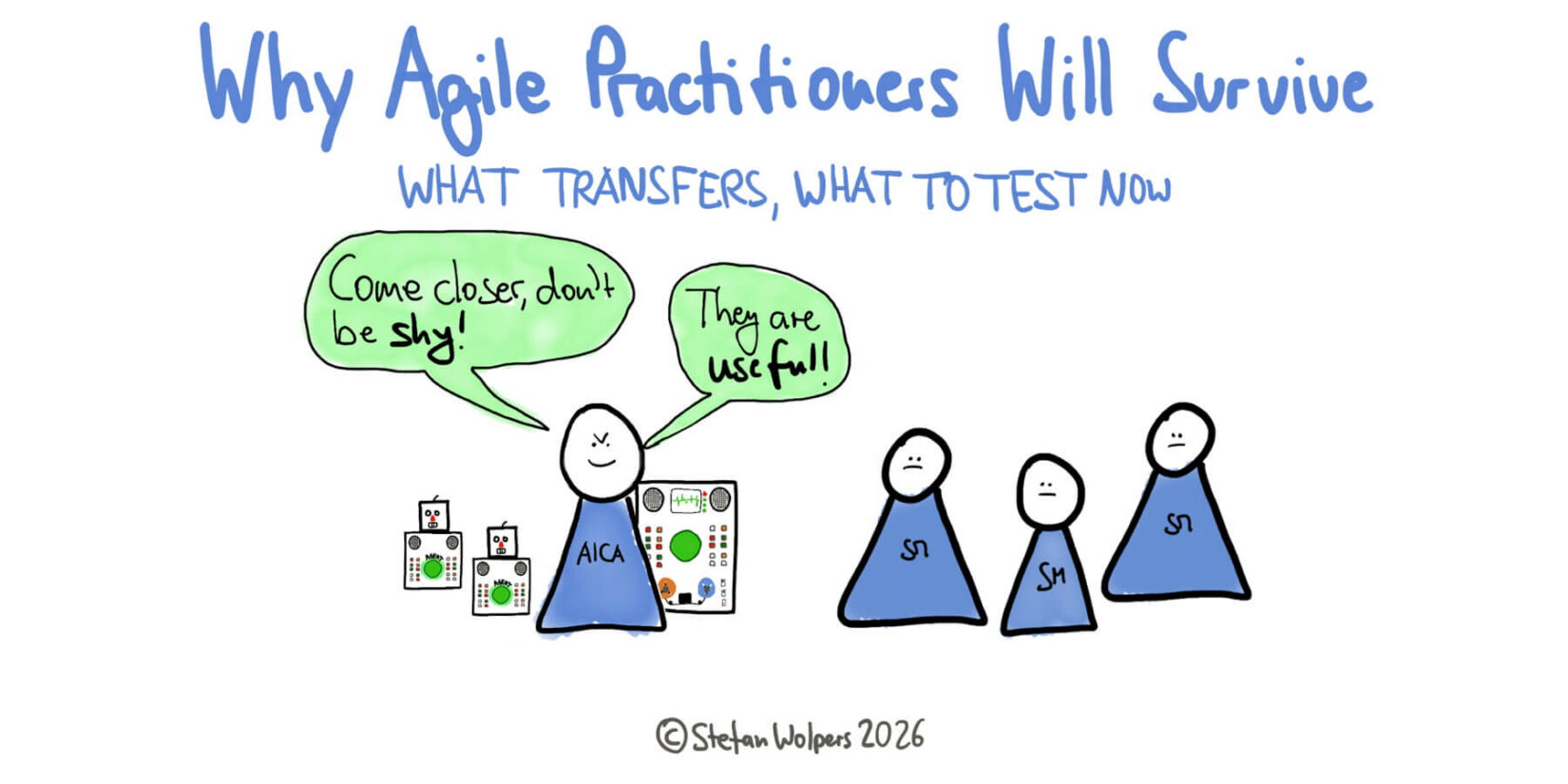
Learn more: Why Agile Practitioners Should Be Optimistic for 2026 (Part 2): AI for Agile Practitioners.
🛠 Concepts, Practices, Tools & Measuring
: Context Engineering: Why Hayek's Knowledge Problem Survives AI
Chris Walker proposes that "context engineering," the costly, expertise-dependent work of making knowledge usable for AI, is a durable bottleneck that limits centralization and preserves a strategic role for local domain knowledge.
: Difficult Conversations Don't Have To Be So Difficult
David Burkus offers practical advice on navigating difficult conversations, suggesting that leaders ditch scripts for bullet points, lead with curiosity rather than accusation, and focus on building a path forward together.
: The tyranny of targets
Tim Harford reflects on how quantified metrics seep into our values and judgment, warning that while targets bring portability and coordination, they also strip away context, autonomy, and the diversity of what we truly care about.
📅 Scrum Training & Event Schedule
You can secure your seat for Scrum training classes, workshops, and meetups directly by following the corresponding link in the table below:
| Date | Class and Language | City | Price |
|---|---|---|---|
| 🖥 🇬🇧 November 27, 2026 | GUARANTEED: AI4Agile Online Course v4 (AI4Agile Certificate; English; Online Course) | Online Course | $149 incl. 19% VAT (If applicable.) |
| 🖥 🇬🇧 December 3-17, 2026 | A3 Delegation System Pilot Workshop 2 (English; Live Virtual Class) | Live Virtual Class | $149 incl. 19% VAT (If applicable.) |
| 🖥 🇩🇪 December 8-9, 2026 | Professional Scrum Product Owner Training (PSPO I; German; Live Virtual Class) | Live Virtual Class | €1189 incl. 19% VAT (If applicable.) |
| 🖥 🇬🇧 December 15-16, 2026 | Professional Scrum Master – Advanced Training (PSM II; English; Live Virtual Class) | Live Virtual Class | €1189 incl. 19% VAT (If applicable.) |
| 🖥 🇩🇪 February 16-17, 2027 | Professional Scrum Product Owner Training (PSPO I; German; Live Virtual Class) | Live Virtual Class | €1189 incl. 19% VAT (If applicable.) |
See all upcoming classes here.

You can book your seat for the training directly by following the corresponding links to the ticket shop. If the procurement process of your organization requires a different purchasing process, please contact Berlin Product People GmbH directly.
📺 Join 6,000-plus Agile Peers on Youtube
Now available on the Age-of-Product YouTube channel to improve learning, for example, about AI's Labor Market Impact:
- Stop Writing Prompts. Let AI Do It for You — Hack #01, AI4Agile Online Course v2.
- Socratic Prompting — Hack #10, AI4Agile Online Course v2.
- Check Your AI’s Plan Before — Hack #7, AI4Agile Online Course v2.
- From Product Requirements to Experiments to Learnings — Supported by Generative AI.
- Never Accept an LLM’s First Offer — Improve GenAI’s Usefulness w/ Feedback Loops and Challenges.
✋ Do Not Miss Out: Learn more about AI's Labor Market Impact — Join the 20,000-plus Strong ‘Hands-on Agile’ Slack Community
I invite you to join the “Hands-on Agile” Slack Community and enjoy the benefits of a fast-growing, vibrant community of agile practitioners from around the world.

If you would like to join, all you have to do now is provide your credentials via this Google form, and I will sign you up. By the way, it’s free.
Help your team to learn about how AI Intensifies Work by pointing them to the free Scrum Anti-Patterns Guide: