
TL; DR: Autonomous AI Agents — Food for Agile Thought #533
Welcome to the 533rd edition of the Food for Agile Thought newsletter, shared with 35,708 peers. This week, Ezra Klein interviews Anthropic’s Jack Clark on autonomous AI agents that act, not just chat, and they warn about specs, oversight, and security as senior judgment grows in value. Teresa Torres and Petra Wille draw a hard line between product outcomes and engineering quality, and Jing Hu shows domain insiders can beat coders at AI hackathons. Also, Andreas Horn, Daniel Nest, and Pavel Samsonov argue for durable instructions, a living context, and real customer signals before speed.
Next, John Cutler reminds us that shipping creates potential, not outcomes, so treat each release as a hypothesis and trace causal chains from near-term effects to long-term results. Paweł Huryn describes Claude Cowork, a desktop agent that plans work, runs parallel sub-agents, and writes real files with plugins, skills, and MCP, while Benedict Evans questions OpenAI’s moat, and Elena Verna urges an AI native weekly build cadence. Deb Liu ties it together with collaboration habits that widen options.
Then, Dror Poleg warns of a jobless boom where GDP rises while hiring stalls, pushing cities toward flexible zoning, conversions, and fiscal tools that spread gains. Zapier frames AI transformation as leadership, culture, tools, and governance that multiply into impact, while Nicole Koenigstein shows multi-agent handoffs compound errors unless you add gates and schemas. Also, Andi Roberts urges friction-based team charters with review cadences. Finally, Anthropic links AI fluency to iteration and tougher evaluation.
🎓 🇬🇧 🤖 OUT NOW — The AI 4 Agile Online Course v2 at $149
The AI4Agile Online Course v2 teaches you to use AI in your daily agile work. Every lesson uses MegaBrain.io, a fictional startup where you apply AI to Sprint Retrospectives, stakeholder reports, product discovery, and backlog analysis.
72 video lessons. 13+ hours. 9 hands-on exercises. 155+ downloadable resources. 11 modules covering prompt engineering, Claude Skills, Claude Cowork, data analysis, and a framework for deciding where AI helps and where it does not.
No coding required. You leave knowing which tools to use and where to draw the line. This course shows you how to do that precisely .
The latest Version 2 is now available and comes with an introductory price of $149 instead of $249—don’t miss this opportunity to save $100!
👉 Join 400+ Peers and Save $100—But Only Until March 9: AI4Agile Online Course v2 at $149.
Did you miss the previous Food for Agile Thought issue 532?
🗞 Shall I notify you about articles like this one? Awesome! You can sign up here for the ‘Food for Agile Thought’ newsletter and join 35,000-plus subscribers.
🎓 Join Stefan in one of his upcoming Professional Scrum training classes!
🏆 The Tip of the Week: Autonomous AI Agents
and : 🎙 How Quickly Will A.I. Agents Rip Through the Economy?
Ezra Klein interviews Anthropic’s Jack Clark on AI agents moving from chat to action. Clark describes multi-agent coding, productivity gains, and the need for specs. Both flag new bottlenecks: oversight, security, and learning. They expect uneven job disruption, rising value of senior judgment, and governance to keep autonomy safe.
🎯 Product
and : Boundaries Between Product & Engineering
Teresa Torres and Petra Wille clarify product versus engineering boundaries: Product Managers own outcomes and the what, not bugs, tech debt, or architecture; remove PM as status middleman, escalate quality systemically.
: I Studied Every Anthropic AI Hackathon Winner. Here's What I've Found
Jing Hu shows non-developers won Anthropic’s hackathon by using domain proximity: spot boring bottlenecks, be the user, and target the checklist work. AI rewards lived pain, not coding credentials today.
: Basic Links
John Cutler suggests shipping creates potential, not outcomes, and triggers multiple causal chains over time. Treat each step as a hypothesis, map expected near-term effects to longer-term outcomes, and use the strategy to pick system levers.
: Claude Cowork: The Complete Guide for PMs
Paweł Huryn explains Claude Cowork as a desktop agent that plans tasks, runs parallel sub-agents, creates real files, and connects via plugins, skills, and MCP. He suggests non-developers use Cowork for everyday workflows and add structured memory plus scheduled tasks.
🧠 Artificial Intelligence
: #35 Edition: I think Skills will be bigger than MCP (here’s the argument)
Andreas Horn proposes Claude Skills as persistent, file-based instruction packages that standardize workflows, domain rules, templates, and tool handling across chats. He explains how Skills differ from prompts, MCP, and subagents, and why Skills boost consistency, quality, and speed.
: Build Your Second Brain With Claude Code & Obsidian
Daniel Nest proposes pairing Claude Code with an Obsidian vault to build an agent-agnostic second brain. Use Markdown notes, wiki links, inbox capture, and hooks to keep Claude's context automatically up to date.
: There’s a short window to get radically ahead by going AI-native. You need to act now.
Elena Verna proposes a short window to get ahead by going AI native. She suggests individuals can collapse intent to execution with tools like Cursor and Claude Code, while slow orgs struggle. Her advice: build fast, default to AI, repeat weekly, and start a side project.
: How will OpenAI compete?
Benedict Evans suggests OpenAI lacks a durable moat: frontier models converge, ChatGPT engagement is shallow, incumbents have distribution, and capex is not a flywheel. Winning requires new experiences and lock-in.
(via O’Reilly Media): The Hidden Cost of Agentic Failure
Nicole Koenigstein proposes that multi-agent systems behave like probabilistic pipelines where errors multiply at each handoff, creating architectural debt and hidden costs. Use validation gates, schema enforcement, best-of-N search, and training to stabilize production reliability.
🖥 💯 🇬🇧 AI for Agile BootCamp #6 — March 19 to April 16, 2026
The job market’s shifting. Agile roles are under pressure. AI tools are everywhere. But here’s the truth: the Agile pros who learn how to work with AI, not against it, will be the ones leading the next wave of high-impact teams.
So, become the one who professional recruiters call first for “AI‑powered Agile.” Be among the first to master practical AI applications for Scrum Masters, Agile Coaches, Product Owners, Product Managers, and Project Managers.
The class is in English. 🇬🇧
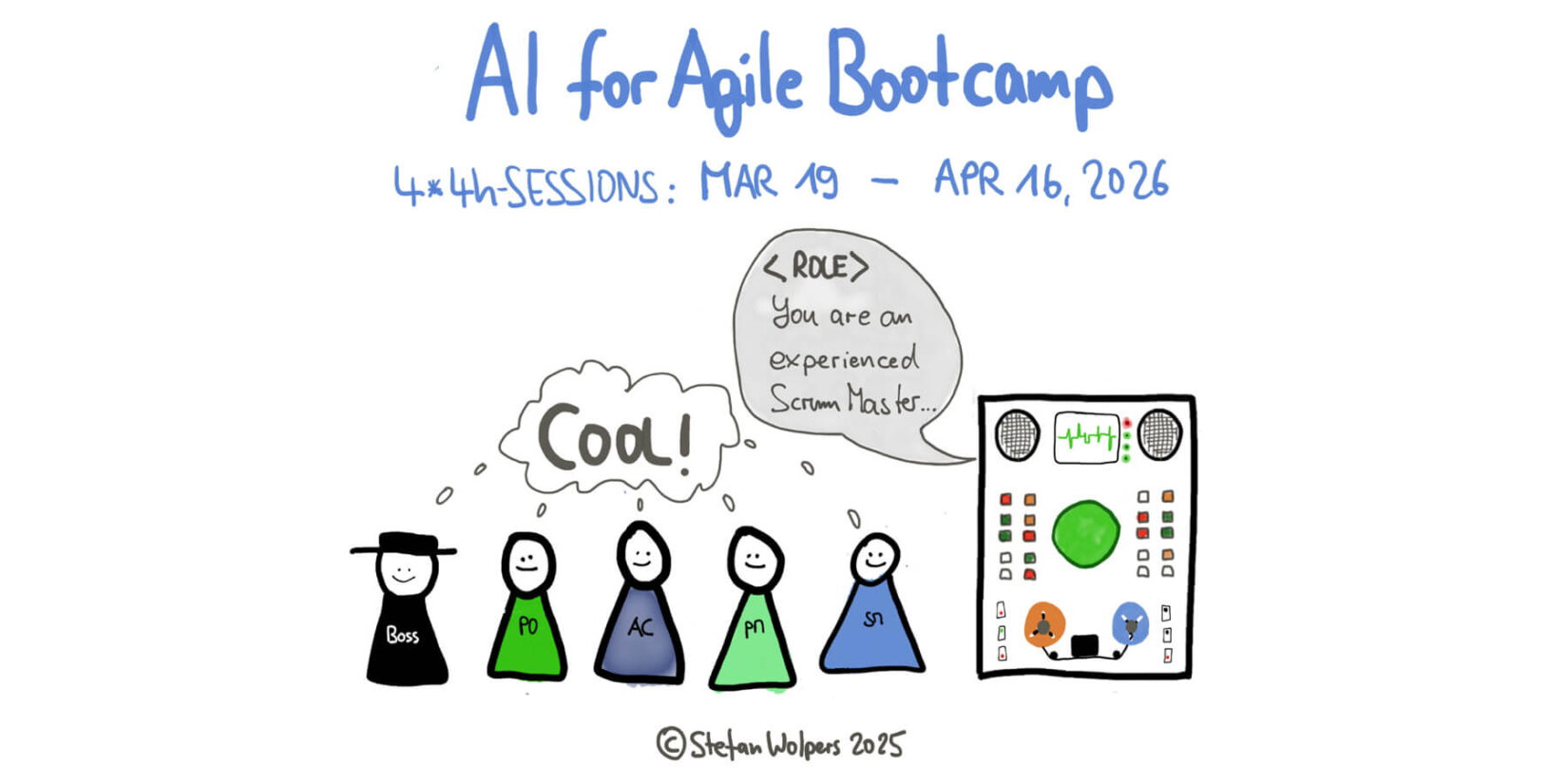
Learn more: 🖥 💯 🇬🇧 AI for Agile BootCamp #6 — March 19 to April 16, 2026.
Customer Voice: “The AI for Agilists course is an absolute essential for anyone working in the field! If you want to keep up with the organizations and teams you support, this course will equip you with not only knowledge of how to leverage AI for your work as an Agilist but will also give you endless tips & tricks to get better results and outcomes. I thoroughly enjoyed the course content, structure, and activities. Working in teams to apply what we learned was the best part, as it led to great insights for how I could apply what I was learning. After the first day on the course, I already walked away with many things I could apply at work. I highly recommend this course to anyone looking to better understand AI in general, but more specifically, how to leverage AI for Agility.” (Lauren Tuffs, Change Leader | Business Agility.)
➿ Agile & Leadership
: Welcome To The Jobless Boom
Dror Poleg describes a jobless boom in which GDP rises while hiring stalls, evident from San Francisco to US data. He suggests the production function changed, so cities must adapt with zoning flexibility, conversions, and fiscal tools to share innovation windfalls.
: Research is leadership, and code can help (but only in the right places)
Pavel Samsonov suggests code is not the productivity bottleneck; customer signal and social systems are. AI can accelerate wrong work, amplify layoffs, and tempt fake research. Real user research, continuity, and leadership choices unblock value delivery.
(via Zapier): The AI transformation framework
Zapier proposes an AI transformation equation: leadership, culture, tools, and governance multiply into impact. It maps maturity loops from mobilize to sustain and warns that missing any pillar can lead to mandates, shadow AI, or stalled pilots.
📯 Why Agile Practitioners Should Be Optimistic for 2026 (Part 1)
It is February 2026, and your LinkedIn feed oscillates between two narratives:
- Narrative #1: AI will replace agile practitioners such as Scrum Masters, Agile Coaches, and everyone whose job description includes "facilitate" or "coach."
- Narrative #2: Stay calm, get another certification, and wait it out.
Both are wrong, and for the same reason: They treat AI adoption as a technology event when it is an organizational transformation. And you have already survived one of those.
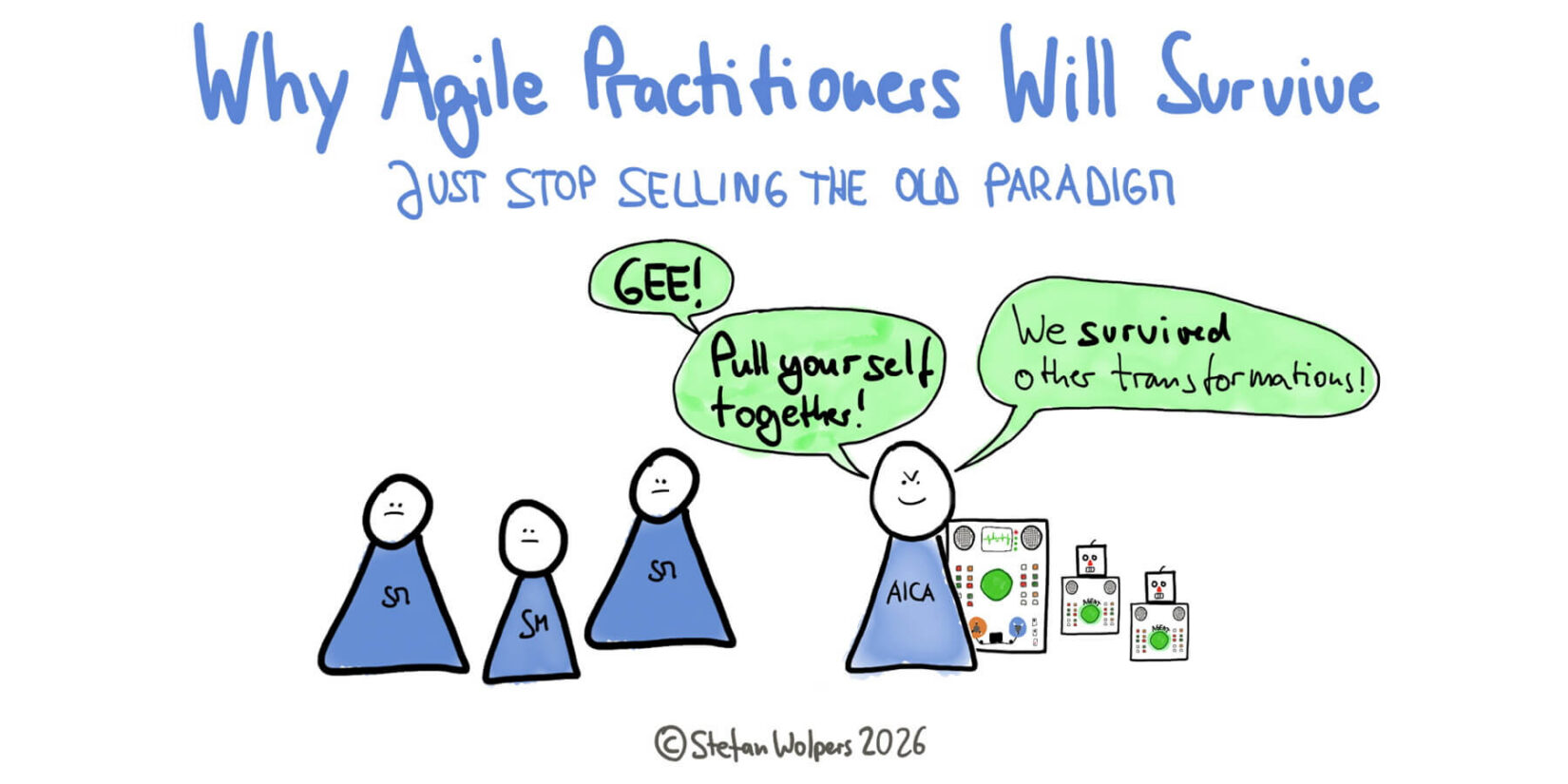
Learn more: Why Agile Practitioners Should Be Optimistic for 2026 (Part 1): You Have Already Survived This.
🛠 Concepts, Practices, Tools & Measuring
: How to Work With Anyone
Deb Liu suggests career growth narrows your choices, so working well with anyone becomes essential. Focus on incentives, find common ground, share credit, and shift posture from across the table to same side to build trust.
: 8 Best Team Charter Canvases Reviewed
Andi Roberts reviews eight team charter canvases and proposes choosing tools based on the team's real friction: strategy, rituals, speed, trust, conflict, or compliance. He warns against workshop fatigue and static charters; keep agreements alive with review cadences and accountability rituals.
(via Anthropic): Anthropic Education Report: The AI Fluency Index
Anthropic reports AI fluency grows with iteration: chats show double evaluation behaviors. But artifact creation makes users more directive and less critical. It proposes iterating, challenging outputs, and setting expectations.
📅 Scrum Training & Event Schedule
You can secure your seat for Scrum training classes, workshops, and meetups directly by following the corresponding link in the table below:
| Date | Class and Language | City | Price |
|---|---|---|---|
| 🖥 🇬🇧 November 27, 2026 | GUARANTEED: AI4Agile Online Course v4 (AI4Agile Certificate; English; Online Course) | Online Course | $149 incl. 19% VAT (If applicable.) |
| 🖥 🇬🇧 December 3-17, 2026 | A3 Delegation System Pilot Workshop 2 (English; Live Virtual Class) | Live Virtual Class | $149 incl. 19% VAT (If applicable.) |
| 🖥 🇩🇪 December 8-9, 2026 | Professional Scrum Product Owner Training (PSPO I; German; Live Virtual Class) | Live Virtual Class | €1099 incl. 19% VAT (If applicable.) |
| 🖥 🇬🇧 December 15-16, 2026 | Professional Scrum Master – Advanced Training (PSM II; English; Live Virtual Class) | Live Virtual Class | €1189 incl. 19% VAT (If applicable.) |
| 🖥 🇩🇪 February 16-17, 2027 | Professional Scrum Product Owner Training (PSPO I; German; Live Virtual Class) | Live Virtual Class | €1099 incl. 19% VAT (If applicable.) |
See all upcoming classes here.

You can book your seat for the training directly by following the corresponding links to the ticket shop. If the procurement process of your organization requires a different purchasing process, please contact Berlin Product People GmbH directly.
📺 Join 6,000-plus Agile Peers on Youtube
Now available on the Age-of-Product YouTube channel to improve learning, for example, about Autonomous AI Agents:
- Hands-on Agile #68: How to Analyze Unstructured Team Interview Data with AI.
- Fabrice Bernhard: The Lean Tech Manifesto.
- Maarten Dalmijn: The 5 Obstacles to Empowered Teams.
- Roman Pichler: The Top Reasons Why a Product Strategy Fails.
- Johanna Rothman: How to Instill Agility, not Agile Practices.
- Hands-on Agile EXTRA: How Elon Musk Would Run YOUR Business with Joe Justice.

✋ Do Not Miss Out: Learn more about Autonomous AI Agents — Join the 20,000-plus Strong ‘Hands-on Agile’ Slack Community
I invite you to join the “Hands-on Agile” Slack Community and enjoy the benefits of a fast-growing, vibrant community of agile practitioners from around the world.

If you would like to join, all you have to do now is provide your credentials via this Google form, and I will sign you up. By the way, it’s free.
Help your team to learn about how AI Intensifies Work by pointing them to the free Scrum Anti-Patterns Guide: