TL; DR: Fujifilm vs Kodak — Food for Agile Thought #518
Welcome to the 518th edition of the Food for Agile Thought newsletter, shared with 40,351 peers. This week, Martin Eriksson applies his decision stack to Fujifilm vs Kodak, showing how Fujifilm avoided Kodak’s fate by aligning strategy and execution. Jason Fried reflects on why great products feel whole and personal, shaped more by craft than management, while Laura Klein calls out the chaos of DIY AI adoption and urges ops teams to step in with structure. Steve Newman questions AI’s readiness for complex, adaptive work, and Christina Wodtke highlights how premortems surface risks before they hit delivery.
Next, David Pereira offers 21 practical templates to help product managers focus on value without slipping into a performative process. Jana Paulech unpacks how bias distorts product discovery and calls for better documentation and broader input. Also, Chris Loy redefines prompt engineering as context engineering, applying software principles to AI workflows, and Sebastian Raschka surveys emerging LLM alternatives with different trade-offs. Simon Powers warns that change efforts fall flat when they rely on outdated mental models.
Lastly, John Cutler shows how Shape Up uses constraints to channel focus and pace when paired with clear intent. Andi Roberts advocates for small-scale experiments to navigate uncertainty and build learning cultures. Additionally, Peter Hunter and Elena Stojmilova share how decentralizing architecture decisions improved team ownership and speed, and Allan Kelly reframes OKRs as tools for autonomy and alignment. Finally, Mike Fisher suggests treating organizational change as a Hero’s Journey to unite teams around purpose.
Did you miss the previous Food for Agile Thought issue 517?
🗞 Shall I notify you about articles like this one? Awesome! You can sign up here for the ‘Food for Agile Thought’ newsletter and join 40,000-plus subscribers.
🎓 Join Stefan in one of his upcoming Professional Scrum training classes!
🏆 The Tip of the Week: Fujifilm vs Kodak
: The Decision Stack in Action: How Fujifilm Survived What Killed Kodak
Martin Eriksson explains how Fujifilm survived what killed Kodak by aligning decisions from vision to delivery. Using his Decision Stack, he shows that transformation fails not because of bad tech but because of organizational misalignment.
🎯 Product
(via Every): 📺 What Jason Fried Learned from 26 Years of Building Great Products
Jason Fried reflects on 26 years of product building, urging founders to stay close to what makes their work meaningful. He sees great products as whole, indivisible ideas shaped by personal experience and taste.
: Understanding Enabling Constraints Using Shape Up (Basecamp)
John Cutler explores how Basecamp’s Shape Up uses enabling constraints, such as fixed cycles and circuit breakers, to drive focus, creativity, and sustainable pace, emphasizing that context and intent make constraints effective.
: 21 Templates for PMs to Save You Hundreds of Hours and Nerves
David Pereira shares 21 free templates to support product managers in sharpening decisions, improving collaboration, and focusing on what creates value across leadership, strategy, discovery, and delivery without falling into form-filling theater.
(via Brainmates): My Data Is Better Than Your Data: Avoiding Bias In Discovery
Jana Paulech highlights how bias affects every stage of product discovery, urging product managers to embrace critical reflection, diverse perspectives, and transparent documentation to strengthen decision-making and build business confidence in data-informed work.
🧠 Artificial Intelligence
(via Nielsen Norman Group): Stop Making Your Team Figure Out AI on Their Own
Laura Klein argues that asking individuals to figure out AI on their own creates chaos, risk, and inequality. Instead, ops teams should lead structured adoption, define secure workflows, and treat AI rollouts like any other organizational tool.
: A Project Is Not a Bundle of Tasks: Current AIs struggle to create a whole that exceeds the sum of its parts
Steve Newman argues that current AIs can complete isolated tasks but lack the cognitive, contextual, and adaptive skills to manage complex projects, especially those requiring long-term learning, planning, and team coordination.
: Context Engineering
Chris Loy points to context engineering as an evolution of prompt engineering, reframing LLMs as task-solving analysts rather than mystical oracles, and applying software design patterns to structure, test, and scale multi-agent AI systems.
: Beyond Standard LLMs
Sebastian Raschka introduces emerging alternatives to standard LLMs, including hybrid linear attention models, text diffusion, code world models, and tiny recursive transformers. He explores trade-offs in performance, efficiency, and specialization across architectures.
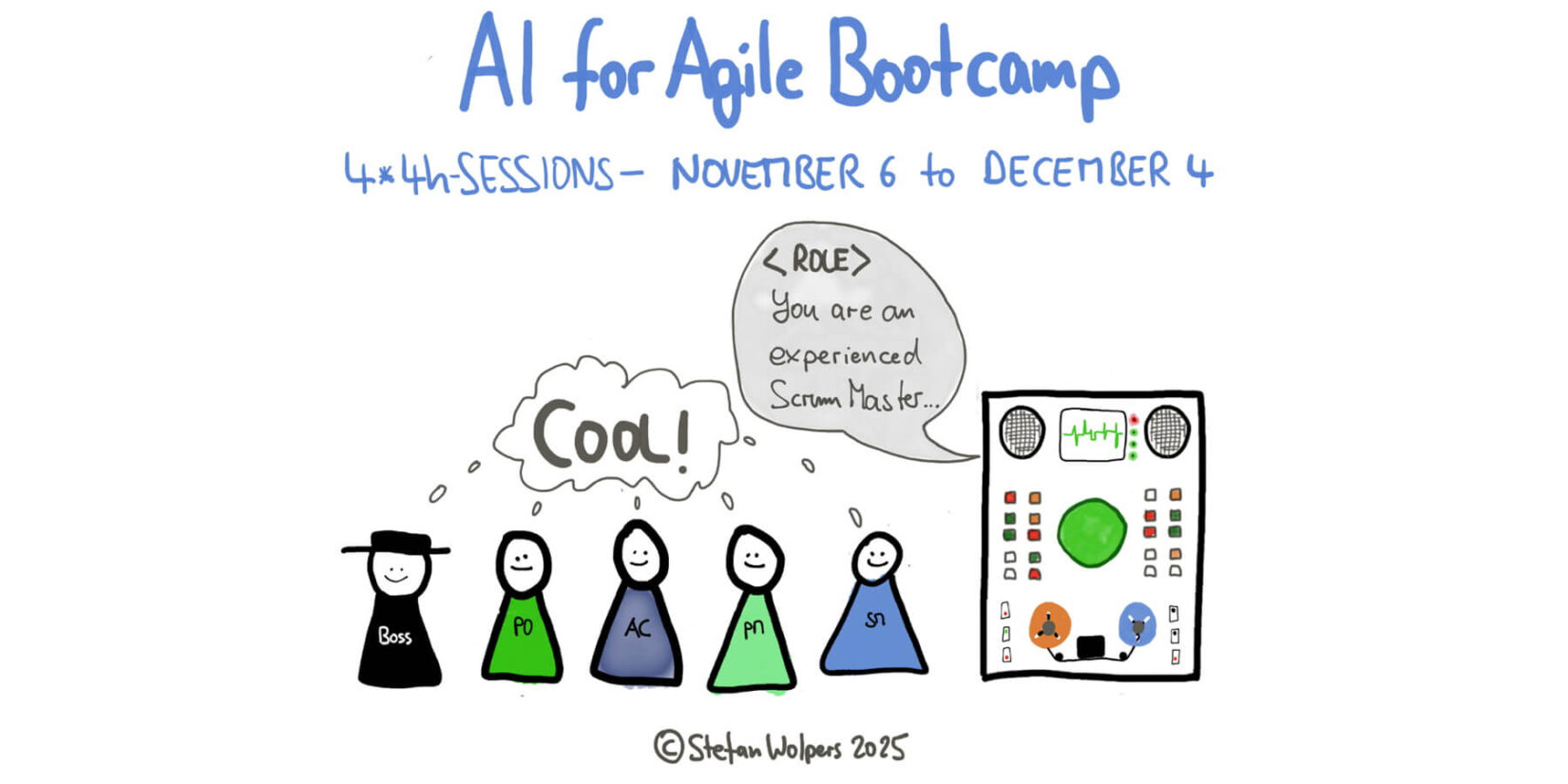
🖥 💯 🇬🇧 AI for Agile BootCamp #4 — November 6 – December 4, 2025
The job market’s shifting. Agile roles are under pressure. AI tools are everywhere. But here’s the truth: the Agile pros who learn how to work with AI, not against it, will be the ones leading the next wave of high-impact teams.
So, become the one who professional recruiters call first for “AI‑powered Agile.” Be among the first to master practical AI applications for Scrum Masters, Agile Coaches, Product Owners, Product Managers, and Project Managers.
Tickets also include lifetime access to the corresponding online course, once it is published. The class is in English. 🇬🇧
Learn more: 🖥 💯 🇬🇧 AI for Agile BootCamp #4 — November 6 – December 4, 2025.
Customer Voice: “The AI for Agilists course is an absolute essential for anyone working in the field! If you want to keep up with the organizations and teams you support, this course will equip you with not only knowledge of how to leverage AI for your work as an Agilist but will also give you endless tips & tricks to get better results and outcomes. I thoroughly enjoyed the course content, structure, and activities. Working in teams to apply what we learned was the best part, as it led to great insights for how I could apply what I was learning. After the first day on the course, I already walked away with many things I could apply at work. I highly recommend this course to anyone looking to better understand AI in general, but more specifically, how to leverage AI for Agility.” (Lauren Tuffs, Change Leader | Business Agility.)
➿ Agile & Leadership
: Why Traditional Change Fails
Simon Powers explains how traditional change fails not by collapsing outright, but by reinforcing outdated paradigms. Without shifting underlying mental models, improvements in leadership, delivery, structure, and culture remain superficial.
: Leading in complexity: How pilots, probes, and experiments help organisations learn their way forward
Andi Roberts argues that pilots, probes, and experiments help leaders navigate uncertainty by reducing risk, accelerating insight, and fostering a culture of learning, adaptability, and shared discovery in complex environments.
(via InfoQ): Empowering Teams: Decentralizing Architectural Decision-Making
Peter Hunter and Elena Stojmilova describe how decentralizing architectural decisions through advice processes, context maps, and ADRs enabled teams to make confident, transparent choices, improving delivery speed, alignment, and ownership across a modernized SaaS platform.
📯 Product Development AI Risks: When Your Leverage Becomes Your Liability
AI can silently erode your product operating model by replacing empirical validation with pattern-matching shortcuts and algorithmic decision-making. This article on product development AI risks, along with its corresponding video, identifies three consolidated risk categories and practical boundaries to maintain customer-centric judgment while leveraging AI effectively.
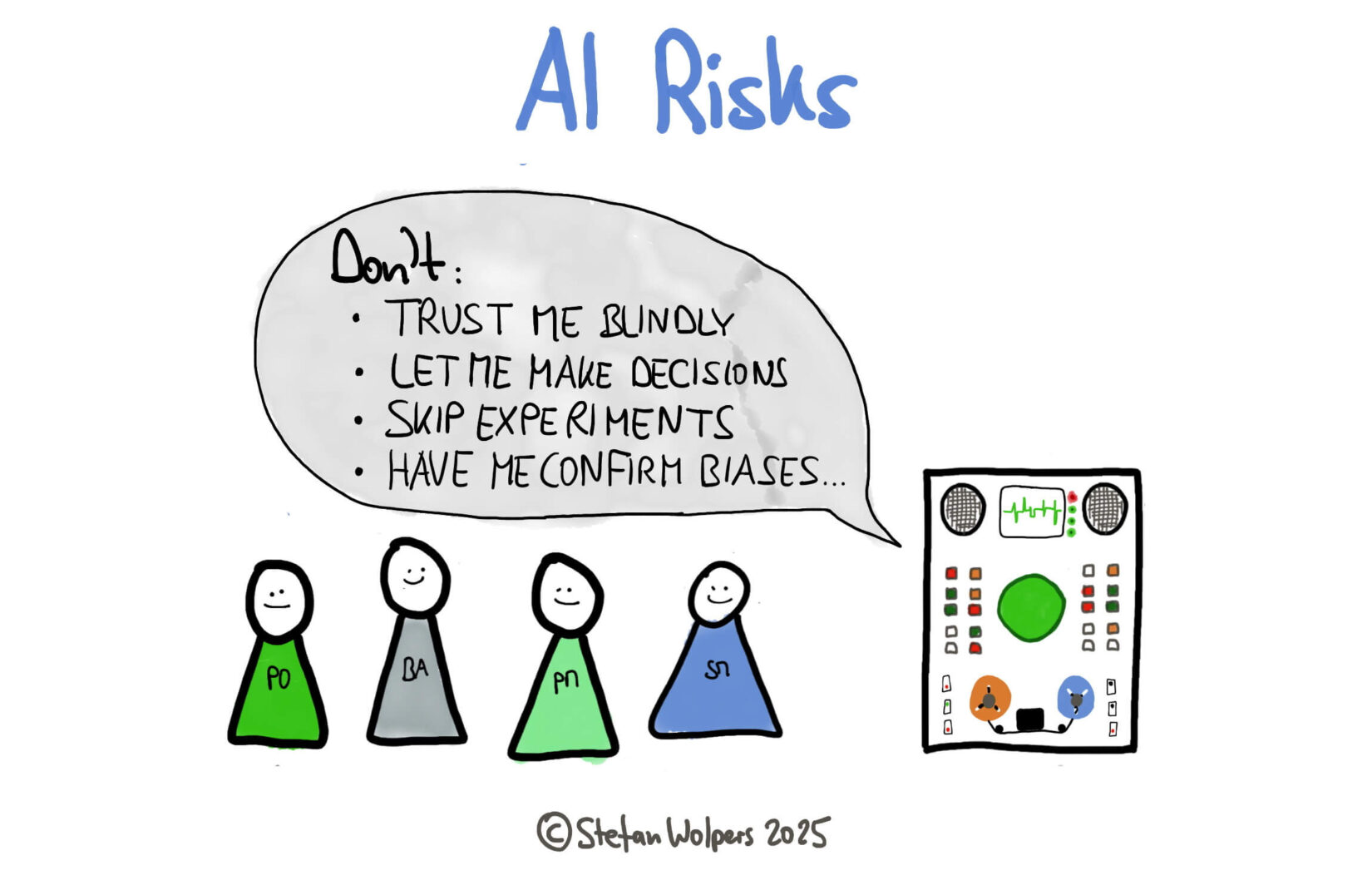
📺 Watch the video now: Product Development AI Risks: When Your Leverage Becomes Your Liability.
🛠 Concepts, Practices, Tools & Measuring
: The Premortem: Your Product’s Autopsy Before Launch
Christina Wodtke explains how premortems help product teams spot hidden risks before launch by imagining failure, exploring technical, market, ethical, and regulatory threats, and designing actionable safeguards to avoid them.
: 6 ways my OKRs are different
Allan Kelly challenges common OKR misconceptions by positioning them as enablers of autonomy, problem-solving, and strategic alignment. His take emphasizes bottom-up input, outcome ownership, and using OKRs to expose systemic friction rather than enforce control.
: Hero's Journey
Mike Fisher argues that every company should frame its evolution as a Hero’s Journey, turning challenges into purpose, employees into allies, and business success into a shared story of transformation and legacy.
📅 Scrum Training & Event Schedule
You can secure your seat for Scrum training classes, workshops, and meetups directly by following the corresponding link in the table below:
| Date | Class and Language | City | Price |
|---|---|---|---|
| 🖥 🇬🇧 November 27, 2026 | GUARANTEED: AI4Agile Online Course v4 (AI4Agile Certificate; English; Online Course) | Online Course | $149 incl. 19% VAT (If applicable.) |
| 🖥 🇬🇧 December 3-17, 2026 | A3 Delegation System Pilot Workshop 2 (English; Live Virtual Class) | Live Virtual Class | $149 incl. 19% VAT (If applicable.) |
| 🖥 🇩🇪 December 8-9, 2026 | Professional Scrum Product Owner Training (PSPO I; German; Live Virtual Class) | Live Virtual Class | €1189 incl. 19% VAT (If applicable.) |
| 🖥 🇬🇧 December 15-16, 2026 | Professional Scrum Master – Advanced Training (PSM II; English; Live Virtual Class) | Live Virtual Class | €1189 incl. 19% VAT (If applicable.) |
| 🖥 🇩🇪 February 16-17, 2027 | Professional Scrum Product Owner Training (PSPO I; German; Live Virtual Class) | Live Virtual Class | €1189 incl. 19% VAT (If applicable.) |
See all upcoming classes here.

You can book your seat for the training directly by following the corresponding links to the ticket shop. If the procurement process of your organization requires a different purchasing process, please contact Berlin Product People GmbH directly.
📺 Join 6,000-plus Agile Peers on Youtube
Now available on the Age-of-Product YouTube channel to improve learning, for example, about Fujifilm vs Kodak:
- Hands-on Agile #68: How to Analyze Unstructured Team Interview Data with AI.
- Fabrice Bernhard: The Lean Tech Manifesto.
- Maarten Dalmijn: The 5 Obstacles to Empowered Teams.
- Roman Pichler: The Top Reasons Why a Product Strategy Fails.
- Johanna Rothman: How to Instill Agility, not Agile Practices.
- Hands-on Agile EXTRA: How Elon Musk Would Run YOUR Business with Joe Justice.
✋ Do Not Miss Out: Learn more about Fujifilm vs Kodak — Join the 20,000-plus Strong ‘Hands-on Agile’ Slack Community
I invite you to join the “Hands-on Agile” Slack Community and enjoy the benefits of a fast-growing, vibrant community of agile practitioners from around the world.

If you would like to join, all you have to do now is provide your credentials via this Google form, and I will sign you up. By the way, it’s free.
Help your team to learn about the AI Boom-or-Bust Situation by pointing them to the free Scrum Anti-Patterns Guide: