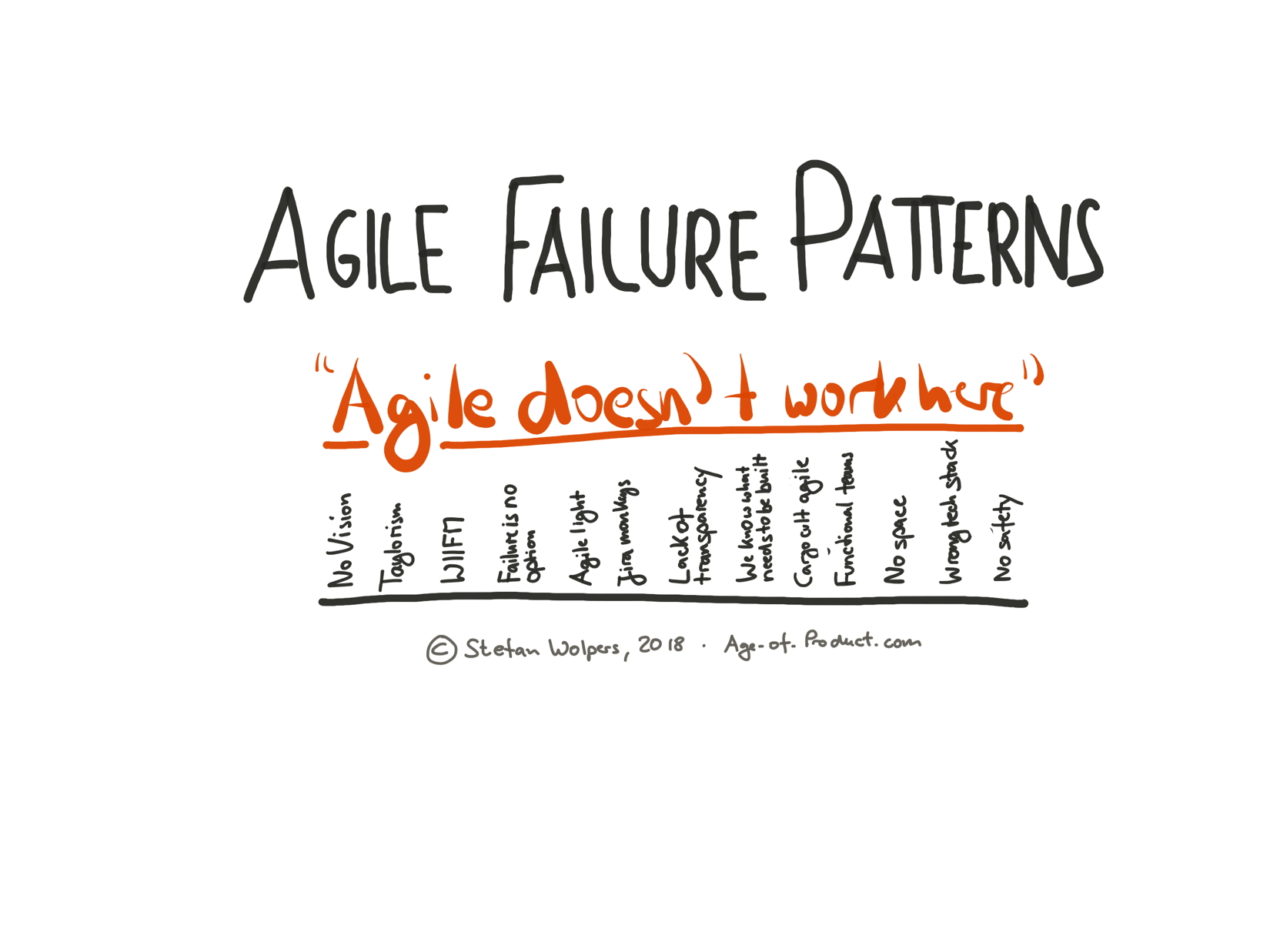
TL;DR: Agile Failure Patterns — Why Agile is Simple and Complex at the Same Time
Agile failure seems to be increasingly more prominent nowadays despite all the efforts undertaken by numerous organization embarking on their journeys to become agile.
The funny thing is: Who would disagree that the four core principles of the Agile Manifesto —
Individuals and interactions over processes and tools
Working software over comprehensive documentation
Customer collaboration over contract negotiation
Responding to change over following a plan
— are derived from applying common sense to a challenging problem? Moreover, the application of those principles might be suited to fix numerous organizational dysfunctions and reduce an error-prone and complex social setting to maybe just a complicated one?
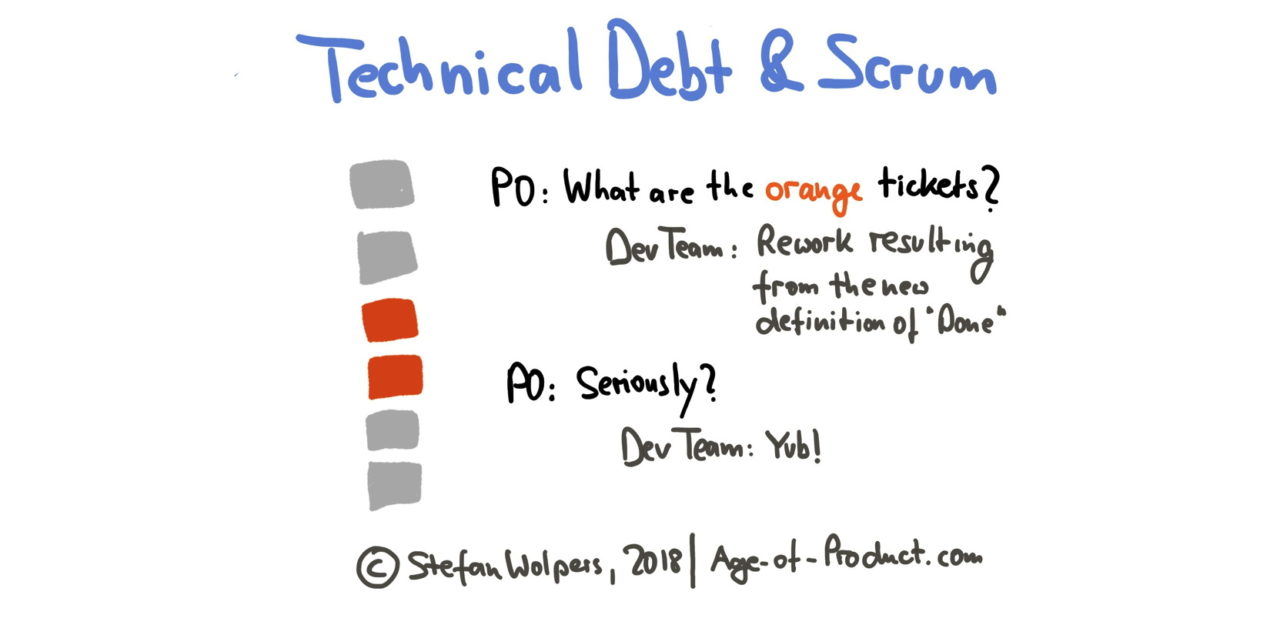
If technical debt is the plague of our industry, why isn’t the Scrum Guide addressing the question of who is responsibly dealing with it? To make things worse, if the Product Owner’s responsibility is to maximize the value customers derive from the Development Team’s work, and the Development Team’s responsibility is to deliver a product Increment (at least) at the end of the sprint adhering to the definition of “Done,” aren’t those two responsibilities possibly causing a conflict of interest?
This post analyzes the situation by going back to first principles, as laid out in the Scrum Guide to answer a simple question: Who is responsible for keeping technical debt at bay in a Scrum Team?
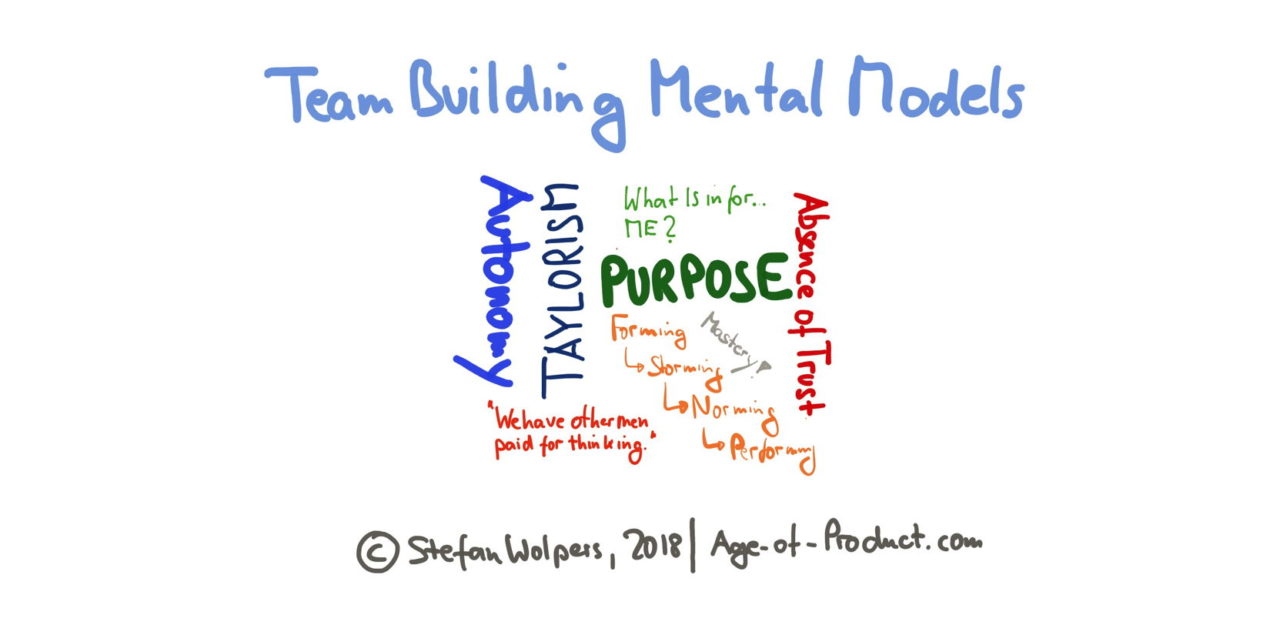
Team building has always been a challenge, not just since the advent of agile frameworks and the resulting emphasis on self-organization, engagement, and achieving a valuable objective. This post covers four team building mental models — or concepts — that have proven useful in understanding the context of creating agile teams: from Taylorism to Tuckman to Lencioni to Dan Pink.
by Stefan Wolpers|Agile and ScrumAgile TransitionWebinars
TL;DR: Webinar Sprint Review Anti-Patterns
The ninth Hands-on Agile webinar Sprint Review anti-patterns addresses twelve anti-patterns of the sprint review—from death by PowerPoint to side-gigs to none of the stakeholders cares to attend.
by Stefan Wolpers|Agile and ScrumAgile TransitionNews
Save the Date: Agile Camp Berlin 2019
The Agile Camp Berlin 2019 will happen from April 26 to April 27, 2019 and the Agile Camp Berlin 2019 venue will be the Evangelische Schule Berlin Zentrum right in the middle of Berlin.
by Stefan Wolpers|Agile and ScrumAgile TransitionWebinars
TL;DR: Webinar Scrum Master Anti-Patterns
The eighth Hands-on Agile webinar Scrum Master Anti-Patterns addresses twelve anti-patterns of your Scrum Master—from ill-suited personal traits and the pursuit of individual agendas to frustration with the team itself.