There has never been a shortage of articles claiming that Agile is either dead, failing, disrespectful, or useless, with authors ranging from respected signatories of the Agile Manifesto to click baiters to people who never experienced the real thing in the first thus lacking a standard for comparison. (See the links below.)
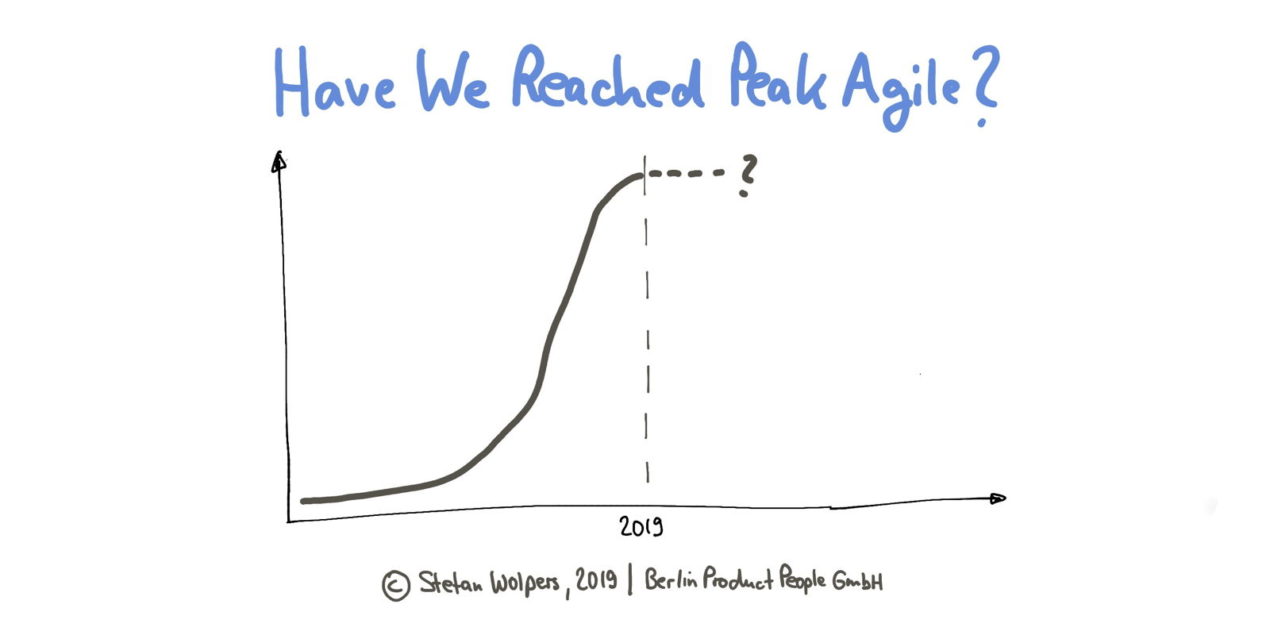
The question from my perspective, though, is: Have we finally have reached peak agile?
TL; DR: Faking Agile Metrics — An Eye-Opening Exercise
Imagine you’re a Scrum Master and the line manager of your team believes that the best sign for a successful agile transformation is a steady increase in the Scrum Team’s velocity. Moreover, if the team fails to deliver on that metric something is wrong with the Scrum Team. Alternatively, something is wrong with you as you are the Scrum Master and hence responsible for the team’s performance. (Apparently, not faking agile metrics, or being transparent in this case, does not seem to be valued here.)
Learn more about how to coach these kinds of line managers and help them overcome their preference for the industrial past with a simple exercise on how to cook the agile books.
‘Autonomy without accountability equals anarchy’ summarizes an essential design element of any agile organization. Without these checks and balances in place any aspiration to transform an organization is likely to fail. (Or at best level out at a mechanistic level.) Learn more about how Scrum deals with accountability.
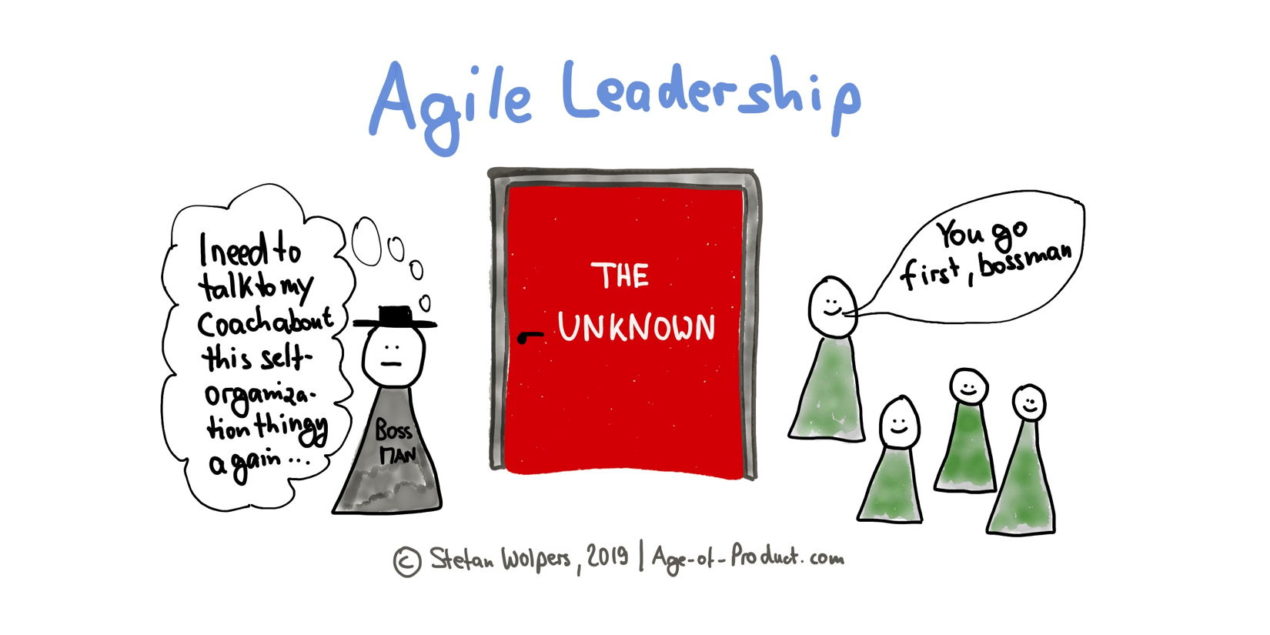
I recently started aggregating my notes, links, and references related to agile leadership to understand better what it — in the context of an agile transition — may look like. In the end, becoming agile is not the goal of a transition; surviving as an organization is. Hence I appreciate whatever appeals to business leaders and their motivation to delve into agile ideas, frameworks, or practices.
Let’s examine some favorite ideas and concepts around agile leadership. (Please bear with me that the following text is rather bullet-point heavy to concentrate its information.)
TL;DR: Scrum Master Problem Dealing — The Survey Results
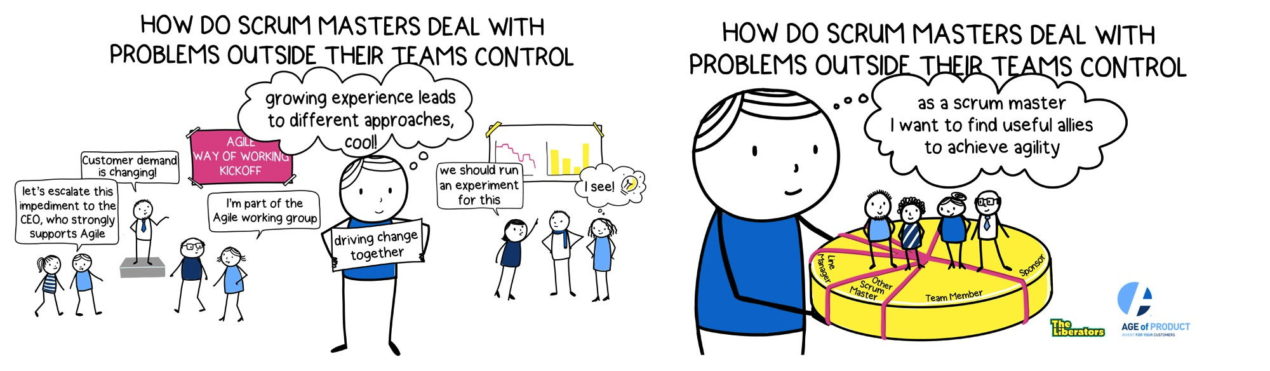
Scrum Master Problem Dealing: We all know it; changing the way we work is extremely difficult. It requires us to find novel solutions to wicked challenges, to deal with cultural baggage (‘the way we do things here’) and to bring along the people needed to make a change successful. And yet, this difficult challenge is a core responsibility of Scrum Masters: How can your organization work effectively with Scrum if it is not considering the entire system?
But how do Scrum Masters and Agile Coaches go about this? What strategies do they use to change the system? Who are their most important allies? And what else can we learn from them?
We teamed up with The Liberators to identify what works in the field. We gathered both quantitative as well as qualitative data from a survey completed by over 200 participants.
The tenth Hands-on Agile webinar Sprint Retrospective anti-patterns covers twelve anti-patterns of the sprint retrospective—from #NoRetro to the dispensable buffer to UNSMART action items to a missing product owner.