TL; DR: Adapt How You Lead for Agile Success w/ Johanna Rothman — ACB21
Too many people say, “With agile, we don’t need no stinkin’ managers.” However, because managers create and refine the culture, modern managers create and refine the agile culture. Without modern management, any agile initiative will die. It’s time to invite managers to change their behaviors and create a real agile culture. Learn from Johann Rothman how to adapt your leadership style for agile success as a manager in an agile organization in this 54-minute long video from the Agile Camp Berlin 2021.
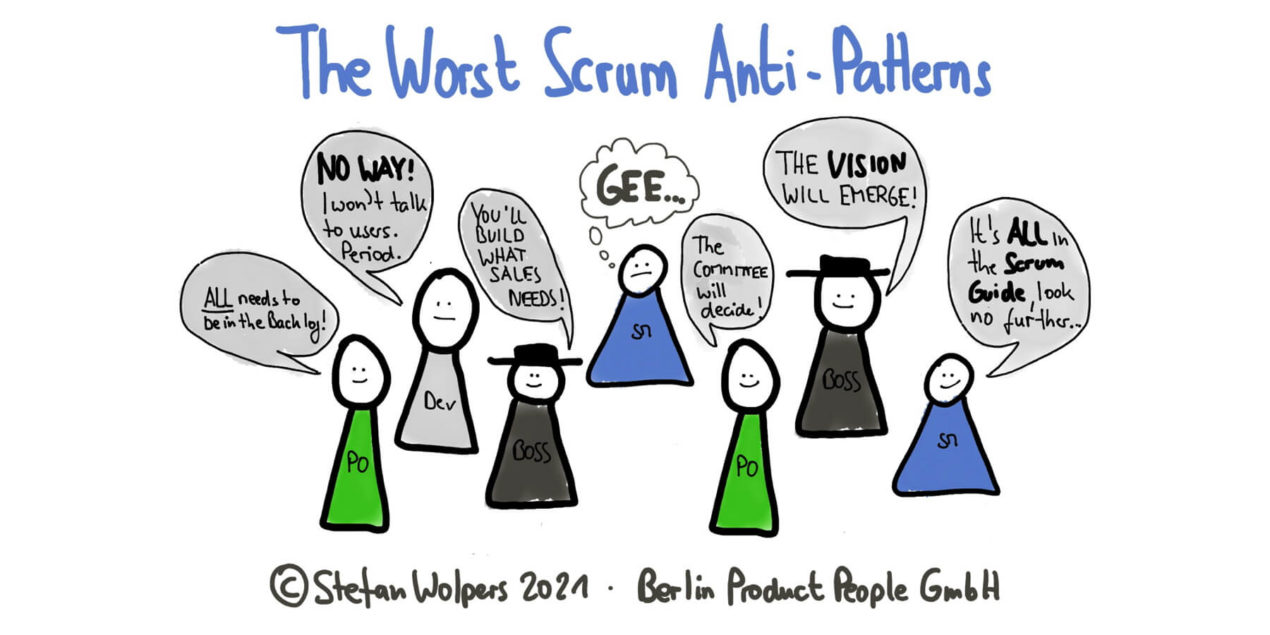
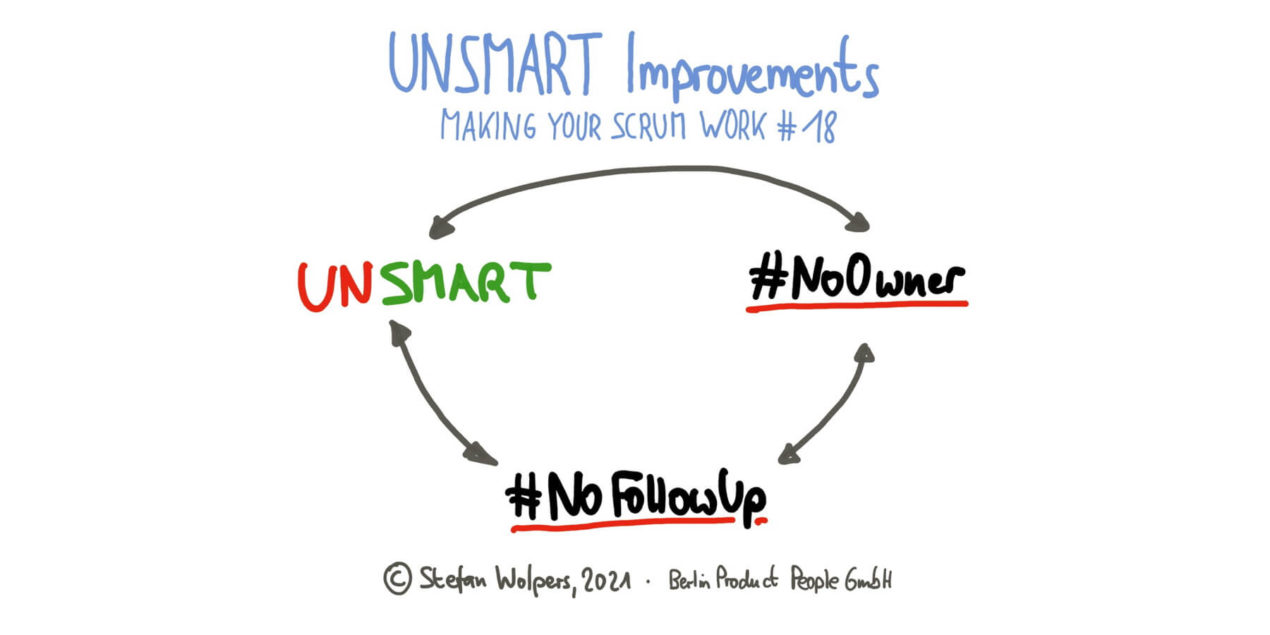
There are plenty of failure possibilities with Scrum. Given that Scrum is a framework with a reasonable yet short “manual,” this effect should not surprise anyone. One area that typically flies under the radar is improvements. While the Scrum Guide encourages addressing the most impactful ones as soon as possible, it is up to the Scrum team to figure out how to improve. One manifestation of this core team task we often encounter is picking unsmart improvements, though.
Join me and delve into the consequences of picking unsmart improvements as a Scrum Team in less than 90 seconds.
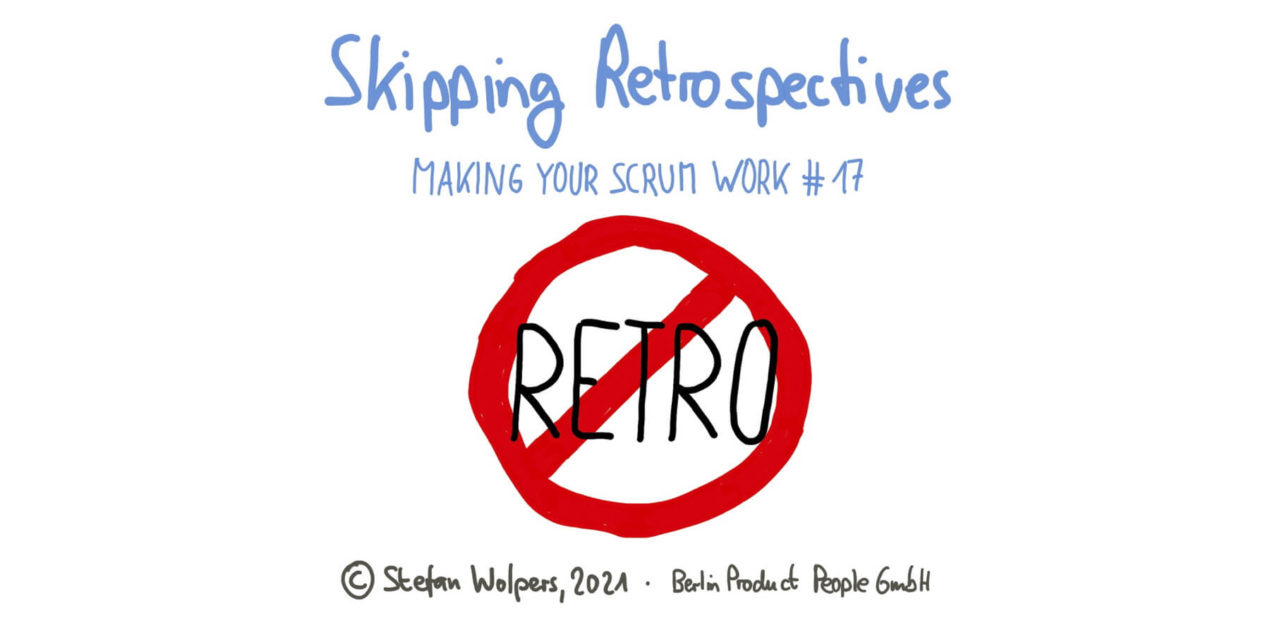
There are plenty of failure possibilities with Scrum. Given that Scrum is a framework with a reasonable yet short “manual,” this effect should not surprise anyone. One area where Scrum’s nature of being intentionally incomplete causes issues regularly is whether Scrum teams shall stick to the event schedule even if the team’s life is uneventful? For example, is skipping Retrospectives okay?
Join me and delve into the consequences of skipping Retrospectives in less than 90 seconds.
Can a Scrum team simply decide to abandon Scrum? After all, the Scrum team is self-managing, according to the Scrum manual, also known as the Scrum Guide. So, let’s explore this question at the very heart of team autonomy.
TL; DR: Linking Strategy to Everyday Work w/ John Cutler — ACB21
In this highly engaging speaker session from the Agile Camp Berlin 2021, John Cutler delves into the advantages of linking strategy to everyday work: Motivation, inspiration, seeing the big picture despite working on a small iteration.
Linking Strategy to Everyday Work (With value creation models, and time-based goals like OKRs)
When teams can link their day-to-day work to a meaningful/concrete representation of “strategy”, they feel more inspired, and confidently work small while thinking big. Too often teams feel like they are iterating to nowhere, or locked into huge, prescriptive batches. Time-based goals like OKRs (alone) don’t help. In this talk we will discuss the difference between point-in-time goals and persistent value-creation models. My goal: inspire teams to adopt some form of persistent value-creation model and link their daily work to that framework.
John Cutler is keenly focused on user experience and evidence-driven product development. He mixes and matches various methodologies to help teams deliver lasting outcomes for their customers.
“Team tetris and the feature factory will only take you so far. Cross-functional teams desire so much more, and my passion is helping them get there. It’s a win/win for the front-line teams, the business, and the customer and user.”
John currently works as the Head of Product Research & Education at Amplitude. As a former UX researcher at AppFolio, a product manager at Zendesk, Pendo.io, AdKeeper and RichFX, a startup founder, and a product team coach, John has a perspective that spans individual roles, domains, and products.
His viral enthusiasm has been heard through speaking/teaching engagements at QCon NYC, Agile-Lean Ireland, UXThailand, UXLondon, Front, Oredev, Mind The Product, Agile 2015, and various ProductCamps (Vancouver, Los Angeles, Raleigh NC) and MeetUps (Santa Barbara, Los Angeles, New York). John’s talk on Feature Factories was voted one of the Top 10 Product Talks of 2017.
✋ Do Not Miss Out and Learn about Linking Strategy to Everyday Work : Join the 10,000-plus Strong ‘Hands-on Agile’ Slack Team
I invite you to join the “Hands-on Agile” Slack team and enjoy the benefits of a fast-growing, vibrant community of agile practitioners from around the world.
You can book your seat for the training directly by following the corresponding links to the ticket shop. If the procurement process of your organization requires a different purchasing process, please contact Berlin Product People GmbH directly.
If you like to learn more about how to avoid skipping Retrospectives, consider attending Stefan’s Professional Scrum Master classes.
TL; DR: Ignoring Self-Management — Undermining Scrum from the Start
There are plenty of failure possibilities with Scrum. Given that Scrum is a framework with a reasonable yet short “manual,” this effect should not surprise anyone. One of Scrum’s first principles is self-management. It is based on the idea that the people closest to a problem are best suited to find a solution. Therefore, the task of the management is not to tell people what to do when and how. Instead, its job is to provide the guardrails, the constraints within which a Scrum team identifies the best possible solution. Join me and explore the consequences of management ignoring self-management and what you can do about it.