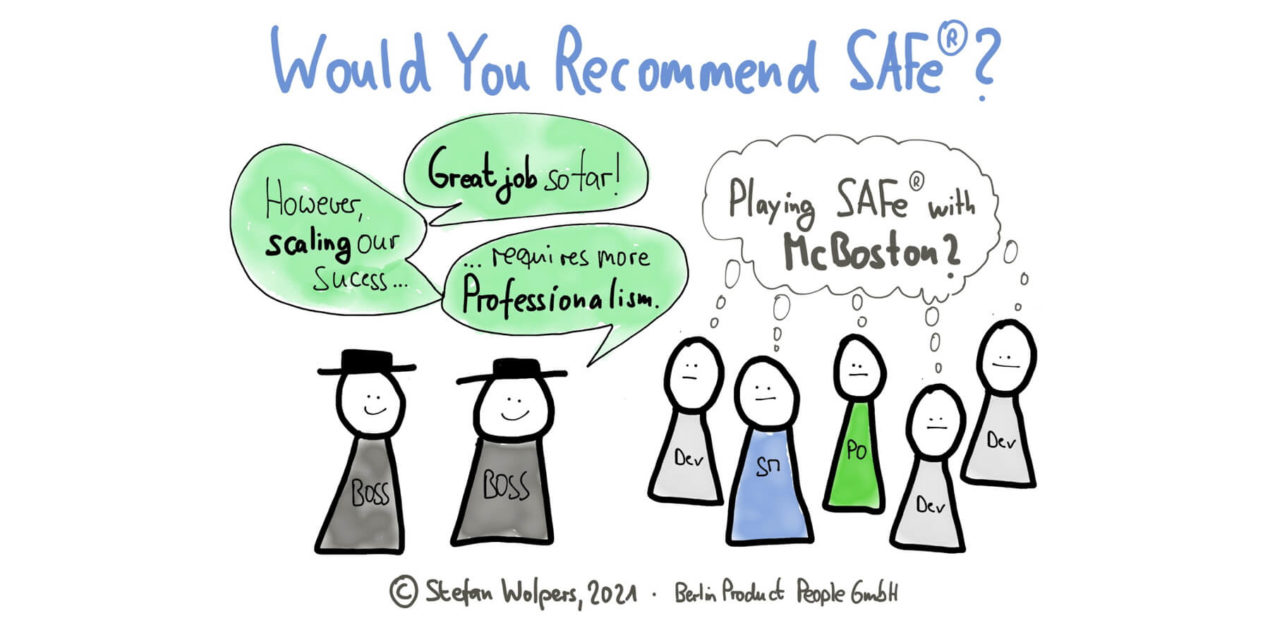
SAFe® has always been a controversial topic within the agile community. Therefore, back in 2017, I ran a survey on the Net Promoter Score® of the Scaled Agile Framework SAFe®. The result back then was -52. Four and a half years later, I believe it is time to rerun the poll: SAFe® has been through several iterations, and many more agile practitioners have experienced working with it. Moreover, the question still is: Would you recommend SAFe ®?
If you can spare five minutes of your time, please join the community effort and participate in the 2022 SAFe® survey.
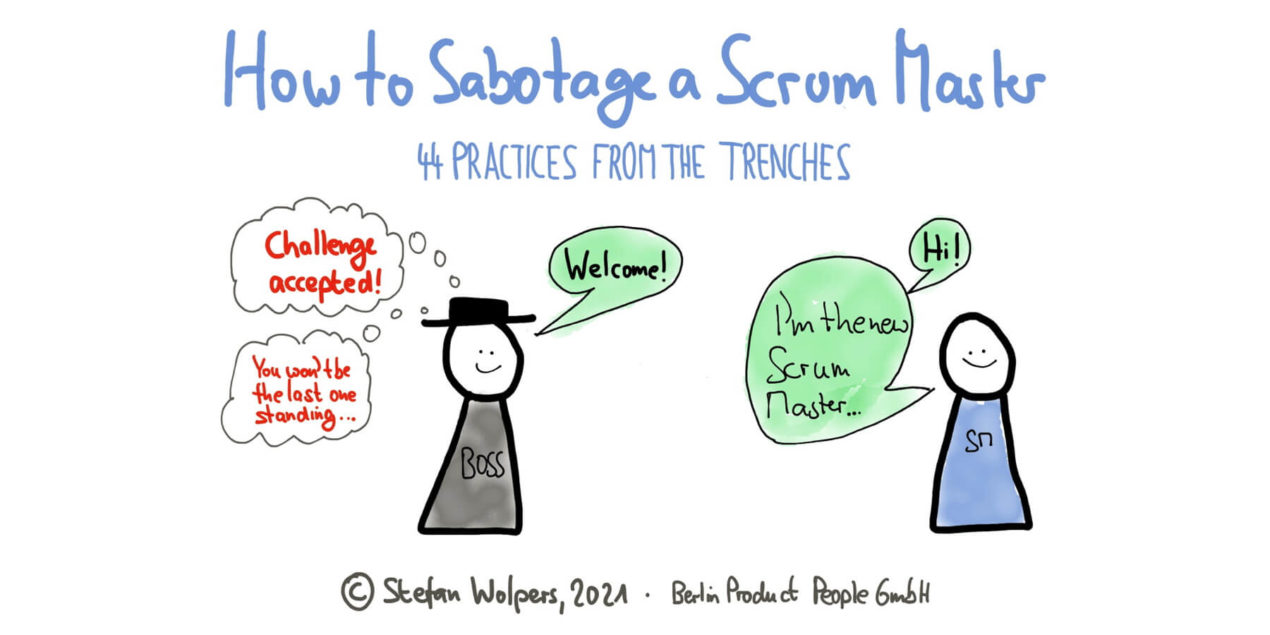
TL; DR: How to Sabotage A Scrum Master — 44 Anti-Patterns from the Trenches to Avoid
One of my favorite exercises from my Professional Scrum Master classes is how to best sabotage a Scrum Master as a member of the middle management. The exercise rules are simple: You’re not allowed to use any form of illegal activity. So, outsourcing the task to a bunch of outlaws is out of the question. Instead, you are only allowed to use practices that are culturally acceptable within your organization.
Read on and learn more on how to best sabotage a Scrum Master from the exercise results of more than ten PSM I and PSM II classes. (I slightly edited the suggestions for better readability.)
TL; DR: Designing Powerful Questions with Daniel Stillman
Powerful Conversations are the environment that drives change. Learn from Daniel Stillman how designing powerful questions helps you coach, create, connect, and lead from the 35th Hands-on Agile meetup of October 5, 2021.
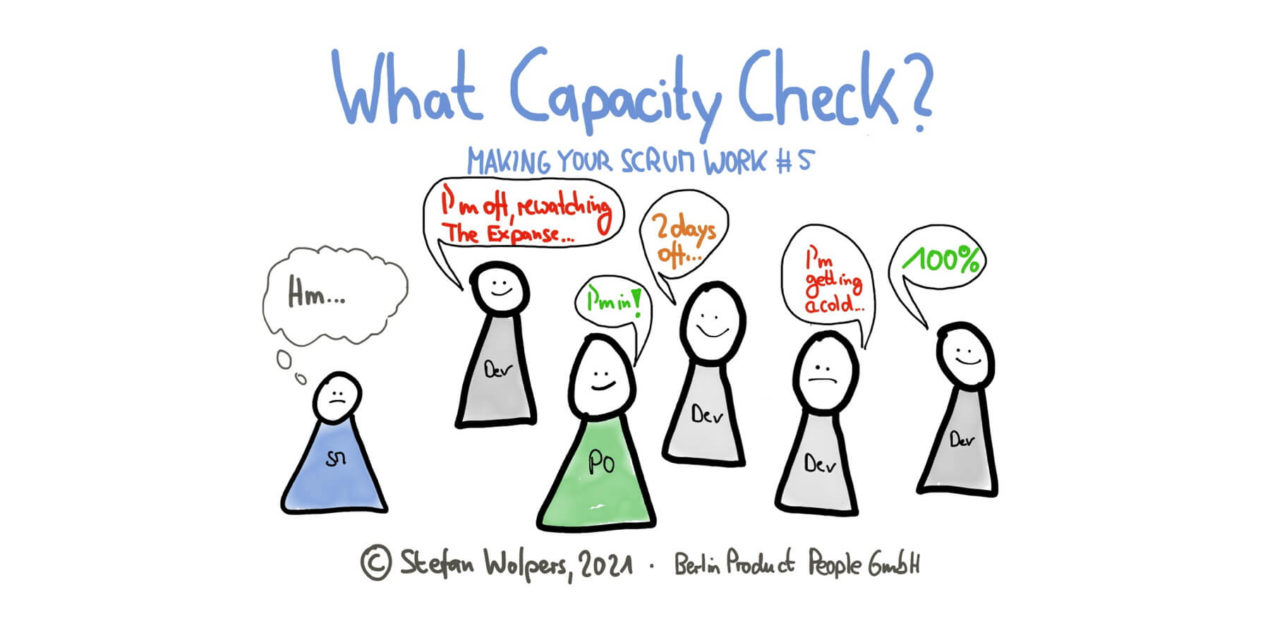
TL; DR: Ignoring the Capacity Check during Sprint Planning
There are plenty of failure possibilities with Scrum. Since Scrum is an intentionally incomplete framework with a reasonable yet short “manual,” this effect should not surprise anyone. For example, the Developers are ignoring a capacity check during the Sprint Planning, and as a result, the Scrum team creates a Sprint Goal that most likely cannot be accomplished.
Join me and delve into the effects of this trust-shattering practice in less than 80 seconds.
If you value agile practices, it is crucial to know if a job offering or a prospective business partner that claims to be “agile” really keeps its promises. Unfortunately, as agility usually cannot be observed directly, and certainly not from the outside of an organization, there is no way of knowing in advance if you will enter an agile environment that serves your own working needs or if a lot of frustration lies ahead of you. Therefore, we ran an extensive survey throughout 2020 and 2021 with more than 1,000 participants from all walks of agility: the Agile Metrics Survey 2021.
With the Agile Metrics Survey 2021, we present the first results and conclude with some thoughts about possible application scenarios of our instrument as well as possible next steps in our research.
TL; DR: Maximizing Utilization as a Relic from the Industrial Management Past
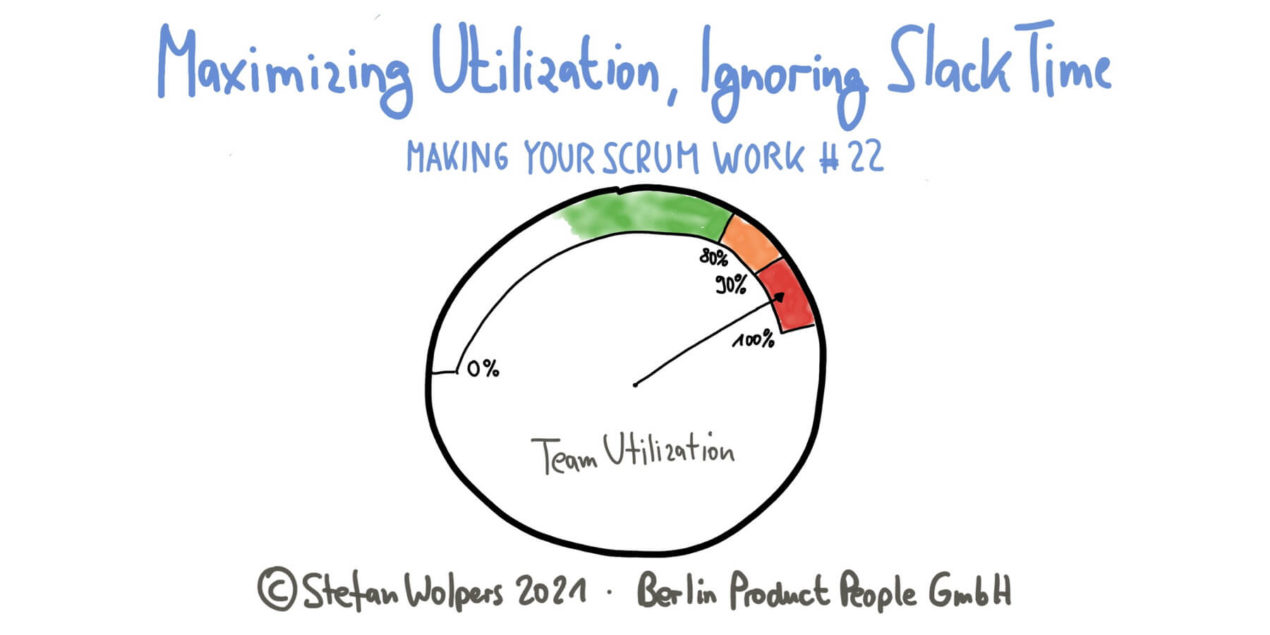
There are plenty of failure possibilities with Scrum. Since Scrum is an intentionally incomplete framework with a reasonable yet short “manual,” this effect should not surprise anyone. For example, what if the focus of the organization is on the maximizing utilization of the “workers” of the Scrum teams? What if the organization is still stuck deeply in industrial paradigm thinking, ignoring the benefits of slack time for the creation of value in the field of knowledge work?
Join me and delve into the effects of this outdated management principle in 60 seconds.