20 Questions New Scrum Masters Should Ask Their Teams to Get up to Speed

TL; DR: 20 Questions a New Scrum Master Should Ask

Twenty questions for you — the new Scrum Master — that fit into a 60 minutes time-box. Start learning how your new Scrum Team is currently delivering the product and get up to speed: from Product Backlog forensics to metrics to team challenges and technical debt. Download a printable template for your convenience.

Do you need to talk to your Product Owner? Here you go: 20 Questions from New Scrum Master to Product Owner.

20 Questions New Scrum Masters Should Ask Their Teams to Get up to Speed — Age-of-Product.com
Continue reading 20 Questions New Scrum Masters Should Ask Their Teams to Get up to Speed

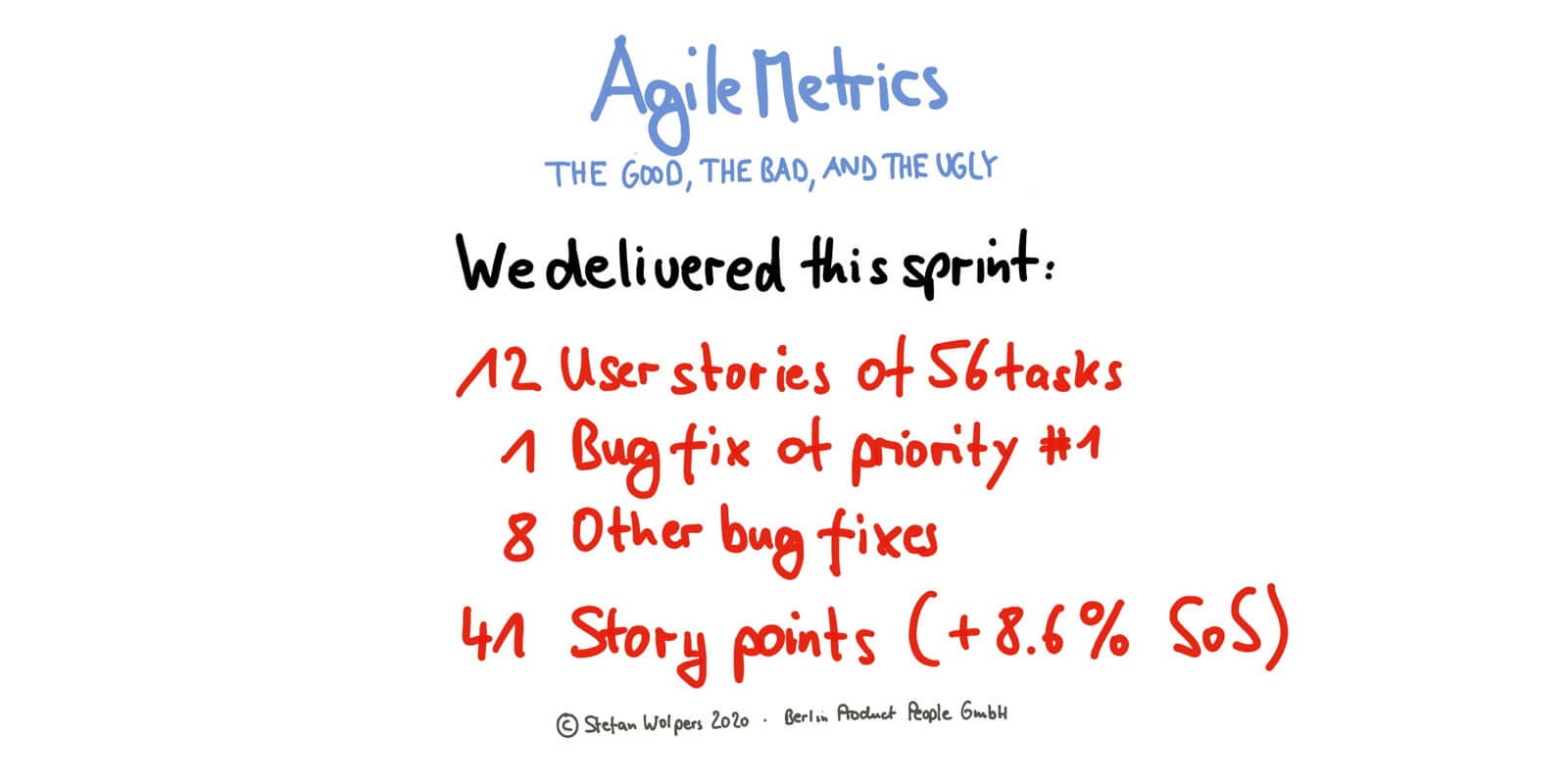
Agile Metrics — The Good, the Bad, and the Ugly

TL; DR: Agile Metrics

Suitable agile metrics reflect either a team’s progress in becoming agile or your organization’s progress in becoming a learning organization.

At the team level, qualitative agile metrics often work better than quantitative metrics. At the organizational level, this is reversed: quantitative agile metrics provide better insights than qualitative ones.

Agile Metrics — Age-of-Product.com
Continue reading Agile Metrics — The Good, the Bad, and the Ugly

18 Signs of a Systemic Toxic Team Culture

TL; DR: 18 Signs of a Systemic Toxic Team Culture

What looked like a good idea back in the 1990ies—outsourcing software development as a non-essential business area—has meanwhile massively backfired for a lot of legacy organizations. While they try to become more appealing to product and software developers, they still have difficulties understanding what it takes to build an attractive product/engineering culture. Learn more about typical anti-patterns and signs that an organization is causing a toxic team culture, impeding its efforts to become agile.

18 Signs of a Systemic Toxic Team Culture — Age-of-Product.com
Continue reading 18 Signs of a Systemic Toxic Team Culture

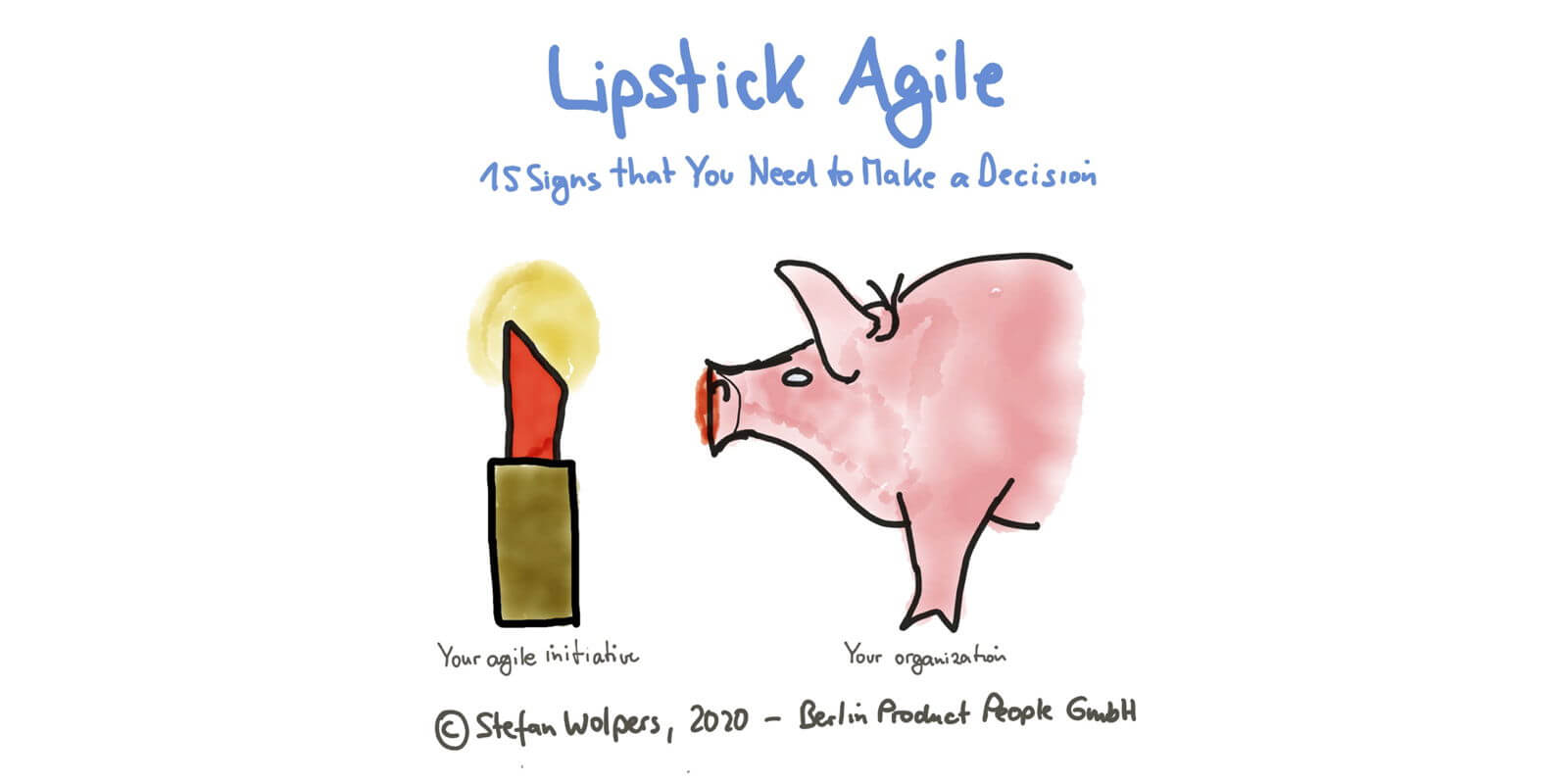
Lipstick Agile — 15 Signs You Probably Need a New Job or to Roll-up Your Proverbial Sleeves

TL; DR: Lipstick Agile — Happiness in the Trenches?

Have you noticed how many people in the agile field are unhappy with their work situation? A situation where an organization already struggles doing agile, not to mention ‘becoming agile?’ This is what I call lipstick Agile.

Scrum Masters and agile coaches are close to either burnout or indifference. Product Owners who “own” the product by name only, and developers questioning why “Agile” is imposed upon them and often turns out to be just another form of micromanagement.

Lipstick Agile — 15 Signs You Probably Need a New Job or to Roll-up Your Proverbial Sleeves
Continue reading Lipstick Agile — 15 Signs You Probably Need a New Job or to Roll-up Your Proverbial Sleeves

Agile Metrics Survey 2020

TL; DR: The Agile Metrics Survey 2020

Let’s stop guessing and start crowdsourcing data and information on this critical topic: Who is using what metrics under which context to what success? Participate in the agile metrics survey now.

Update 2020-12-14: We have joined forces with empiriks.de, a German consultancy specializing in statistical analysis, and we plan to take the study to the next level. The Agile Metrics Survey already complies with academic standards. However, what we need now is more participants to improve the sample size.

So far, we have more than 750 contributors; let’s strive for 1,000 contributions by the end of January 2021 and aim to publish the report by the end of March 2021!

👉 🔬 Start your contribution now!

Agile Metrics Survey 2020 — Age-of-Product.com
Continue reading Agile Metrics Survey 2020

Scrum’s Nature: It Is a Tool; It Is Not About Love or Hate

TL; DR: Scrum’s Nature: It Is a Tool; It Is Not About Love or Hate

Regularly, we find articles from developers detailing why ‘Agile’ in general and Scrum’s nature, in particular, deserve our collective disdain.

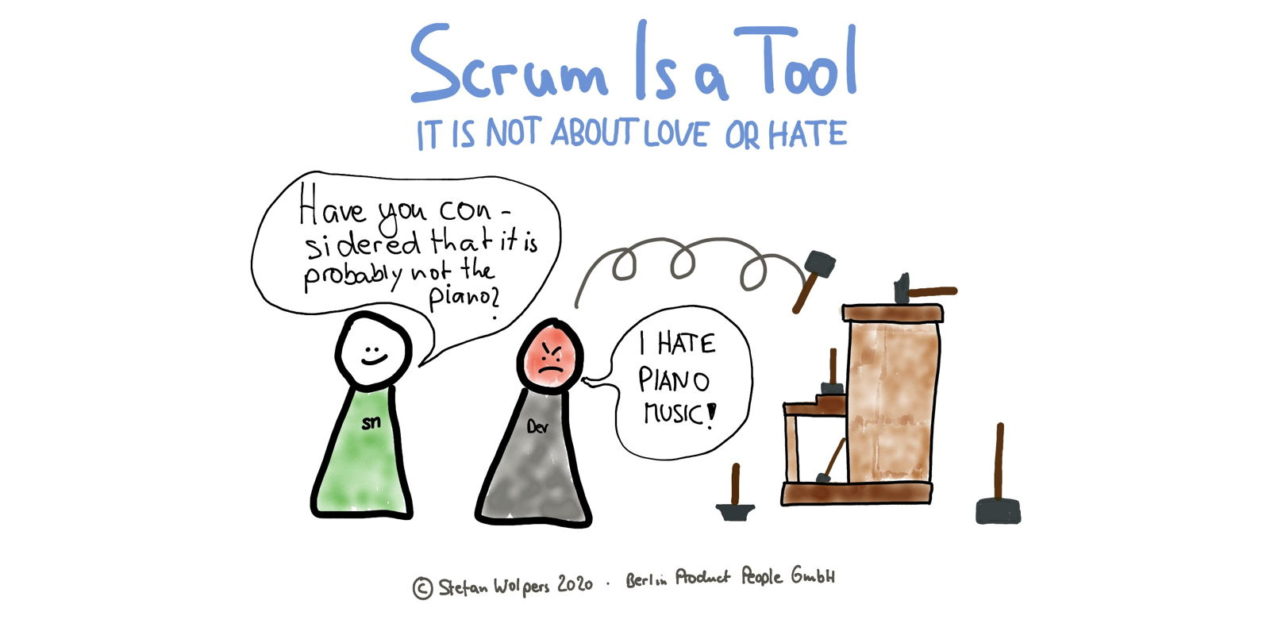
What has always struck me in this discussion is its emotionality. Scrum is a tool, useful to accomplish one primary task: delivering value to customers of emergent products in complex environments while mitigating an organization’s exposure to risk at the same time. So, if Scrum is not working in an organization, maybe it is because Scrum is applied to the wrong cause in the first place. Or, that its application has been mechanical, driven by folks who don’t know what they are doing. (Seriously, how hard can Scrum be if the manual comprises of 18 pages, right?)

The question then is: Why would I “hate” a tool unsuited for the intended purpose or applied incompetently? Would I hate a hammer for not being capable of accurately driving a screw into a wooden beam? Probably not, as the hammer wasn’t designed for that purpose, and neither sheer will-power nor stamping with your feet will change the fact.

Scrum’s Nature: It Is a Tool; It Is Not About Love or Hate — Age-of-Product.com
Continue reading Scrum’s Nature: It Is a Tool; It Is Not About Love or Hate