We are used to saying the Scrum is a perfect probe for organizations, as it will reliably discover all dysfunctionalities. Since the pandemic has forced many of us to work remotely, this unique capability has been kicked into overdrive regarding remote agile transitions.
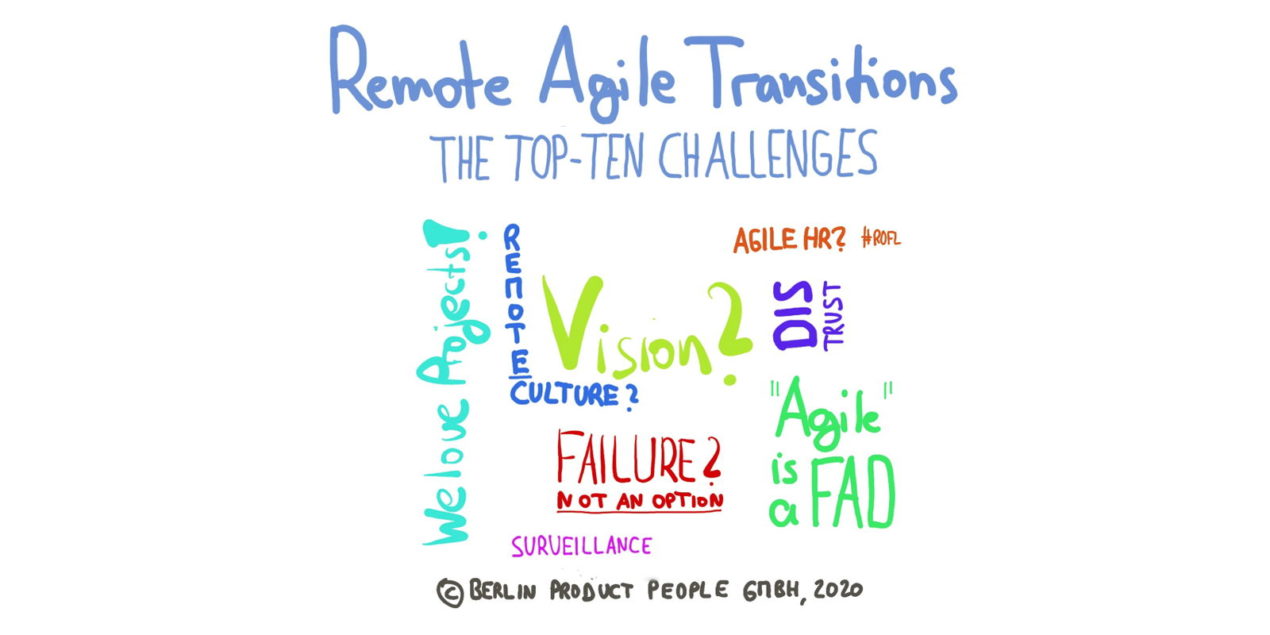
Here are my top-10 challenges of organizational change that remote Agile has made more urgent to address than ever before.
TL; DR: Results of a Virtual Strategy Session for Scrum Masters Regarding Remote Work
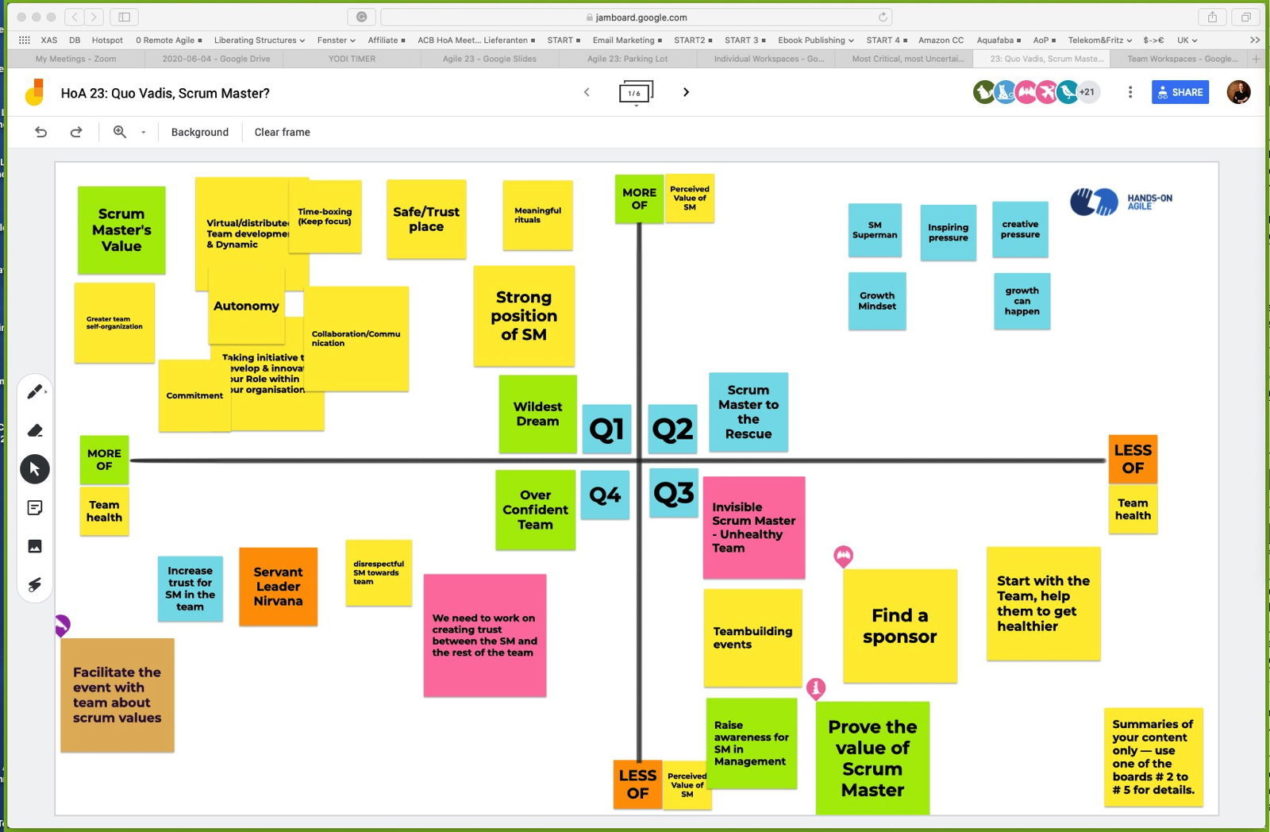
Last week, 30-plus participants in the 23rd Hands-on Agile meetup had a virtual strategy session where they explored Liberating Structures’ Critical Uncertainties microstructure. They identified robust and hedging strategies for Scrum Masters and agile coaches regarding the challenges of remote work and distributed agile teams.
Read on to learn more about wildest dreams, overconfident teams, and Scrum Masters to the rescue.
TL; DR: Exploring Virtual Open Space Technolgy — A Live Virtual Meetup on June 25, 2020
How do we run a virtual open space event or BarCamp with a large number of participants? Principally, we could use break-out rooms for organizing the sessions. The question is, though, how do we ensure that the law-of-two-feet still applies? By making everyone a co-host? Probably not the best idea in some situations.
Let us hence check out an MIT application that claims to provide precisely the solution we are looking for — Unhangout.
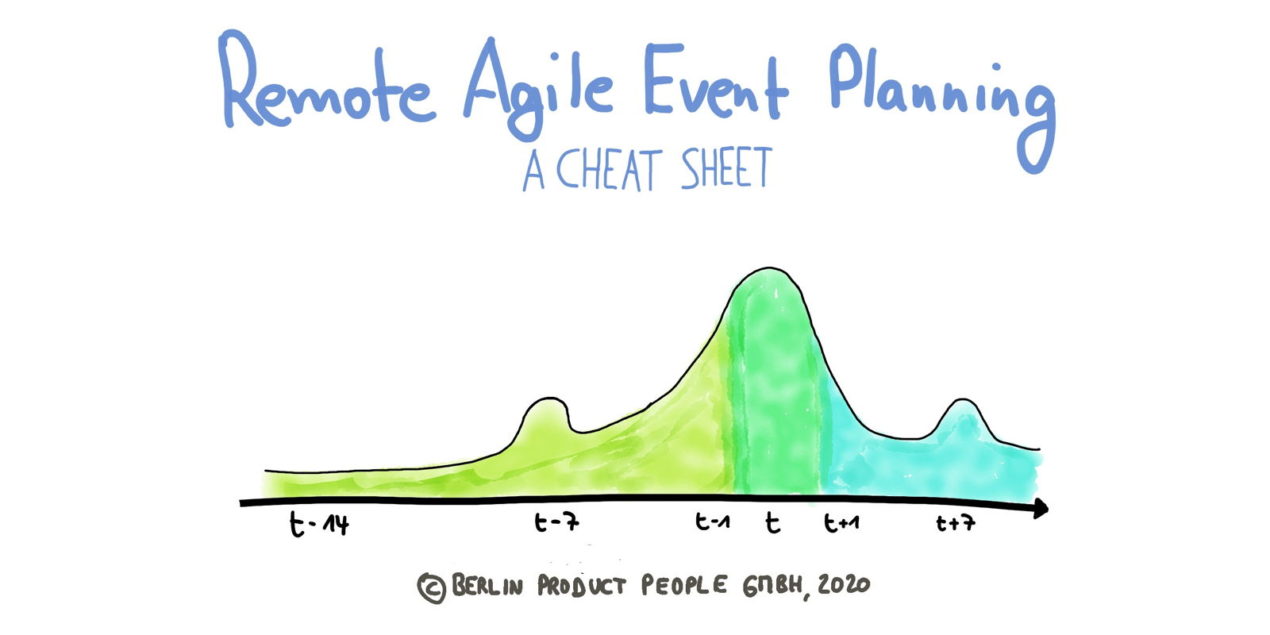
TL; DR: Remote Agile Event Planning — a Cheat Sheet
Imagine, you are supposed to facilitate a remote user-story mapping with 26 people from all over our organization. Or, think about a remote meta-level Retrospective of a recent release of your organization’s cash cow that went sideways. You may ask yourself: How am I planning for this given that participants likely have different levels of experience, and everyone needs to be included fully in the discussion? My solution to this challenge is going the extra mile regarding the remote agile event planning. The concept I describe below is tested, proven, and modeled after my virtual Professional Scrum training classes.
TL; DR: The Agile Movers & Shakers Interview w/ Christiaan Verwijs & Barry Overeem
Today we welcome Christiaan Verwijs & Barry Overeem. Christiaan and Barry are both Professional Scrum Trainers (PST) with Scrum.org, dedicated early adopters of Liberating Structures, and co-authors of the upcoming Zombie Scrum Survival Guide.
TL; DR: Quo Vadis, Scrum Master? — A Live Virtual Meetup on June 4, 2020
Freelancing Scrum Masters being let go, with no new projects on the horizon. Employed Scrum Masters being furloughed or fired. Moreover, considering remote work as the new normal — where does this development leave the Scrum Master or agile coach? Is the “invisible presences” acquiring a new, unwanted meaning?