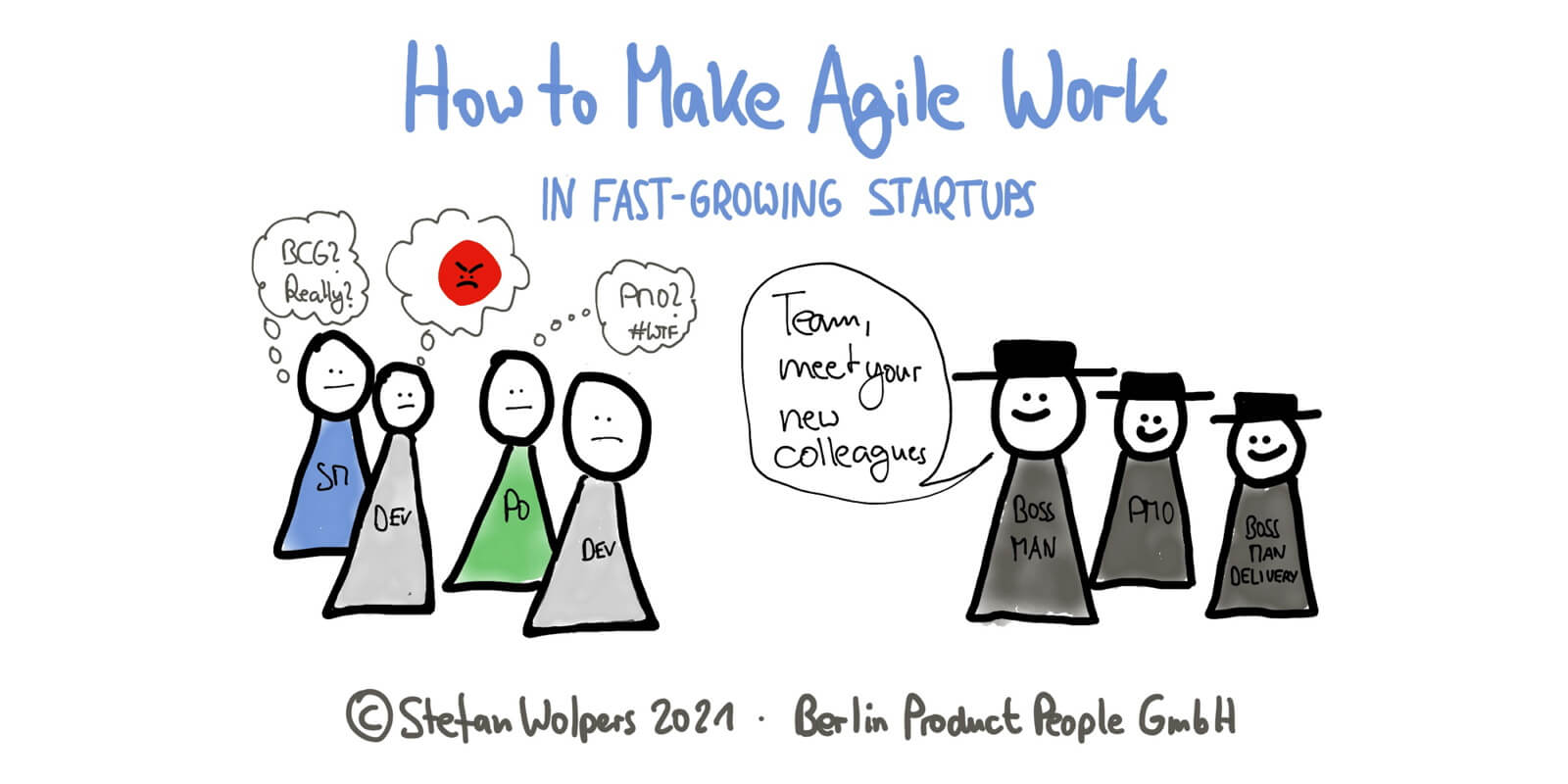
TL; DR: How to Make Agile Work in Fast-Growing Startups
For years, I worked in several Berlin-based, fast-growing startups in my capacity as Scrum Master, agile coach, and Product Owner. These are my lessons learned on making ‘agile’ — including Scrum as a framework — work in a fast-growing startup. Also, let me introduce you to the anti-patterns agile startups shall avoid at all costs.
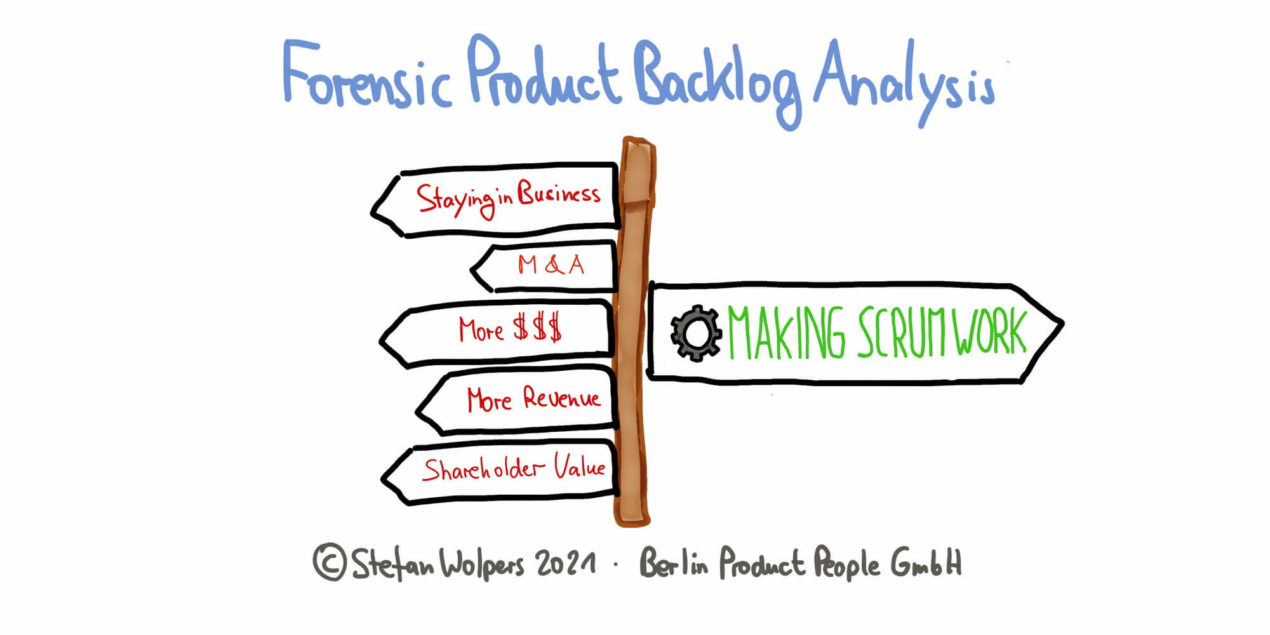
TL; DR: A Forensic Product Backlog Analysis (Part 1)
Garbage in, garbage out: No matter whether your team chose Scrum for the right purpose—solving complex, adaptive problems. No matter whether your Scrum Team’s product quality is top-notch or whether your teammates embrace self-management to the fullest. If your Product Backlog is not up to the job, all of these accomplishments will account for little, as your team will provide less value to its customers than possible. Here is where the forensic Product Backlog analysis steps in, a light-weight, simple practice to help Product Owners and Scrum Masters unearth anti-patterns that led to your low-value Product Backlog.
Learn more on how a piece of paper and a pencil can turn around the perception of your Scrum Team among stakeholders and customers.
Like a job ad for a Scrum Master position, the equivalent for the Product Owner position also reveals excellent insight into an organization’s progress on becoming agile. Yesterday, I analyzed 60-plus randomly selected job ads from the UK, the US, and Germany for that purpose. Learn more about what makes job ads such a treasure trove with the following 23 Product Owner anti-patterns.
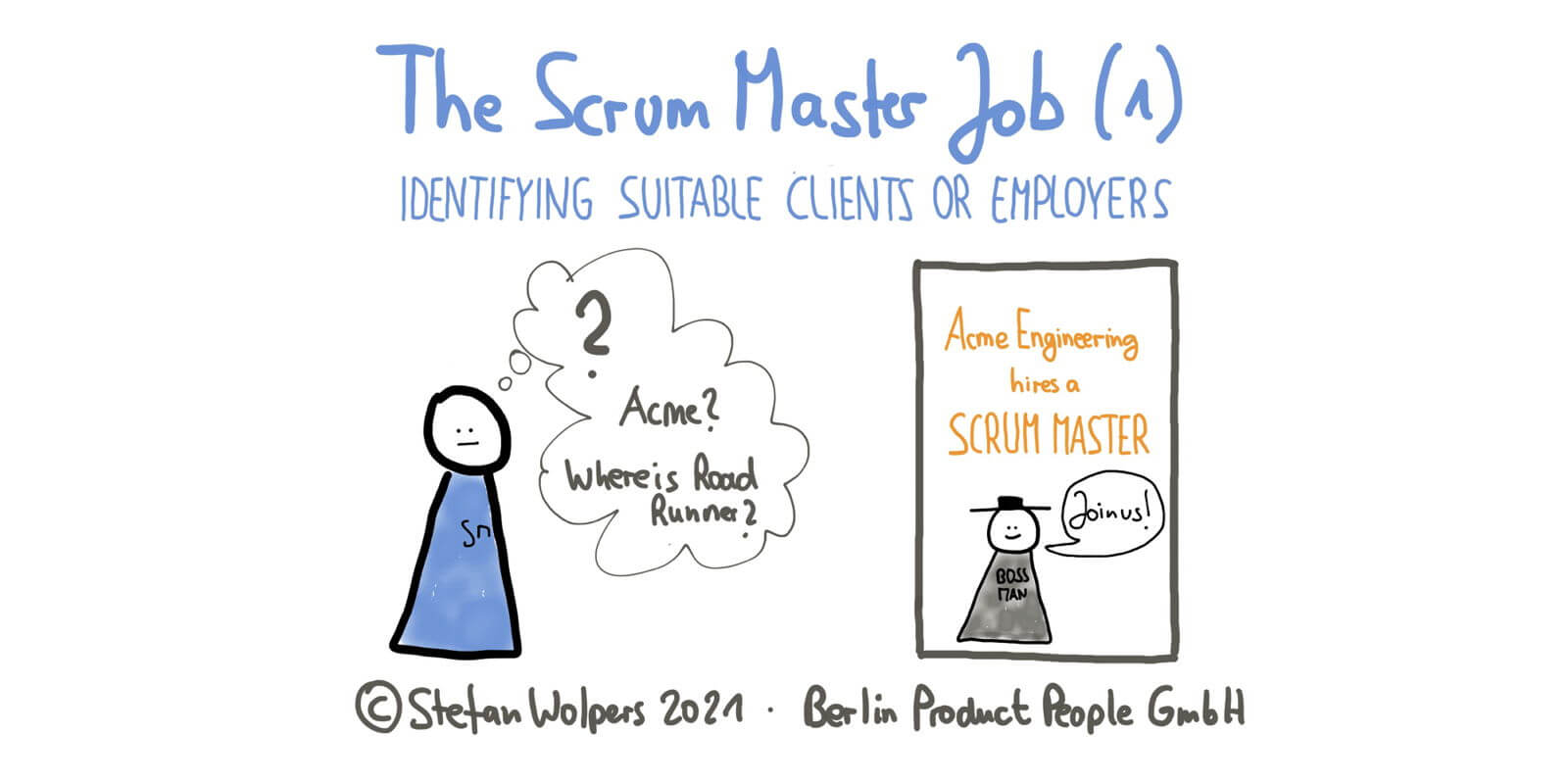
TL; DR: Scrum Master Job — 4 Steps to Identify Suitable Employers or Clients
Are you considering a new Scrum Master job? However, you are not sure that it is the right organization? Don’t worry; there are four steps of proactive research to identify suitable employers or clients for Scrum Masters and avoid disappointment later.
I have used those four steps for years to identify organizations I would like to work with, and they never failed me. Read on and learn how to employ search-engines, LinkedIn’s people search, reaching out to peers in the agile community, and analyzing the event markets in the quest for your next Scrum Master job.
Job ads for Scrum Master positions reveal great insight into an organization’s progress on becoming agile. I analyzed more than 50 job ads for Scrum Master positions to gain these. Learn more about what makes job ads such a treasure trove with the following 22 Scrum Master anti-patterns derived from job ads.
While the new Scrum Guide is less prescriptive and more inclusive, it also ties loose ends by including elements better, namely the previously free-floating Sprint Goal and the Definition of Done with the creation of Scrum commitments. This inclusion works remarkably well in the former’s case; regarding the latter, we need a shoehorn, though.