TL; DR: Increasing the Velocity of Value w/ Dave West — ACB21
In this highly engaging speaker session from the Agile Camp Berlin 2021, Dave West talks about why orienting to value rather than work is a crucial requirement for building an agile capability: Velocity of Value.
TL; DR: Scaling Agility, Product Team Health—Food for Agile Thought #298
Welcome to the 298th edition of the Food for Agile Thought newsletter, shared with 31,941 peers. This week, we advise how to create a system of interdependent agile teams also know as scaling agility. In addition, we advocate for a budgeting approach that will not impede your organization’s agile transformation, and we enjoy a moment of serendipity: Don’t use a big-name consultancy to support agile transformations and beware of their playbooks.
We then provide actionable advice on dealing with a CEO’s worldview that is impeding your product team; we delve into validation, de-risking, and when to use what, and we reflect on the short shelf life many solutions in today’s volatile environment have and how you may counter that effect.
Lastly, we appreciate a set of signals that hint at your product team’s progress in becoming more effective.
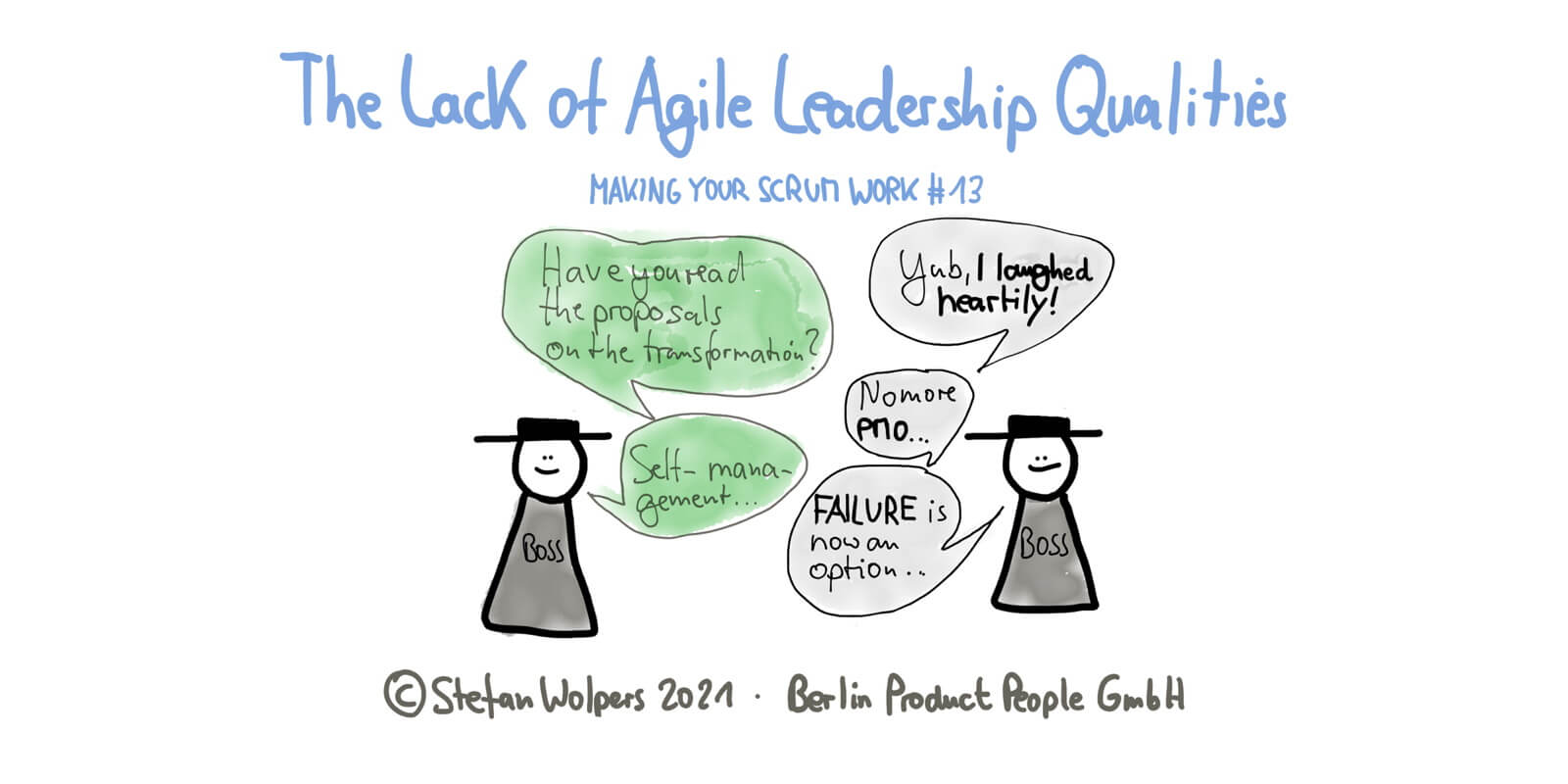
TL; DR: The Lack of Agile Leadership Qualities — When Change Agents Don’t Act as Role Models
There are plenty of failure possibilities with Scrum. Given that Scrum is a framework with a reasonable yet short “manual,” this effect should not surprise anyone. When Scrum becomes an element of an agile transformation, a lack of agile leadership qualities on the incumbents’ side may impede its overall progress significantly despite the best efforts of all other change agents.
📺 Join me and explore the consequences of a lack of agile leadership qualities and what you can do about it in less than three minutes.
TL; DR: Evidence-based Interventions w/ Viktor Cessan — ACB21
In this highly engaging speaker session from the Agile Camp Berlin 2021, Viktor Cessan shares lessons learned as an agile coach when working with systems, resulting in evidence-based interventions.
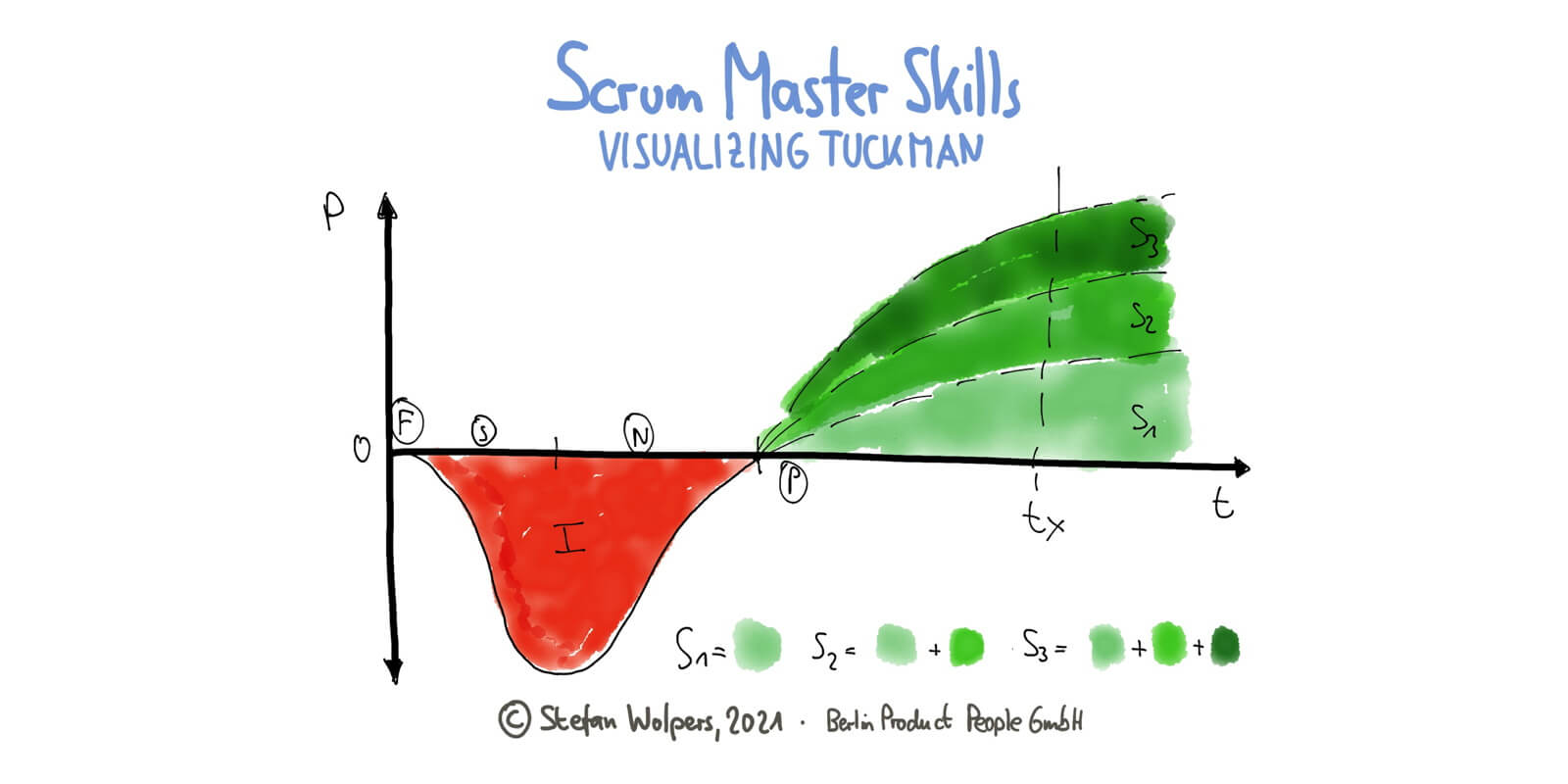
Scrum Master Skills: Visualizing the Tuckman Model
“A picture is worth a thousand words.” Probably, we have all heard that piece of wisdom before. In my experience, having some — even rudimentary — sketching or drawing capabilities is an essential Scrum Master skill. Visualizing a tricky issue while explaining the background to a stakeholder, someone from the management or a teammate helps to pave the way to have a meaningful discussion.
Let me introduce you to an example sketch based on the Tuckman model of group dynamics I use in my Professional Scrum Master training classes to make the effort and cost of creating a Scrum team easier understandable.
TL; DR: North Star Metric, Team Dynamics Explained—Food for Agile Thought #297
Welcome to the 297th edition of the Food for Agile Thought newsletter, shared with 31,817 peers. This week, we point at data and case studies, providing insights into how to narrow in on your organization’s North Star Metric. Also, we advocate that technical debt is rather a strategic lever for your organization’s success than a liability, and we analyze the invisible undercurrents that determine your team’s culture.
We then continue reading Marty Cagan’s pathology series with a deep dive into the well-known problems with MBA programs. Moreover, we share six common product discovery anti-patterns and what you can do about them, and we introduce fundamental principles behind designing and maintaining a product roadmap tailored to the needs of agile teams.
Lastly, we enjoy listening to Richard Kasperowski and Seb Rose talking about how to help create a good team with less seasoned professionals.