Free Ebook: 97 Scrum Master Interview Questions to Identify Suitable Candidates

TL; DR: The Scrum Master Interview Guide to Identify Genuine Scrum Masters

In this comprehensive Scrum Master Interview guide, we delve into 97 critical questions that can help distinguish genuine Scrum Masters from pretenders during interviews. We designed this selection to evaluate the candidates’ theoretical knowledge, practical experience, and ability to apply general Scrum and “Agile “principles effectively in real-world scenarios—as outlined in the Scrum Guide or the Agile Manifesto. Ideal for hiring managers, HR professionals, and future Scrum teammates, this guide provides a toolkit to ensure that your next Scrum Master hire is truly qualified, enhancing your team’s agility and productivity.

If you are a Scrum Master currently looking for a new position, please check out the “Preparing for Your Scrum Master Interview as a Candidate” section below.

So far, this Scrum Master interview guide has been downloaded more than 25,000 times.

Scrum Master Interview — How to Prepare Yourself to Stand Out — Age-of-Product.com
Continue reading Free Ebook: 97 Scrum Master Interview Questions to Identify Suitable Candidates

Food for Agile Thought #347: Beneficial Pre-Mortems, Agility Follows Structure, Scaled Feature Factories, Understanding Refactoring

TL; DR: Beneficial Pre-Mortems, Scaled Feature Factories — Food for Agile Thought #347

Welcome to the 347th edition of the Food for Agile Thought newsletter, shared with 35,417 peers. This week, we delve into five success-critical topics for every product manager, from the benefits of pre-mortems to prioritizing your time to ROI and opportunity-cost thinking. Also, we explain code cruft in a metaphor for non-technical people to help the looming conflict between developers and management, and we share learnings from supporting agile transformations at three companies in the insurance and automation industries.

Then, we detail a pattern of non-tech companies heavily investing in digitalization: Despite good intentions, they end up as big feature factories. Moreover, we point out a) how iterating behavioral changes and applying experiments help build the right products and b) the often overlooked signal-to-noise ratio critical for innovation, or: asking for ideas is a bad idea.

Finally, we embrace a simple process that allows everyone on a team to start writing user stories: the Product Backlog Building Canvas. Also, the folks at ProductLed asked 600-plus SaaS businesses about their paths to product-led growth and core metrics such as free to paid accounts conversion rates.

Food for Agile Thought #347: Beneficial Pre-Mortems, Agility Follows Structure, Scaled Feature Factories, Understanding Refactoring — Age-of-Product.com
Continue reading Food for Agile Thought #347: Beneficial Pre-Mortems, Agility Follows Structure, Scaled Feature Factories, Understanding Refactoring

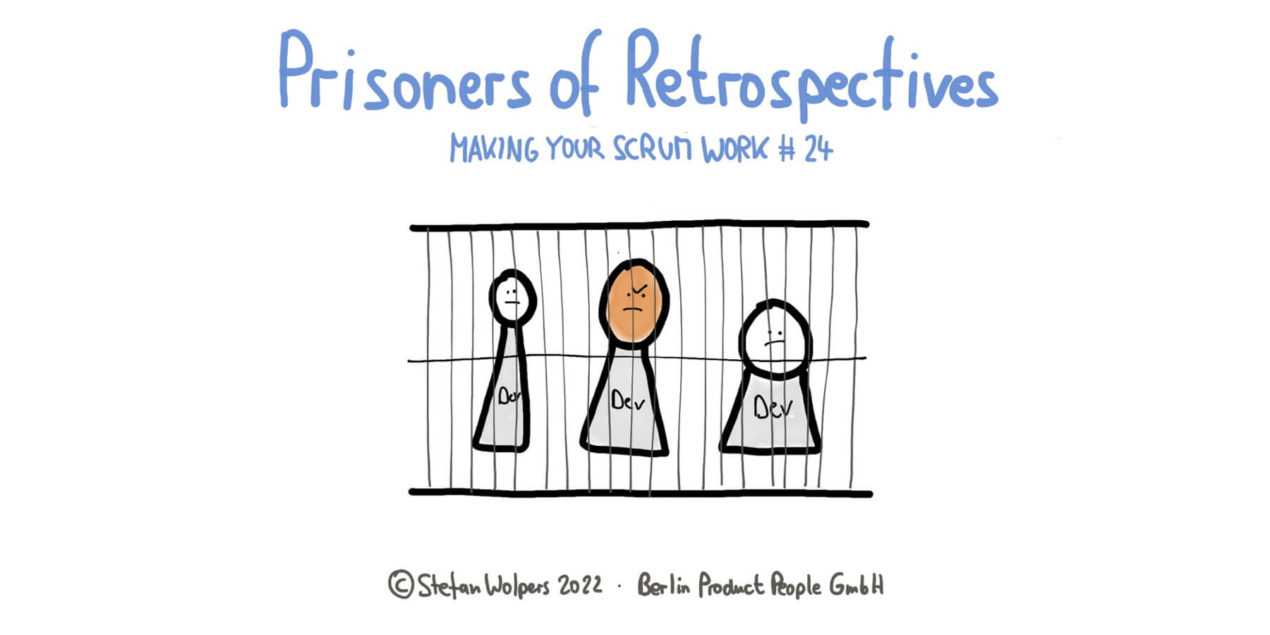
Scrum Developer Anti-Patterns

TL; DR: Scrum Developer Anti-Patterns

After covering the anti-patterns of the Scrum Master, the Product Owner, and the stakeholders, this article addresses Scrum Developer anti-patterns, covering all Scrum Events and the Product Backlog artifact. Continue reading and learn more about what to look out for if you want to support your teammates who build the Increment.

Scrum Developer Anti-Patterns — Scrum Anti-Patterns Guide 2022 — Age-of-Product.com
Continue reading Scrum Developer Anti-Patterns

Food for Agile Thought #346: Pro Frameworks, Ensuring (Product) Excellence, Islands of Agility, 6 Common KPI Mistakes

TL; DR: Pro Frameworks, Ensuring Excellence — Food for Agile Thought #346

Welcome to the 346th edition of the Food for Agile Thought newsletter, shared with 35,394 peers. This week, we point to the benefits of frameworks, helping us learn, collaborate, and reduce cognitive load. Also, we explore the idea of starting an agile transformation by splitting off a part of an organization and helping that part become agile first; consequently, we take the stoic perspective on transformations.

Then, we follow Marty Cagan, who adds excellence in the form of a strong product leader to the success recipe of the individual empowered product teams tasked with solving customer problems. Moreover, we address the ‘create customer value’ obsession: Ian Miell claims that ‘many peoples’ work generates value by focussing on things that appear to have no measurable or apparently justifiable customer benefit.’ And we remind ourselves of Goodhart’s Law. (In other words: Why you do not want to become data-driven as a product mensch.)

Finally, we list typical mistakes when measuring success, from vanity metrics to worshipping data. We describe five models to better understand a team’s performance, from Google’s Team Effectiveness Model to the T7 Model of Team Effectiveness, and we share an extensive guide on how to embrace the new hybrid work reality as a facilitator. Lastly, we thank Shane Hastie and Sandy Mamoli for authoring the 2022 edition of the InfoQ Culture & Methods Trends Report.

Food for Agile Thought #346: Pro Frameworks, Ensuring (Product) Excellence, Islands of Agility, 6 Common KPI Mistakes — Age-of-Product.com
Continue reading Food for Agile Thought #346: Pro Frameworks, Ensuring (Product) Excellence, Islands of Agility, 6 Common KPI Mistakes

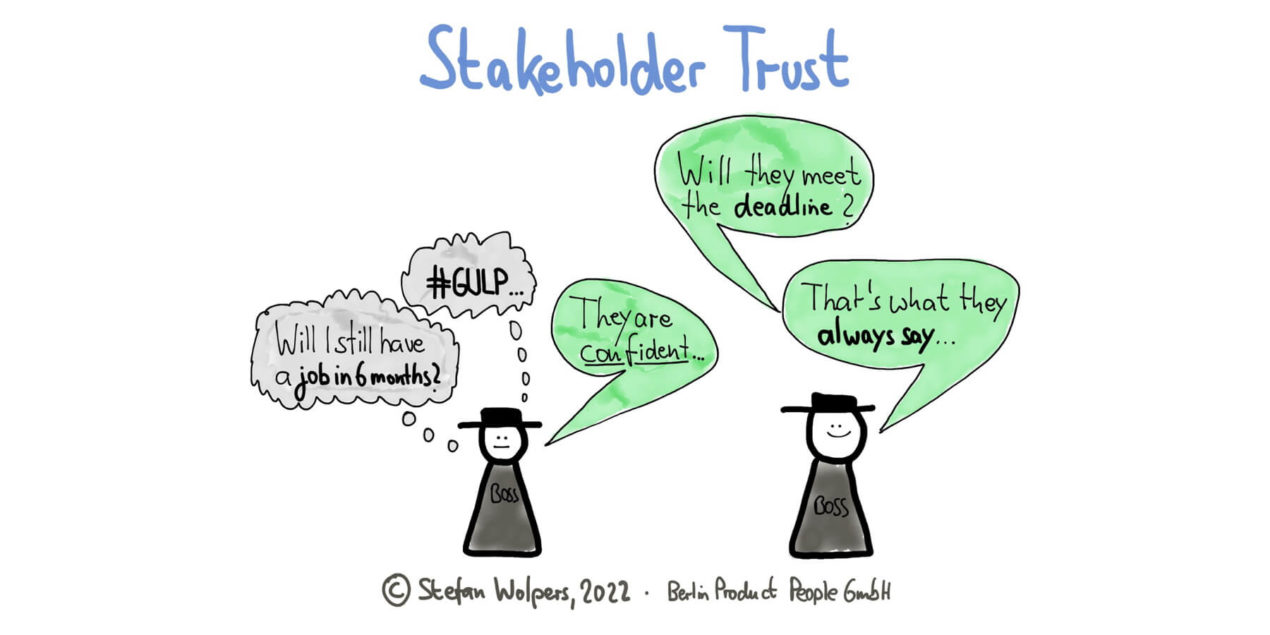
36 Scrum Stakeholder Anti-Patterns

TL; DR: Scrum Stakeholder Anti-Patterns

Learn how individual incentives and outdated organizational structures — fostering personal agendas and local optimization efforts — manifest themselves in Scrum stakeholder anti-patterns that easily impede any agile transformation to a product-led organization.

36 Scrum Stakeholder Anti-Patterns — Scrum Anti-Patterns 2022 — Age-of-Product.com
Continue reading 36 Scrum Stakeholder Anti-Patterns

Food for Agile Thought #345: Dissonance Causes, Transformation Defined, The Age of Scrum Is Over, Efficiency is the Enemy

TL; DR: Dissonance Causes, The Age of Scrum Is Over — Food for Agile Thought #345

Welcome to the 345th edition of the Food for Agile Thought newsletter, shared with 35,369 peers. This week, we analyze dissonance causes — resulting in tension, loss, fear, or curiosity — from information to expectations to constraints. Chris Lennon believes that ‘Scrum has given us a lot, but it’s time for some conscious uncoupling.’ And we also share an approach to dealing with the management’s unreal desire to have reliability, predictability, and numbers in software development.

Then, we dissect the idea of ‘managing’ stakeholders instead of aligning all parties in the product game by including everyone and giving everyone a voice, and we have a look at how to create better user stories. Also, we reflect on ‘mastering the delicate relationship between the builders and sellers,’ and we define what a transformation to a product-led organization is about, from ‘changing how you build and deploy’ to ‘changing how you decide which problems to solve.’

Moreover, we analyze the challenges of pursuing an agile-traditional hybrid approach as an organization at the same time to achieve business agility. We also point to an HBR study, claiming that ‘employee productivity was 71% higher when meetings were reduced by 40%.’ Finally, we share the analysis of an Estonian company’s approach to becoming agile at scale.

Food for Agile Thought #345: Dissonance Causes, Transformation Defined, The Age of Scrum Is Over, Efficiency is the Enemy — Age-of-Product.com
Continue reading Food for Agile Thought #345: Dissonance Causes, Transformation Defined, The Age of Scrum Is Over, Efficiency is the Enemy