TL; DR: Product Waste, Little’s Law & Forecasts — Food for Agile Thought #344
Welcome to the 344th edition of the Food for Agile Thought newsletter, shared with 35,342 peers. This week, we delve into the patterns of product waste resulting from an ‘organizational and conceptual gap’ between product and engineering teams on the one side and sales and marketing teams on the other side. Also, we outline how to support your teams emotionally in challenging times, and we visualize the mental model of developers as systems thinkers, from inner and outer loops to flow states to context switching. Moreover, we reflect on those who ‘dodge gatekeepers and dance around policies, doing whatever it takes to get the job done.’
Then, we provide insight into Stripe’s product strategy, resulting in a ‘microcosm of product-led, developer-centric growth.’ Moreover, we guide the reader from JTBD to user-centered design to the CCVC framework, and we listen to Chad McAllister interviewing Mike Mace on how to get customer insights quickly to counter demands from your resident HiPPO or a pushy sales team.
Also, we show how the application of Little’s Law can support your team’s forecast quality, and, finally, we address the widespread belief that Kanban is nothing more than some columns on a board and a handful of cards to push around, resulting in highly complex boards of little value.
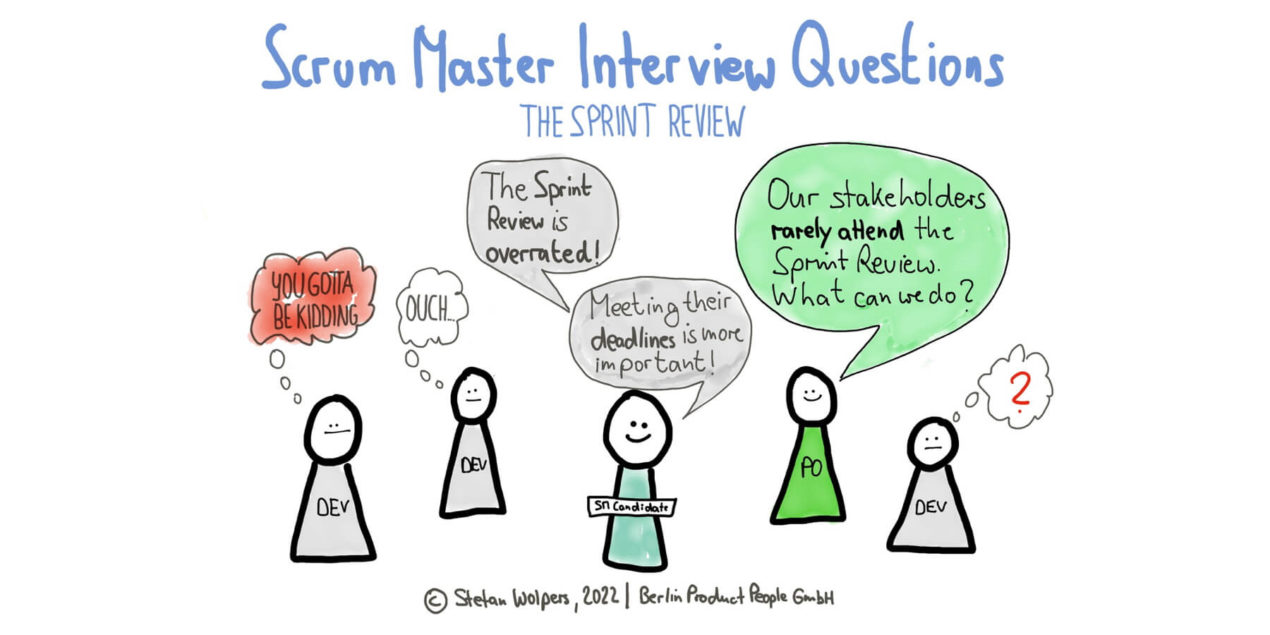
Are we still on track to accomplish the Product Goal? Moreover, how did the previous Sprint contribute to our Scrum team’s mission? Answering these questions and adapting the Product Backlog in a collaborative effort of the Scrum Team with internal and external stakeholders is the purpose of the Sprint Review. Given its importance, it is worthwhile to tackle the most common Sprint Review anti-patterns.
TL; DR: Why Teams Estimate, the HiPPO Effect — Food for Agile Thought #343
Welcome to the 343rd edition of the Food for Agile Thought newsletter, shared with 35,304 peers. This week, we point to good reasons why teams estimate: ‘credibility, deeper thinking, prioritization, and insight.’ Also, we explore six ways of avoiding the 💩 sandwich when providing critical feedback, and we watch a classic: Henrik Kniberg visualizes the cost and consequences of moving from single-piece flow to simultaneously working on multiple work items.
Then, we suggest dealing with resistance from stakeholders, such as the sales folks, who fear meeting their quotas, and we highlight some of the ‘dysfunctions around decision making and offer ways to overcome them.’ Moreover, we delve into the strange effects of the highest-paid person’s opinion, from manifestations to impact to suggestions on how to deal with them. (High impact release notes may be one helpful tactic; learn how to author them.)
Also, we enjoy Sachin Rekhi’s take on Jeff Bezos’ June 2004 instruction: ‘From now on, your presentation software is Microsoft Word, not PowerPoint. Get used to it.’ Finally, ‘Programmers are also human’ celebrates McBoston’s Josh Doe, formerly Agile Consulting, Inc.
What event could better embody Scrum’s principle of empiricism than the Sprint Retrospective? I assume all peers agree that even the simplest form of a Retrospective—if only held regularly—is far more helpful than having a fancy one once in a while, not to mention having none. Moreover, I am convinced there is always room for improvement; just avoid dogmatism. Hence, learn more about 21 common Sprint Retrospective anti-patterns that will hold back your Scrum team.
TL; DR: Agile Laggards, Fireside Chat with Marty Cagan — Food for Agile Thought #342
Welcome to the 342nd edition of the Food for Agile Thought newsletter, shared with 35,264 peers. This week, we point to Geoffrey Moore’s ‘Technology Adoption Life Cycle,’ and that ‘Agile’ has entered the laggards segment. We also delve into an essential team success factor — stakeholder trust — and reflect on ‘balancing long-lived teams with short term coordination and alignment.’
Then, we learn how to determine best whether an idea is worth pursuing and define six ‘first principles’ for product leaders to deal with team topology, from ownership to alignment to autonomy. Moreover, we follow Behzod Sirjani, who believes that NPS has been turned into a useless vanity metric while it has actual value for measuring ‘word-of-mouth loops.’
Also, we advocate not focusing on productivity but, for example, on value, quality, speed, and flexibility, as they may lead to higher productivity later on. Lastly, we enjoy a fireside chat with Marty Cagan, where he addresses empowerment, adopting a product-led mindset, and why project-oriented companies should consider becoming product-oriented.