Food for Agile Thought #528: The Real Value Journey, Product Discovery Coding, Shadow IT, AI Shopping?

TL; DR: The Real Value Journey — Food for Agile Thought #528

Welcome to the 528th edition of the Food for Agile Thought newsletter, shared with 35,758 peers. This week, John Cutler presents a five-act narrative exploring how organizations evolve from delivery-focused work toward product-centricity through a messy, iterative value journey, while Stephanie Leue identifies an “alignment tax” that slows growing organizations and requires systemic redesign. Turning to AI, Christina Wodtke explores how Claude Code enables “(product) discovery coding” through conversation. Addy Osmani offers guidance on writing AI agent specs, and Allan Kelly warns that AI coding will unleash shadow IT alongside security risks.

Next, Rich Mironov suggests executives ask whether products earn their keep by trusting engineering judgment over ticket-level ROI math. Bandan Singh proposes filters before reacting to competitors. Also, Lenny Rachitsky interviews Zevi Arnovitz on how nontechnical PMs ship products using Cursor, while Jing Hu warns that AI assistants may weaken desire by removing anticipation-building friction. Additionally, Mike Cohn proposes that soft skills persist and compound, unlike technical skills, which have a shrinking half-life.

Then, Teresa Torres demystifies how large language models work, explaining tokenization, embeddings, and attention mechanisms. David Burkus suggests effective delegation requires giving ownership rather than tasks, while Anthropic releases Claude’s new constitution, prioritizing safety, ethics, and helpfulness. Lastly, PwC’s 29th Global CEO Survey reveals 56% of CEOs report no AI financial return yet, and Simon P. Couch estimates Claude Code sessions consume 138 times more energy than typical queries, calling for transparency from frontier labs.

Food for Agile Thought #528: The Real Value Journey, Product Discovery Coding, Shadow IT, AI Shopping? — Age-of-Product.com
Continue reading Food for Agile Thought #528: The Real Value Journey, Product Discovery Coding, Shadow IT, AI Shopping?

Ralph Wiggum Ships Code While You Sleep. Agile Asks: Should It?

TL; DR: When Code Is Cheap, Discipline Must Come from Somewhere Else

Generative AI removes the natural constraint that expensive engineers imposed on software development. When building costs almost nothing, the question shifts from “can we build it?” to “should we build it?” The Agile Manifesto’s principles provide the discipline that these costs used to enforce. Ignore them at your peril when Ralph Wiggum meets Agile.

Ralph Wiggum Ships Code While You Sleep. Agile Asks: Should It? The Agile Manifesto in the Age of AI — Age-of-Product.com
Continue reading Ralph Wiggum Ships Code While You Sleep. Agile Asks: Should It?

Food for Agile Thought #527: Non-Coder Claude Code, Empowered Product Teams, The Blame Game, Claude Skills in 15 Minutes

TL; DR: Non-Coder Claude Code — Food for Agile Thought #527

Welcome to the 527th edition of the Food for Agile Thought newsletter, shared with 35,767 peers. This week, Grant Harvey and Alberto Romero track Claude Cowork, the non-coder Claude Code, bringing agentic work to non-coders. They highlight safety limits plus the human judgment behind “autonomy.” Laura Klein questions “empowered” teams when dependencies and certainty demands drive feature shipping, and Janna Bastow reframes prioritization as decision confidence, built through strategy, evidence, and decision logs. Also, Dwarkesh Patel, Michael Burry, Patrick McKenzie, and Jack Clark challenge the AI boom with doubts about productivity, shifting leadership, and energy constraints.

Next, Lenny Rachitsky, Aishwarya Naresh Reganti, and Kiriti Badam explain why probabilistic AI products need careful control, gradual autonomy, and production monitoring grounded in real workflows. Roman Pichler offers a five-step strategy reset for existing products, backed by data, risk testing, and outcome roadmaps, while Zach Bruggeman, Jason Quense, and Rahul Sengottuvelu show how sandboxed coding agents use tests and telemetry to stay reliable. Anthropic’s November 2025 usage report maps autonomy and success, and John Cutler highlights the importance of ownership and a weekly doc cadence to prevent drift for product models.

Then, Scott A. Snyder suggests incentives, not tools, unlock AI adoption by rewarding responsible experiments and outcomes. Joost Minnaar and Mark Graban show how blame and rushed oversight kill learning, while trust, transparency, and consistent presence build improvement. Peter Yang describes Claude Skills as reusable instruction folders that standardize recurring work across chats. Finally, Jason Crawford reminds us that complex systems resist prediction, so build buffers, monitor signals, and use simple leverage points.

Food for Agile Thought #527: Non-Coder Claude Code, Empowered Product Teams, The Blame Game, Claude Skills in 15 Minutes — Age-of-Product.com
Continue reading Food for Agile Thought #527: Non-Coder Claude Code, Empowered Product Teams, The Blame Game, Claude Skills in 15 Minutes

Claude Cowork: AI Agents’ Email Moment for Non-Coders

TL; DR: Claude Cowork

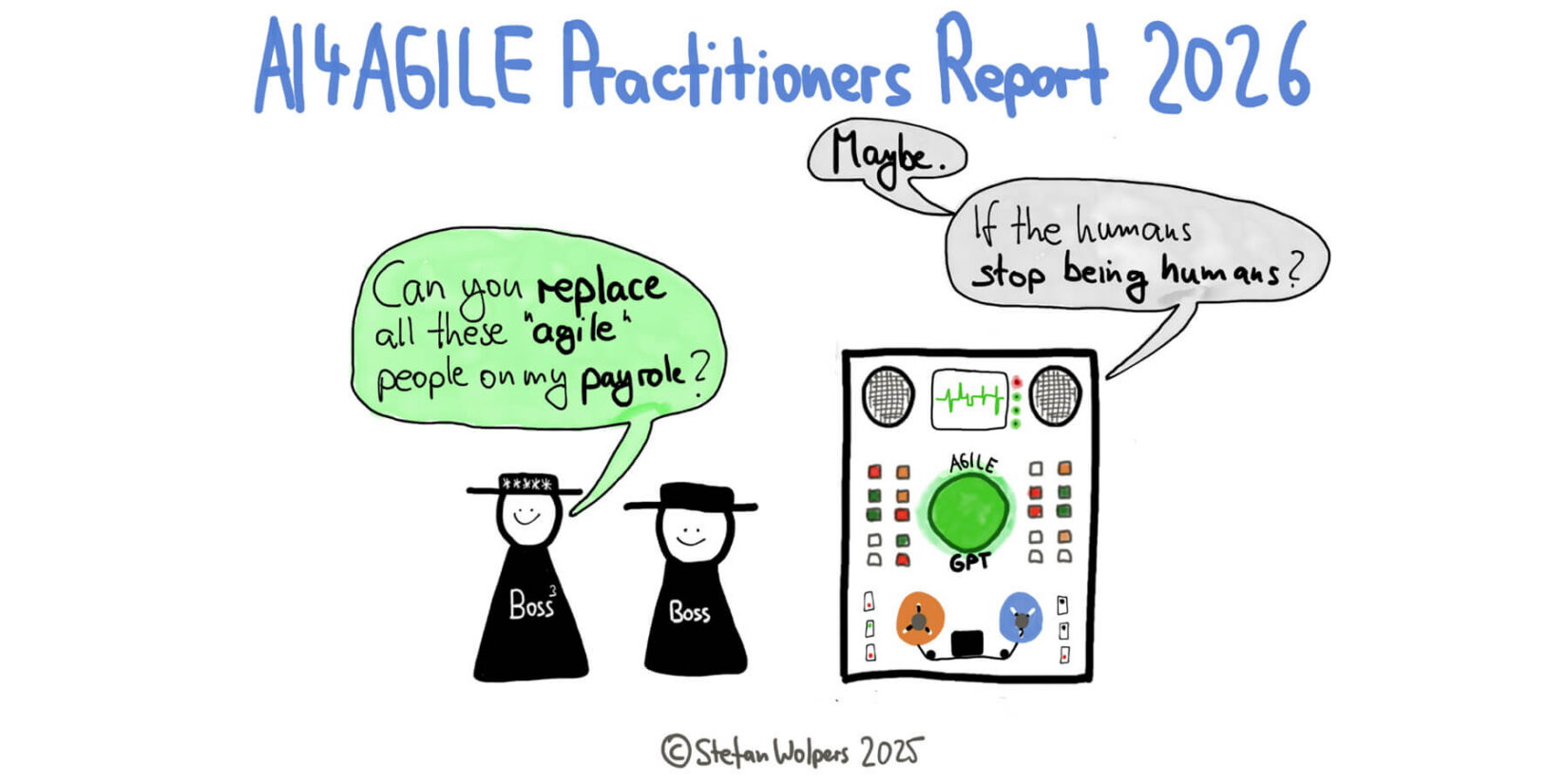
AI agents have long promised productivity gains, but until now, they demanded coding skills that most agile practitioners lack or are uncomfortable with. In this article, I share my first impressions on how Claude Cowork removes that barrier, why it is a watershed moment, and how you could integrate AI Agents into your work as an agile practitioner.

Claude Cowork: AI Agents’ Email Moment for Non-Coders — no more CLI or terminal needed — Age-of-Product.com
Continue reading Claude Cowork: AI Agents’ Email Moment for Non-Coders

The A3 Framework: Assist, Automate, Avoid — A Decision System for AI Delegation

TL; DR: The A3 Framework

The A3 Framework categorizes AI delegation before you prompt: Assist (AI drafts, you actively review and decide), Automate (AI executes under explicit rules and audit cadences), or Avoid (stays entirely human when failure would damage trust or relationships). Most AI training teaches better prompting. The A3 Framework teaches the prior question: Should you be prompting at all? Categorize first, then prompt.

The A3 Framework: Assist, Automate, Avoid — A Decision System for AI Delegation to Preserve Professionalism — Age-of-Product.com
Continue reading The A3 Framework: Assist, Automate, Avoid — A Decision System for AI Delegation

Food for Agile Thought #526: Claude Code Moment, Product Model Failure, Wrong Decisions, How to Navigate the Unknown

TL; DR: The Claude Code Moment — Food for Agile Thought #526

Welcome to the 526th edition of the Food for Agile Thought newsletter, shared with 35,788 peers. This week, Ethan Mollick and Teresa Torres unpack how Claude Code’s agentic architecture and workflow primitives hint at a new era of autonomous work: powerful, yet risky in practice. John Cutler and Randy Silver challenge teams to stop copying frameworks and start fixing the organizational rules that shape product behavior, while Stephanie Leue highlights why speed stalls when finance, structure, and decision rights stay frozen. Also, Barry O’Reilly and Annie Duke close with lessons on judgment, attention, and decision hygiene.

Next, Teresa Torres lists 2026 product conferences and asks readers to add missing events. Peter Yang shares 25 product beliefs that favor user contact, ruthless focus, and shipping over process theater, and Jaclyn Konzelmann outlines AI-era principles that build agency, intuition, and clear thinking. Mike Fisher warns that culture debt compounds when leaders trade trust for speed, plus Daniel North reframes performance issues as system signals and pushes calm, incentive-aware technical leadership.

Then, Nathan Furr and Andrew Shipilov argue that AI pilots fail when teams pursue scattered experiments rather than customer value, and they call for disciplined tests that scale through empowered cross-functional teams. Andi Roberts reframes silent meetings as social risk or overload and shows how leaders can make speaking up safer, and Christina Wodtke explains how OKR key results force clarity and can legitimize joyful work. Also, Anh-Tho Chuong breaks down AI-driven SaaS pricing. Finally, Aakash Gupta and Pawel Huryn show PMs how to use n8n for automations and agents.

Food for Agile Thought #526: Claude Code Moment, Product Model Failure, Wrong Decisions, How to Navigate the Unknown — Age-of-Product.com
Continue reading Food for Agile Thought #526: Claude Code Moment, Product Model Failure, Wrong Decisions, How to Navigate the Unknown