Welcome to the Scrum Guide Reordered Audiobook Download Page
The Scrum Guide Reordered audiobook is based on about 95 percent of the text of the Scrum Guide 2020, extending its original structure by adding additional categories, for example, on self-management, commitments, or accountability. The audiobook of the Scrum Guide 2020 Reordered is a 22-minute long MP3 file. We are planning to make it available on other platforms, too.
The audio version of the SG 2020 Reordered allows you to get a first understanding of Scrum-related questions in a convenient manner—by listening to the content. For example, SG 2020 Reordered audiobook is good at relating specific topics—say “stakeholder”—with Scrum first principles such as Scrum Values, or empiricism.
TL; DR: Product-Led Companies, #NoProjects—Food for Agile Thought #281
Welcome to the 281st edition of the Food for Agile Thought newsletter, shared with 30,412 peers. This week, we learn to identify product-led companies; we reflect on the effects of top-down decisions on imposing agile frameworks without identifying problems first, and we remind us of signs that an organization lacks the ‘agile mindset’ yet pretends to be agile.
We then gain insight into how to innovate within Google after being acquired—or not. We suggest embracing Pareto’s principle to execute an effective product strategy by ruthless prioritization, and we acknowledge the importance of picking appropriate metrics to guide our product teams to success.
Lastly, we appreciate introducing critical root cause analysis techniques, from ‘5 Whys’ to ‘Pareto Analysis.’
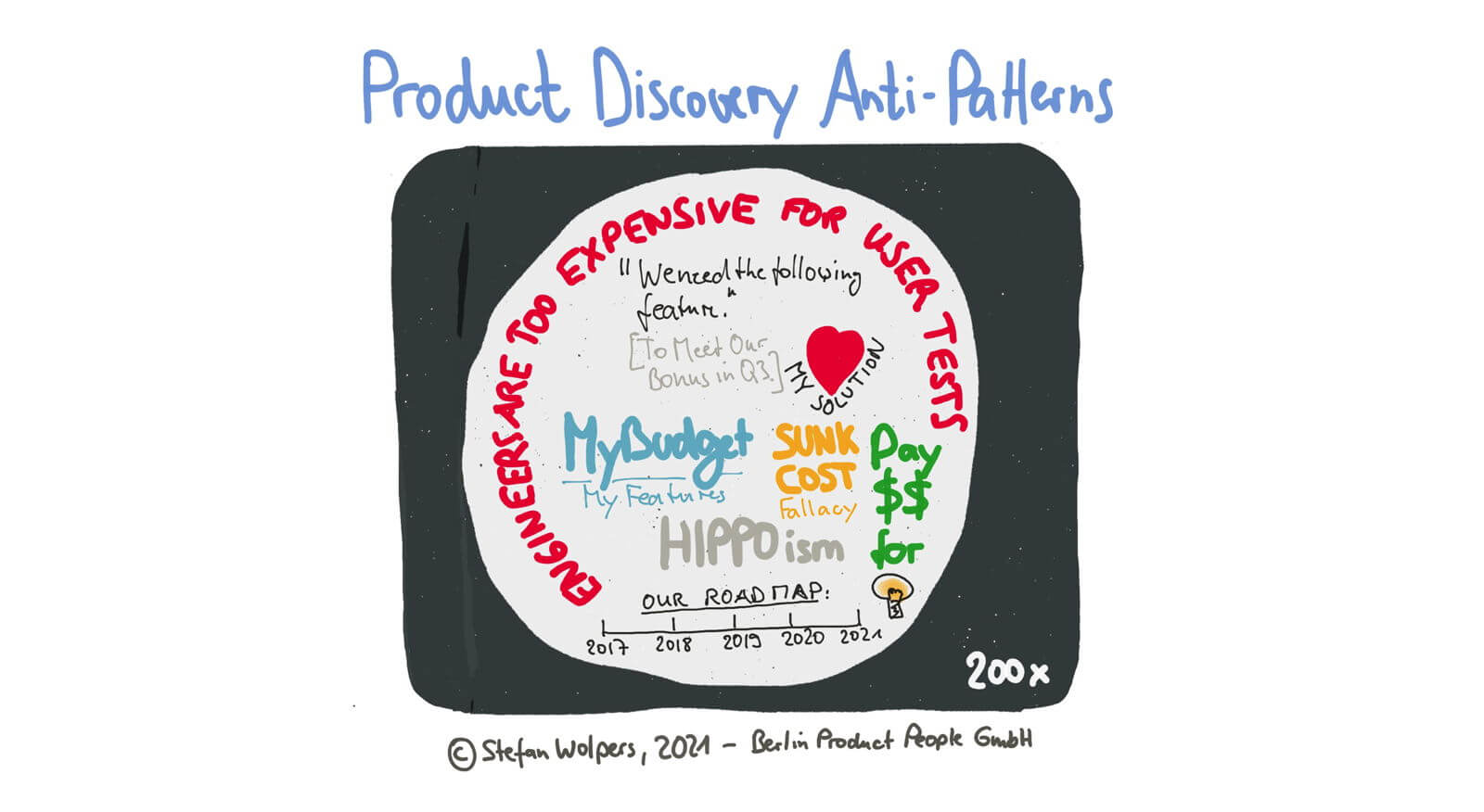
Scrum has proven to be an effective product delivery framework for all sorts of products. However, Scrum is equally well suited to build the wrong product efficiently as its Achilles heel has always been the product discovery part. What product discovery part, you may think now. And this is precisely the point: The Product Owner miraculously identifies what is the best way to proceed as a Scrum Team by managing the Product Backlog. How that is supposed to happen is nowhere described in the Scrum Guide. Consequently, when everyone is for themselves, product discovery anti-patterns emerge.
From sunk costs, HIPPO-ism, my-budget-my-features to self-fulfilling prophecies — learn more about the numerous product discovery anti-patterns that can manifest themselves when you try to fill Scrum’s product discovery void.
TL; DR: Managing Complexity, Difficult People on Software Projects—Food for Agile Thought #280
Welcome to the 280th edition of the Food for Agile Thought newsletter, shared with 30,344 peers. This week, we discover almost 50 different personality types you may encounter on software teams while managing complexity; we have a personal view on what success to a Scrum Master means, and we learn about the key takeaways from a development team’s transition from Scrum to Basecamp’s Shape Up.
We then delve into research outlining characteristics of organizations and tasks best suited to Agile. We also talk about chasing innovation, why it needs to be sustainable and the risks of taking it too far, and we embrace a one-hour virtual pre-mortem workshop before our team is heading into a high-stakes project.
Lastly, we download the brand-new free field guide on how to deal with complexity and uncertainty—courtesy of the EU’s Joint Research Centre (JRC) and Cognitive Edge.
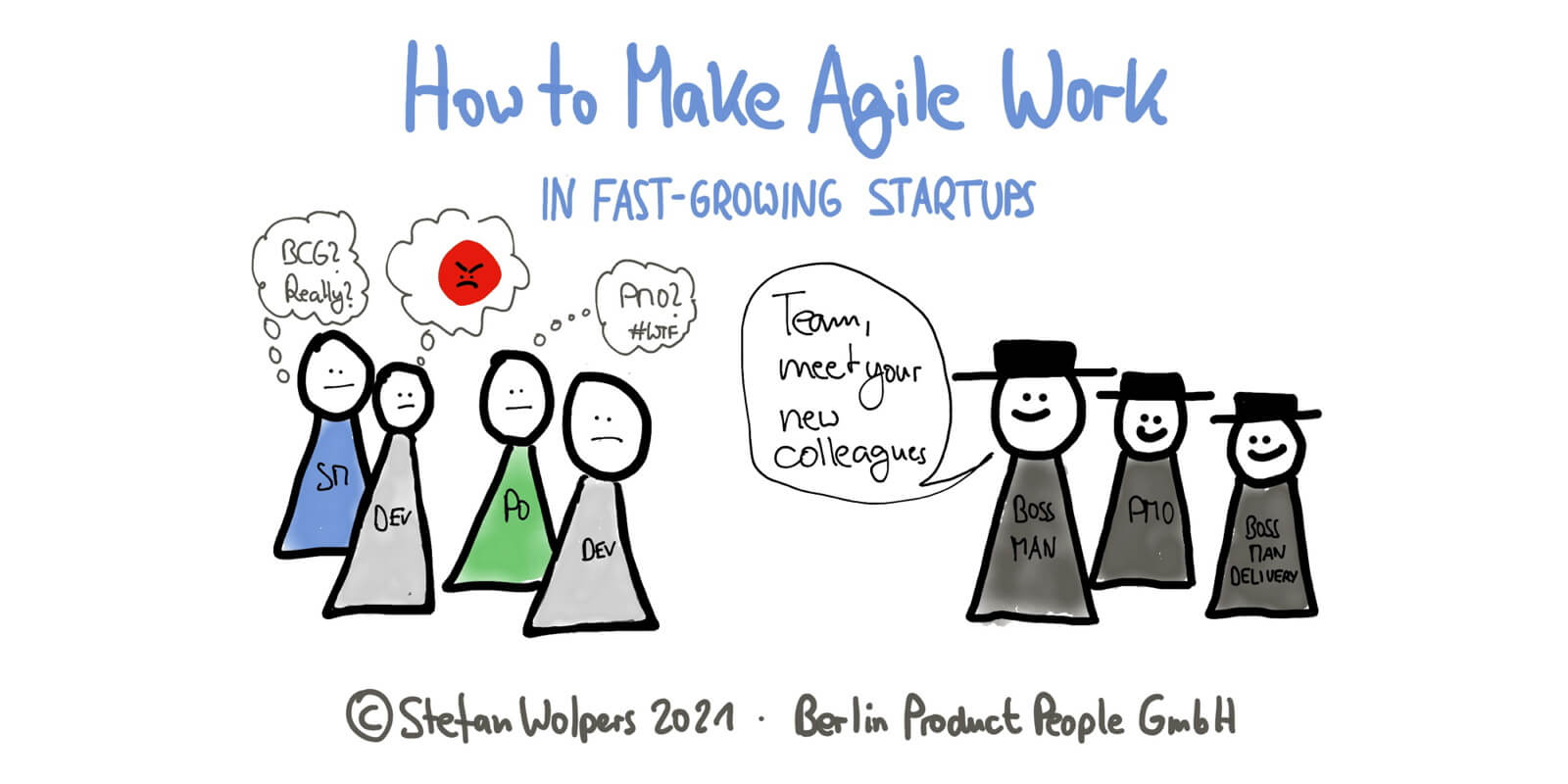
TL; DR: How to Make Agile Work in Fast-Growing Startups
For years, I worked in several Berlin-based, fast-growing startups in my capacity as Scrum Master, agile coach, and Product Owner. These are my lessons learned on making ‘agile’ — including Scrum as a framework — work in a fast-growing startup. Also, let me introduce you to the anti-patterns agile startups shall avoid at all costs.
TL; DR: Agile Manifesto’s History, Amazon’s Invention Machine—Food for Agile Thought #279
Welcome to the 279th edition of the Food for Agile Thought newsletter, shared with 30,267 peers. This week, we look back 20 years at the origins of the Agile Manifesto, why they came together; we detail the difference between Agile vs. Scrum and typical ‘big mistakes,’ and we check a list of five ‘no’ that might come in handy in challenging discussions.
We then listen to insider tales from Amazon—from the need to slow down to innovate to focus on customers’ needs to build by working backward, and we discuss the first principles of continuous discovery. Moreover, we explain why tension and conflict are necessary, helpful parts of product management.
Lastly, we appreciate the release of the third annual State of User Research report.