TL; DR: The Stoic Scrum Master – Making Your Scrum Work (30)
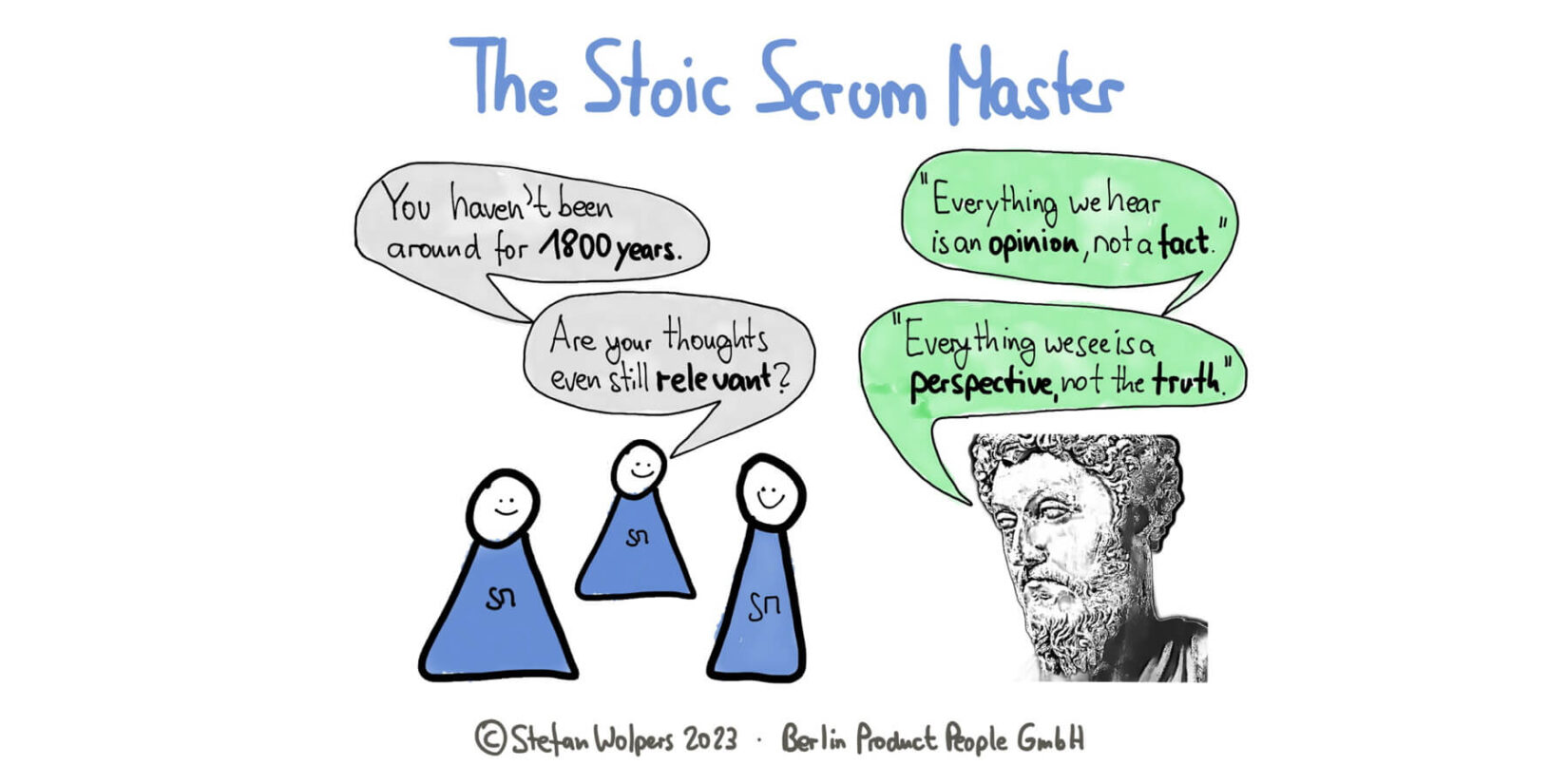
Can wisdom from the past still be relevant to today’s VUCA-determined world? I started reading Marcus Aurelius’ Meditations some time ago and found it intriguing; maybe it applies to “Agile?” In other words: is there something like a Stoic Scrum Master?
If I understand Stoicism correctly, it is about living a life of virtue, which comprises wisdom, justice, courage, and moderation. (All of those can be further subdivided, see Stoic Ethics.) For whatever reason, I felt reminded of Scrum Values and thought: could it be that the first principles of “agile” haven’t been defined by the Agile Manifesto but by “Zeno of Citium in Athens in the early 3rd century BCE?”
So, I embarked on a fun exercise of asking our beloved LLM to create an essay that applies Stoicism to Scrum, notably the Stoic Scrum Master.
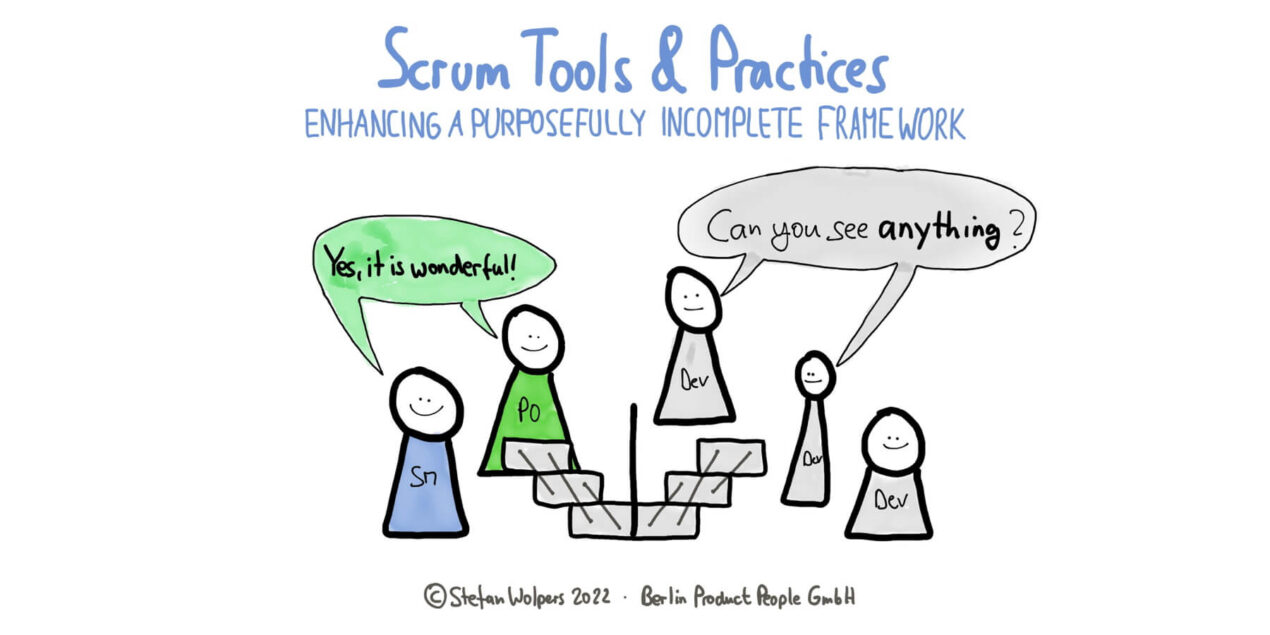
“The Scrum framework is purposefully incomplete, […].” (Source.) This half-sentence is probably one of the more often misinterpreted statements of the Scrum Guide. On the one side, it defines the necessity to enhance Scrum with other practices and tools. On the other side, it is the reason that so many attempts to practice Scrum are simply botched, resulting in ScrumBut versions of epic diversity. So, let’s look at proven Scrum tools and practices enhancing a purposefully incomplete framework without defying or negating its first principles.
Please note that the following Scrum tools and practices list is not complete. Please feel free to add more suggestions by commenting.
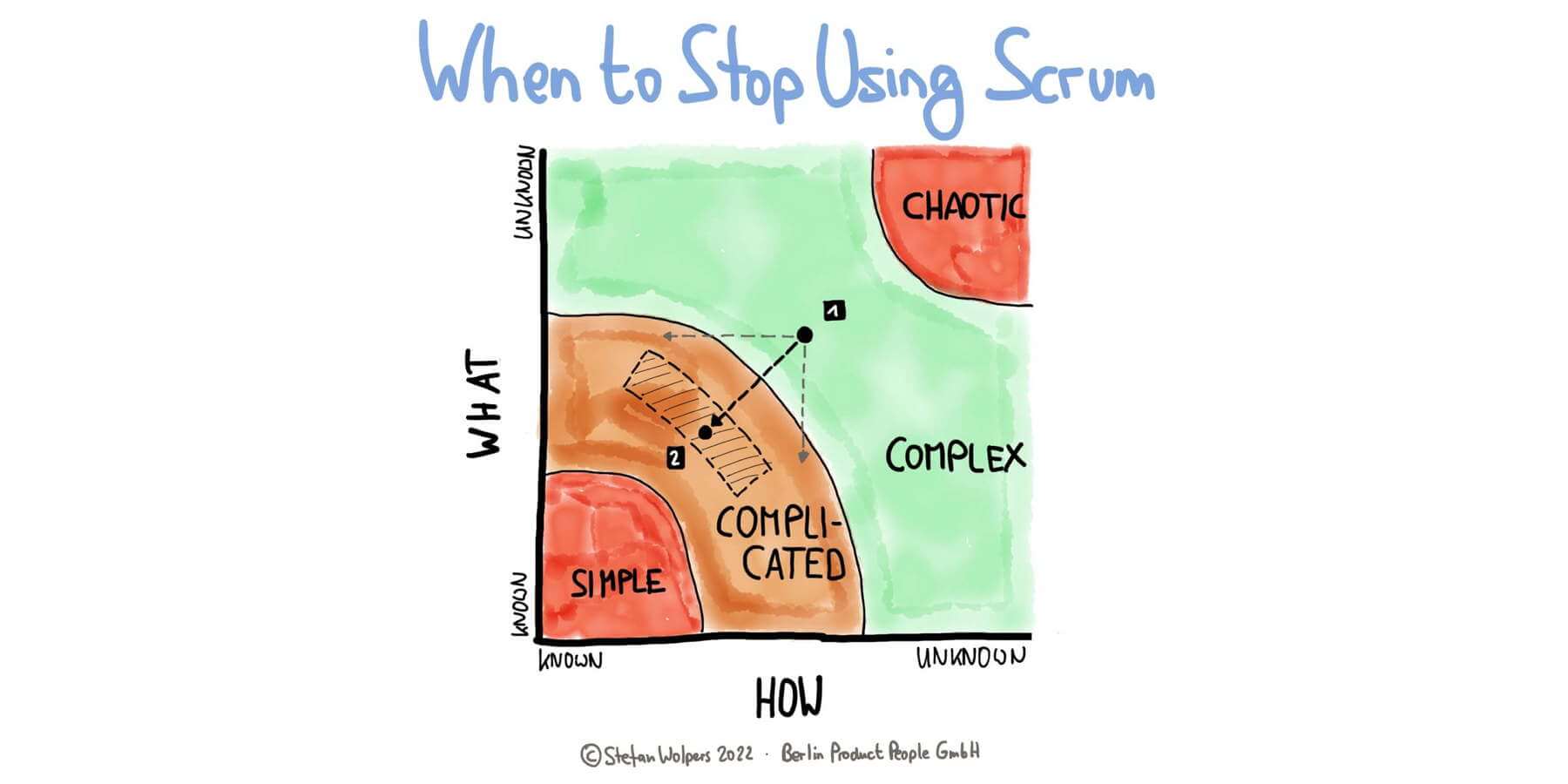
When is the time to look beyond Scrum? After all, many things—ideas, practices, mantras, etc.—outlive their utility sooner or later; why would Scrum be an exception? Moreover, we are not getting paid to practice Scrum but solve our customers’ problems within the given constraints while contributing to the sustainability of our organization. Scrum is a tool, a helpful practice but neither a religion nor a philosophy. Which brings us back to the original question: Is there a moment when a Scrum team should stop using Scrum?
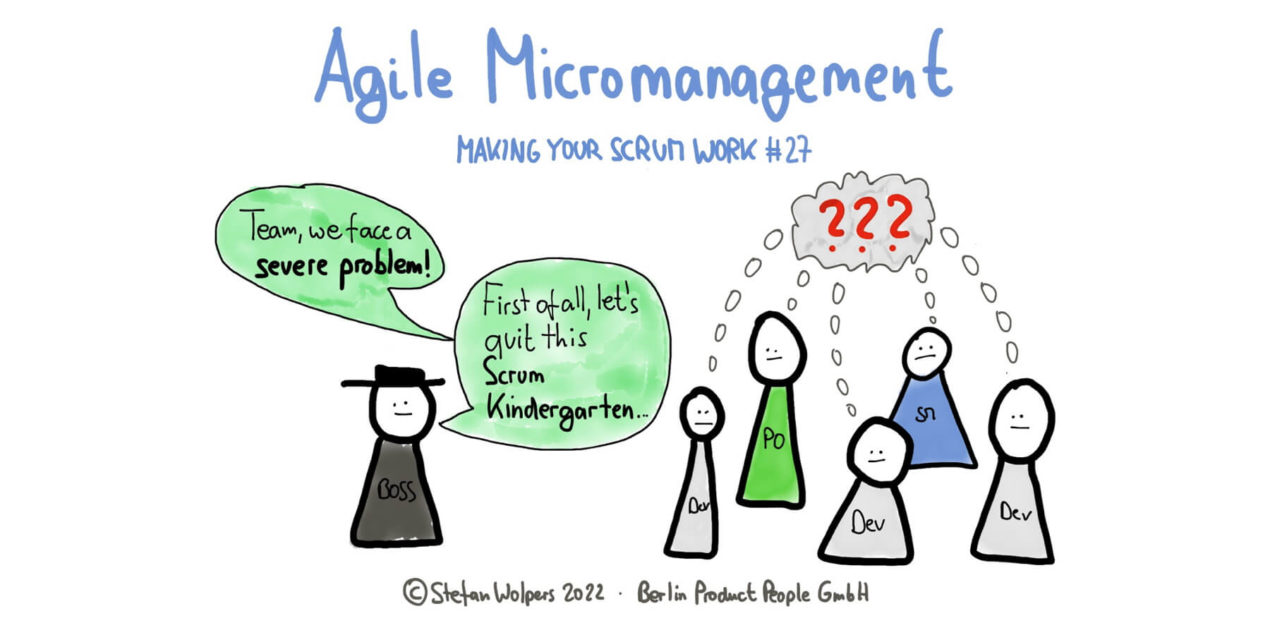
There are plenty of failure possibilities with Scrum. Indeed, given that Scrum is a framework with a reasonable yet short “manual,” this effect should not surprise anyone. For example, the Scrum Guide clearly states the importance of self-management at the Scrum team level. Nevertheless, the prevailing cause of many messed-up attempts to use Scrum result from what I call agile micromanagement, a pseudo-commitment to agile principles only to be overridden whenever it seems beneficial from a stakeholder’s or manager’s perspective.
Join me and delve into the importance of self-managing Scrum teams in less than two minutes.
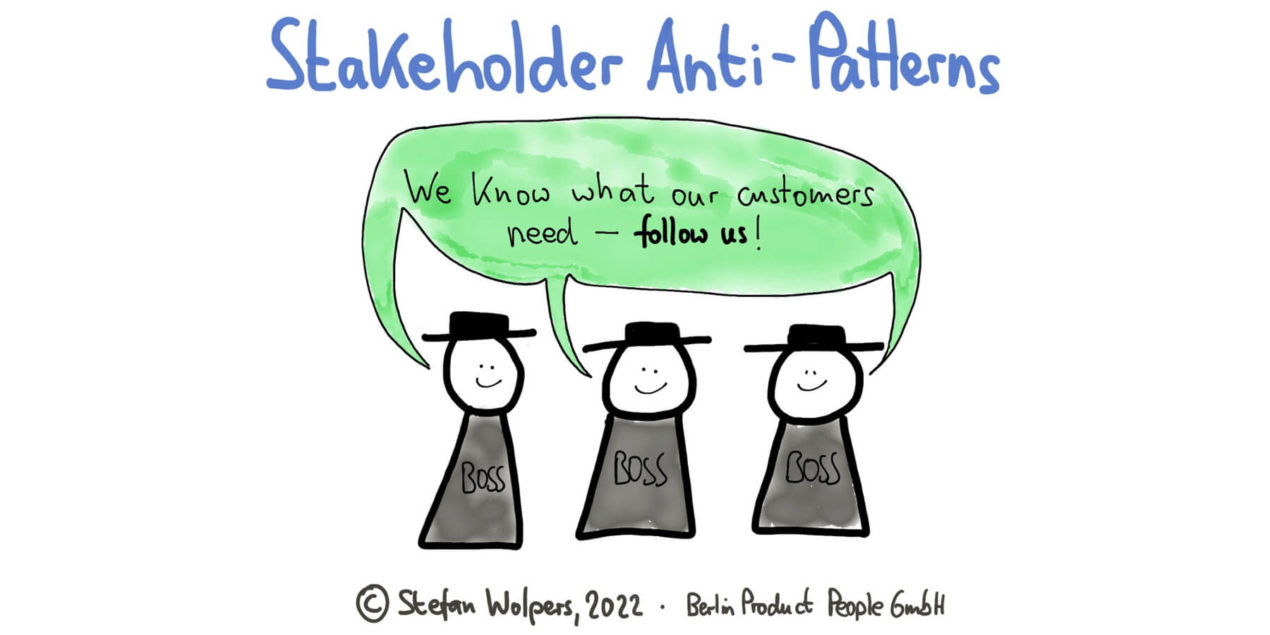
Learn how individual incentives and outdated organizational structures — fostering personal agendas and local optimization efforts — manifest themselves in Scrum stakeholder anti-patterns that easily impede any agile transformation to a product-led organization.
The reasons Scrum Masters violate the spirit of the Scrum Guide are multi-faceted. Typical Scrum Master anti-patterns run from ill-suited personal traits to complacency to pursuing individual agendas to frustration with the team itself.
Read on and learn in this post on Scrum anti-patterns how you can identify if your Scrum Master needs support from the team.