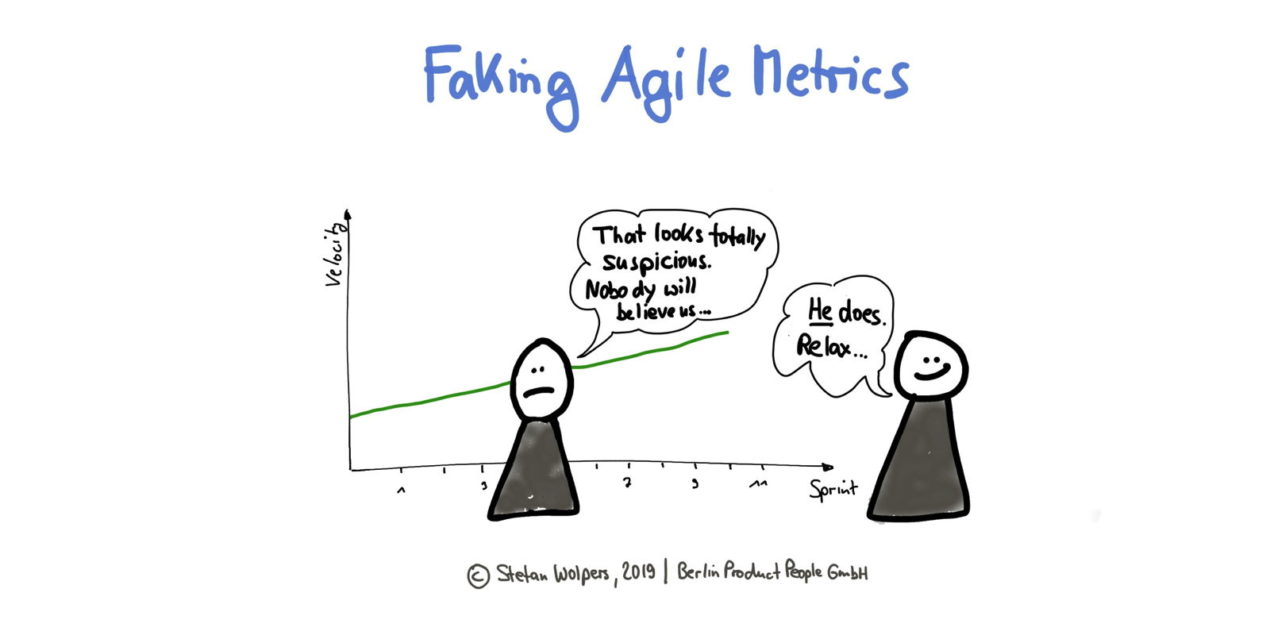
TL; DR: Faking Agile Metrics — An Eye-Opening Exercise
Imagine you’re a Scrum Master and the line manager of your team believes that the best sign for a successful agile transformation is a steady increase in the Scrum Team’s velocity. Moreover, if the team fails to deliver on that metric something is wrong with the Scrum Team. Alternatively, something is wrong with you as you are the Scrum Master and hence responsible for the team’s performance. (Apparently, not faking agile metrics, or being transparent in this case, does not seem to be valued here.)
Learn more about how to coach these kinds of line managers and help them overcome their preference for the industrial past with a simple exercise on how to cook the agile books.
The Agile Metrics Survey 2020 Design: Usually, we start an initiative or project by defining what success would look like and how we would learn that we are successful. Which immediately points at metrics of all kinds. This approach is not different for any attempt to become agile, to turn into a learning organization—at least it should not be.
The question is which metrics have been proven to be successful in the past to support that approach. In other words: is there life beyond velocity?