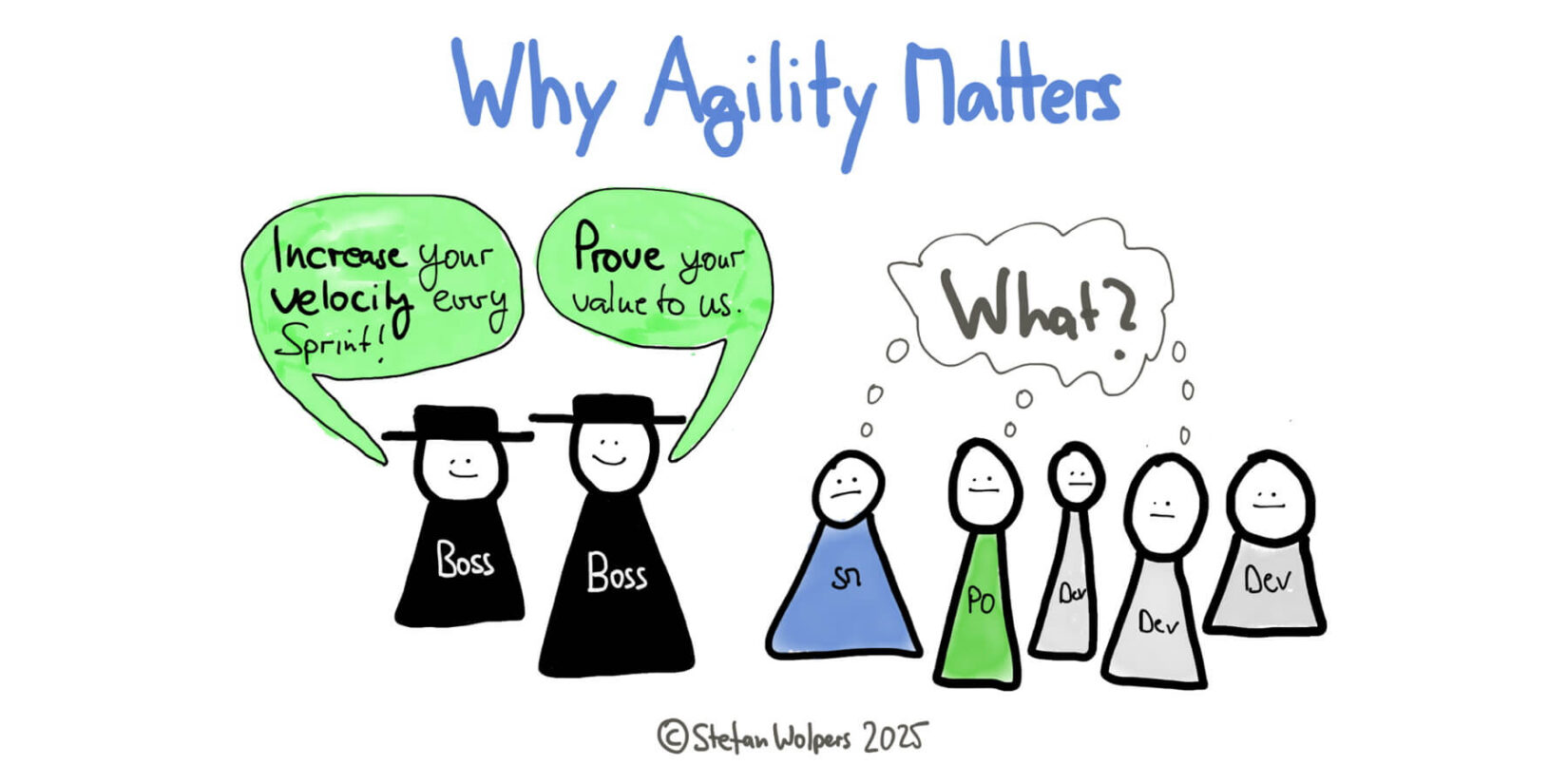
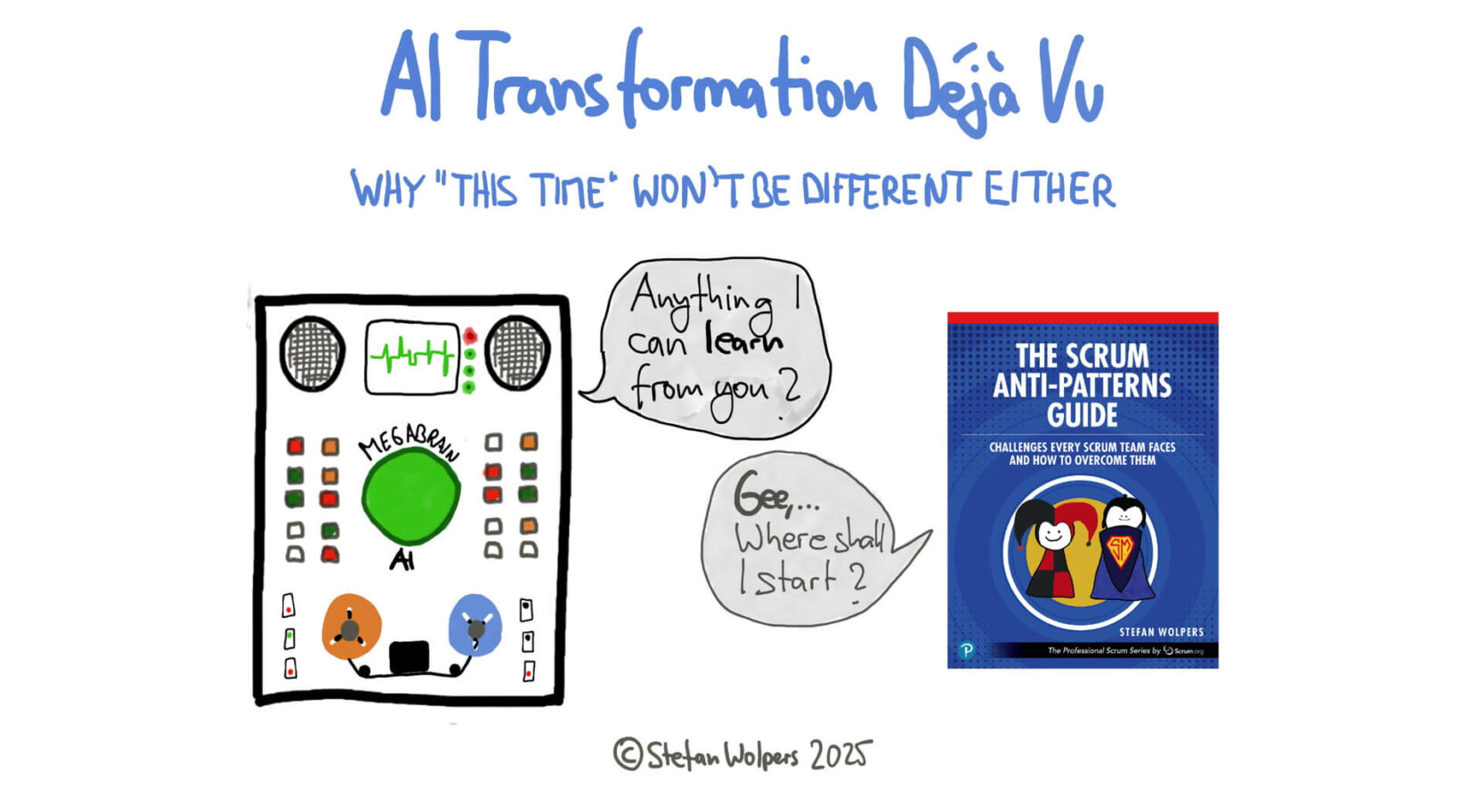
What if your organization’s “Agility” dysfunction isn’t an implementation problem but a missing-conditions problem that switching to, say, a product operating model cannot solve? This article identifies the success factors for agility that are absent in your organization. It gives you concrete Monday-morning actions to test what’s actually possible within your sphere of influence to drive change, because agility matters.
Organizations seem to fail their AI transformation using the same patterns that killed their Agile transformations: Performing demos instead of solving problems, buying tools before identifying needs, celebrating pilots that can’t scale, and measuring activity instead of outcomes.
These aren’t technology failures; they are organizational patterns of performing change instead of actually changing. Your advantage isn’t AI expertise; it’s pattern recognition from surviving Agile. Use it to spot theater, demand real problems before tools, insist on integration from day one, and measure actual value delivered.
Many companies adopt Agile practices like Scrum but fail to achieve true transformation. This “Agile Paradox” occurs because they implement tactical processes without changing their underlying command-and-control structure, culture, and leadership style.
True agility requires profound systemic changes to organizational design, leadership, and technical practices, not just performing rituals. Without this fundamental shift from “doing” to “being” agile, transformations stall, and the promised benefits remain unrealized.
TL; DR: Is There a Need for the Scrum Guide Expansion Pack?
The Scrum Guide Expansion Pack represents a fascinating contradiction in the agile world. While attempting to cure Scrum’s reputation crisis, it may actually amplify the very problems it seeks to solve. Let me explain what this means for practitioners dealing with the aftermath of failed Scrum implementations.
The data couldn’t be more supportive: Despite 25 years of the Agile Manifesto, countless books, a certification industry, conferences, and armies of consultants, we’re collectively struggling to make Agile work. My recent survey, although not targeting Agile failure, still reveals systemic dysfunctions that persist across organizations attempting to implement Agile practices:
Stop treating AI as a team member to “onboard.” Instead, give it just enough context for specific tasks, connect it to your existing artifacts, and create clear boundaries through team agreements. This lightweight, modular approach of contextual AI integration delivers immediate value without unrealistic expectations, letting AI enhance your team’s capabilities without pretending it’s human.