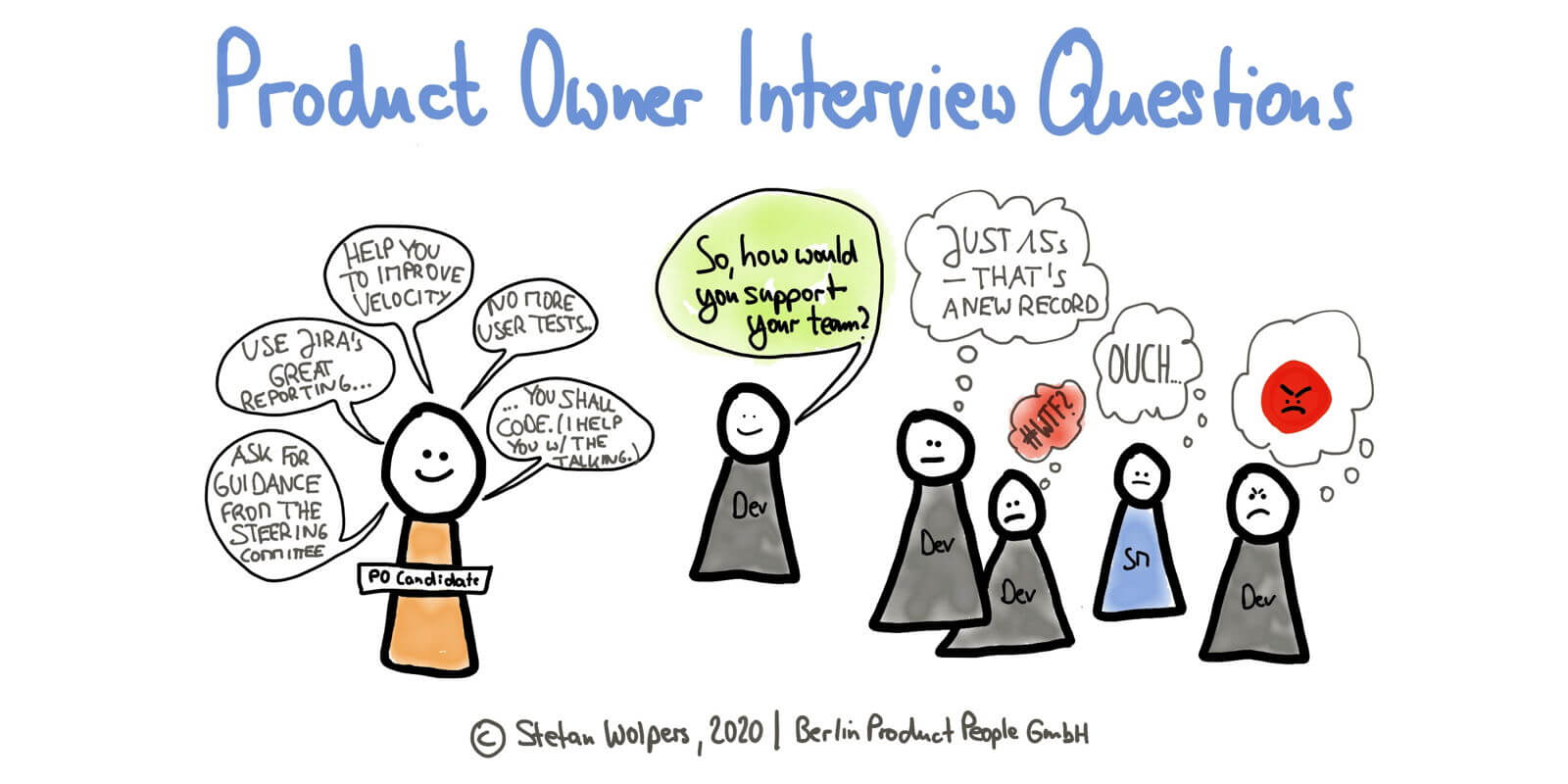

TL; DR: 92 Product Owner Interview Questions to Avoid Imposters
If you are looking to fill a position for a Product Owner in your organization, you may find the following 92 interview questions useful to identify the right candidate. They are derived from my sixteen years of practical experience with XP and Scrum, serving both as Product Owner and Scrum Master and interviewing dozens of Product Owner candidates on behalf of my clients.
So far, this Product Owner interview guide has been downloaded more than 10,000 times.
TL; DR: Estimates Are Useful, Just Ditch the Numbers
Many people dislike estimating work items as estimates supposedly open the path to the misuse of velocity by the managers, reintroducing Taylorism, micro-management, and excessive reporting through the backdoor. To them, for example, the proponents of #noestimates, estimates conflict with basic ideas of agile product development such as self-management, becoming outcome-focused, or leaving the feature factory for good.
I like to suggest a different, less ideological approach: estimates are useful at the team level, just ditch the numbers. How so? Estimation of work items is a fast way for a Scrum team to figure out whether all team members are on the same page regarding the why, the what, and the how of the upcoming work. The numbers are a mere side-effect, probably still valid to inform the team, though. (Indeed, the numbers are not intended to be used beyond the team level.)
By the way, similar to the fact that you cannot “not communicate,” I am convinced that people will always “estimate,” whether they talk about it or not.
TL; DR: The Necessity of Leadership Engagement, OKRs in PM — Food for Agile Thought #310
Welcome to the 310th edition of the Food for Agile Thought newsletter, shared with 33,061 peers. This week, we delve into the necessity of leadership engagement to make change happen. We also show a way out of the ‘answering three questions’ mode for your Daily Scrum, and we ask: Can you take self-management to new heights even within a small organization of 7-8 people?
We then characterize traits of high-performing product teams, from healthy skepticism to experimentation to dealing with uncertainty. Moreover, we delve into improving the relationship between the product folks and business stakeholders within your organization in a mutually beneficial way, and we point at three first principles of valuable roadmaps, an excellent primer for stakeholders outside a product team.
Lastly, we share a free Excel-based tool for organizations that aspire to excel at software delivery practices to improve value creation, as well as a valuable guide to help you apply OKRs when you’re working in product management.
TL; DR: Adapt How You Lead for Agile Success w/ Johanna Rothman — ACB21
Too many people say, “With agile, we don’t need no stinkin’ managers.” However, because managers create and refine the culture, modern managers create and refine the agile culture. Without modern management, any agile initiative will die. It’s time to invite managers to change their behaviors and create a real agile culture. Learn from Johann Rothman how to adapt your leadership style for agile success as a manager in an agile organization in this 54-minute long video from the Agile Camp Berlin 2021.
Welcome to the Download Page for the “97 Scrum Master Interview Questions” PDF
The “97 Scrum Master Interview Questions” guide is available in its seventh edition. Learn about 14 topical areas essential for an assessment of candidates for Scrum Master positions.
TL; DR: Say Agile One More Time, Scrum Master Salary Report 2022 — Food for Agile Thought #309
Welcome to the 309th edition of the Food for Agile Thought newsletter, shared with 33,012 peers. This week, we enjoy agile in memes — ‘Say Agile One More Time;’ we learn about a remarkable transformation of an industrial behemoth, and we share a beginner list of decision-making patterns, from consensus to rock, paper, and scissors.
We then reflect on the unfortunate ‘practice’ of putting carts before horses when product managers talk to the C-level, and we share six tips on how product folks can annoy their engineering teammates with outstanding efficacy. Also, we point at a critical part of the product creation process that bears many risks: Adding product features is fun and addictive. Now, what if no one uses them?
Lastly, we suggest a practice to test the health of your product creation process, and we shed some light on how long it took startups at Altar.io to build minimum viable products across several industries.