In Scrum, the Sprint Goal serves as the spotlight that provides transparency to the Sprint Backlog, as the flag that allows the team to rally, and the one thing that provides focus and cohesion. No Scrum team has ever been able to reap the benefits of the framework to the fullest extent without making the Sprint Goal a cornerstone of its efforts. The following nine Sprint Goal principles point at critical issues any Scrum team needs to consider on its path to excellence.
TL; DR: Tracking Learnings, Impact Mapping for Fun & Profit — Food for Agile Thought #363
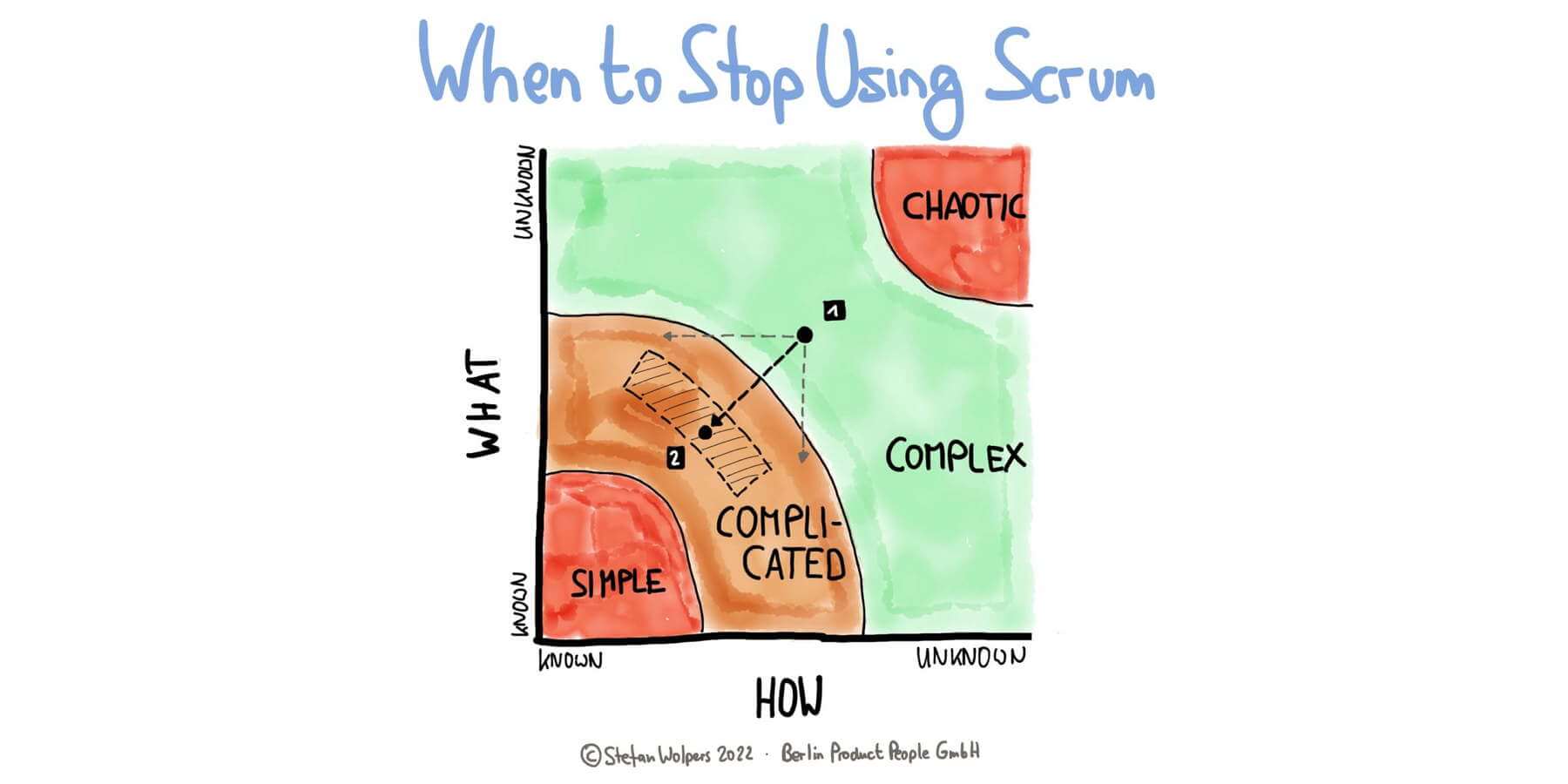
Welcome to the 363rd edition of the Food for Agile Thought newsletter, shared with 36,042 peers. This week, we delve into tracking learnings and what to do with all the “stuff” that continuous product discovery produces. Also, we analyze the utility of agile games as change-supporting tools and share a decision-making approach to scaling, from “don’t scale” to “managing dependencies between work to be done.” Finally, we consider the fact that “simple” covers a vast ground and has the potential to cause confusion and misinterpretation. (You may want to reconsider your KISS approach.)
Then, we advocate getting comfortable with impact mapping when you have a “vague goal but haven’t yet done a good exploration of how to get there.” Again, we also stress the importance of product discovery, given that we all love “our ideas” when building new businesses, before we point out five practices that will enable your team to take full advantage of the Product Backlog as a tactical tool.
Finally, we appreciate Paulo Caroli’s curated list of popular practices for organizing meetings; he also provides a downloadable PDF and a Mural template. On top of that, Andrea Saez shares the “Customer Value Explorer,” a canvas to map customer value against business objectives. Lastly, Google Cloud published the “2022 Accelerate State of DevOps Report,” focusing on security.
TL; DR: HoA #44: Honey, I Shrunk the Backlog w/ Allan Kelly
In this energizing 44th Hands-on Agile session on product backlog management, Allan Kelly clarified one thing: The backlog was a great idea until it wasn’t. Many successful teams deliver backlog items daily, but their backlogs aren’t getting smaller. The never-ending backlog overshadows delivery success. Product discovery, dual-track agile, OKRs, etc., make it worse by accelerating backlog growth without taking any of the rotting items away.
Learn more about Allan’s remedy for oversized product backlogs in less than an hour.
TL; DR: Agile Military — Food for Agile Thought #362
Welcome to the 362nd edition of the Food for Agile Thought newsletter, shared with 36,013 peers. This week, we delve into lessons learned on leadership in the agile military. We also read a curated collection of articles, “facts, evidence, and opinions from relevant sources without vested interests” on the usefulness of SAFe® and analyze common reasons why organizations do not reap the expected benefits of becoming Agile. Moreover, we ask: Do we need a CUO, a Chief Unblocking Officer?
Then, we dissect strategy anti-patterns, from committing too early to prospective customers to dodging controversial calls while delving into product leadership, team objectives, and the importance of context and clarity. Also, Jon Moore and Marty Cagan continued their article series, detailing why consequential transformations to product-led organizations require different decision processes, and Kate Kaplan created an overview of the human side of DesignOps: who is doing what and talking to whom?
Finally, we sketch various mental models, concepts, and “laws” helpful to Scrum Masters and agile coaches and delve into the relationship between hypothesis-driven development, validation, and the minimum viable product. Lastly, we learn that just because your Sprint board has columns and cards does not mean it is a Kanban board.
TL;DR: Scrum Master Salary Report 2023 — An Anonymous Poll by the Community for the Community
The purpose of this anonymous Scrum Master salary report 2023 is to create a clear, data-backed benchmark that allows everyone in the agile community to understand whether their compensation is adequate. (And yes, the report will cover Scrum Masters as well as Agile Coaches, both employed and freelancing.)
The goal is to have a sufficient number of replies – that would be at least 1,000 – by the end of November 2022 to create the report in time for January 2023. Of course, the report will be available for free.
TL; DR: Useful Agile Metrics — Food for Agile Thought #361
Welcome to the 361st edition of the Food for Agile Thought newsletter, shared with 35,942 peers. This week, we enjoy an Agile 2022 workshop, where Doc Norton deep-dives into the tricky issue of useful agile metrics, from the problematic ones, like velocity, to gaming metrics to selecting metrics that support your team. Also, we dissect contributing factors to successful agile transformations while pointing at what to avoid, from cargo-cultism to HyperScrum-dementalism to agile scapegoatism, and delve into the rationale of higher purpose goals, from motivating people to driving autonomy. Finally, did you know that the fourth element of Scrum’s empiricism—beyond transparency, inspection, and adaptation—is hiding in plain sight in a sentence on Scrum Values?
Then, we learn from Lenny Rachitsky how to best proceed in becoming the stakeholder whisperer, while Jon Moore and Marty Cagan sketch necessary changes in how you build products when transforming to become a strong, product-led company. Moreover, John Cutler reflects on the “tension between your go-to-market (GTM) and product teams as you scale,” resulting in more complexity, for example, product debt. By the way, there is also an interview with John by Jason Knight.
Finally, we listen to John Drogosz pitching the advantages of value stream mapping for cross-functional teams to improve their way of working and suggest ten steps to gain any basic industry understanding, from diagrams to glossaries to thought leaders and conferences. Moreover, Rita McGrath elaborates on Kodak’s demise and what the halo effect has to do with it. Think printers from the company that invented digital photography.