TL; DR: Great Strategies, Agile’s Value Focus — Food for Agile Thought #406
Welcome to the 406th edition of the Food for Agile Thought newsletter, shared with 48,537 peers. This week, Jason Cohen discusses the hallmarks of great strategies; Donald Mark Haynes unpacks true agility beyond Scrum; Michael Göthe reviews Stephen Bungay’s insights on leadership drawn from military history; and David Perell examines Elon Musk’s improvement process.
Then, Gary Niemen delves into how Buddhism and meditation principles enhance product management; Jeff Gothelf underscores the value of framing work as a hypothesis; and Roman Pichler identifies common pitfalls in product strategy formulation.
Lastly, Ari Tikka corrects misconceptions about Tuckman’s “Orming” and its confusion with Katzenbach and Smith’s curve; Joshua Kerievsky champions probabilistic forecasting, using Monte Carlo simulations; and Enzo Avigo introduces Engineering-driven development (EDD), emphasizing engineer-led product processes at the expense of product managers.
TL; DR: Adherence to Legacy Systems, Processes, and Practices
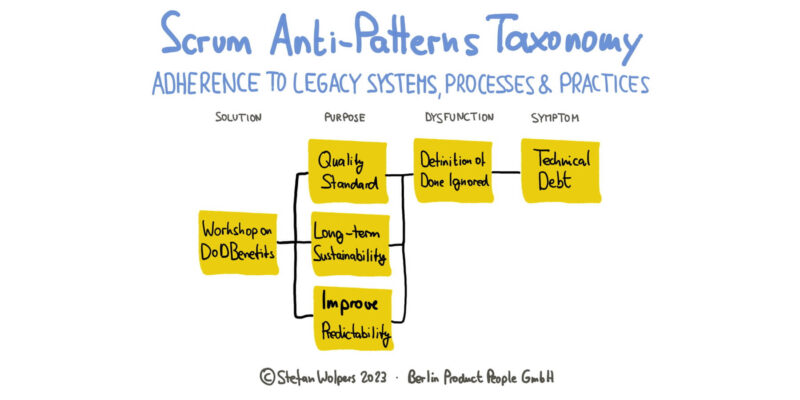
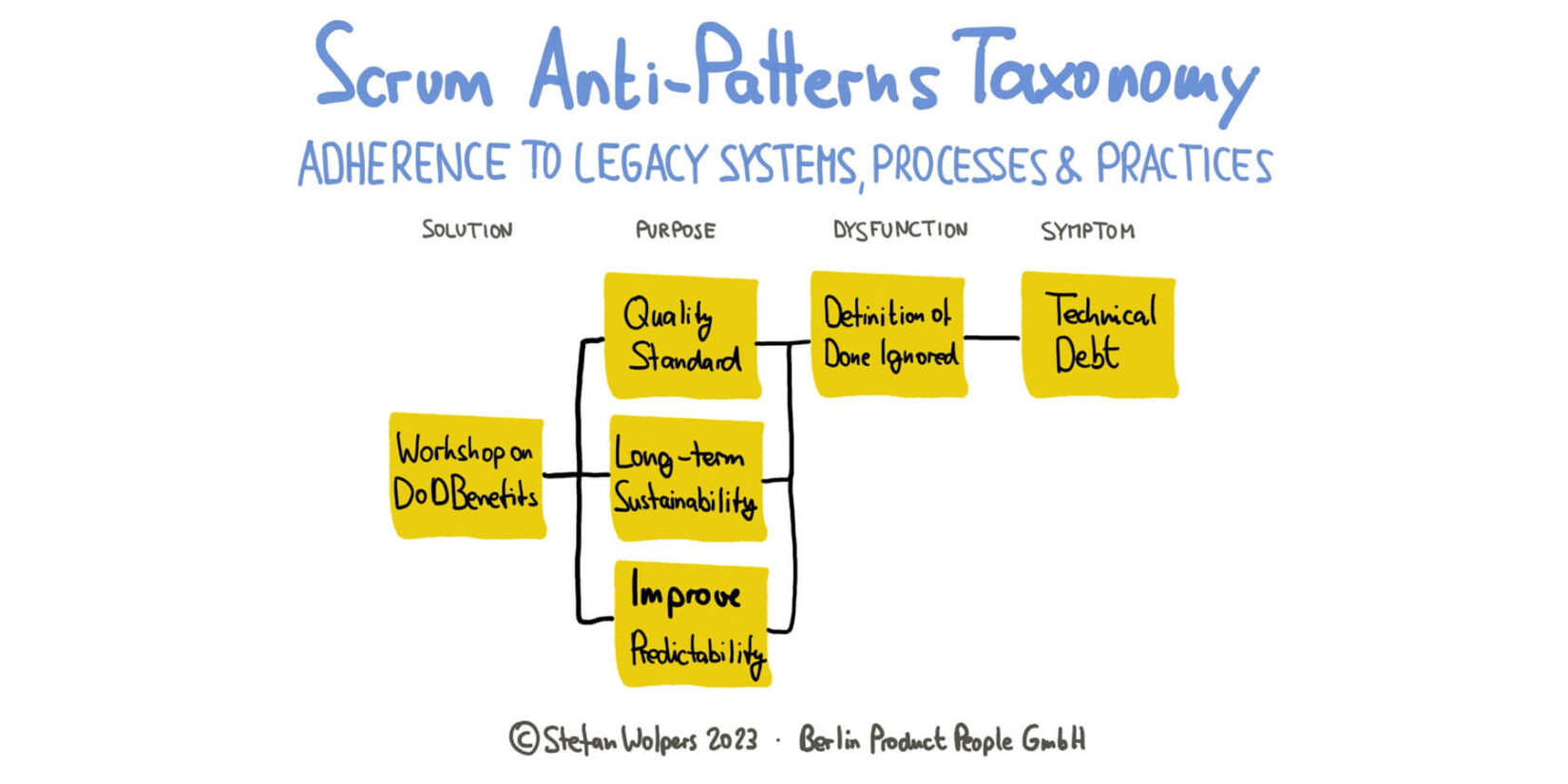
Administrative overreach and micromanagement in Scrum mainly arise from clinging to legacy systems and traditional (management) practices, leading to rigidity and misapplication of Agile principles. The excessive control by stakeholders and the management level stifles creativity and adaptability, disrupting planning and hindering a Scrum team’s growth. Moreover, these categories from the Scrum anti-patterns taxonomy often emphasize an unbalanced focus on short-term gains, neglecting long-term strategy, value creation, and the essential alignment among all stakeholders to succeed in uncertainty.
Learn how these Scrum anti-patterns categories manifest themselves and how they affect value creation for customers and the long-term sustainability of the organization.
This is the first of three articles analyzing the 183 anti-patterns from the upcoming Scrum Anti-Patterns Guide book. The following article will address communication and collaboration issues at the team and organizational levels.
TL; DR: Dysfunction Mapping — Food for Agile Thought #405
Welcome to the 405th edition of the Food for Agile Thought newsletter, shared with 48,416 peers. This week, we delve into Maarten Dalmijn’s introduction of “Dysfunction Mapping” to address organizational complexities, explore the principles behind Jeff Bezos’ success as dissected by Jason Evanish, and learn about the emotional roots of resistance to change with insights from David Burkus. Additionally, Miss_HayaX reflects on the prevalent use of Scrum in technical projects and explores when teams might consider alternatives.
Then, we discover Peter Yang’s valuable insights on acing behavioral interviews for PM candidates, explore what Deb Liu learns from the 1960s Milgram experiment about requests, and dive into Lenny Rachitsky’s comprehensive playbook for kickstarting and scaling B2B businesses.
Finally, we explore Tim Metz’s advocacy for essential “team health checks,” delve into Christoph Roser’s insights into the “soft power” of the Toyota Production System, unravel Kim Scott’s reflections on the misconceptions surrounding Radical Candor, and find out about a precarious alternative approach to Product Backlog refinement.
TL; DR: The Minimum Viable Library for Scrum Masters
The Minimum Viable Library is available! Explore a series of carefully curated collections of essential books, newsletters, podcasts, and tools to elevate your agile expertise.
Read on and learn how the recommendations for Scrum Masters cover a wide range of topics, including Scrum, servant leadership, customer value creation, coaching teams, improving team dynamics through Retrospectives, and navigating agile enterprise transformations.
TL; DR: Social Status — Food for Agile Thought #404
Welcome to the 404th edition of the Food for Agile Thought newsletter, shared with 48,271 peers. This week, we explore intriguing perspectives on social dynamics: David Pinsof delves into the psychology of social status, while Alex Ewerlöf discusses ownership in project management. We also feature Daniele Altomare’s insights on ethics in Agile environments and John Cutler’s viewpoint on the influence of culture on organizational frameworks.
Then, Packy McCormick warns about the pitfalls of execution without a robust strategy, using Breather as a case study. Aatir Abdul Rauf identifies common blunders in product discovery that affect success. Also, Melissa Perri and Teresa Torres address complex issues in large companies, emphasizing skilled product management and standardized processes.
Finally, Justin Garrison examines Amazon’s unique document-centered meeting approach. Lenny Rachitsky and Dr. Nicole Forsgren unpack productivity in DevOps with the DORA and SPACE frameworks. Dave Hora advocates for strategic agility in software production, while Casey Rosengren explores non-coercive leadership strategies. Lastly, a McKinsey report delves into the growth and impact of generative AI tools in organizations.
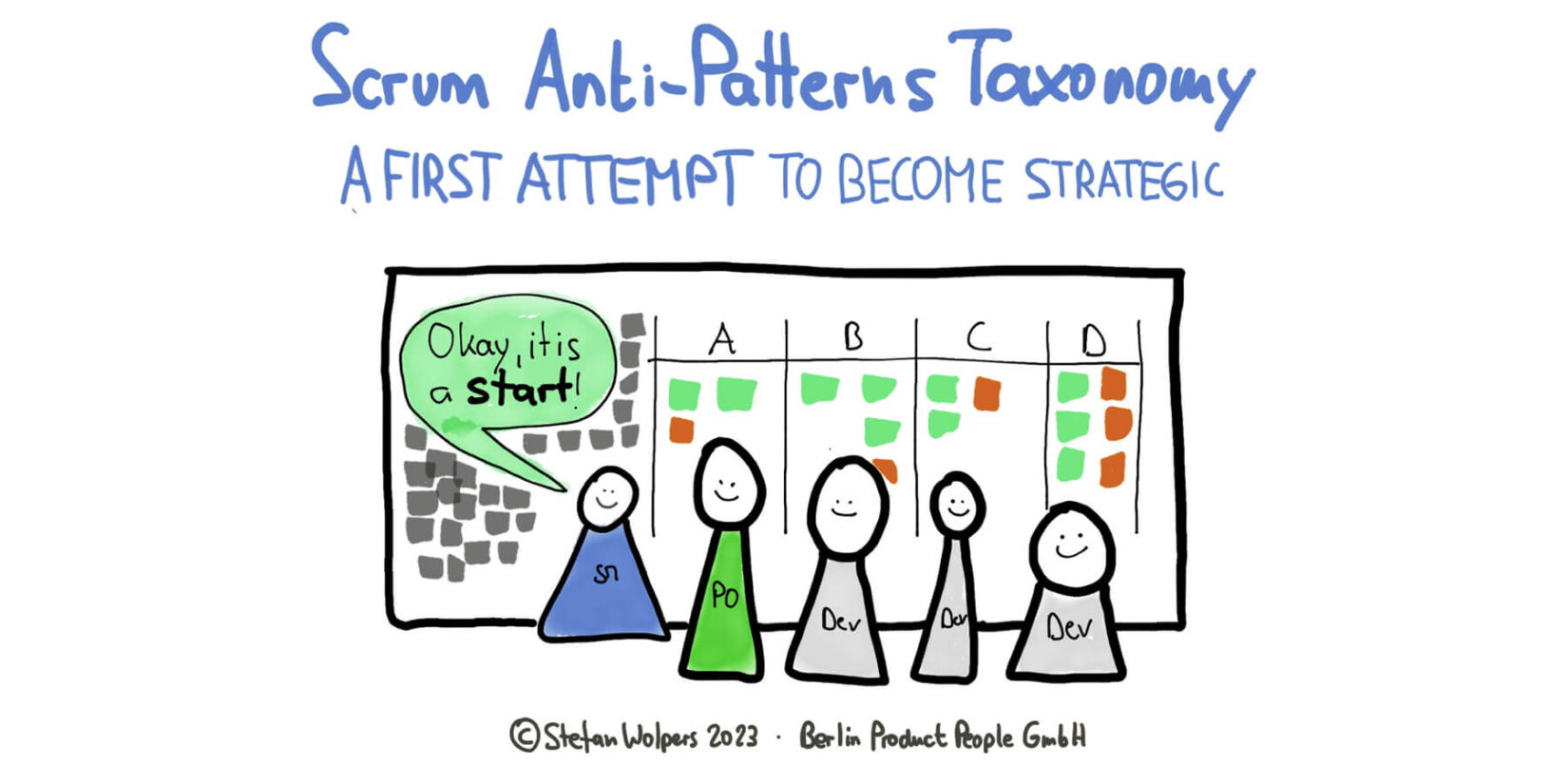
As the editing process of the Scrum Anti-Patterns Guide is nearing its end, it is time to take the next step. The brand new Scrum Anti-Patterns Guide offers 180-plus anti-patterns organized by roles, events, artifacts, and commitments. However, the Guide does not create a meta-level or abstract Scrum anti-patterns taxonomy. Consequently, the Guide does not provide an overall strategy to counter or evade Scrum anti-patterns at a personal, cultural, structural, or organizational level. The question is whether it is possible to create such a taxonomy.
Read on and learn more about the first steps of completing the big picture of Scrum anti-patterns.