AI FOMO comes from seeing everyone’s polished AI achievements while you see all your own experiments, failures, and confusion.
The constant drumbeat of AI breakthroughs triggers legitimate anxiety for Scrum Masters, Product Owners, Business Analysts, and Product Managers: “Am I falling behind? Will my role be diminished?”
But here’s the truth: You are not late. Most teams are still in their early stages and uneven. There are no “AI experts” in agile yet—only pioneers and experimenters treating AI as a drafting partner that accelerates exploration while they keep judgment, ethics, and accountability.
Disclaimer: I used a Deep Research report by Gemini 2.5 Pro to research sources for this article.
TL; DR: Vibe Coding for PMs — Food for Agile Thought #509
Welcome to the 509th edition of the Food for Agile Thought newsletter, shared with 40,501 peers. This week, Aatir Abdul Rauf highlights the rise of vibe coding for PMs as a core skill, offering 23 tips from prototyping to tool chaining. Arbaz Surti reflects on GPT-5’s turbulent launch, urging PMs to prioritize empathy, transparency, and careful rollouts to preserve trust, and Audrey Xu Leung stresses that experimentation succeeds when rooted in ethical, data-driven cultures of curiosity. Jing Hu explores the AI Enthusiasm Paradox between novices and experts, while Ethan Mollick examines Mass Intelligence reshaping trust, expertise, and work.
Next, Ian Vanagas offers nine lessons for building AI features, from guardrails to continuous evaluation. Teresa Torres shares how simple evals and tracing improved Product Talk’s Interview Coach and reinforced discovery habits. Steve Newman cautions that, despite GPT-5’s progress, agentic AI remains far off. Also, Seth Godin suggests creatives either walk away with slower, deeper work or dance with AI tools, and John Cutler maps nine organizational design patterns and strategies to navigate them.
Lastly, Ron Jeffries warns that overreliance on LLMs erodes learning and true ownership of solutions. Pim de Morree shares how Liip’s pay transparency and Hypoport’s role clarity shape authentic self-management; Brian Balfour highlights sudden product market fit collapses triggered by AI shifts, leaving incumbents scrambling, and Addy Osmani distinguishes vibe coding from disciplined engineering, stressing reviews and tests for quality. Finally, Jenn Spykerman cautions that most AI pilots never scale, urging leaders to measure real production ROI.
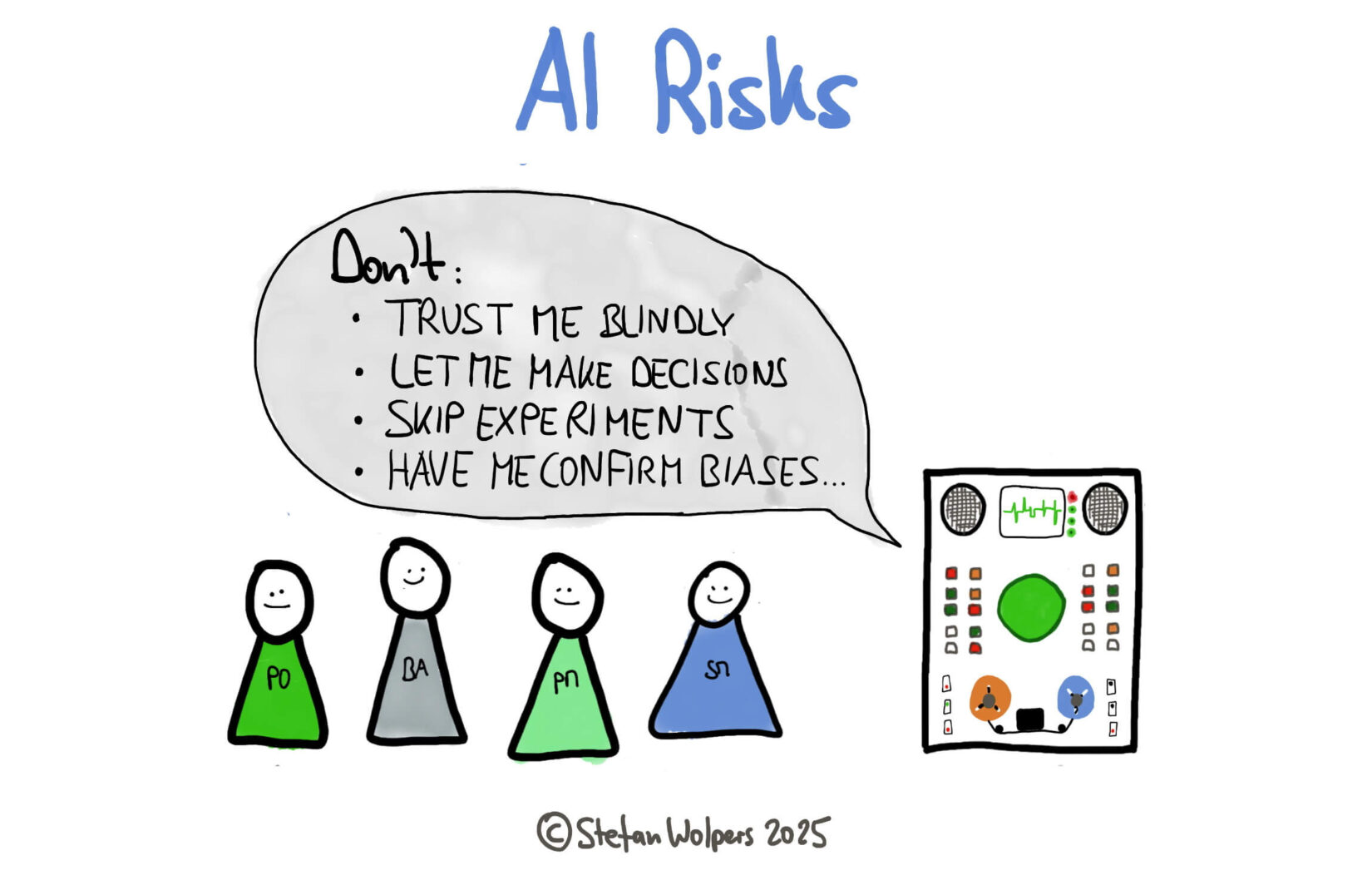
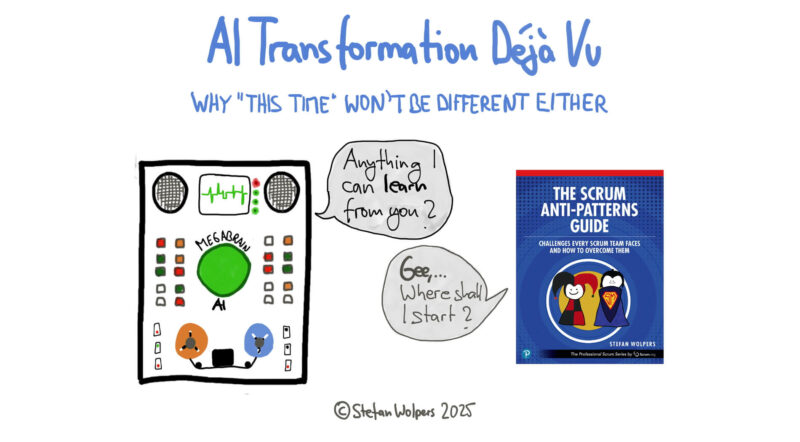
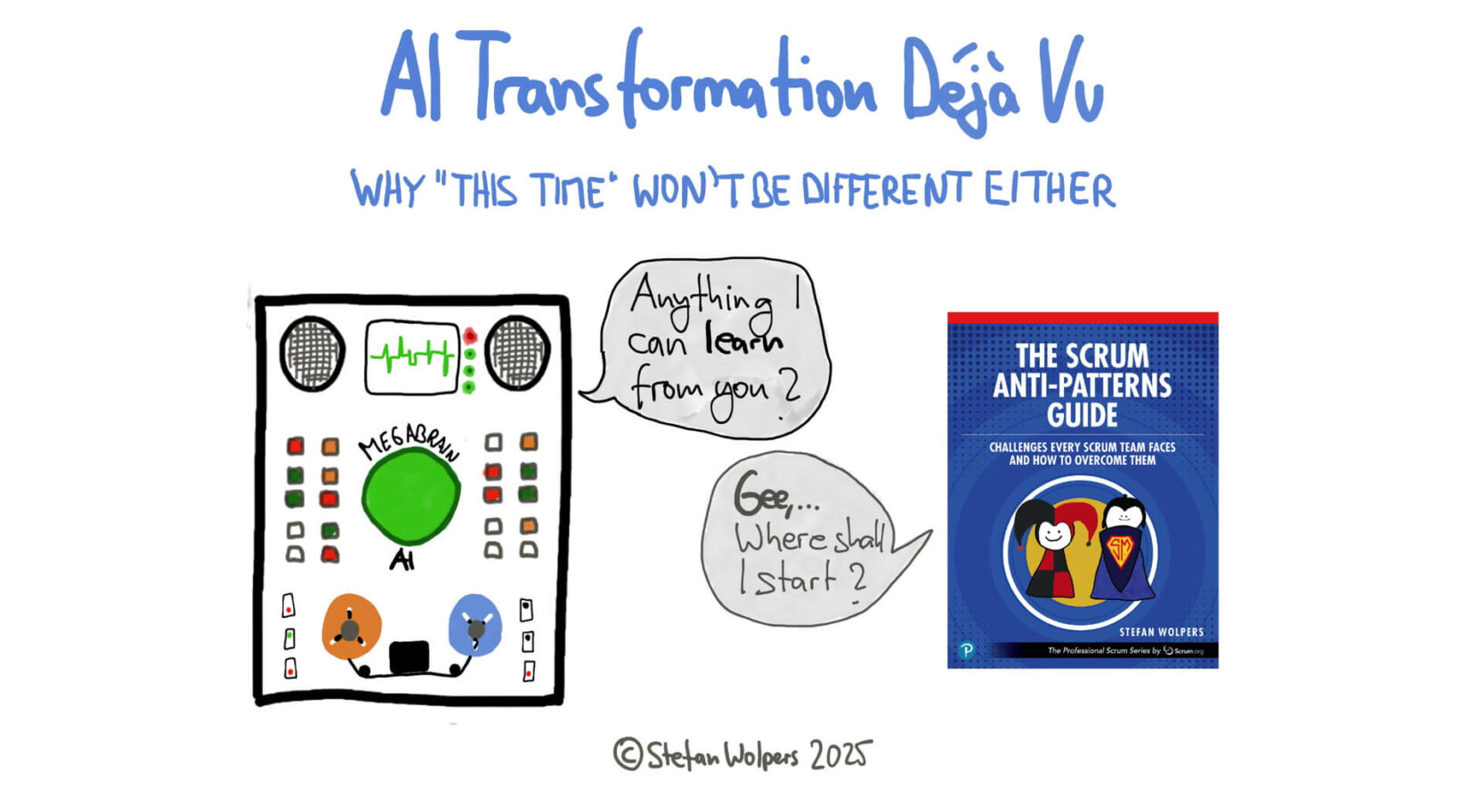
Here’s another one for your collection: The Generative AI Precision Anti-Pattern, where organizations wield LLMs like precision instruments when they’re probabilistic tools by design. Sound familiar? It’s the same pattern we see when teams cargo-cult agile practices without understanding their purpose.
LLMs excel at text summarization and pattern recognition in large datasets, which helps analyze user feedback or generate documentation drafts, but can they be used for deterministic tasks like calculations? If you are not careful with matching your problem to the right tool, you end up building issues of all kinds into the foundation of your product.
What can you do about it? Spoiler alert: The fix isn’t better prompting, but architectural discipline and tool-job alignment.
TL; DR: AI Employment Effects — Food for Agile Thought #508
Welcome to the 508th edition of the Food for Agile Thought newsletter, shared with 40,487 peers. This week, Erik Brynjolfsson, Bharat Chandar, and Ruyu Chen highlight recent AI employment effects — a 13 percent decline in employment among early-career workers in AI-exposed roles, driven by automation rather than augmentation. Marty Cagan builds on Shreyas Doshi’s product leadership archetypes, emphasizing the irreplaceable role of product craft, and John Cutler encourages teams to treat urgency as a strategic tool. Mustafa Suleyman cautions against overestimating simulated AI consciousness, and James Newhook demonstrates how AI can enhance persona research without replacing human insight.
Next, David Pereira and Anthony Argenziano show how PMs can stay strategic by combining structured discovery with AI support. Anthropic researchers reveal how AI is lowering the barrier for cybercrime at scale. Also, Ant Murphy outlines seven habits of effective, team-first leaders, while Graham Ward defends coaching as a deeply human craft built on trust. Zvi Mowshowitz challenges claims of AI stagnation, pointing instead to flawed expectations and brittle workflows.
Lastly, Tiffany Anderson demonstrates how misaligned teams hinder growth and how a shared understanding of customers accelerates execution. Nick Lichtenberg reveals that a booming shadow AI economy is quietly outperforming official adoption. Sangeet Paul Choudary calls for AI-native business models, not bolt-ons, while Andi Roberts reframes chronic complaints as unmet needs. Finally, Martin Fowler urges hands-on AI experimentation while warning of hallucinations, security risks, and the misleading comfort of surveys and hype cycles.
TL; DR: Choose to Become an AI Leader with the AI 4 Agile Online Course
Your stakeholders already expect AI-enhanced value delivery. While you’re experimenting with prompts, competitors are 10x-ing their customer insights, pattern recognition, product decisions, and delivery speed. AI isn’t another skill to learn; it is THE survival skill for knowledge workers. The following 18 months separate agile leaders from followers—and the AI 4 Agile Online Course bridges that gap.
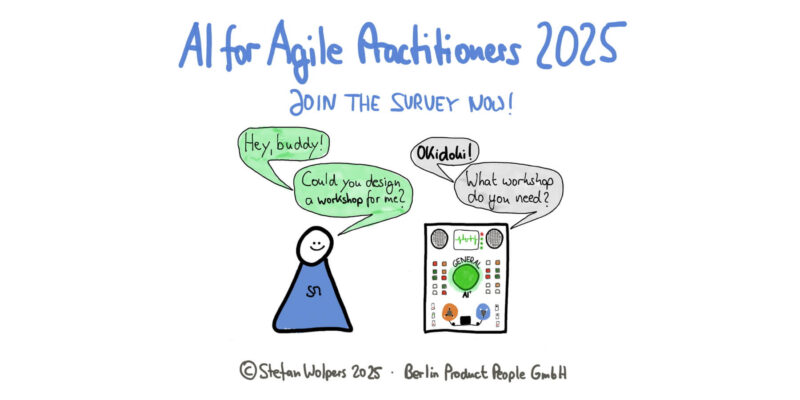
We’ve all been there: You’re preparing for the next Retrospective, and you turn to ChatGPT for help. “Give me some Retrospective ideas,” you type. What do you get back? Generic templates you’ve seen a hundred times before: Set the Stage, Gather Data, Generate Insights, Decide What to Do, and Close the Retrospective. (Kudos to Esther Derby and Diana Larsen for the format!) The problem isn’t the AI. It’s how we’re asking: We are ignoring the benefits of Meta Prompting or having a conversation with the AI before jumping to task completion.