
TL; DR: Career Success Factors — Food for Agile Thought #523
Welcome to the 523rd edition of the Food for Agile Thought newsletter, shared with 35,802 peers. This week, Addy Osmani reflects on 14 years at Google, showing how user focus, clear thinking, and steady learning are true career success factors. Janna Bastow pushes back on traditional roadmaps, urging teams to ditch false certainty in favor of action-based planning. Elena Verna and Jonathan Yagel make the case for Building in Public as a trust-building engine. Meanwhile, technicalities warns of uneven AI progress, and Tim Tully et al. see a durable AI boom shaping enterprise adoption.
Next, Roman Pichler urges product teams to lead themselves, stressing shared ownership, clear authority, and skilled coaching. Joshua Seiden reframes AI-savvy product managers as translators, not engineers. OpenAI launches GPT-5.2, highlighting faster reasoning, vision, and tool use. Gavin Baker and Patrick O’Shaughnessy break down AI infrastructure ROI as a game of tokens, cycles, and execution. Shreyas Doshi demystifies micromanagement by showing when it blocks progress and when it clarifies expectations.
Then, OpenAI highlights a widening performance gap as enterprise AI adoption deepens. John Cutler urges teams to map real operating dynamics rather than cling to neat hierarchies. Cris Beswick warns that innovation needs intentional slack, not overworked teams, and Peter Yang offers practical tips for generating consistent, brand-aligned AI visuals. Finally, Erik Thorsell breaks down why estimates frustrate developers and matter to product owners, calling for transparency over false precision.
Did you miss the previous Food for Agile Thought issue 522?
🗞 Shall I notify you about articles like this one? Awesome! You can sign up here for the ‘Food for Agile Thought’ newsletter and join 35,000-plus subscribers.
🎓 Join Stefan in one of his upcoming Professional Scrum training classes!
🏆 The Tip of the Week: Career Success Factors
: 21 Lessons from 14 Years at Google
Addy Osmani shares 21 hard-earned lessons from 14 years at Google, emphasizing that thriving in (not just) engineering is more about user empathy, collaboration, clarity, and compounding growth than pure (coding) skill and raw talent.
🎯 Product
: Building In Public is scary. Do it anyway.
Elena Verna and Jonathan Yagel argue that Building in Public is essential for fast-moving digital and AI teams, fostering trust, momentum, and loyalty by sharing progress frequently rather than waiting for perfect launches.
(via ProdPad): The Only Thing That Matters On Your Roadmap Is the Next Step
Janna Bastow argues that roadmaps create false certainty, exhaust teams, and stall learning, while step-based planning and focusing on the next meaningful action reduces overwhelm, manages uncertainty, and lets strategy emerge through progress.
: Should Product Teams be Self-Managing?
Roman Pichler argues that product teams should be self-managing, sharing leadership and ownership to improve decision-making, motivation, and speed, provided they have clear authority, disciplined collaboration, portfolio alignment, and skilled coaching.
: Product People Must Use AI To Write Code! (And other incredibly dumb ideas the AI Hype would have you believe).
Joshua Seiden argues that product managers must understand AI without becoming engineers, framing the PM as a translator who asks good questions, respects role boundaries, and treats AI as an amplifier of core skills.
🧠 Artificial Intelligence
(via LessWrong): AI in 2025: gestalt
technicalities argues that 2025 AI progress looks impressive but uneven, driven by cost tradeoffs, with fragile benchmarks, obscured frontier capabilities, and safety gains offset by rising agentic and alignment risks.
and (via Invest Like the Best): 📺 GPUs, TPUs, & The Economics of AI Explained
Gavin Baker and Patrick O‘Shaughnessy discuss AI infrastructure economics, arguing that cost per token, chip cycles, and verifiable tasks drive ROI, while hardware advances and integration determine durable advantage long term.
(via OpenAi): Introducing GPT-5.2
OpenAI introduces GPT-5.2 as its most capable model for professional work, claiming significant gains in speed, cost efficiency, reasoning, coding, long-context analysis, vision, and tool use, with early enterprise users reporting substantial daily time savings.
(via OpenAi): The State of Enterprise AI
OpenAI reports that enterprise AI adoption is accelerating in both breadth and depth, with usage expanding across industries, increasing productivity, enabling new tasks, and creating performance gaps between frontier and average organizations.
(via Menlo Ventures): 2025: The State of Generative AI in the Enterprise
Tim Tully, Joff Redfern, Deedy Das, and Derek Xiao argue that enterprise AI represents a sustained boom rather than a bubble, citing rapid adoption, real revenue, application-focused spending, strong app startups, and incumbent dominance in infrastructure.
🖥 💯 🇬🇧 AI for Agile BootCamp #5 — January 29 – February 19, 2026
The job market’s shifting. Agile roles are under pressure. AI tools are everywhere. But here’s the truth: the Agile pros who learn how to work with AI, not against it, will be the ones leading the next wave of high-impact teams.
So, become the one who professional recruiters call first for “AI‑powered Agile.” Be among the first to master practical AI applications for Scrum Masters, Agile Coaches, Product Owners, Product Managers, and Project Managers.
Tickets also include lifetime access to the corresponding online course, once it is published. The class is in English. 🇬🇧
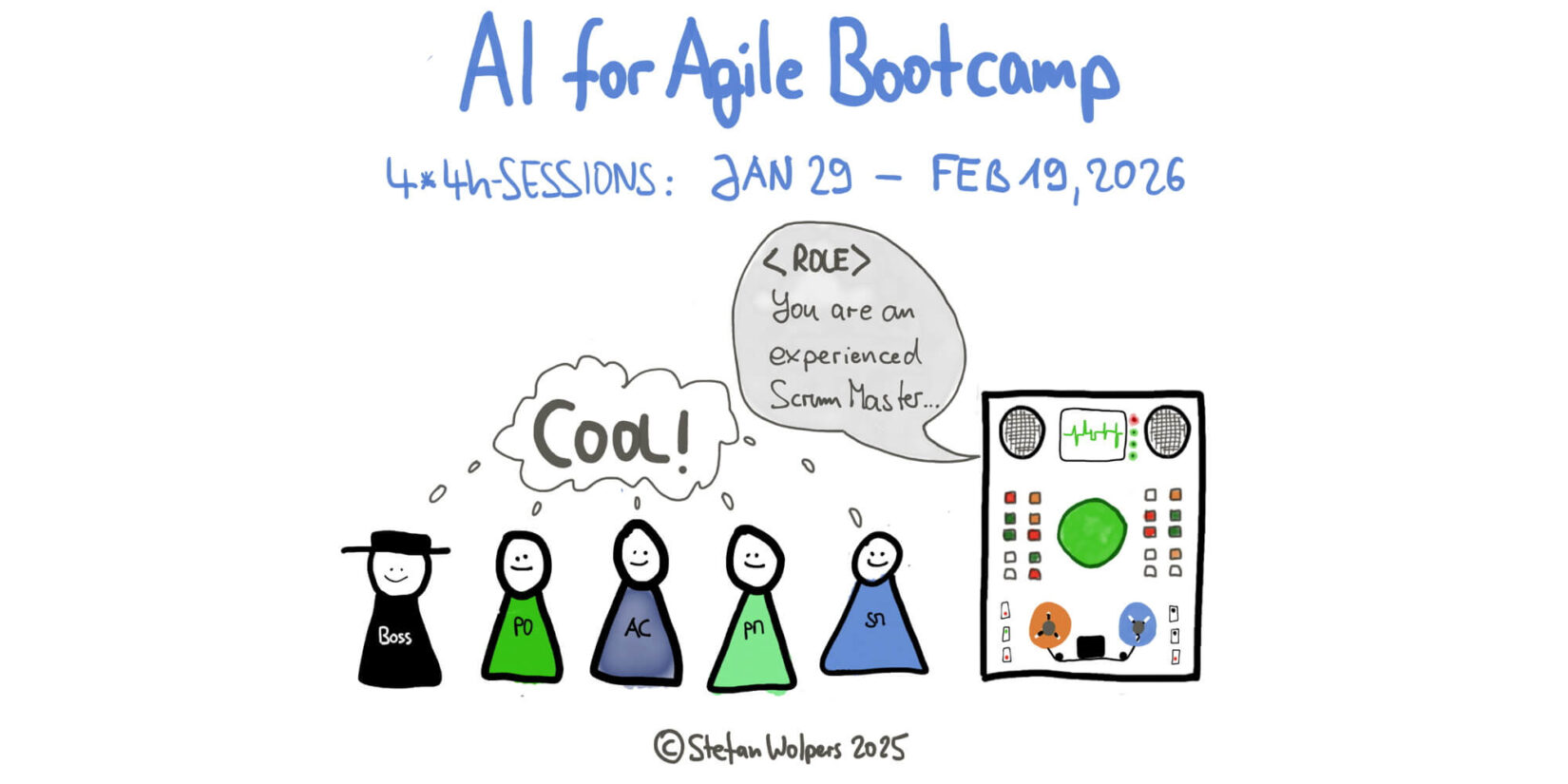
Learn more: 🖥 💯 🇬🇧 AI for Agile BootCamp #5 — January 29 – February 19, 2026.
Customer Voice: “The AI for Agilists course is an absolute essential for anyone working in the field! If you want to keep up with the organizations and teams you support, this course will equip you with not only knowledge of how to leverage AI for your work as an Agilist but will also give you endless tips & tricks to get better results and outcomes. I thoroughly enjoyed the course content, structure, and activities. Working in teams to apply what we learned was the best part, as it led to great insights for how I could apply what I was learning. After the first day on the course, I already walked away with many things I could apply at work. I highly recommend this course to anyone looking to better understand AI in general, but more specifically, how to leverage AI for Agility.” (Lauren Tuffs, Change Leader | Business Agility.)
➿ Agile & Leadership
: Why Labeling Relationships Is So Important
John Cutler explores how labeling relationships between objects in company operating systems reveals assumptions, avoids flawed scaling logic, and exposes real dynamics. He urges teams to model messy networks rather than tidy hierarchies.
: The Slipstream Model of Competence
Maarten Dalmijn explains that competence grows fastest in high-trust environments, where people receive slightly more trust than deserved. In contrast, low trust creates drag, erodes competence, and drives capable people away.
: Brittleness paradox: why organisations break before they innovate -
Cris Beswick argues that organisations that demand innovation while running at full capacity become brittle, miss obvious ROI, and lose talent, because innovation requires protected slack and leadership choices, not spare-time heroics.
📯 Agile Is Dead, Long Live Agility
Your LinkedIn feed is full of it: Agile is dead. They're right. And, at the same time, they're entirely wrong.
The word is dead. The brand is almost toxic in many circles; check the usual subreddits. But the principles? They're spreading faster than ever. They just dropped the name that became synonymous with consultants, certifications, transformation failures, and the enforcement of rituals.
You all know organizations that loudly rejected "Agile" and now quietly practice its core ideas more effectively than any companies running certified transformation programs. The brand failed. The ideas won.
So why are we still fighting about the label?
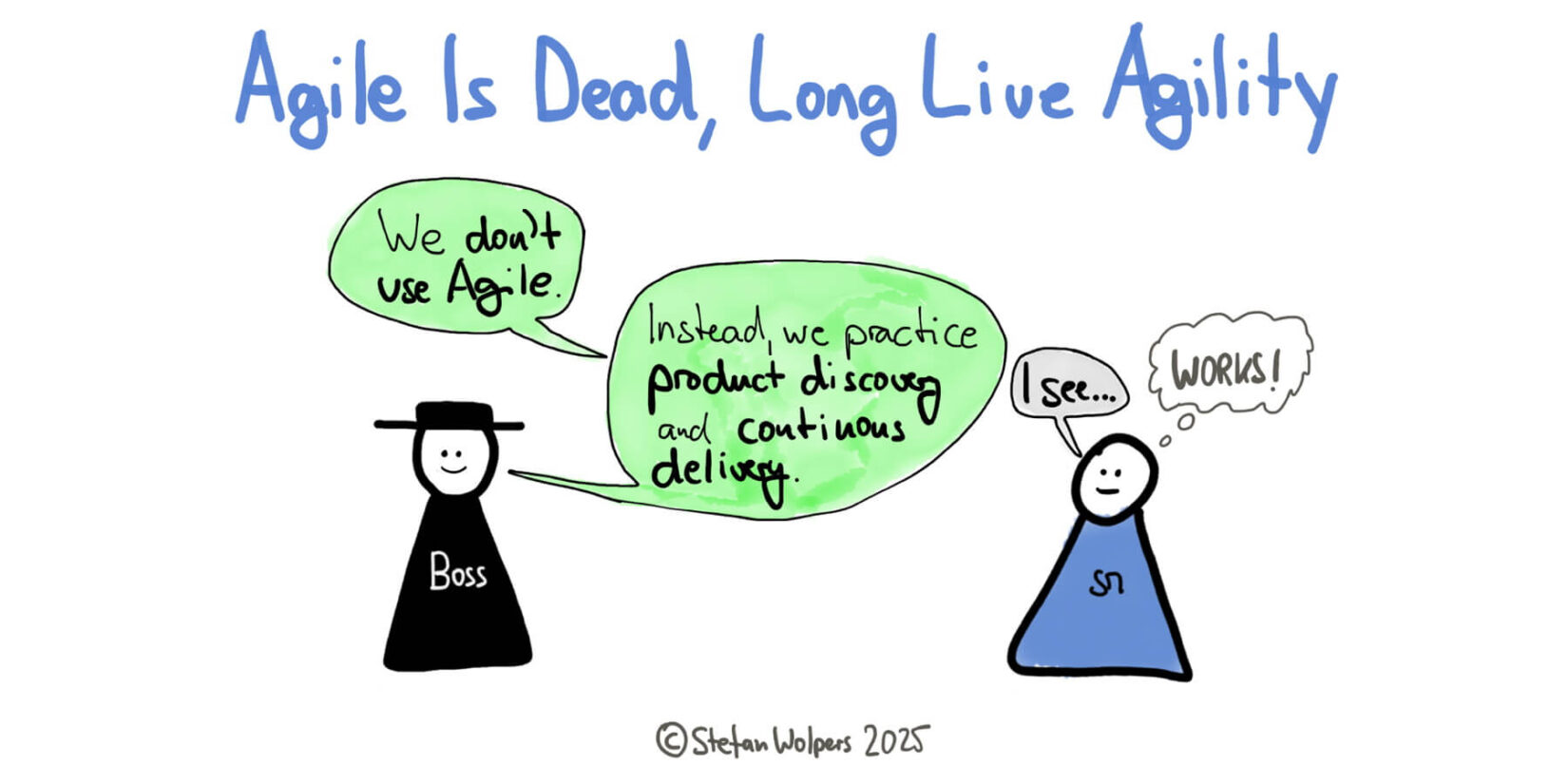
Learn more: Agile Is Dead, Long Live Agility.
🛠 Concepts, Practices, Tools & Measuring
: Full Tutorial: Create Beautiful Infographics that Match Your Brand in 15 Min (Nano Banana)
Peter Yang explains how to create brand-aligned infographics quickly by using detailed style guides, two-stage prompts, iterative edits, and reusable prompts to avoid generic AI visuals.
: Estimates – a necessary evil?
Erik Thorsell explores the tension between developers and product owners over estimates, showing how they are both necessary for planning and harmful when treated as deadlines. He advocates for transparency and continuous updates.
: Understanding Micromanagement
Shreyas Doshi outlines four types of micromanagement, explains which are harmful and which are helpful, and argues that transparent communication turns necessary involvement into a leadership tool rather than a sign of mistrust or insecurity.
📅 Scrum Training & Event Schedule
You can secure your seat for Scrum training classes, workshops, and meetups directly by following the corresponding link in the table below:
| Date | Class and Language | City | Price |
|---|---|---|---|
| 🖥 🇩🇪 November 3-4, 2026 | Professional Scrum Product Owner Training (PSPO I; German; Live Virtual Class) | Live Virtual Class | €1189 incl. 19% VAT (If applicable.) |
| 🖥 🇬🇧 November 27, 2026 | GUARANTEED: AI4Agile Online Course v4 (AI4Agile Certificate; English; Online Course) | Online Course | $149 incl. 19% VAT (If applicable.) |
| 🖥 🇬🇧 December 3-17, 2026 | A3 Delegation System Pilot Workshop 2 (English; Live Virtual Class) | Live Virtual Class | $149 incl. 19% VAT (If applicable.) |
| 🖥 🇩🇪 December 8-9, 2026 | Professional Scrum Product Owner Training (PSPO I; German; Live Virtual Class) | Live Virtual Class | €1189 incl. 19% VAT (If applicable.) |
| 🖥 🇬🇧 December 15-16, 2026 | Professional Scrum Master – Advanced Training (PSM II; English; Live Virtual Class) | Live Virtual Class | €1189 incl. 19% VAT (If applicable.) |
| 🖥 🇩🇪 February 16-17, 2027 | Professional Scrum Product Owner Training (PSPO I; German; Live Virtual Class) | Live Virtual Class | €1189 incl. 19% VAT (If applicable.) |
See all upcoming classes here.

You can book your seat for the training directly by following the corresponding links to the ticket shop. If the procurement process of your organization requires a different purchasing process, please contact Berlin Product People GmbH directly.
📺 Join 6,000-plus Agile Peers on Youtube
Now available on the Age-of-Product YouTube channel to improve learning, for example, about Quo Vadis AI:
- Hands-on Agile #68: How to Analyze Unstructured Team Interview Data with AI.
- Fabrice Bernhard: The Lean Tech Manifesto.
- Maarten Dalmijn: The 5 Obstacles to Empowered Teams.
- Roman Pichler: The Top Reasons Why a Product Strategy Fails.
- Johanna Rothman: How to Instill Agility, not Agile Practices.
- Hands-on Agile EXTRA: How Elon Musk Would Run YOUR Business with Joe Justice.
✋ Do Not Miss Out: Learn more about Career Success Factors — Join the 20,000-plus Strong ‘Hands-on Agile’ Slack Community
I invite you to join the “Hands-on Agile” Slack Community and enjoy the benefits of a fast-growing, vibrant community of agile practitioners from around the world.

If you would like to join, all you have to do now is provide your credentials via this Google form, and I will sign you up. By the way, it’s free.
Help your team to learn about Career Success Factors by pointing them to the free Scrum Anti-Patterns Guide:

🗞️ Last Week’s Food for Agile Thought Edition
Read more: Food for Agile Thought #522: Quo Vadis, AI? POM & Stakeholders, Why Transformations Die, Tech Debt Elephant.
