by Stefan Wolpers|FeaturedAgile and ScrumAgile Transition
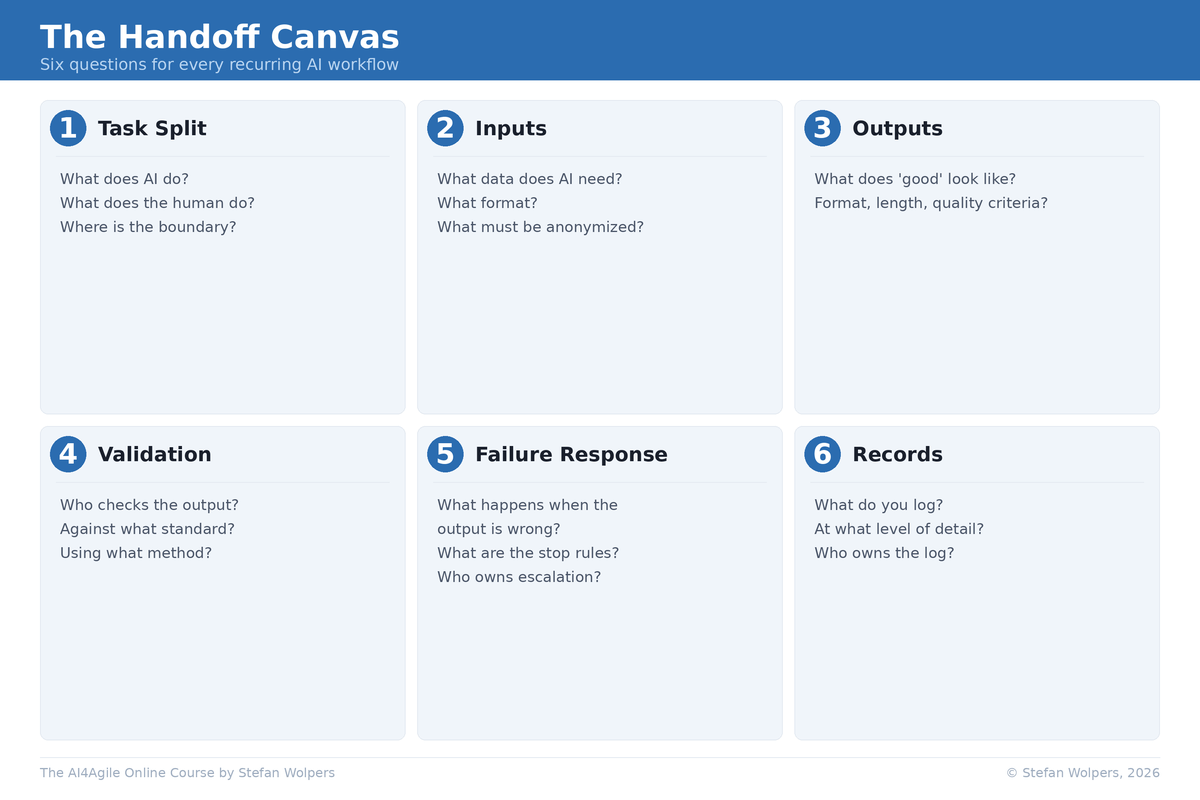
TL;DR: The A3 Handoff Canvas
The A3 Framework helps you decide whether AI should touch a task (Assist, Automate, Avoid). The A3 Handoff Canvas covers what teams often skip: how to run the handoff without losing quality or accountability. It is a six-part workflow contract for recurring AI use: task splitting, inputs, outputs, validation, failure response, and record-keeping. If you cannot write one part down, that is where errors and excuses will enter.
The Handoff Canvas closes a gap in a useful pattern: from an unstructured prompt to applying the A3 framework to document decisions with the A3 Handoff Canvas, to creating transferable Skills, potentially leading to building agents.
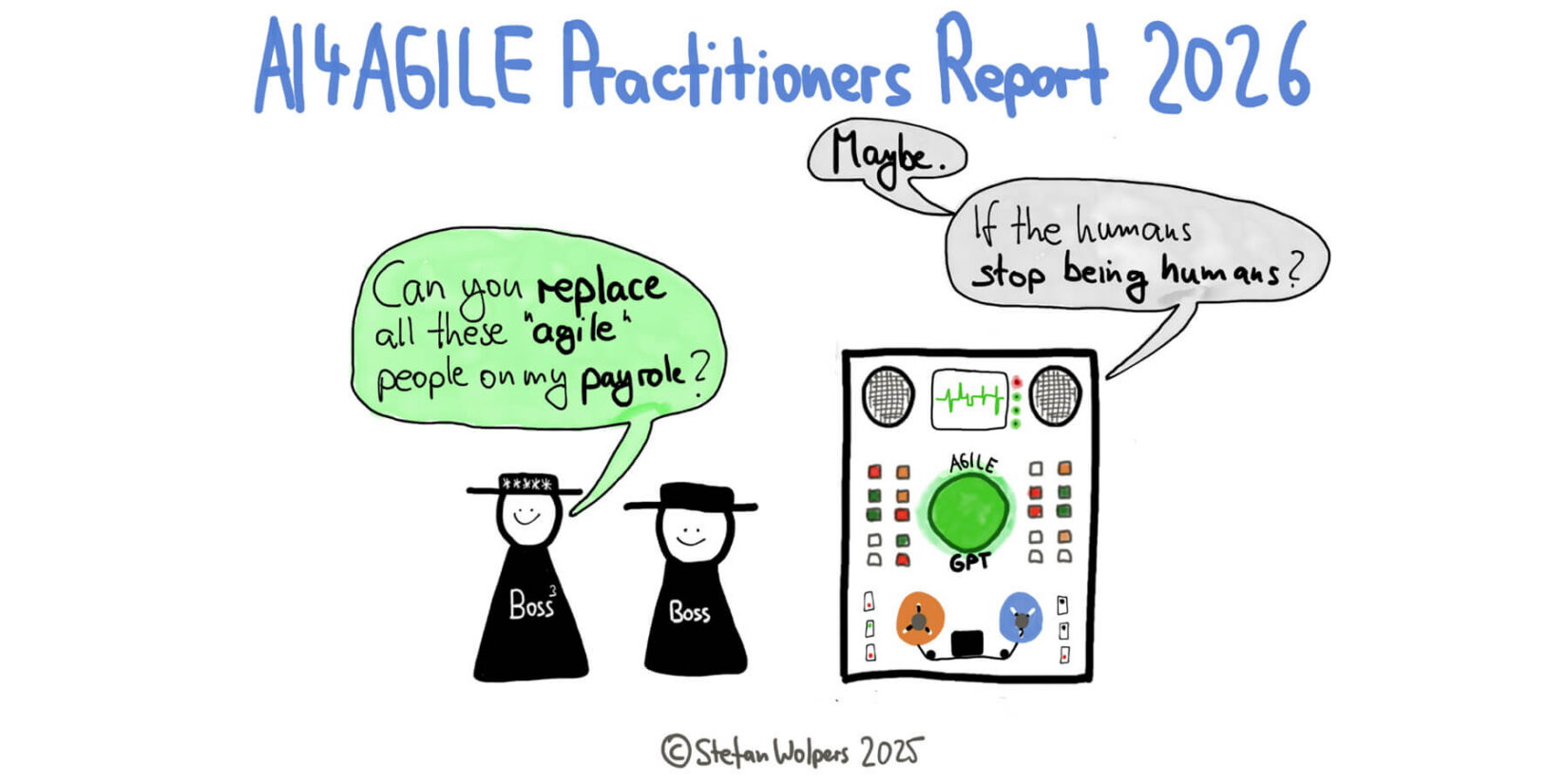
83% of Agile practitioners use AI, but most spend 10% or less of their time with it because they do not know where it fits. Our survey of 289 Agile practitioners identifies the real adoption barriers and shows where AI creates value you can act on. Learn more by downloading the free AI4Agile Practitioners Report 2026.
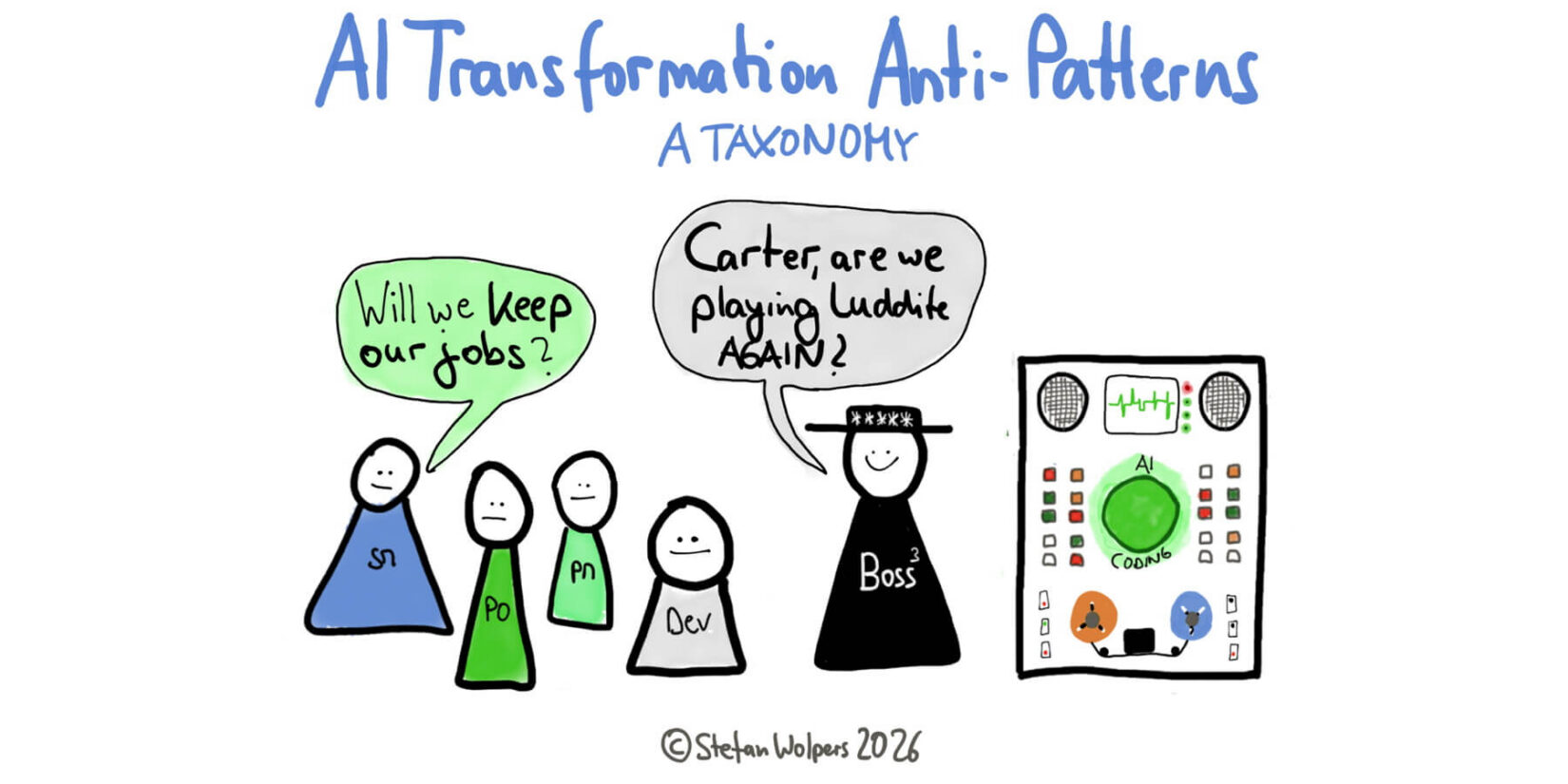
AI initiatives fail for the same reasons Agile transformations did: The majority of failures result from people, culture, and processes, not technology. This article gives you a diagnostic checklist of 10 AI transformation anti-patterns to spot where your organization’s initiatives are coming off track.
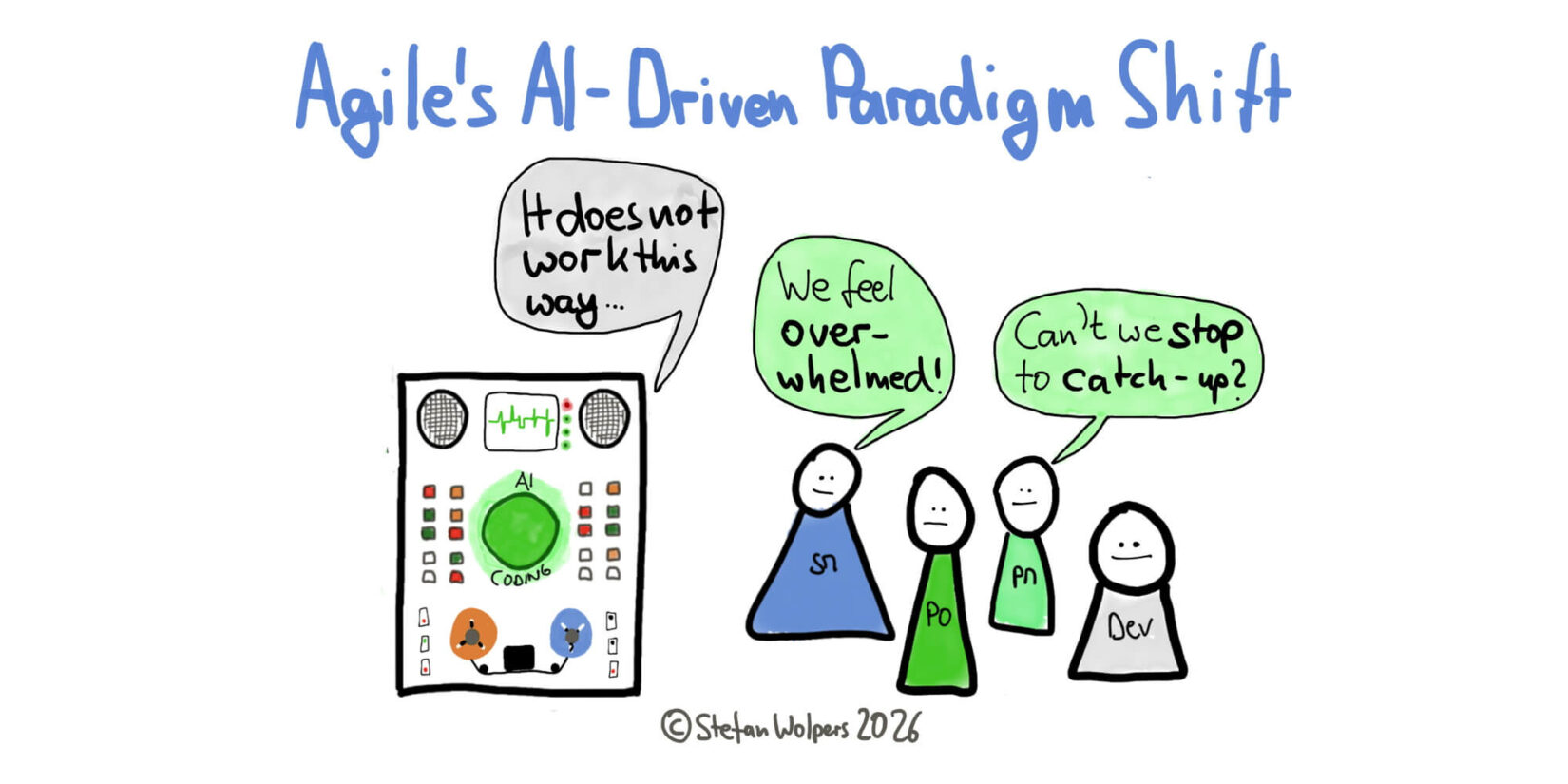
The paradigm shift is here. Andrej Karpathy, former Tesla AI director and OpenAI co-founder, recently admitted he has never felt this far behind as a programmer. If Karpathy feels overwhelmed, how should the rest of us feel?
This article maps the shift across three levels: strategic, product, and individual. Each level demands different responses, while “good enough Agile” no longer provides an income or perspective. The question is where you are on the journey.
TL; DR: When Code Is Cheap, Discipline Must Come from Somewhere Else
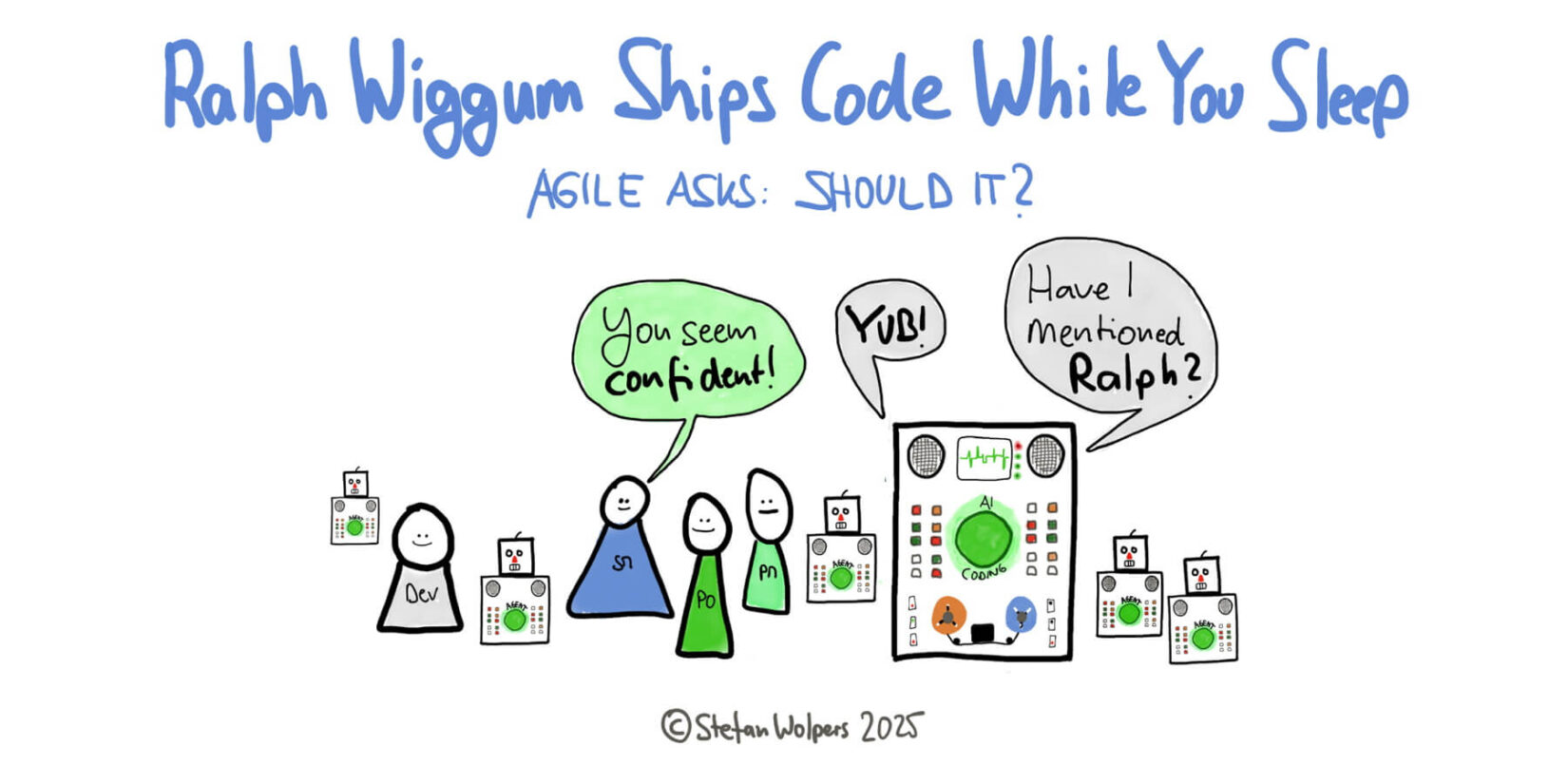
Generative AI removes the natural constraint that expensive engineers imposed on software development. When building costs almost nothing, the question shifts from “can we build it?” to “should we build it?” The Agile Manifesto’s principles provide the discipline that these costs used to enforce. Ignore them at your peril when Ralph Wiggum meets Agile.
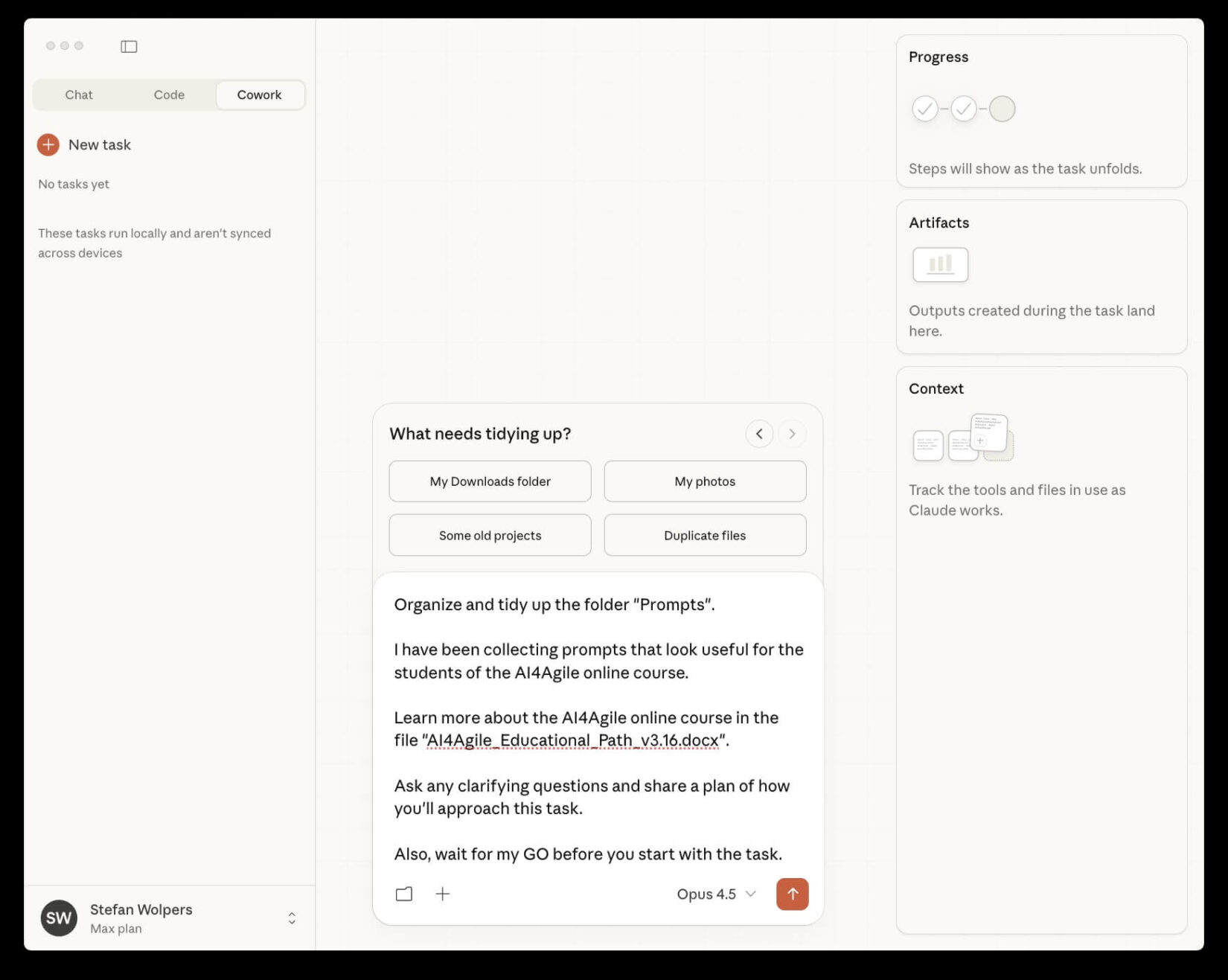
AI agents have long promised productivity gains, but until now, they demanded coding skills that most agile practitioners lack or are uncomfortable with. In this article, I share my first impressions on how Claude Cowork removes that barrier, why it is a watershed moment, and how you could integrate AI Agents into your work as an agile practitioner.