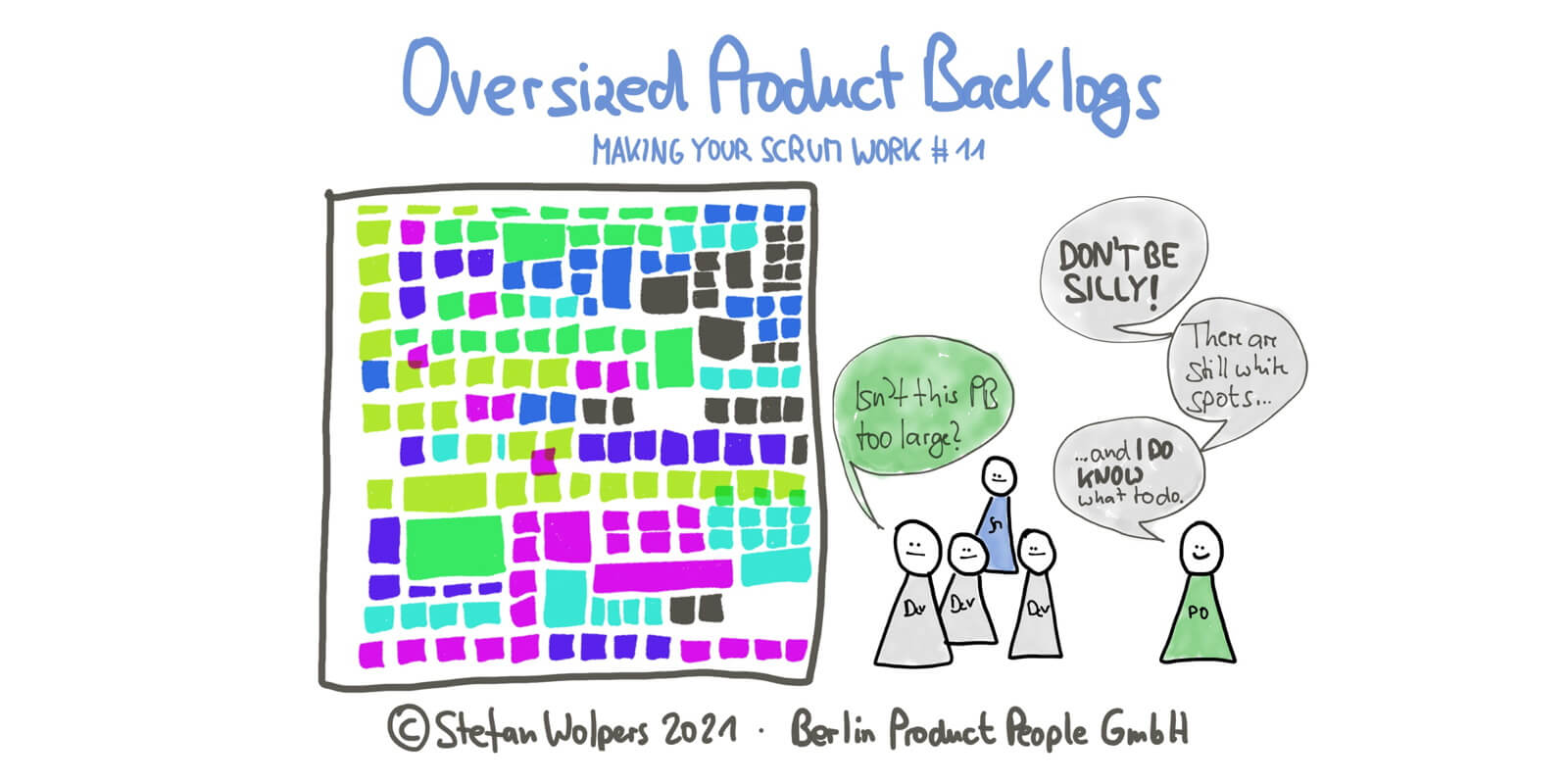
Some Product Owners believe that a comprehensive Product Backlog is the best way to accomplish the Product Goal and be fully transparent simultaneously—never let a possibly valuable idea slip away. However, a comprehensive backlog may quickly become an oversized Product Backlog with unintended side effects.
Learn more about an oversized Product Backlog’s negative impact on innovation, your Scrum team’s ability to create value, and your relationship with stakeholders.
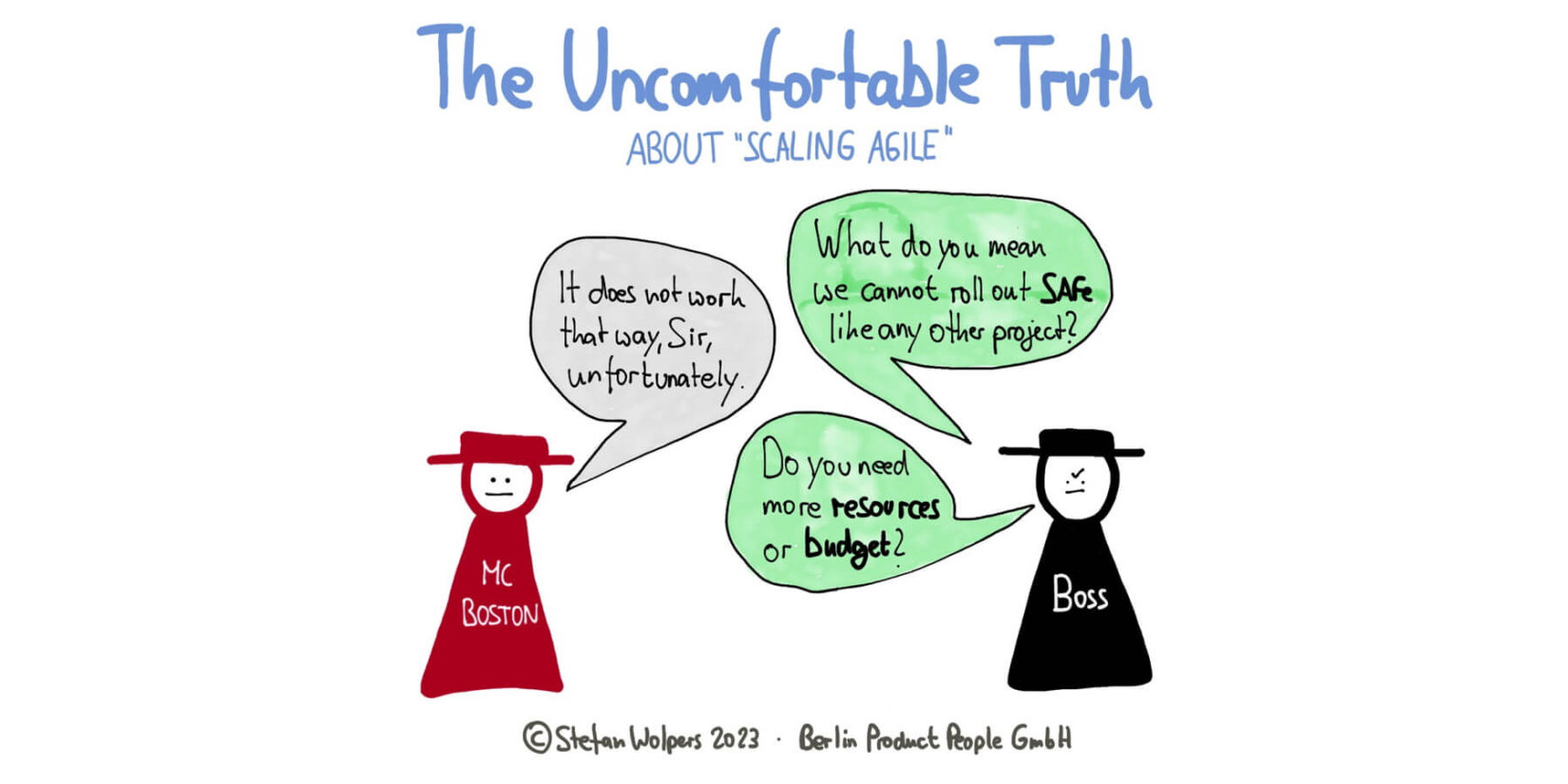
Agile transformations, scaling Agile from a team level to the whole organization, are more than implementing frameworks like SAFe®. They require a radical shift from rigid, top-down management to flexible, people-centric operations rooted in simplified structures, autonomous teams, and frequent, sustainable value delivery rather than promising quicker, cheaper results.
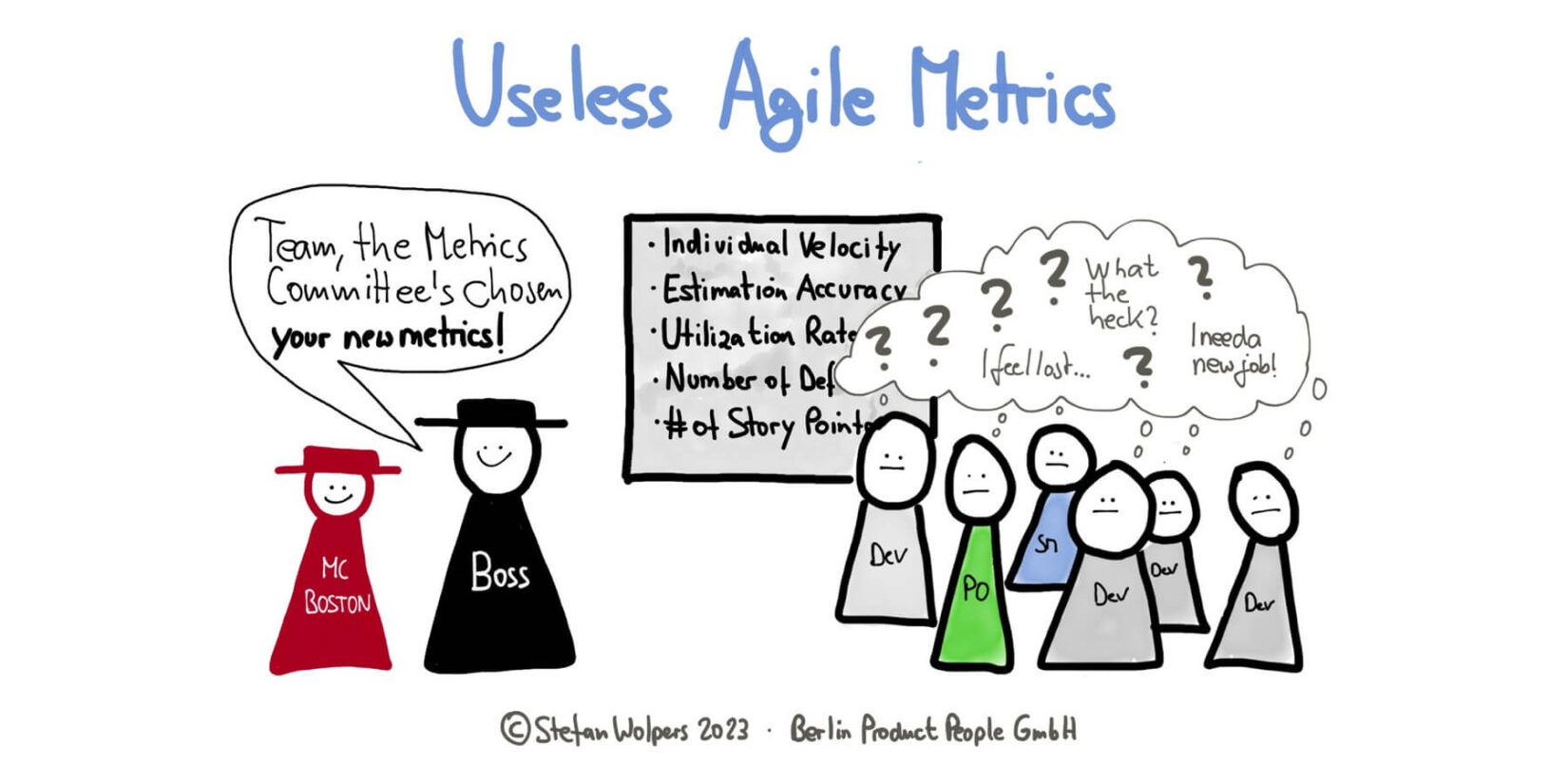
Ideally, a metric is a leading indicator for a pattern change, allowing your Scrum team to analyze the cause in time and take countermeasures. However, what if you picked the wrong metrics? What if these useless agile metrics lead you in the wrong direction while providing you with the illusion that you know where your team is heading?
Learn more about useless agile metrics, from individual velocity to estimation accuracy to utilization rates.
TL; DR: Employing Agile Coaches next to Scrum Masters?
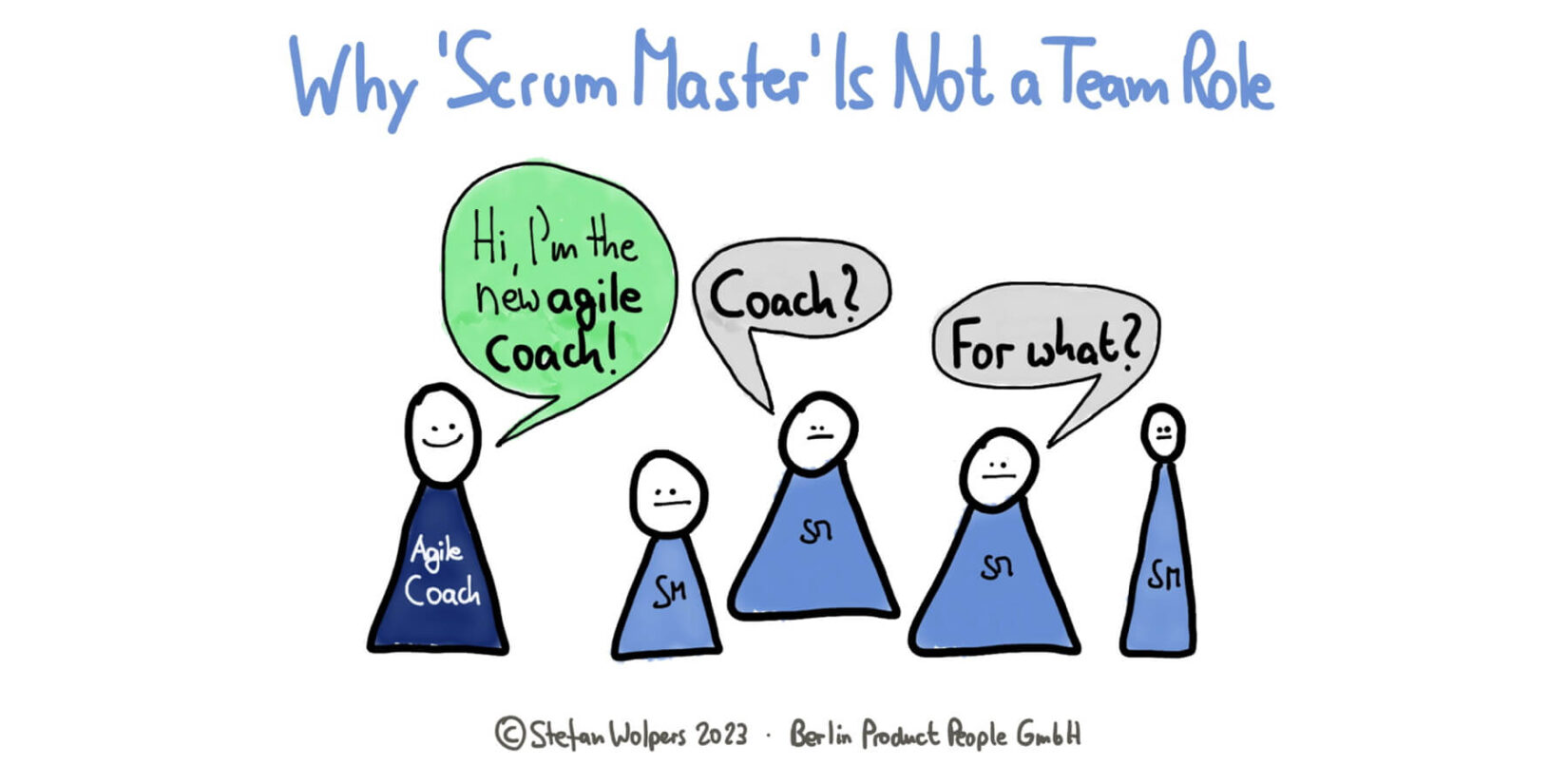
Often, when organizations employ agile coaches and Scrum Masters, we can observe that agile coaches work at an organizational level. In contrast, Scrum Masters work in a tactical role at the team level in a “delivery manager capacity,” which defies the Scrum Guide’s concept of accountabilities.
However, if you take Scrum seriously, this approach has no upside. Here are eight reasons for empowering your Scrum Masters to work with the organization.
Disclaimer: I acknowledge, though, that “agile coach” is a helpful keyword for positioning yourself as an agile practitioner; potential employers and clients search for this term.
Creating an agile community of practice helps winning hearts and minds within the organization as it provides authenticity to the agile transition — signaling that the effort is not merely another management fad.
Read more to learn how to get your agile community going even without a dedicated budget and how to make it work with distributed teams.
📺 Update 2023-05-11: Recently, Petra Wille published the findings of her study on how to establish and grow a product community of practice based on interviewing 100-plus practitioners. Watch her talk now!
TL; DR: Life Is a Negotiation; Why Would Scrum Be Different?
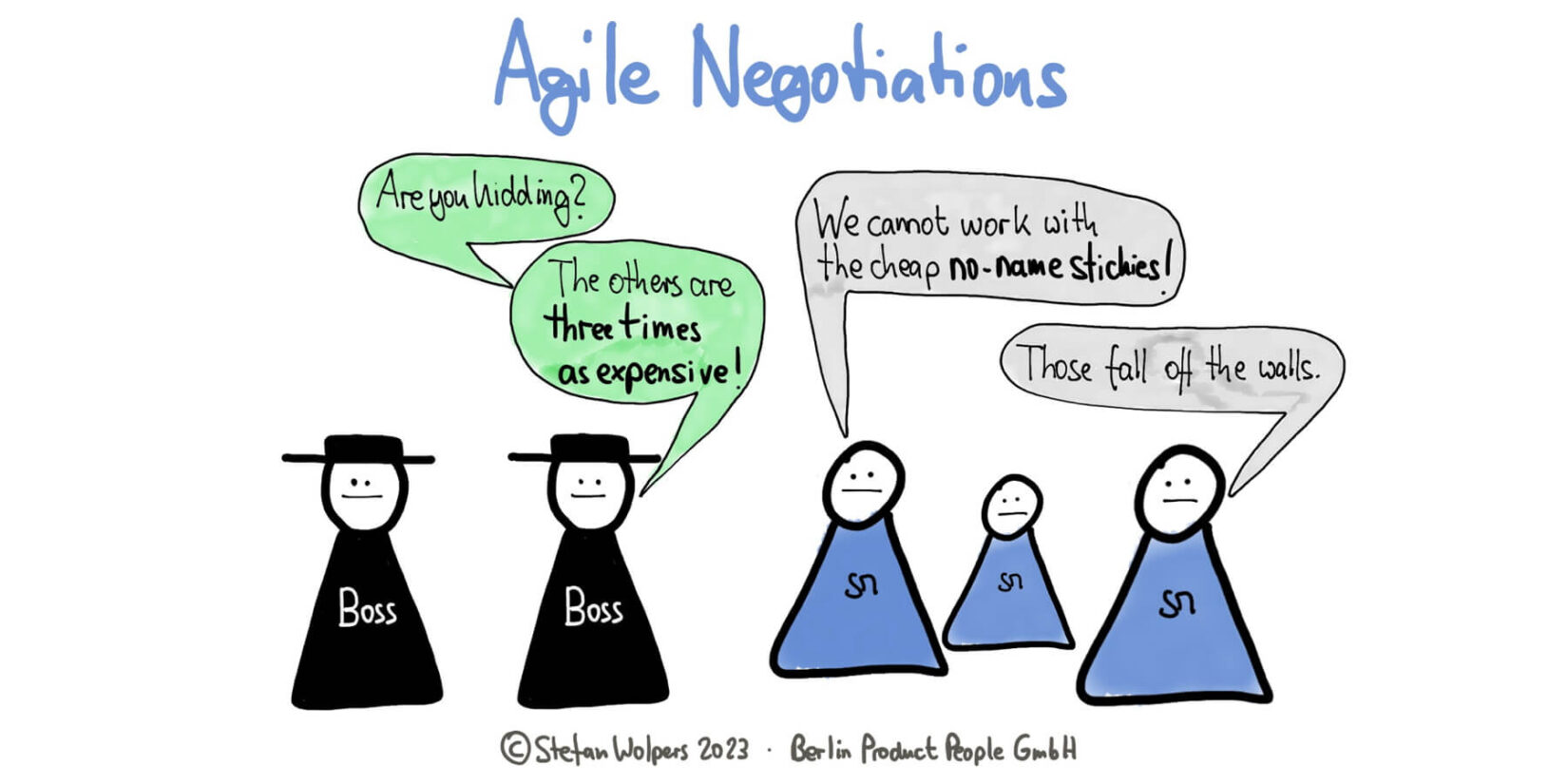
Life is a negotiation; why would Scrum be different, particularly given its egalitarian nature? As you may recall, no one on a Scrum team can tell anyone else what to do, how to do it, or when to do it. Instead, solving your customers’ problems in a complex environment requires communication skills, empathy, patience, diplomacy, and professionalism. So let’s have a look at some typical agile negotiation scenarios.