TL; DR: Agile Workspace Means Choice Among a Diversity of Spaces
If you want your organization to become agile, adding more whiteboards to the workspace will not suffice. You have to abandon the idea that the workspace is an assembly line for white-collar workers. You need to let go Taylorism. We are now in the age of the creative worker.
To become agile – and reap its benefits such as becoming more innovative –, you need a diversity of workspaces to support all forms of creative work: focus, collaborate, learn, and socialize. Also, you have to let your creative workers choose which space is best suited for a task.
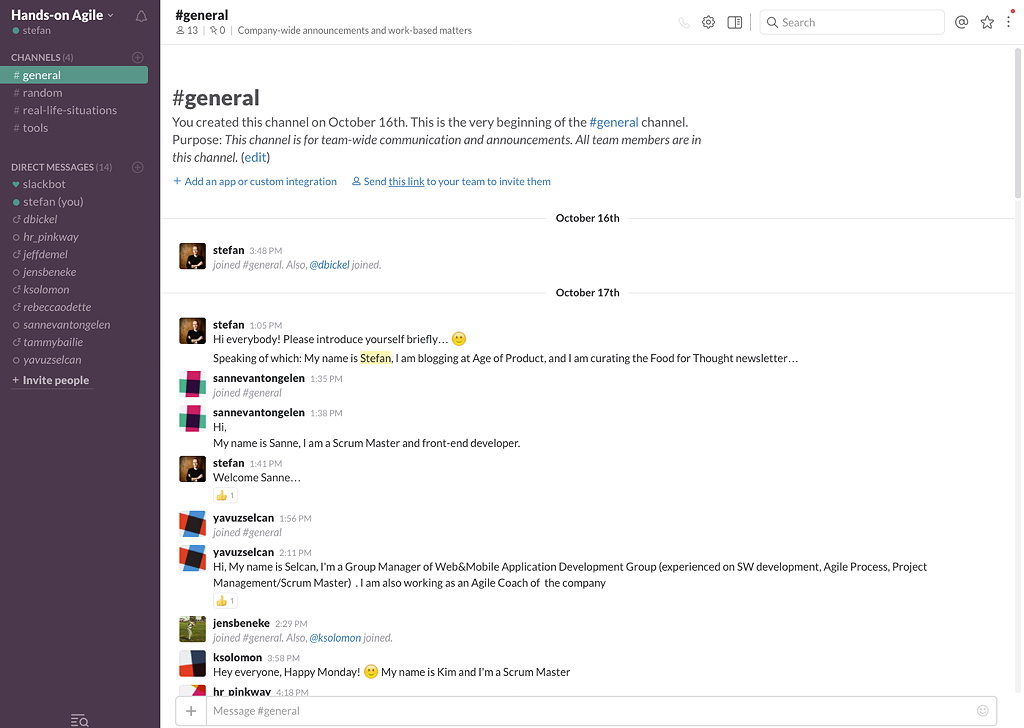
I would like to invite you to join for free Age of Product’s new “Hands-on Agile” Slack team and enjoy the benefits of a fast-growing, 800+ strong community of agile peers from all corners of the world.
Let’s face it: While your enthusiasm for the big picture of agile practices is admirable, your stakeholders will most likely be moved by one thought only at the beginning of the transition: “What’s in for me? How will I now have my requirements delivered?”.
Read on and learn about one way how to kick-off the transition to a learning organization by pitching a simplified version the big picture of agile practices to your stakeholders first.
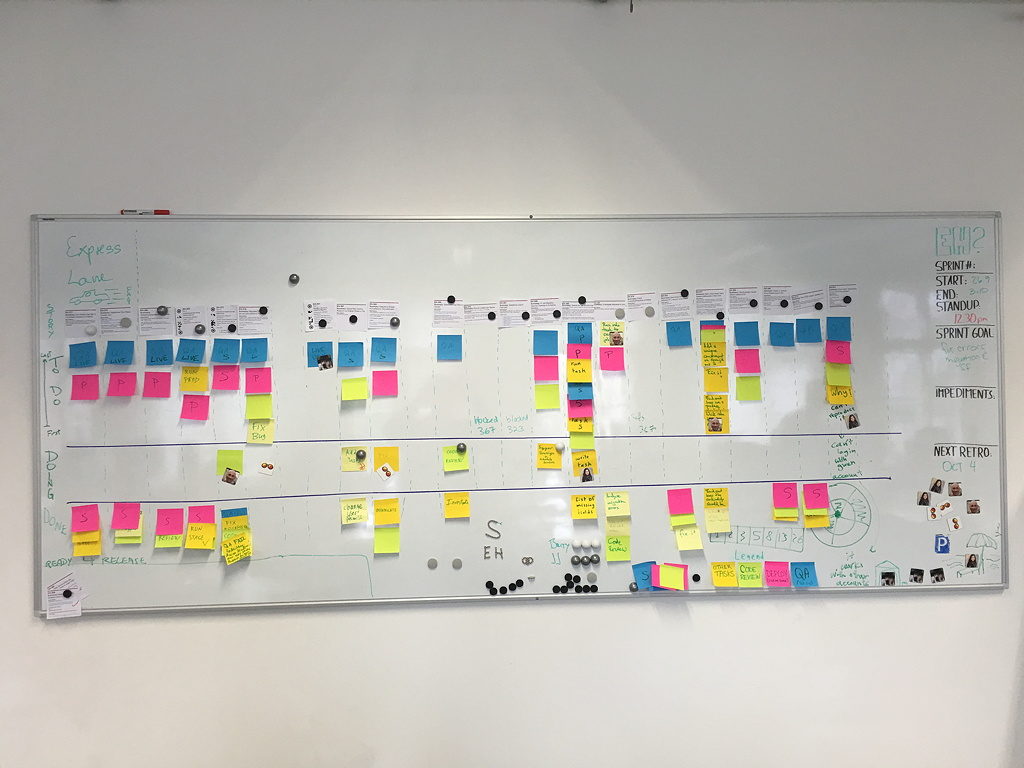
Offline boards lift a team’s level of collaboration significantly. They are great information radiators for stakeholders, and they massively benefit from the psychology of getting haptic. Learn the best practices of getting started with your own offline boards in this third post of our series on how to kick-off an agile transition.
Where to start when kicking-off an agile transition?
Usually, tools and processes are smallest the common denominator among all participants, as they are at the core of the grand scheme of agile things.
It is a rare occasion that you start from scratch with a brand-new team without an existing product, probably even in a more or less nascent organization, for example, a startup.
In most cases, an existing product delivery organization with available products, and services will go “agile“. In this case, turning attention to the available product backlog is a pragmatic first step. The following process describes what aspects need to be attended to optimize the outcome.
A hands-on, practical guide on how to kick-off an agile transition: Embrace the agile mindset and scale your engineering and product organization to harvest your organization’s full potential.