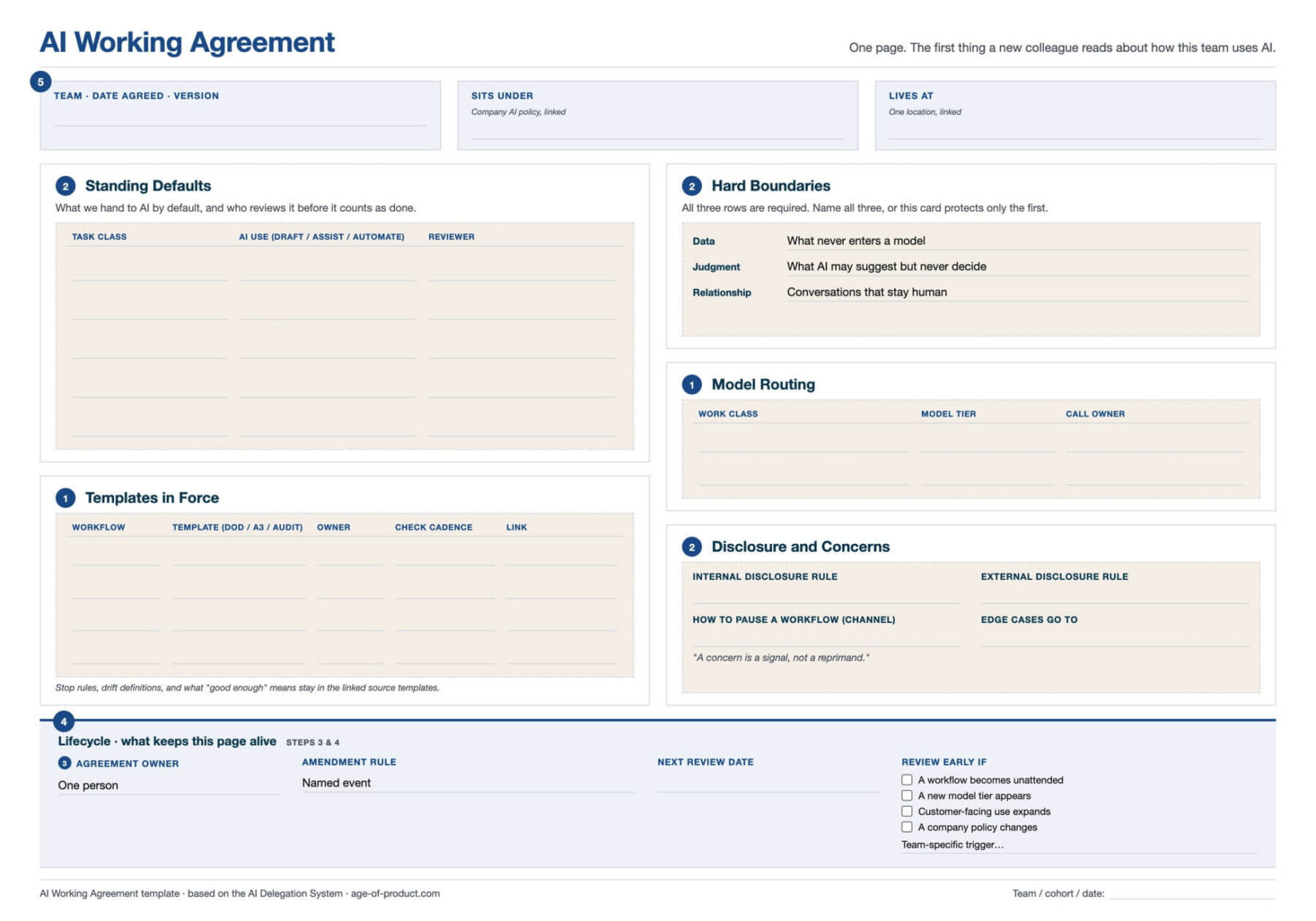
Your team already has rules for using AI. Some live in templates, some in habits, exceptions, and one person’s memory. The AI Working Agreement puts the decisions that matter in one place: what the team delegates to AI, what stays human, what must be reviewed, what never enters a model, who owns which workflow, and how the agreement changes. Write it, and a new colleague can read your team’s AI decisions on their first day, while the decisions stay when someone leaves.
Thesis: Team-level AI governance fails more from uncodified judgment than from missing policies. The AI Working Agreement turns scattered AI decisions into one inspectable artifact, so a team can onboard people, survive departures, and challenge its own habits before those habits harden into risk.
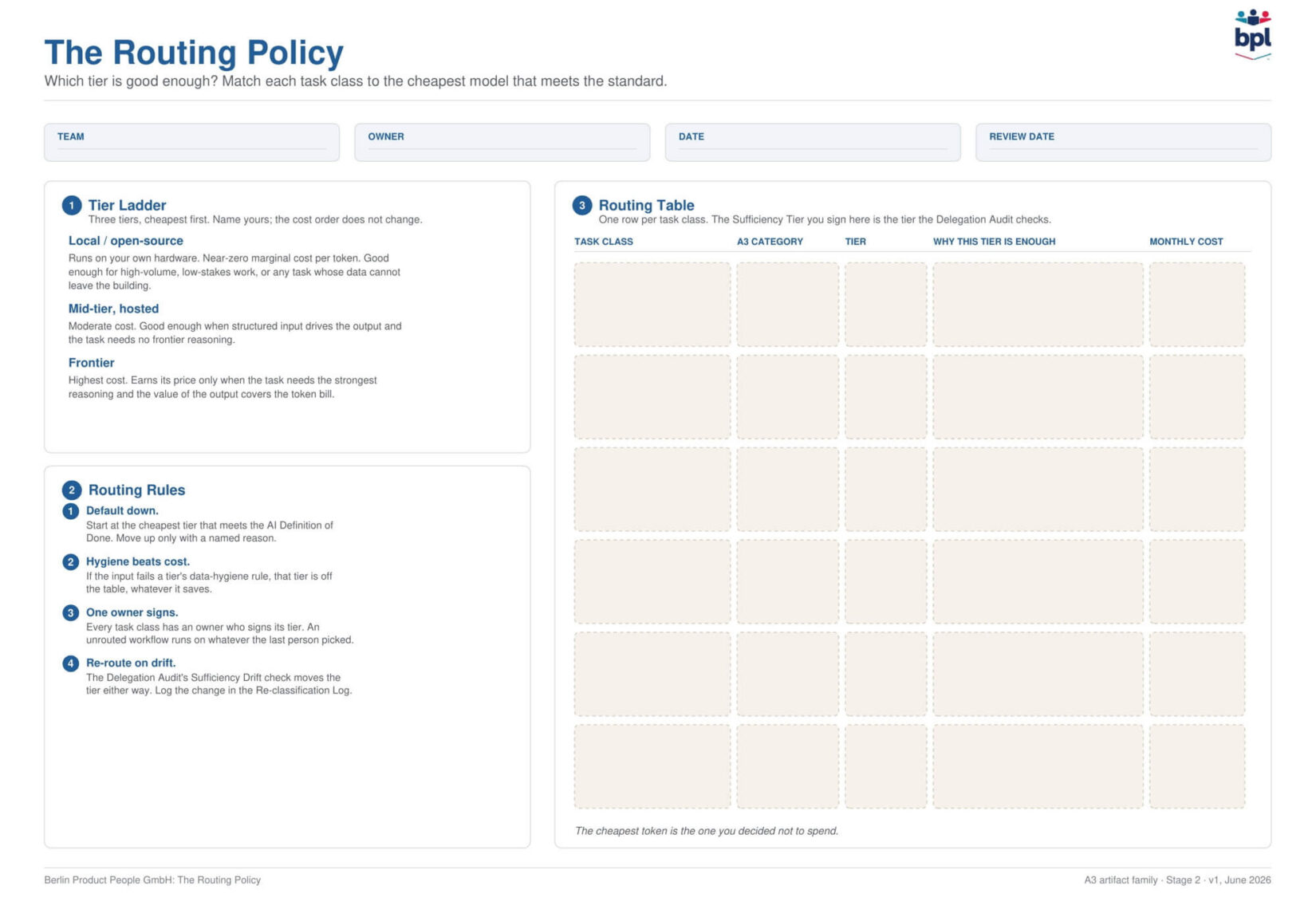
You moved your routine AI work to a cheaper model, so you think the cost question is handled; however, often, that is not the case. The decision lives in one person’s head and produces nothing that the person accountable for the invoices can read. Worse, it is an architectural choice nobody documented. The AI Routing Policy is the missing artifact of Stage 2 of the Delegation Lifecycle: it records which execution path, from a cheaper model to a frontier model to plain code, handles each class of work, what counts as good enough output to meet the AI Definition of Done, and who owns the call. The skill it needs to work is one you already have: You write acceptance criteria.
Thesis: An AI routing policy is not about picking a cheaper model at the moment of executing an AI task. It is a written, repeatable team decision that assigns each task class to the cheapest sufficient execution path: a model, human review, deterministic code, or no automation. Paired with a minimal routing log, it creates the spend-by-task-class record that your finance team will eventually request. You can draft the first three lines in twenty minutes.
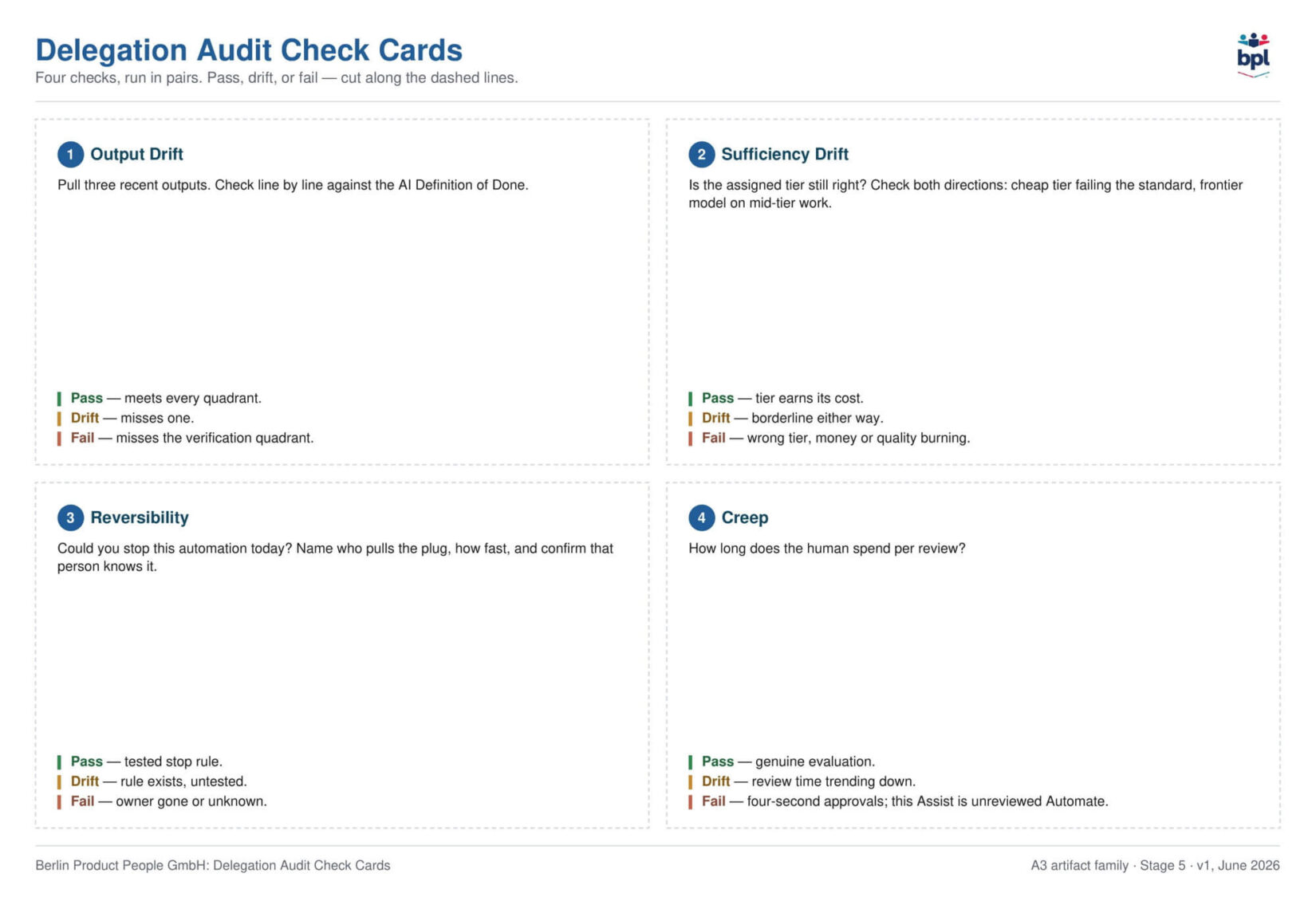
Scrum teams inspect how the last Sprint went during the Retrospective. They are much less likely to inspect the work they have handed to AI, because no meeting on the calendar owns it. That gap is where a working AI automation quietly turns into risk: it keeps producing fluent, on-brand output long after the decision to trust it has expired. The AI Delegation Audit closes the gap by leveraging the facilitation skills teams already use in a Retrospective.
Thesis: The Delegation Audit is the missing inspection cadence for delegated AI work. It checks four things: whether the work still meets the standard, whether the model still fits the task, whether the team can still stop the automation, and whether reviewed assistance has quietly become unreviewed automation. You can try it on one workflow in fifteen minutes.
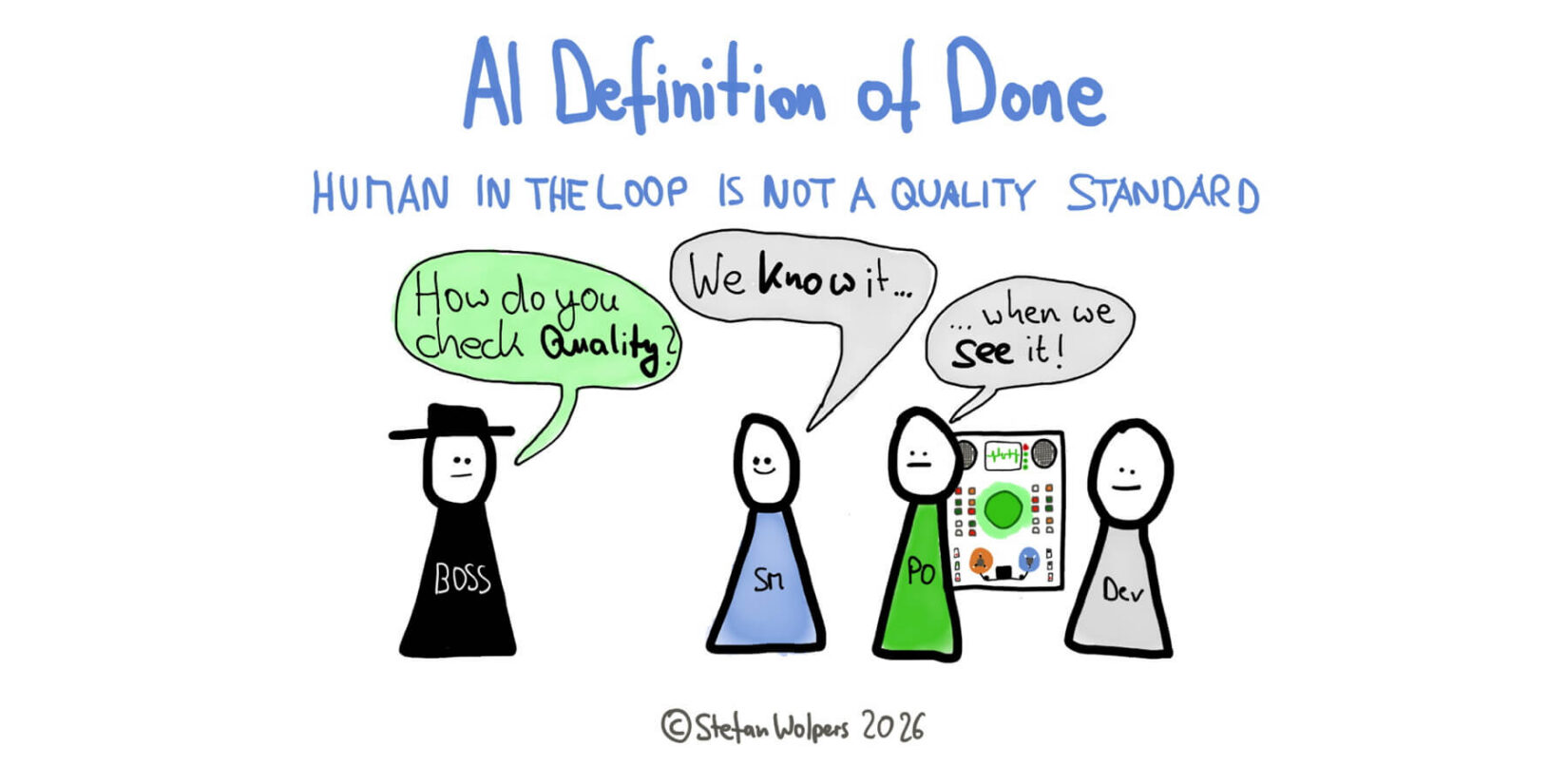
Your team has a Definition of Done for a product increment. It has none for the 20-plus AI-supported outputs that leave the team each week: status reports, stakeholder emails, release notes, and updates for the C-level. Each one carries your team’s name. “I know quality when I see it” is the standard most teams actually run by, and you cannot audit it, teach it to a new colleague, or defend it when a claim turns out to be wrong. The AI Definition of Done fixes that with one page per task class, agreed by the team, before the output ships.
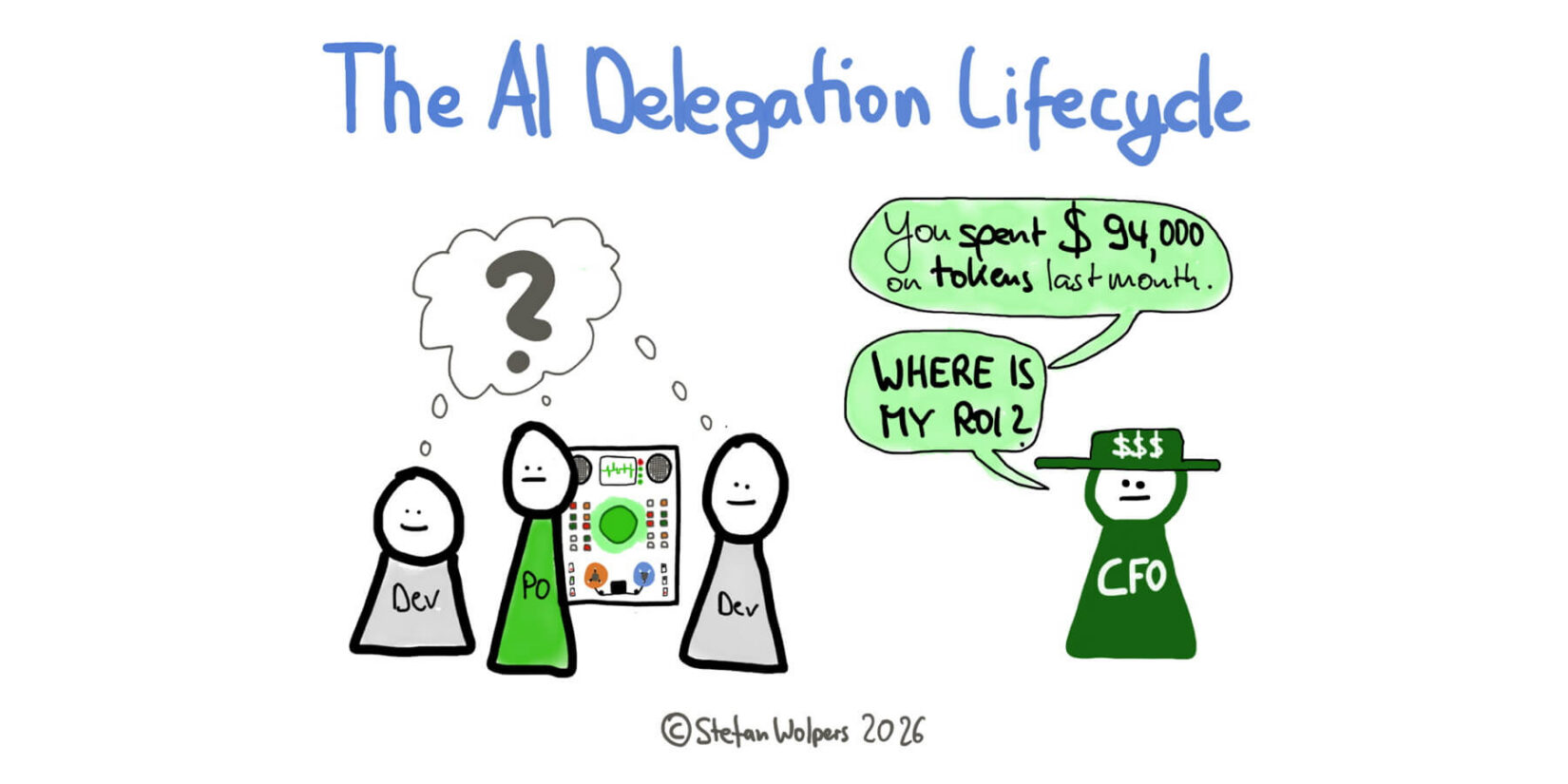
Your team ships AI outputs that nobody fully trusts; you needed to be quick, and “dirty” tagged along. That ungoverned automation becomes AI debt the moment a stakeholder asks who owns it. The AI Delegation Lifecycle turns six agile skills you already practice into six explicit decisions that govern delegated AI work and produce audit-ready evidence without a separate report.
TL;DR: Write As Little Code As Possible and Agentic Coding
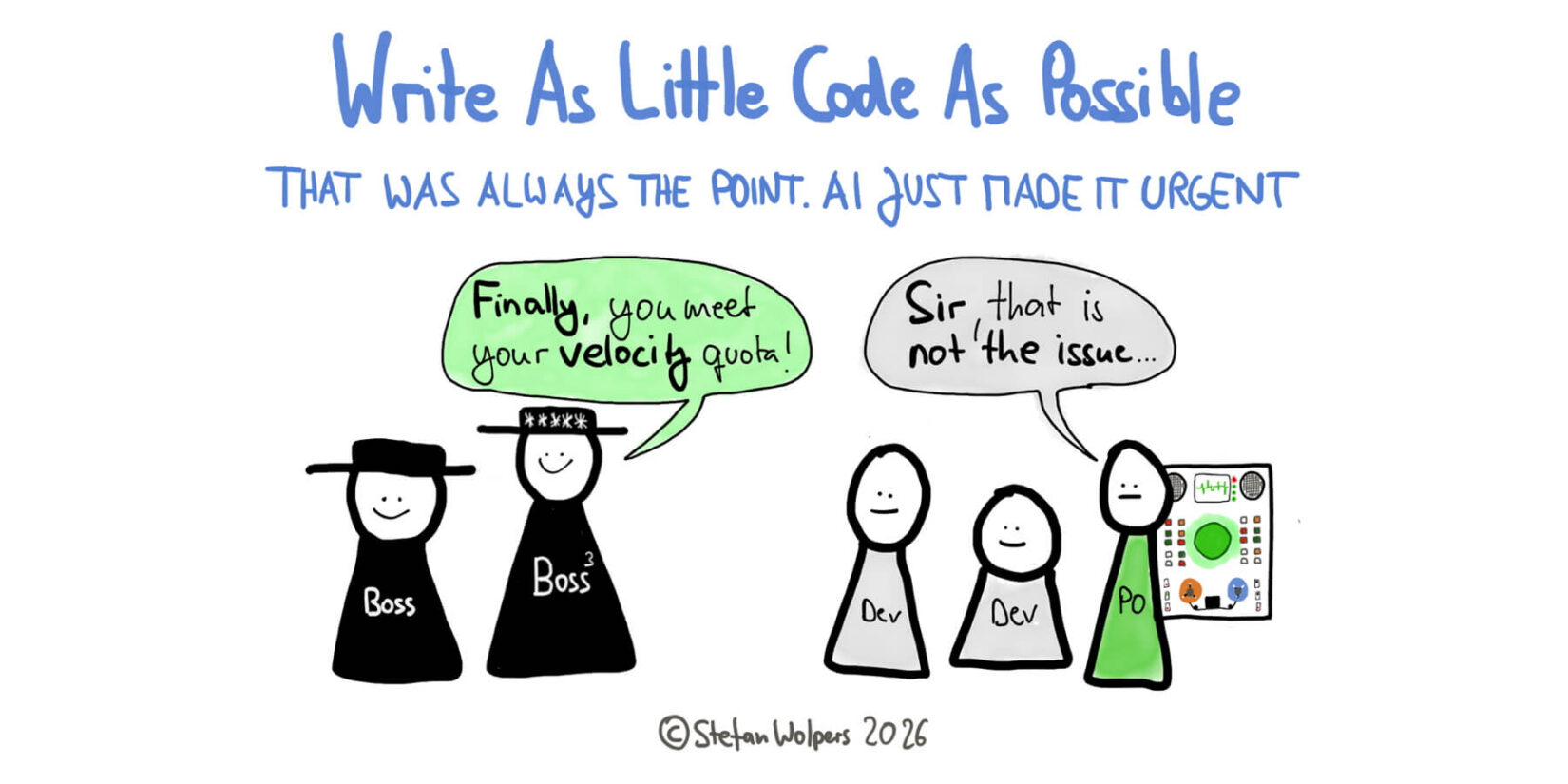
Agentic coding tools have collapsed the friction of producing plausible software; output is no longer an issue. However, they have not collapsed the friction of knowing what is worth building, whether it fits the system, or whether users will change their behavior because of it, the much-desired outcome. When generating plausible code becomes cheap, every hour spent building the wrong thing becomes waste that can now be produced at scale. Discovery, validation, product judgment, and verification are what stand between your team and creating expensive waste at high-speed.
Thesis: AI made generating code cheap enough that weak product judgment can now scale. That is the problem this article addresses.