TL; DR: The Minimum Viable Library for Agile Leaders
A new edition of the Minimum Viable Library on Agile Leadership is available! Explore a series of carefully curated collections of essential books, newsletters, podcasts, and tools to elevate your agile expertise.
Read on and learn how the recommendations for agile leaders cover a wide range of topics, from the importance of self-managing teams and trust-based environments to the crucial roles of accountability and resilience. While “servant leadership” as a term may be fading, its principles of empowerment and collaboration endure. Stories of transformation in traditional settings underscore the value of decentralized leadership and quick communication.
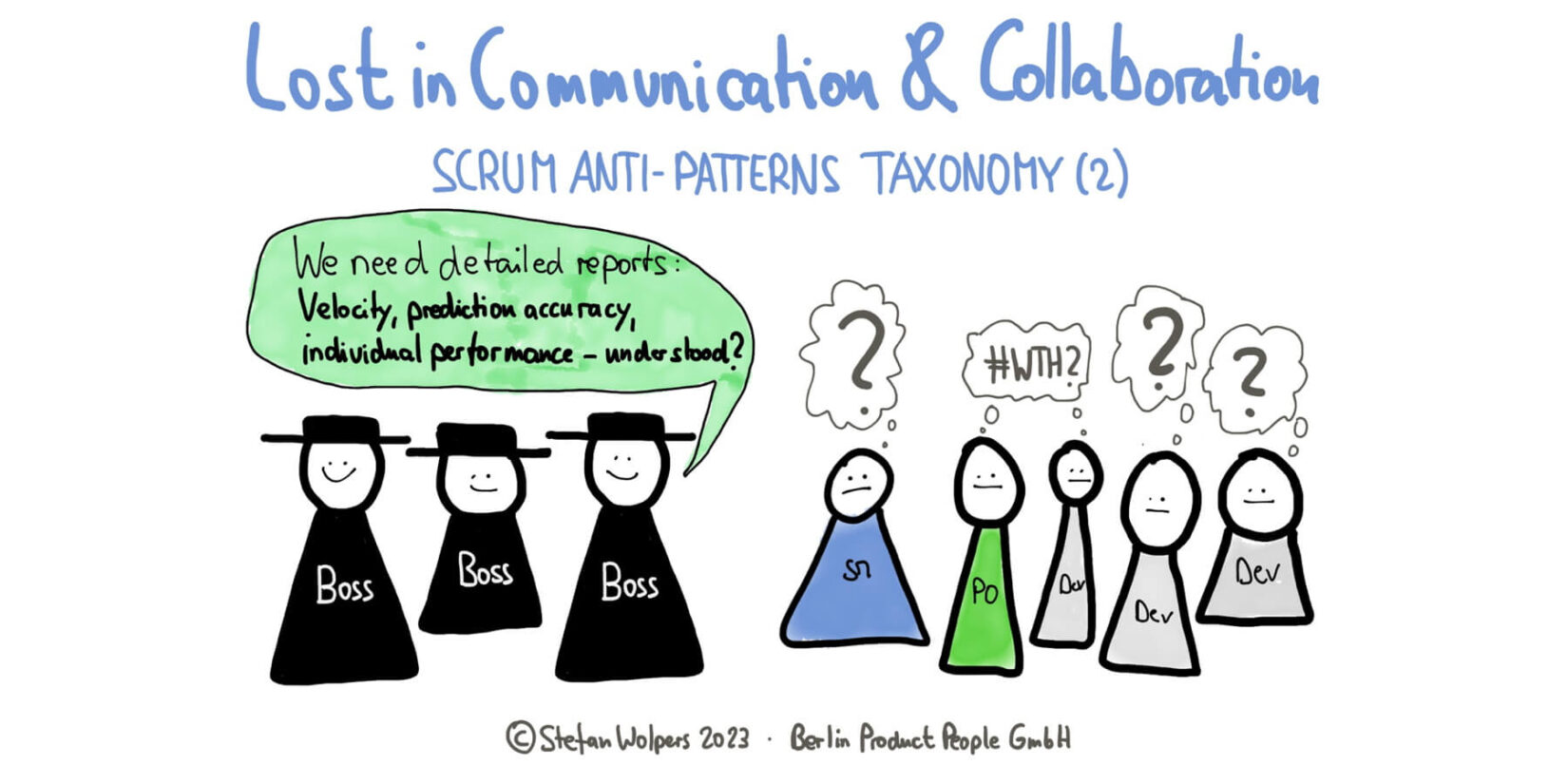
Lost in Communication and Collaboration addresses two categories from the Scrum anti-patterns taxonomy that are closely aligned: ineffective collaboration at the stakeholder level, often resulting in an unsuited reporting system based on misaligned metrics.
Learn how these Scrum anti-patterns categories manifest themselves and how they affect value creation for customers and the organization’s long-term sustainability.
This is the second of three articles analyzing the 183 anti-patterns from the upcoming Scrum Anti-Patterns Guide book. The third article will address failures and breakdowns in planning, process, collaboration, and alignment within the Scrum framework.
by Stefan Wolpers|Agile and ScrumAgile TransitionVideos
TL; DR: Hands-on Agile #52: Jim Highsmith & the Agile Manifesto
On August 17, 2023, we had the opportunity to interview Jim Highsmith about his path to agile product development: From Wild West to the co-authoring the Agile Manifesto.
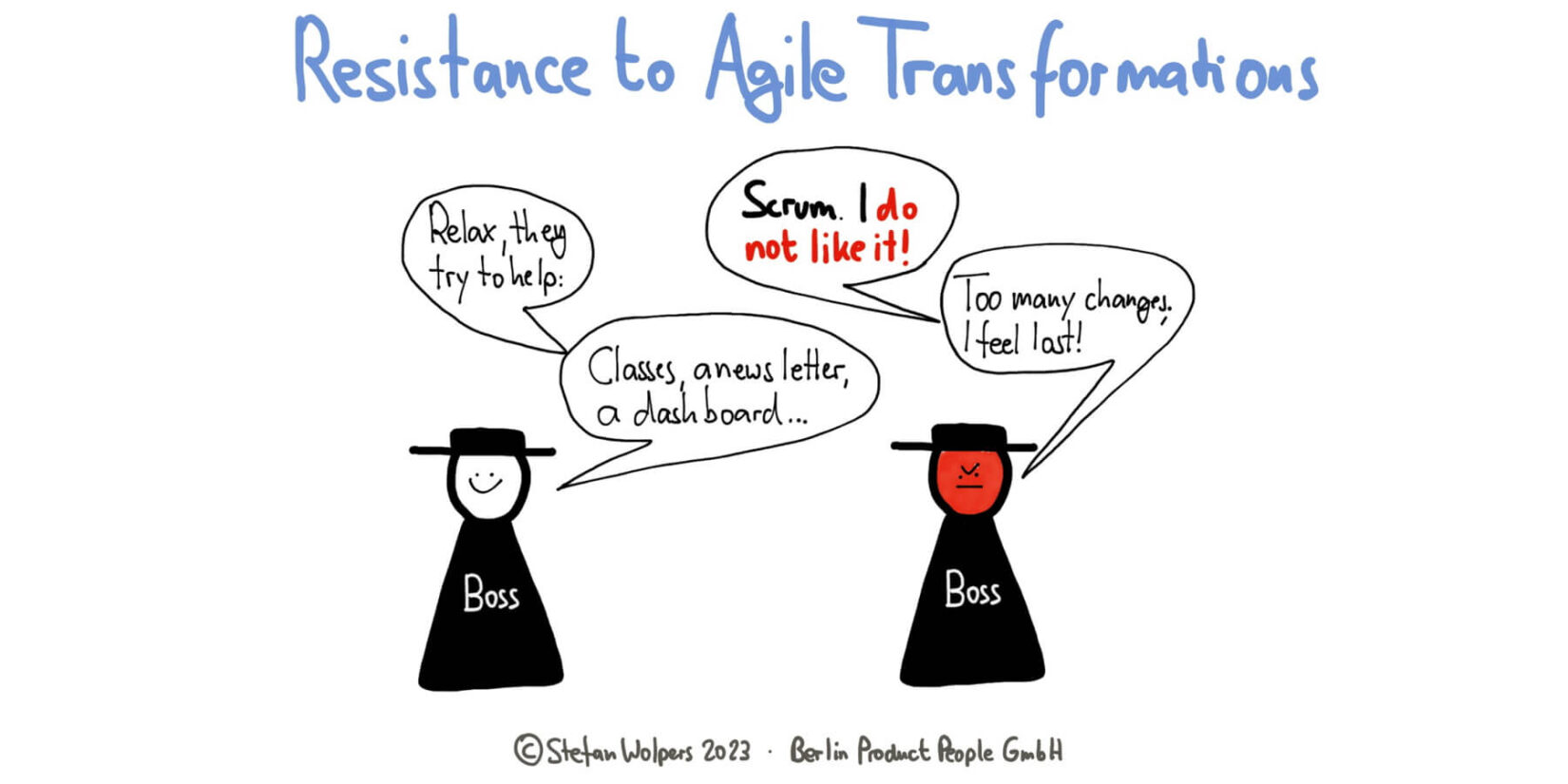
Stakeholders often revert to resistance to agile transformations due to fears about job security, perceived loss of control, comfort with established practices, and misconceptions about Agile.
However, we can help: Agile practitioners can ease the change process by employing techniques such as empathetic listening, co-creating the change process, introducing incremental changes, offering targeted education, and showcasing internal success stories. Addressing resistance with understanding and respect is pivotal to a successful agile transformation.
TL;DR: Scrum Master Salary Report 2024 — An Anonymous Poll by the Community for the Community
The purpose of this anonymous Scrum Master salary report is to create a clear, data-backed benchmark that allows everyone in the Agile community to understand whether their compensation is adequate. The report will cover Scrum Masters and Agile Coaches, both employed and freelancing.
The goal is to have at least 1,000 replies by the end of November 2023 to create the report in time for January 2024. Of course, the report will be available for free.
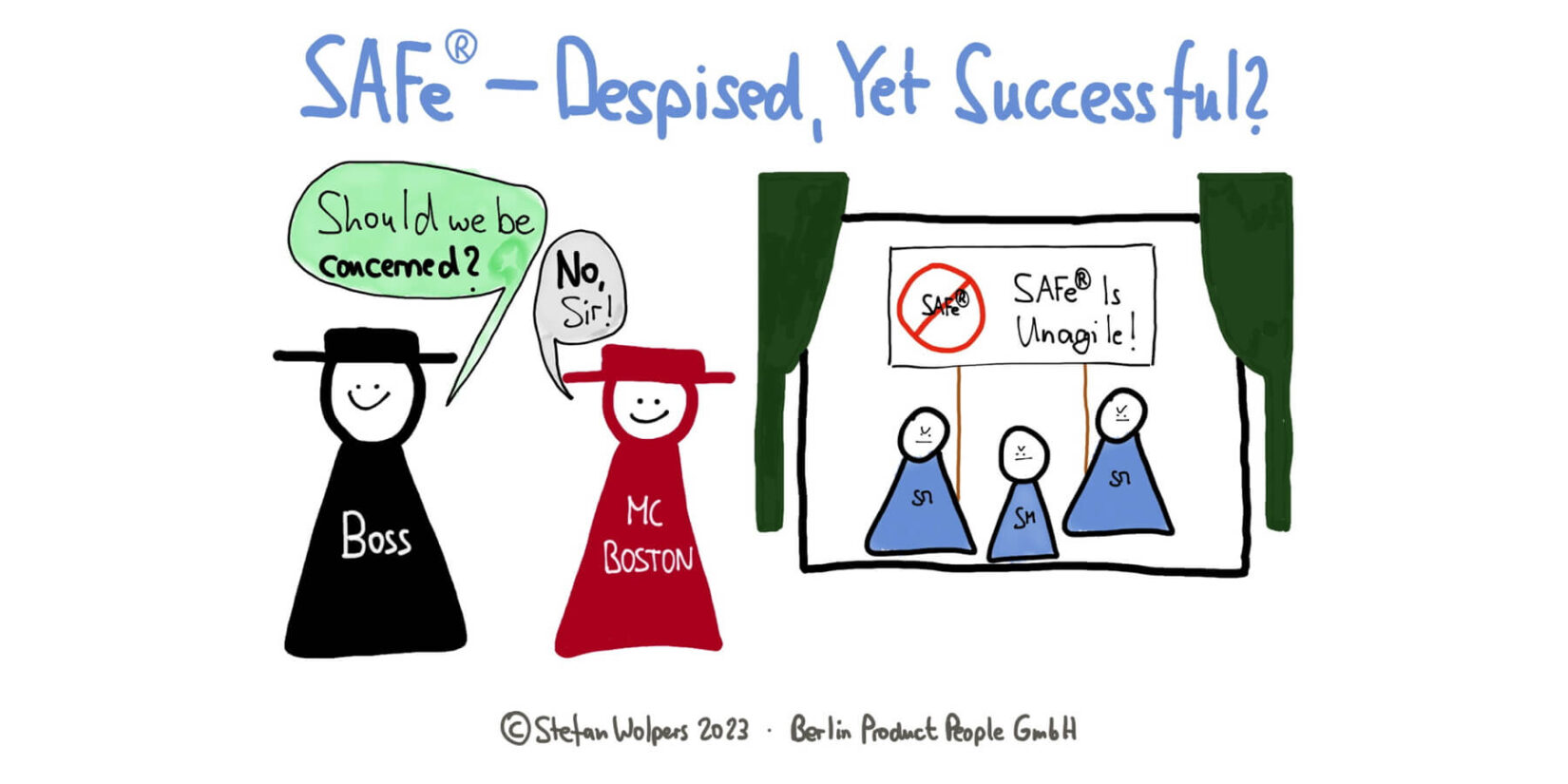
Many in the Agile community consider the Scaled Agile Framework designed by Dean Leffingwell and Drew Jemilo as unagile, violating the Agile Manifesto and the Scrum Guide. “True agilists” would never employ SAFe® to help transition corporations to agility. SAFe® is an abomination of all essential principles of “agility.” They despise it.
Nevertheless, SAFe® has proven not only to be resilient but thriving. SAFe® has a growing market share in the corporate world and is now the agile framework of choice for many large organizations.
How come? Learn more about nine reasons for this development.
PS: I have no affiliation with SAFe® whatsoever and consider it harmful. Yet there are lessons to learn.