TL; DR: Continuous Improvement, Innovation Heroes? — Food for Agile Thought #307
Welcome to the 307th edition of the Food for Agile Thought newsletter, shared with 32,883 peers. This week, we explore the heart of continuous improvement; we dissect the leadership anti-pattern of rewarding the continuation of a broken system, and we suggest eight attitudes to describe leadership styles in a VUCA world, ranging from the organizational refactorer to the flow manager.
We then delve into the anti-pattern of product requirements documents (PRD), substituting proper product discovery. Moreover, we show that successful businesses figure out how to align their goals with the customers they serve. Also, we provide insight into how to practice empathy and communicate effectively with the leadership.
Lastly, we enjoy a podcast with Mr. User Story Mapping Jeff Patton, explaining how you can transform ordinary teams into extraordinary ones by fixing the product backlog.
There are plenty of failure possibilities with Scrum. Given that Scrum is a framework with a reasonable yet short “manual,” this effect should not surprise anyone. A classic discussion is whether it is appropriate that (line) managers attend the Retrospectives of the Scrum team. Probably, making their attendance a regular habit—or even a requirement—is not a good idea. However, what about managers that occasionally attend a Retrospective? Moreover, what if the (line) manager is also a team member?
Join me and delve into the how and when of managers attending Retrospectives in less than two minutes.
TL; DR: Selling Product’s Success, Method and Framework Prison — Food for Agile Thought #306
Welcome to the 306th edition of the Food for Agile Thought newsletter, shared with 32,841 peers. This week, we delve into selling Product’s success. Also, we apply David Marguest’s ‘thinking time’ and ‘doing time’ concepts to Scrum events, and we learn what we can do to escape the craziness of methods and frameworks.
We then describe how Intercom changed its NPS strategy to provide helpful customer insights across the company; we share Dovetail’s success story of turning a massive set of qualitative data into an actionable roadmap, and we discuss ethical principles to guide your user research.
Lastly, we share a list of tips and tricks to get more out of your working day without putting in more hours, and we point to the importance of understanding the information cascade and its effect on popular estimation techniques.
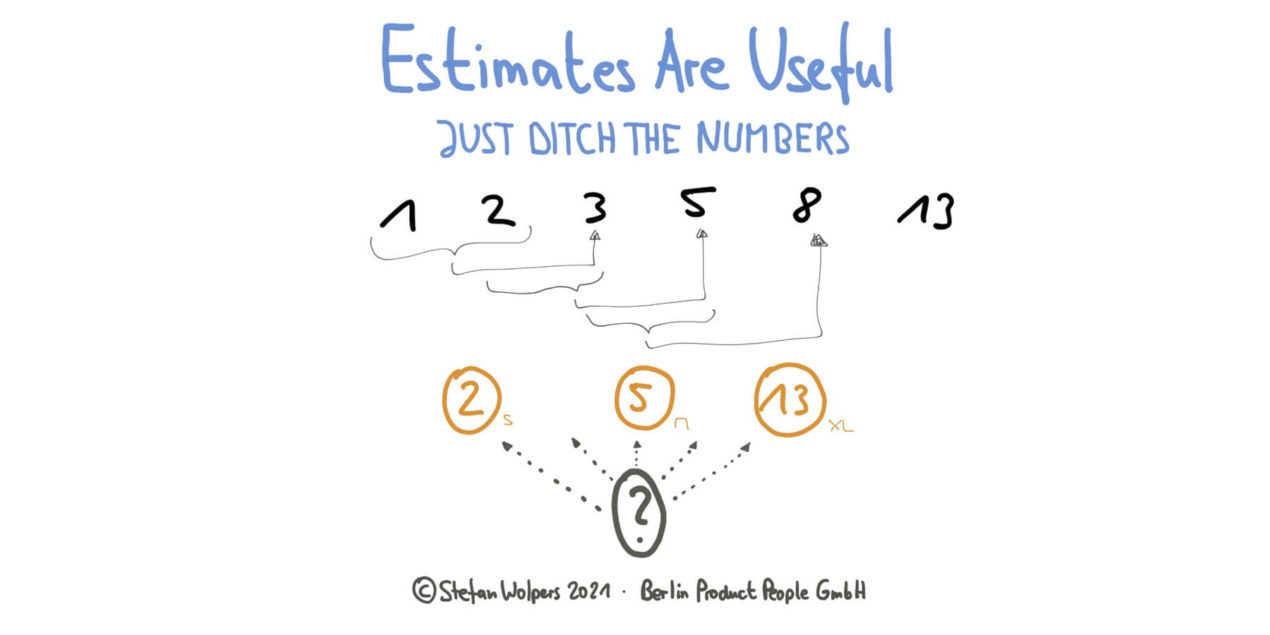
There are plenty of failure possibilities with Scrum. Given that Scrum is a framework with a reasonable yet short “manual,” this effect should not surprise anyone. One area that typically flies under the radar is improvements. While the Scrum Guide encourages addressing the most impactful ones as soon as possible, it is up to the Scrum team to figure out how to improve. One manifestation of this core team task we often encounter is picking unsmart improvements, though.
Join me and delve into the consequences of picking unsmart improvements as a Scrum Team in less than 90 seconds.
TL; DR: Coaching Executive Mindsets, Big Project Syndrome — Food for Agile Thought #305
Welcome to the 305th edition of the Food for Agile Thought newsletter, shared with 32,803 peers. This week, we delve into coaching executive mindsets; we are getting into the zone with the Agile Fluency Model, and we reflect on the difference between accountability and responsibility and how to avoid confusing them.
We then come back to a familiar and highly destructive leadership pattern: turning big ideas into similar-sized projects. Moreover, we point at common analytics problems and how product teams can measure success more effectively, and we mention that output metrics are an obsolete and counterproductive way of measuring human impact in a world of knowledge.
Lastly, we delve into practical aspects of reinventing organizations, from resilience to socio-technical systems to the power of visualization.
TL; DR: Logical Fallacies, Agile 2.0 — Food for Agile Thought #304
Welcome to the 304th edition of the Food for Agile Thought newsletter, shared with 32,756 peers. This week, we share an epic list of logical fallacies created by faulty reasoning that influence decision-making. We also listen to an idea of what the next iteration of ‘Agile’ might be — 20 years after the manifesto, and we reject the idea that simply sticking to the INVEST principles will automatically create good user stories.
We then share a list of visualization models to help deal with complexity in product management. Moreover, we learn why going with evidence, not opinions might turn out to be highly lucrative, and we reflect on the benefits of taking our time to get products right.
Lastly, we point at the disservice we accept when we apply false analogies to creating software, and we embrace a template for a Futurospective.