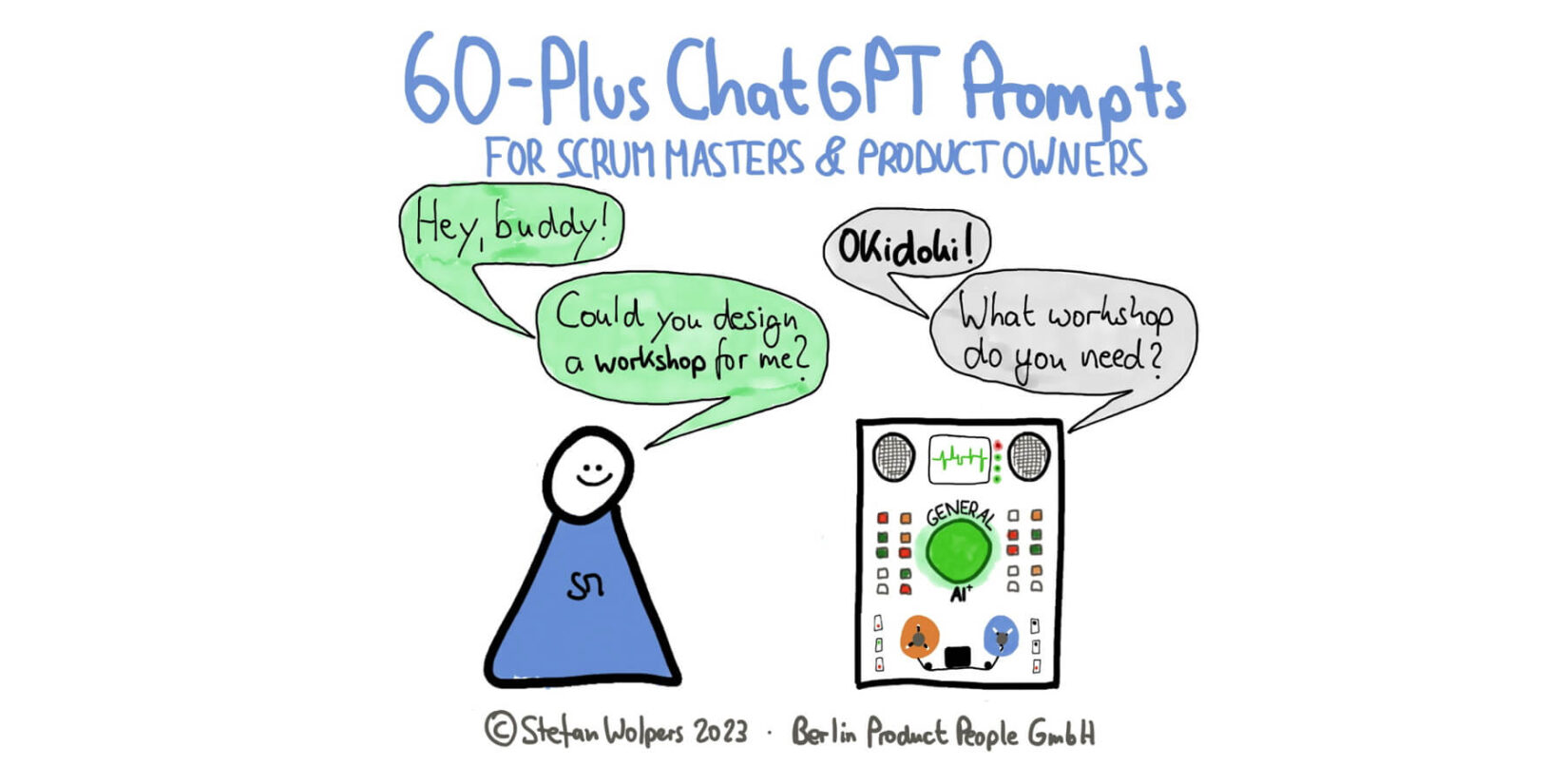
Workshop Design with ChatGPT

TL; DR: Workshop Design with ChatGPT

The following article explores whether we can use ChatGPT-4 to create workshops for agile practitioners; for example, Scrum Masters. While Liberating Structures have simplified the task, workshop design with ChatGPT may provide an alternative.

As you will learn, and despite being prone to lapse into project management speak, ChatGPT is remarkably capable of doing so, provided we feed it suitable prompts. Whether this requirement gives ChatGPT an edge over manually creating workshops remains to be seen.

Workshop Design with ChatGPT — Age-of-Product.com
Continue reading Workshop Design with ChatGPT

Food for Agile Thought #386: Scrum Police, Marty Cagan on Transformations, Agile Bureaucracy, Trust In Product Management?

TL; DR: Scrum Police, Marty Cagan on Transformations — Food for Agile Thought #386

Welcome to the 386th edition of the Food for Agile Thought newsletter, shared with 45,734 peers. This week, we applaud Mike Cohn and his fantastic squad from the Scrum Police for battling the countless misadventures of wonky Scrum implementations. Also, Jurriaan Kamer explores six options to “revitalize your agile transformation” while we reflect on the “relationship between organization and self-organization,” as systems self-organize within constraints. Moreover, Shane Snow claims, “despite our natural propensity to trust, a lack of trust is the #1 underlying cause of dysfunction in teams,” and Jason Cohen dives into humanity’s repeated pattern of inability to predict the future and what techniques we have to navigate our volatile world.

Then, Marty Cagan shares his thoughts on common transformation pitfalls, from outsourcing the transformation to McBoston to the widespread desire for a process, and Tim Herbig suggests addressing the analysis-paralysis problem product teams face during product discovery. Additionally, Dave Gray shares several free innovation-related illustrations, from the corporate innovation ecosystem to measuring innovation to plugging into the startup ecosystem.

Finally, we appreciate that Corinna Baldauf turned all 144 Retromat exercises into a giant Miro template and enjoy Nick Brown’s excellent primer on the many problems, issues, and flaws of a favorite concept of many organizations: flow efficiency. Russ Roberts interviews Kevin Kelly about his book ‘Excellent Advice for Living,’ and why Kevin Kelly is not worried about AI, and we close with David Rotman’s belief that LLMs would inevitably cause a revolution by transforming many jobs. Whether that will be beneficial to society is up to us to decide.

Food for Agile Thought #386: Scrum Police, Marty Cagan on Transformations, Agile Bureaucracy, Trust In Product Management? — Age-of-Product.com
Continue reading Food for Agile Thought #386: Scrum Police, Marty Cagan on Transformations, Agile Bureaucracy, Trust In Product Management?

Creating a Personal Readme for Scrum Masters with ChatGPT

TL; DR: Creating a Personal Readme for Scrum Masters with ChatGPT

Providing a personal readme to your new teammates and stakeholders as a Scrum Master is a great way to build trust and rapport while managing expectations at the same time. I do so regularly and having a template for that purpose comes in handy.

Therefore, I thought it also might be an excellent exercise to test ChatGPT on more practical aspects of a Scrum Master’s work. So please follow the complete path to having ChatGPT create a decent personal readme template for Scrum Masters—which took me less than 20 minutes.

Creating a Personal Readme for Scrum Masters with ChatGPT — Age-of-Product.com
Continue reading Creating a Personal Readme for Scrum Masters with ChatGPT

Food for Agile Thought #385: ChatGPT in Product Development, Organizational Change Patterns, The Art of the User Story, Do We Need Sprint Goals?

TL; DR: ChatGPT in Product Development — Food for Agile Thought #385

Welcome to the 385th edition of the Food for Agile Thought newsletter, shared with 45,612 (1) peers. This week, we delve into ChatGPT in product development, pointing to what ChatGPT can and cannot do. Also, John Cutler asked some friends a simple question: “How does change actually happen at your company,” and we explain the relationship between organizational design and an organization’s size. Moreover, we learn how to deal with controversial topics that “elicit strong emotions, have little or no effort invested into resolution, and unequal participation” as a coach.

Then, we dive into the challenges of integrating UX research and Scrum and what a token for discussion — also known as a user story — has to do with it while questioning the utility of strictly adhering to the mandate of employing a Sprint Goal every single Sprint. Also, we learn how Fender, the famous guitar maker, overcame its existence-threatening churn rate among new customers and reflect on why larger organizations quickly become less innovative and what autonomous teams and ‘saying no’ have to do with it.

Finally, we check out ChatGPT 4 for Scrum practitioners; we report on a recent analysis of how OpenAI’s GPT technology could affect the workforce and walk you through the current ChatGPT ecosystem, helping everyone to understand why it has been called AI’s iPhone moment.

Food for Agile Thought #385: ChatGPT in Product Development, Organizational Change Patterns, The Art of the User Story, Do We Need Sprint Goals? — Age-of-Product.com
Continue reading Food for Agile Thought #385: ChatGPT in Product Development, Organizational Change Patterns, The Art of the User Story, Do We Need Sprint Goals?

ChatGPT 4: A Bargain for Scrum Practitioners?

TL; DR: ChatGPT 4: A Bargain for Scrum Practitioners?

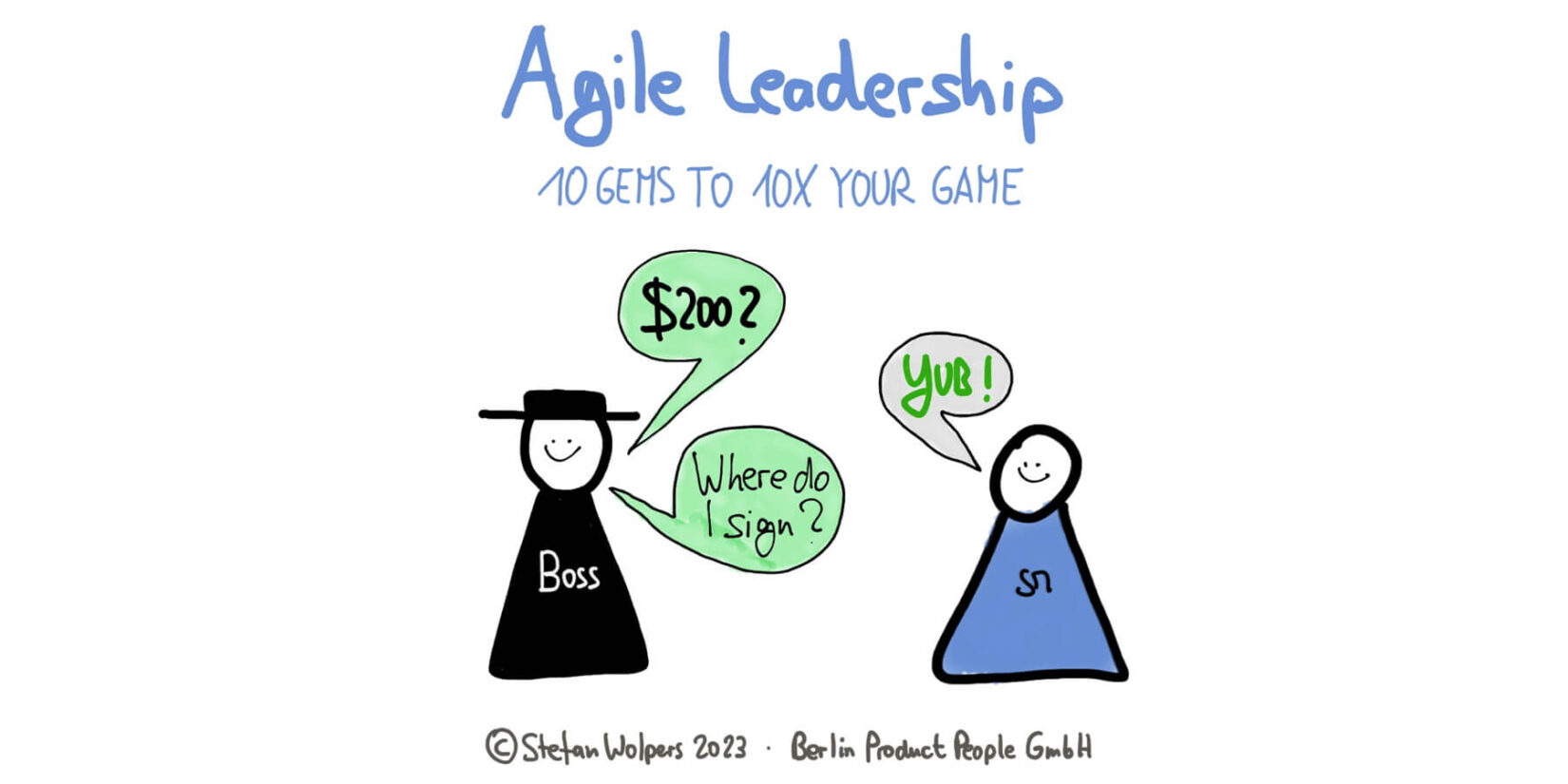
When OpenAI released its new LLM model GPT-4 last week, I could not resist and signed up for $20 monthly. I wanted to determine whether ChatGPT 4 is superior to its predecessor, which left a good impression in recent months; see my previous articles on Scrum, Agile, and ChatGPT.

I decided to run three comparisons, using the identical prompt to trigger answers from the new GPT-4 and previous GPT-3.5 models. Read on and learn what happened. It was not a foregone conclusion.

ChatGPT 4: A Bargain for Scrum Practitioners? — Age-of-Product.com
Continue reading ChatGPT 4: A Bargain for Scrum Practitioners?

Food for Agile Thought #384: The Decline of the Agile Brand, Product Managers Devs Don’t Hate, Product Core Competencies, Scrum a Natural Pattern?

TL; DR: The Decline of the Agile Brand — Food for Agile Thought #384

Welcome to the 384th edition of the Food for Agile Thought newsletter, shared with 45,437 (1) peers. This week, we listen to Brett Maytom and Michael Küsters on the decline of the Agile brand. Moreover, we explore whether Scrum is not only applied empiricism but also “some sort of natural pattern” before Seth Godin suggests tried and tested practices to help you maneuver complex projects, from “budgets are a tool, not a weapon” to “heroism is more fun but less reliable than good planning.” Moreover, we describe four effectiveness-impacting biases, from the urgency effect to the planning fallacy.

Then, we sketch a developer-friendly role model of a product manager, from demonstrating evident expertise to helping with the dirty work, which pairs well with Marty Cagan’s concept of roles of an empowered product team. Next, Teresa Torres and Hope Gurion discuss the responsibility of empowered product teams for their outcomes, while Lenny Rachitsky interviews Stanford University professor and author Christina Wodtke on how OKRs can help your team achieve better results.

Finally, we share a bunch of primers on user story mapping, planning poker and story points, and practical user research. Lastly, we ask: Can wisdom from the past still be relevant to today’s VUCA-determined world? Is there something like a Stoic Scrum Master?

Food for Agile Thought #384: The Decline of the Agile Brand, Product Managers Devs Don’t Hate, Product Core Competencies, Scrum a Natural Pattern? — Age-of-Product.com
Continue reading Food for Agile Thought #384: The Decline of the Agile Brand, Product Managers Devs Don’t Hate, Product Core Competencies, Scrum a Natural Pattern?