Food for Agile Thought #422: Human Misjudgment, Evaluating Product Managers, Fake Agile, Scaling Simplified

TL; DR: Human Misjudgment — Food for Agile Thought #422

Welcome to the 422nd edition of the Food for Agile Thought newsletter, shared with 49,901 peers. This week, Farnam Street highlights the revised edition of Charlie Munger’s “The Psychology of Human Misjudgment,” Nigel Thurlow critiques “Fake Agile,” while John Cutler analyzes Brian Chesky’s leadership insights. Also, Marco Nink identifies key traits of agile companies, and we examine how to miss Sprint Goals consistently.

Then, Jeff Patton offers a framework for assessing Product Managers across seven vital areas. Moreover, Roman Pichler discusses the role of a validated product strategy and the Opportunity Solution Tree in product discovery, and Richard Mironov critiques annual planning, advocating for continuous, inclusive corporate and product strategy.

Lastly, Troy Lightfoot and Andy Cleff discuss with Prateek Singh and Dan Vacanti their book “Scaling Simplified,” focusing on Agile scaling through flow. Mark Ridley investigates Bruce Tuckman’s “Stages of Group Development,” its evolution, and its current relevance. Additionally, Casey Rosengren addresses startup decision-making, underscoring the impact of fear and uncertainty, and Dr. Stuart Woolley critiques the gap between management practices and their effectiveness in software engineering.

Food for Agile Thought #422: Human Misjudgment, Evaluating Product Managers, Fake Agile, Scaling Simplified — Age-of-Product.com
Continue reading Food for Agile Thought #422: Human Misjudgment, Evaluating Product Managers, Fake Agile, Scaling Simplified

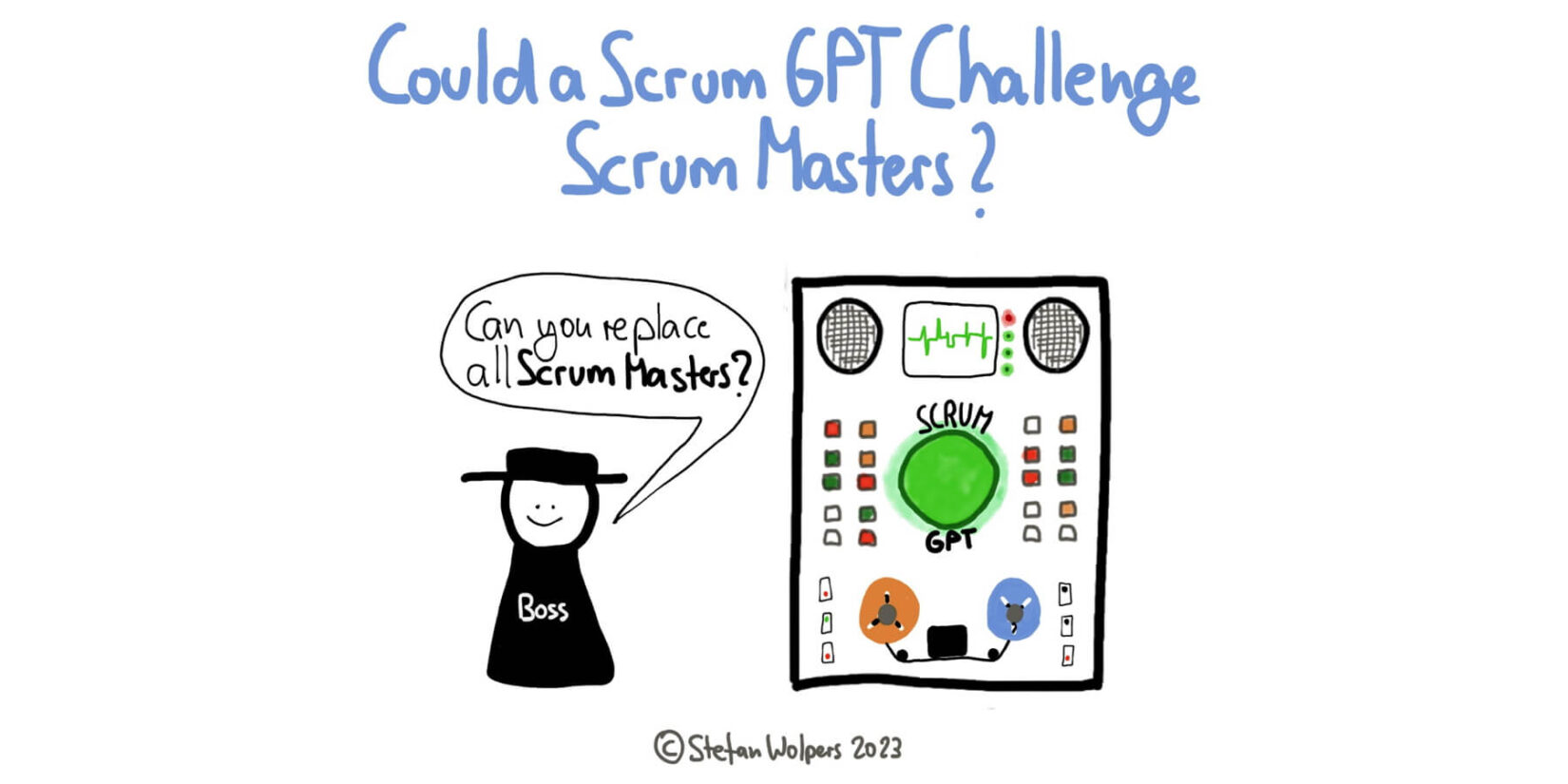
Why Succeed When You Can Fail? A Guide to Missing Sprint Goals

TL; DR: Missing Sprint Goals

Do you excel in the art of setting unattainable, imposed, or plain non-existing Sprint Goals? In other words, are you good at missing Sprint Goals with regularity? If not, don’t worry; help is on the way!

In this article, we’ll explore how to consistently miss the mark. For example, enjoy the thrill of cherry-picking unrelated backlog items and defining success by sheer output, not outcome. Countless Scrum Teams have thoroughly tested all suggestions. They are ideally suited for teams who love the challenge of aimlessly wandering through Sprints!

Why Succeed When You Can Fail? A Sarcastic Guide to Missing Sprint Goals — Age-of-Product.com
Continue reading Why Succeed When You Can Fail? A Guide to Missing Sprint Goals

Food for Agile Thought #421: Fairytale Planning, Alternatives To Product Managers, Slowing Down to Speed Up, Insights from Spotify

TL; DR: Fairytale Planning — Food for Agile Thought #421

Welcome to the 421st edition of the Food for Agile Thought newsletter, shared with 49,812 peers. This week, we explore Jason Cohen’s Fairytale Planning for strategic simplicity, examine Jim Highsmith’s critique of the waterfall model’s impact on organizational dynamics, and delve into John Cutler’s insights on balancing productivity in product management. Also, we highlight Eiki’s emphasis on the importance of psychology in agile coaching through transformative leadership methods, and we explore the Scrum trap of applying unsuited practices.

Then, we listen to Agile Uprising’s interview with Maarten Dalmijn, discussing his book ‘Driving Value with Sprint Goals,’ while Marty Cagan critiques Brian Chesky’s take on product management. Aatir Abdul Rauf offers insights on crafting product strategies, and Charles Lambdin laments the persistent focus on output over outcomes.

Lastly, Jason Yip discusses lessons from Spotify on autonomy and team building, while Dan Shipper honors Charlie Munger’s legacy in decision-making. Shane Hastie’s podcast with Todd Little delves into Kanban’s advantages, and David Pinsof critically analyzes the nature of opinions in social contexts.

Food for Agile Thought #421: Fairytale Planning, Alternatives To Product Managers, Slowing Down to Speed Up, Insights from Spotify — Age-of-Product.com
Continue reading Food for Agile Thought #421: Fairytale Planning, Alternatives To Product Managers, Slowing Down to Speed Up, Insights from Spotify

The Scrum Trap: How Unfit Practices Will Harm Return on Investment

TL, DR: The Scrum Trap

Scrum is a purposefully incomplete framework. Consequently, it needs to be augmented with tools and practices to apply its theoretical foundation to an organization’s business reality: what problems shall be solved for whom in which market? Moreover, there is an organization’s culture to take into account. However, the intentional “gap” is not a free-for-all to accept whatever comes to mind or is convenient. Some tools and practices have proven highly effective in supporting Scrum’s application and reaping its benefits. And then there are others — the Scrum trap.

Let’s look at what practices and tools for collaboration and team building are not helpful when used with Scrum.

The Scrum Trap: How Unfit Practices Will Harm Return on Investment — Age-of-Product.com
Continue reading The Scrum Trap: How Unfit Practices Will Harm Return on Investment

Food for Agile Thought #420: Triple Track Development, Outcome Roadmaps, Building Trust, ProductOps Guide

TL; DR: Triple Track Development, Building Trust — Food for Agile Thought #420

Welcome to the 420th edition of the Food for Agile Thought newsletter, shared with 49,687 peers. This week, Paulo Caroli introduces Triple Track Development, blending Business Strategy, Discovery, and Delivery for digital product evolution. Jacob Kaplan-Moss discusses trust-building in management, emphasizing the need for consistency and transparency. We delve into Wharton research by Peter Cappelli, revealing how excessive comfort impacts workplace performance, and Gergely Orosz examines the evolution of software backend development with insights from Joshua Burgin. Plus, we tackle the feature factory dilemma in large organizations, exploring its effects on Agile principles and strategies to overcome it.

Then, Itamar Gilad proposes a blended roadmap approach for adaptability in planning. Lenny Rachitsky interviews Melissa Perri and Denise Tilles, highlighting the significance of product operations. At the same time, Teresa Torres and Hope Gurion discuss balancing product discovery with delivery, while Marc Abraham emphasizes the importance of prioritization and saying “no” in decision-making.

Lastly, John Cutler explores systems thinking and business efficiency with Leah Tharin, and Jeff Gothelf presents a guide on designing lightweight experiments. Moreover, Christoph Roser examines the impact of overburden in manufacturing on employees and machinery. Finally, Dennis Hambeukers highlights the role of good design in fostering agility and collaboration.

Food for Agile Thought #420: Triple Track Development, Outcome Roadmaps, Building Trust, ProductOps Guide — Age-of-Product.com
Continue reading Food for Agile Thought #420: Triple Track Development, Outcome Roadmaps, Building Trust, ProductOps Guide

Escaping the Feature Factory

TL; DR: Escaping the Feature Factory — Refocussing From Output to Outcome

The feature factory fate is not inevitable; there is hope to avoid becoming a mere cog in the machinery. Learn how!

In many large organizations, Scrum teams fall into the ‘feature factory’ trap, focusing more on churning out features than creating real value. It’s too bad that this shift undermines Agile principles and hampers long-term success and innovation. Let’s discuss how and why this happens and what we can do to break the chains of the feature factory.

Escaping the Feature Factory — Refocussing From Output to Outcome — Age-of-Product.com
Continue reading Escaping the Feature Factory