If you weren’t at the virtual Hands-on Agile 2025 conference earlier this month, you missed an incredible opportunity to explore the shift from concept-based to context-based agility with nearly 800 fellow agilists. But don’t worry – I’m here to share some of the key takeaways and insights!
Check out the slides from the Live Stream speakers below; I will keep you posted on the availability of the recordings.
Welcome to the 480th edition of the Food for Agile Thought newsletter, shared with 42,711 peers. This week, we feature Anthropic’s Economic Index, which tracks AI and jobs, showing a preference for augmentation over automation. Richard Hanania argues AI job fears are overblown, pointing to historical resilience. Ben Thompson examines OpenAI’s Deep Research, an AI-powered assistant that synthesizes vast information but raises concerns about knowledge gaps and secrecy. In agility, Simon Powers dissects why Agile transformations stall—citing lack of authority, iterative adoption struggles, and hidden budgets. Adrian Howard debunks common Scrum misconceptions, showing that most criticisms stem from misuse rather than the framework itself. Also, Ken Schwaber reflects on Scrum.org’s founding, tackling assessment challenges, certification culture, and the deeper purpose of Scrum education.
Next, we dive into AI’s evolving role in product management, strategic alignment, and organizational transformation. Peter Yang shares a week in AI-powered product leadership, revealing 17 impactful use cases that enhance strategy, design, and decision-making. Teresa Torres & Hope Gurion challenge organizations on their readiness for the Product Operating Model, and Arne Kittler explores the intersection of product direction and commercial strategy, using Martin Eriksson’s Decision Stack to highlight how product teams and go-to-market strategies can collaborate for growth and faster decision-making.
Lastly, Viktor Cessan introduces a tool to quantify team dependency costs, helping teams optimize workflows and align structures with product goals. Marcelo Calbucci shares insights from The PRFAQ Framework, revealing how Amazon’s Working Backward process sharpens innovation through structured debate, and the Duolingo Team distills 14 years of growth into The Duolingo Handbook, outlining five principles that define their experiment-driven culture. Tim O’Reilly argues that AI won’t replace programmers but will reshape their roles, favoring those who adapt. Finally, Francesco Bonacci examines AI agents for computer use, detailing how autonomous systems execute tasks through reasoning, planning, and APIs.
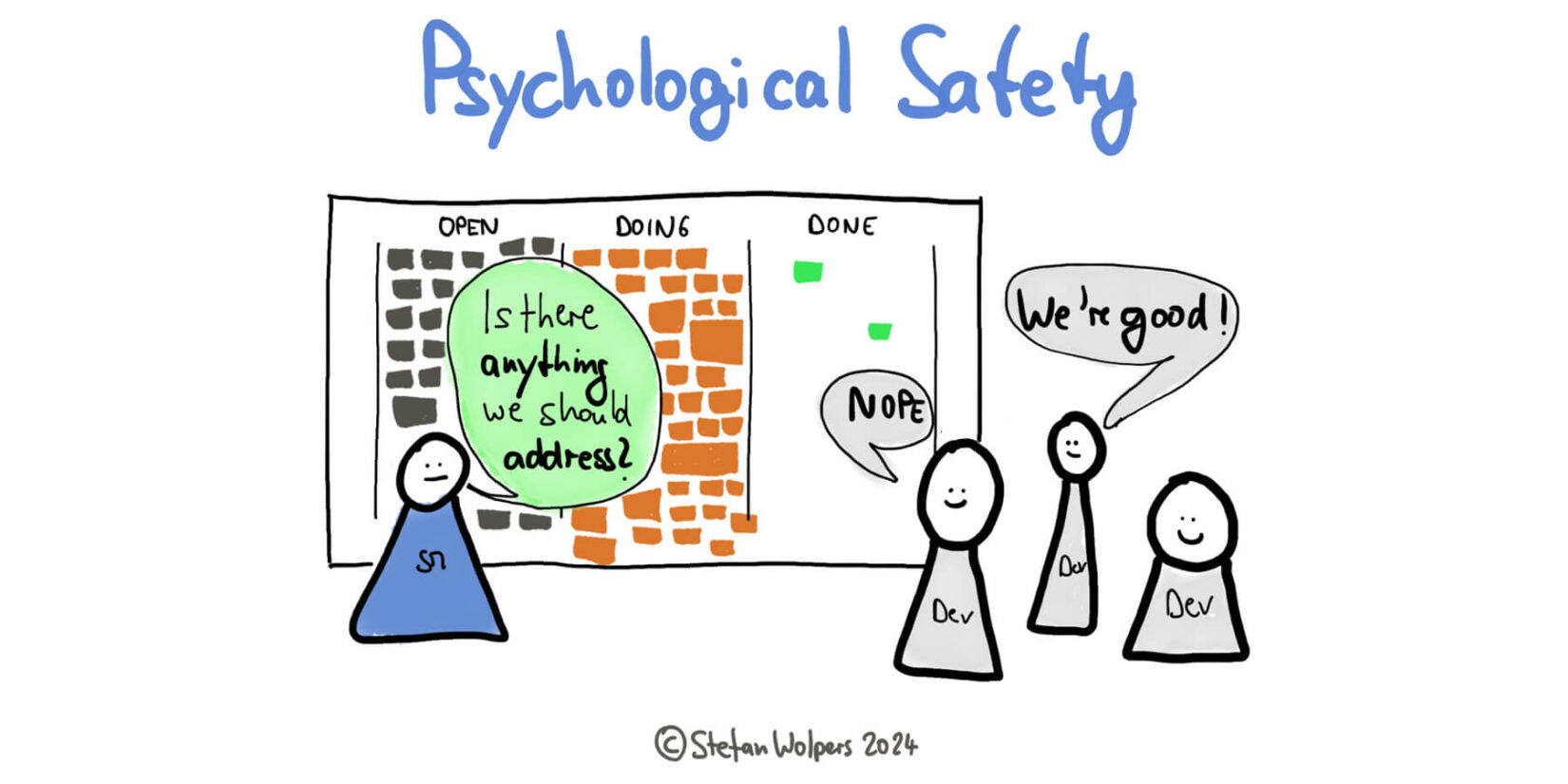
TL; DR: Psychological Safety as a Competitive Edge
Psychological safety isn’t about fluffy “niceness”—it is the foundation of agile teams that innovate, adapt, and deliver.
When teams fearlessly debate ideas, admit mistakes, challenge norms, and find ways to make progress, they can outperform most competitors. Yet, many organizations knowingly or unknowingly sabotage psychological safety—a short-sighted and dangerous attitude in a time when knowledge is no longer the moat it used to be. Read on to learn how to keep your competitive edge.
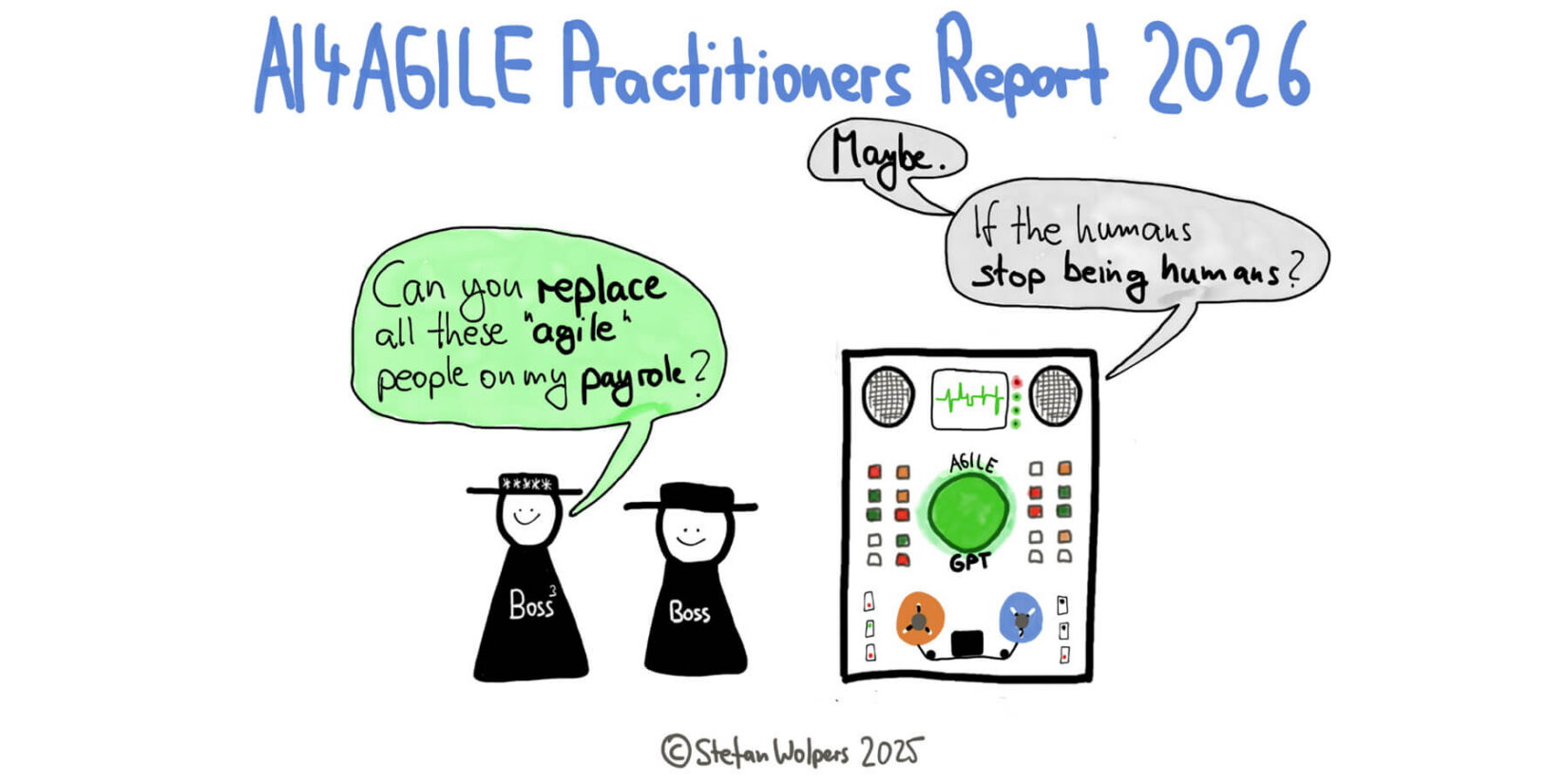
Welcome to the Download Page of the “AI4Agile Practitioners Report 2026”
83% of Agile practitioners use AI, but most spend 10% or less of their time with it because they do not know where it fits. Our survey of 289 Agile practitioners identifies the real adoption barriers and shows where AI creates value you can act on. Learn more by downloading the free AI4Agile Practitioners Report 2026.
Download your copy of the AI4Agile Practitioners Report 2026 now:
Cannot see the subscription form? Please click here
Please note that you will not be able to download the PDF without having JavaScript enabled.
AI4Agile Practitioners Report 2026 — Related Posts
TL; DR: Deep Research — Food for Agile Thought #479
Welcome to the 479th edition of the Food for Agile Thought newsletter, shared with 42,738 peers. This week, Zvi Mowshowitz and Ethan Mollick dissect OpenAI’s Deep Research, an AI-driven research agent poised to transform knowledge work but raising concerns about cost and safety. Andrej Karpathy offers a deep dive into Large Language Models, while Kyle Wiggers unpacks the EU AI Act’s first enforcement deadline, banning high-risk AI applications. In leadership, Lenny Rachitsky interviews Shopify’s Tobi Lütke on playing infinite games and leading with first principles. Meanwhile, Caroline Kealey declares change management dead, urging leaders to embrace adaptation, and Willem-Jan Ageling examines how organizational culture stifles agility—suggesting agility may not always be the right fit.
Next, Richard Mironov critiques ROI’s role in product decisions, arguing that uncertainty, risk, and hidden costs make it unreliable, advocating for strategic framing and cost trade-offs instead. Jason Knight interviews Martin Eriksson on why PMs struggle with strategy, emphasizing the need for clear company direction and leadership that empowers teams. Arvid Kahl shares a structured framework for backlog pruning, ensuring a focus on validated, high-value features that drive strategic growth.
Lastly, Charity Majors critiques Brian Chesky’s ‘Founder Mode’, arguing that leadership requires accountability, not heroism and that efficiency trumps empire-building in sustainable companies. Teresa Torres introduces the SPICEY framework for continuous discovery, emphasizing small, adaptable habits over perfection. John Cutler outlines four key competencies for product operating systems, highlighting leadership, domain expertise, systems thinking, and operations. Plus, Petra Wille launches All Things Product, a weekly podcast featuring Teresa Torres as the first guest.
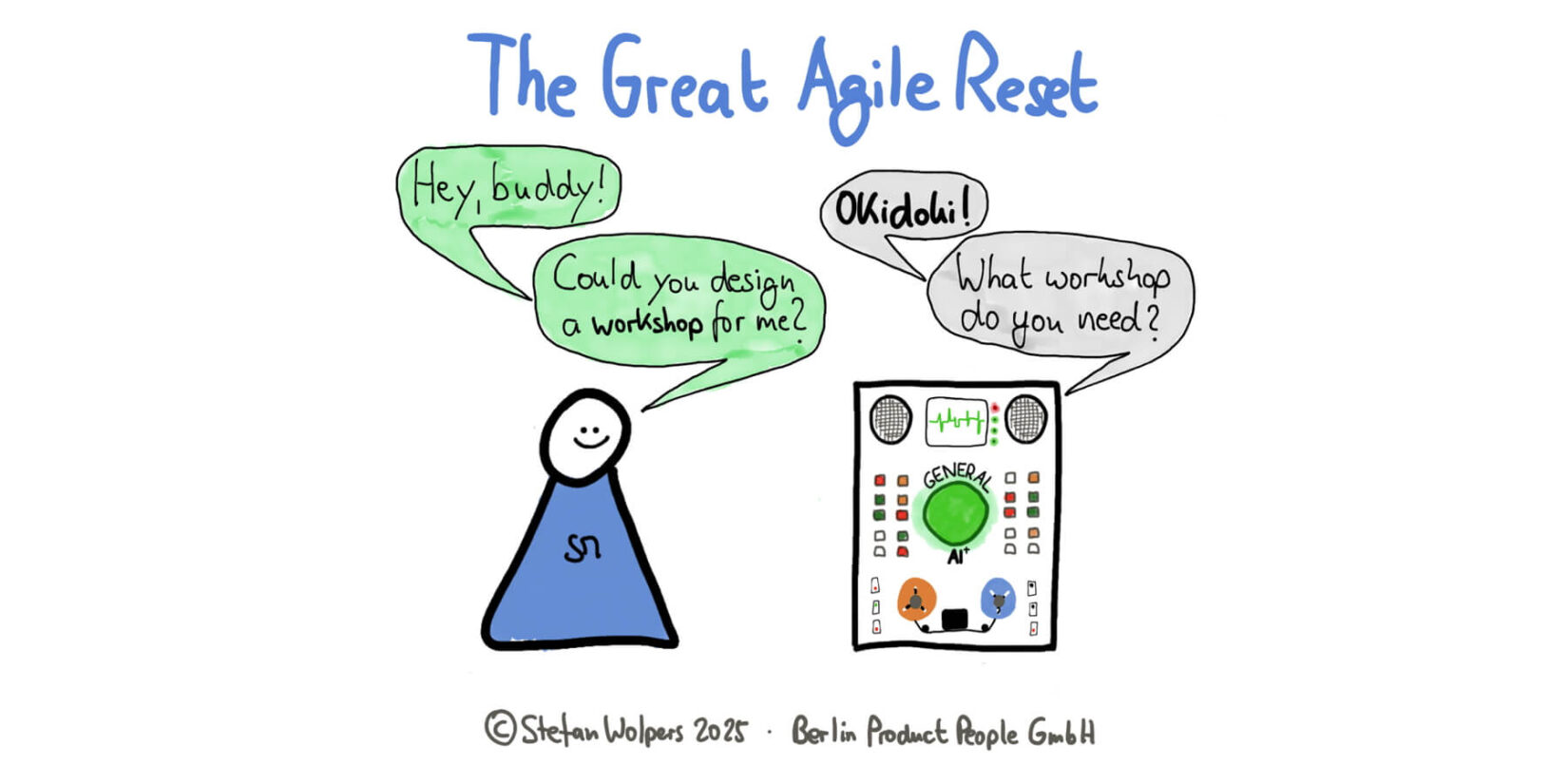
TL; DR: Moving Beyond Agile Frameworks in the Agile Reset
Remember my article from six months ago about reinventing Hands-on Agile to counter the great agile reset? (Just kidding; of course, you don’t.) Back then, I reflected on how to adapt my business model best, given the massive changes in the marketplace for “Agile.” (See the link below.)
Well, it’s time for an honest update, and it is not pretty.