TL; DR: Agile Transition
A hands-on, practical guide on how to kick-off an agile transition: Embrace the agile mindset and scale your engineering and product organization to harvest your organization’s full potential.
A hands-on, practical guide on how to kick-off an agile transition: Embrace the agile mindset and scale your engineering and product organization to harvest your organization’s full potential.
Age of Product’s Food for Thought of July 10th, 2016—shared with 3,258 peers—explores the shark-jumping nature of Scrum certifications, how cat herders and team therapists can make a living with Scrum, and how the Scrum master role evolves in organizations.
We then talk about carrots and sticks in agile ceremonies, Scrum personas, and the five new Scrum values of 2016. (Too much Scrum? Well, it’s summertime on the northern hemisphere…)
We also dive deep into the discussion between data-drivenness and UX, why A/B testing is a great management practice, and how to schedule meetings that don’t aggravate makers.
Last, but not least, we learn how to steal from the competition, embrace the holy grail of “the one metric”, and are blown away by the best list of mental models so far created. Have a great Sunday!
Age of Product’s Food for Thought of July 3rd, 2016—shared with 3,132 peers—starts with a video on how Spotify is scaling agile engineering, before we move on to dealing with problems of all kind: organizational debt, dysfunctional teams, and how to manage continuous delivery to legacy organizations.
We then explore the secrets of great teamwork, why movies like “Oceans 11” or “The Italian Job” can be watched for professional reasons, and how to scale the role of the product owner along the life-cycle of a product.
We also dive deep into the lean startup methodology, namely into “product/market fit” and the “minimum viable product”.
Last, but not least, we learn what basketball legend Wilt Chamberlain has to do with agile transition, and that solving problems with the tools at hand rather than inventing new solutions from scratch can be a license to print money. Have a great Sunday!
Age of Product’s Food for Thought of June 26th, 2016—shared with 3,010 peers—starts with a rant on Scrum slaves, aka Scrum masters being perceived as team secretaries, how to make people join the daily stand-ups joyfully, and preserve estimation accuracy over time. And still, when we talk about agile adoption the Borg way, resistance is futile.
We also explore a simple trick, how to plan for great retrospectives, utilizing Retromat to its full potential.
We dive deep into scaling lean product management with Ash Maurya, understand the importance of not falling for pleasing only your best customers and analyze the long-term product strategy of Mr. Musk.
Last, but not least, we enjoy Wally toying with the pointy-haired boss, and learn about Google’s epic undertaking of turning itself into “machine learning first” company. Have a great Sunday!
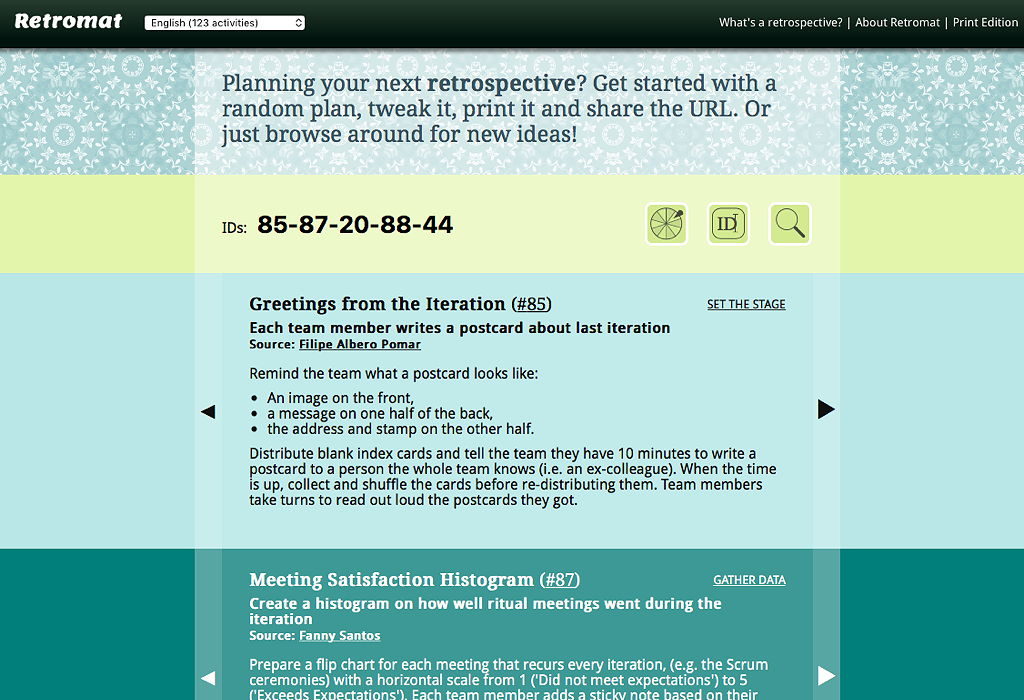
Learn how to curate retrospectives with Retromat without relying on the random retrospective function, including three examples.
This part of the Lean User Tests series focuses on selecting and inviting interviewees: Who is a suitable candidate, how to invite them and why you will need replacement candidates.
You should now be around three to four weeks away from your next—or first—user test. If anything is impeding you from reaching that goal, please do not hesitate to contact me by commenting on this post, and I will gladly help you.