Food for Agile Thought’s issue #204—shared with 23,376 peers—turns to Scrum TPS to 3-5x quality and value; we learn how to weave strings of Liberating Structures to achieve a Scrum Team’s goals, and we adjust our approach to handling organizational change.
We then kill our product backlogs; we embrace the idea of #nocode MVPs, and we come back again to the question of user story sizing.
Lastly, we ask: how come that so many agile transformations still fail, given the wealth of knowledge accumulated on the topic over recent years?
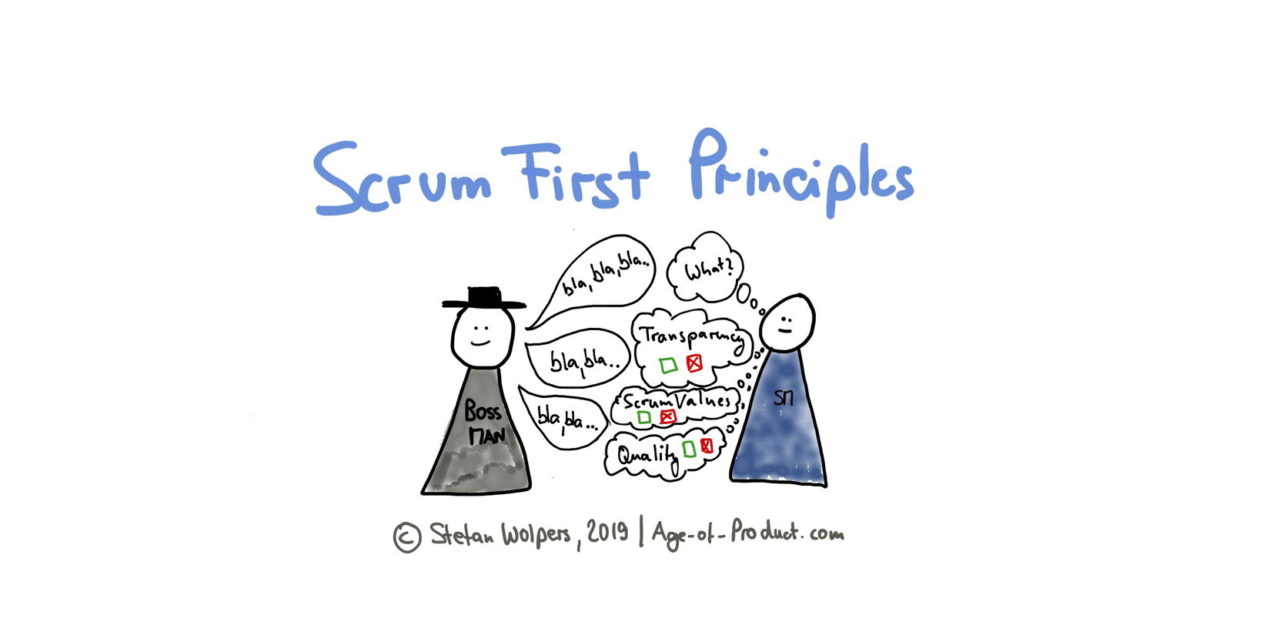
Popularized by Elon Musk, utilizing first principles thinking to solve problems in an innovative, creative, and less biased way has proven popular in the tech community. Given that its sibling empiricism is an integral part of Scrum as a framework, applying Scrum first principles thinking is also a useful exercise.
Learn more about how to Elon Musk the Scrum Guide.
Food for Agile Thought’s issue #203—shared with 23,236 peers—revisits the case for a combined top-down, bottom-up approach to agile transformations; we learn how to identify and deal with Zombie Scrum, and we consider the usefulness of making a Development Team member also the Scrum Master.
We then address how to communicate product changes to customers in a way that they will not freak out; we go Black Mirror with ethic tests, and we consider how to communicate as a product mensch with engineers without making them freak out either.
Lastly, we ask whether it is futile to resist the slow but steady assimilation of coaches into an organization’s culture?
Food for Agile Thought’s issue #202—shared with 22,882 peers—dives into mental models and cognitive biases that impede decision making; we browse through a case study of a failed large Scrum project in the financial industry, and we get more ideas on how to overcome agile transition antibodies of an organizational immune system.
We also address how to make product discovery less of a gamble; we consider suitable metrics for an innovation program, and we get a glimpse at ProductOps. (DevOps, DesignOps, and now ProductOps—the space is getting crowded.)
Lastly, we learn more about how “Agile” is working around the globe, and how we could learn from other cultures.
TL; DR: The Liberating Structures Product Backlog Meetup
The fourth Liberating Structures for Scrum meetup addressed the Product Backlog, more precisely the issues with Product Backlogs that subsequently cause Sprint Plannings to fail and Scrum Teams to deliver below their capabilities; as the saying goes: garbage in, garbage out.
Food for Agile Thought’s issue #201—shared with 22,612 peers—delves into software nature, we correct some popular misconceptions about Scrum, and we revisit the idea that innovation always includes failure, and that teams should experience it safely.
We also address the conceptual difference of product management for machine learning compared to ‘normal’ product management; we embrace the importance of disrupting ourselves, and we appreciate the Product Backlog ordering quadrant.
Lastly, we learn how to help teams that do not want to be coached.