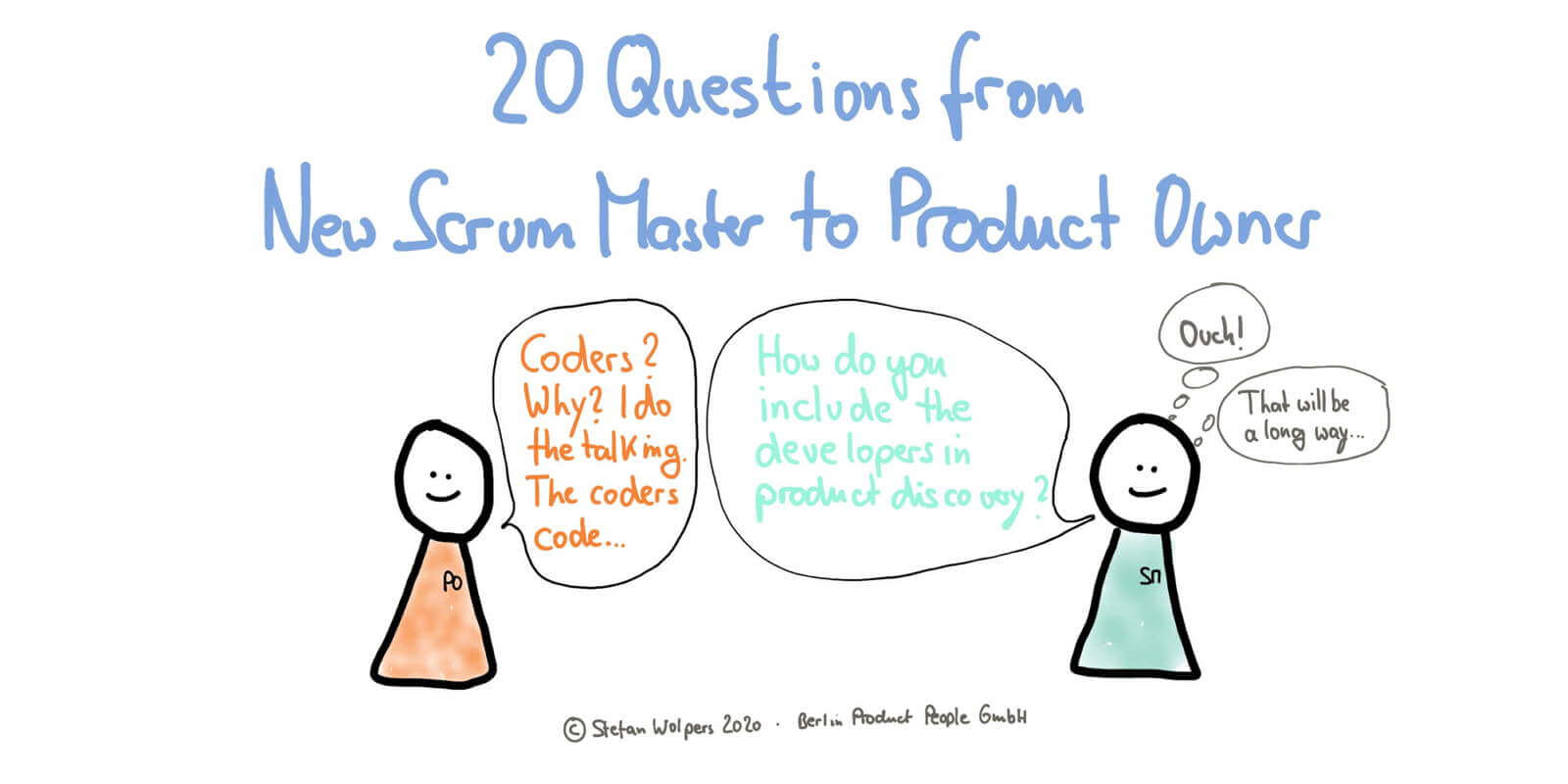
Welcome to the 20 Questions from New Scrum Master to Product Owner Download Page
From Scrum Master to Product Owner, this set of questions addresses the future collaboration between the two individuals and the rest of the Scrum Team. The questions have been modeled after some basic principles, that high performing teams have in common. Download a printable template for your convenience.
TL; DR: 20 Questions to Ask the Product Owner to Get up to Speed as a New Scrum Master
From Scrum Master to Product Owner, this set of questions addresses the future collaboration between the two individuals and the rest of the Scrum Team. The questions have been modeled after some basic principles, that high performing teams have in common. Download a printable template for your convenience.
TL; DR: Business Agility 2020, How to Succeed w/ Agility — Food for Agile Thought #261
Welcome to the 261st edition of the Food for Agile Thought newsletter, shared with 27,344 peers. This week, we are curious about the state of business agility 2020; we delve into a new recipe to succeed with agility, and we check the benefits that developers derive from estimating their work.
We then abandon the label ‘MVP,’ probably to embrace the ‘Maximum Viable Product.’ We also revisit Ben Horowitz’s famous quote from 20 years ago: Are product managers really the CEO of their product?
Lastly, we applaud a new initiative to develop a code of ethical conduct to raise agile coaching standards.
by Stefan Wolpers|Agile and ScrumAgile TransitionLean and Product
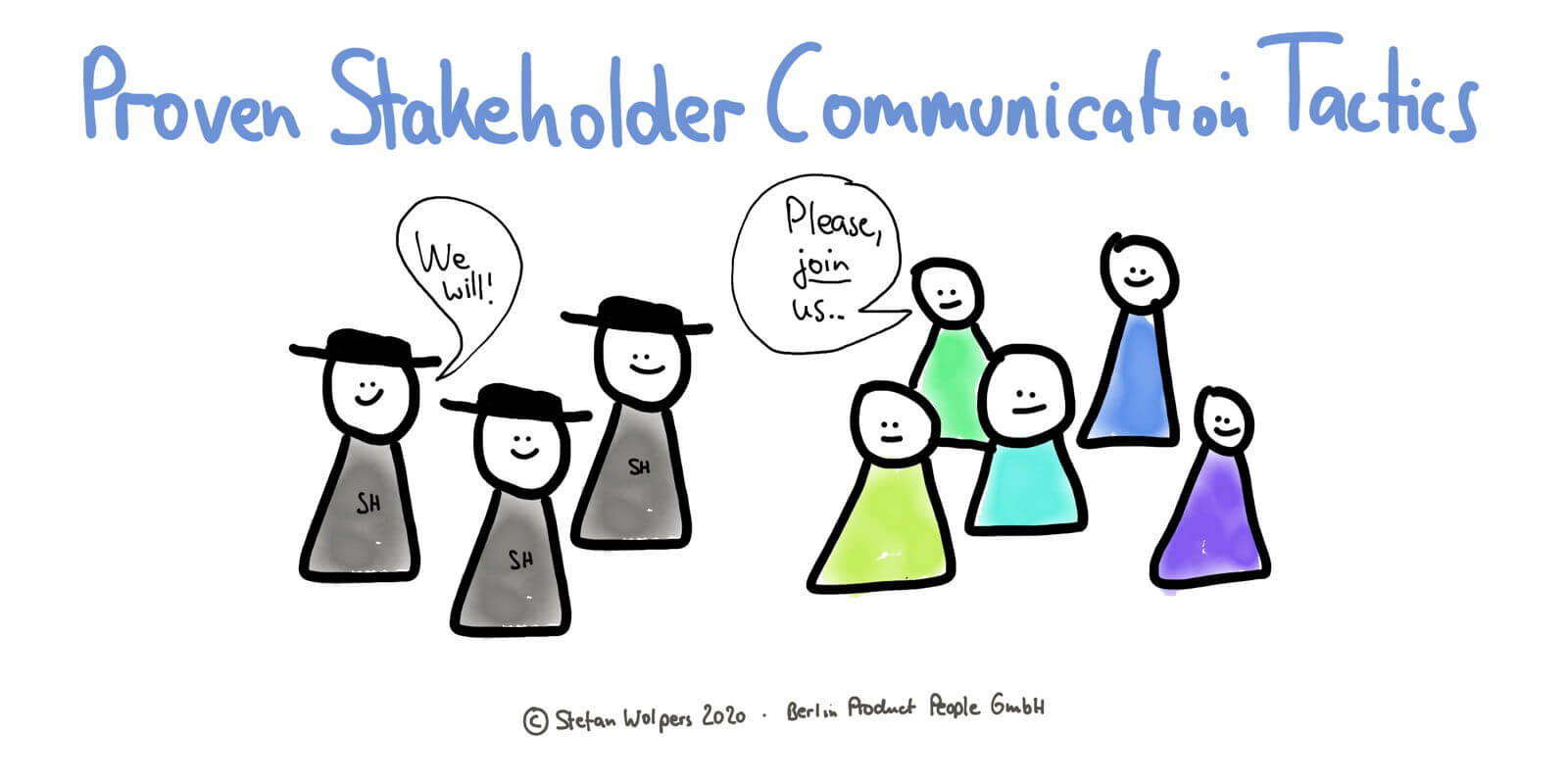
TL; DR: 11 Proven Stakeholder Communication Tactics
Stakeholder communication: It is simply not enough for an agile product development organization to create great code and ship the resulting product like a clockwork. It would help if you also talked about it, particularly at the beginning of your endeavor to becoming a learning organization. Marketing your journey to the rest of the organization—and thus securing their support, collaboration, and buy-in—is a critical success factor to step up the transformation game: You want to become agile, not “do agile.”
Learn more about eleven proven stakeholder communications tactics that contribute to making this happen.
TL; DR: Kiss Dual Track Agile Good-Bye? — Food for Agile Thought #260
Welcome to the 260th edition of the Food for Agile Thought newsletter, shared with 27,261 peers. This week, we ask: Is it time to kiss Dual Track Agile good-bye? We also learn about the experience of a large insurance company with a cross-functional product-team and brush up our understanding of a nasty cognitive bias that makes collaboration less effective.
We then listen to Shazam’s founder on lessons learned on the path to product/market fit; we pick up a few good suggestions regarding Product Backlog management, and we understand why Basecamp does not use product roadmaps.
Lastly, we enjoy an interview with Reed Hastings on the roots of Netflix’s culture.
TL; DR: Fully Remote Teams, Benevolent Dictators — Food for Agile Thought #259
Welcome to the 259th edition of the Food for Agile Thought newsletter, shared with 27,128 peers. This week, we have a glimpse at the world of fully remote teams. We also derisk projects with pre-mortems, and we learn about decision making and benevolent dictators.
We then embrace the testing of business ideas; we discover a lean approach to risk mitigation, and we learn about one startup’s path to product/market-fit.
Lastly, we are grateful for a workshop planning canvas to support our facilitation efforts.