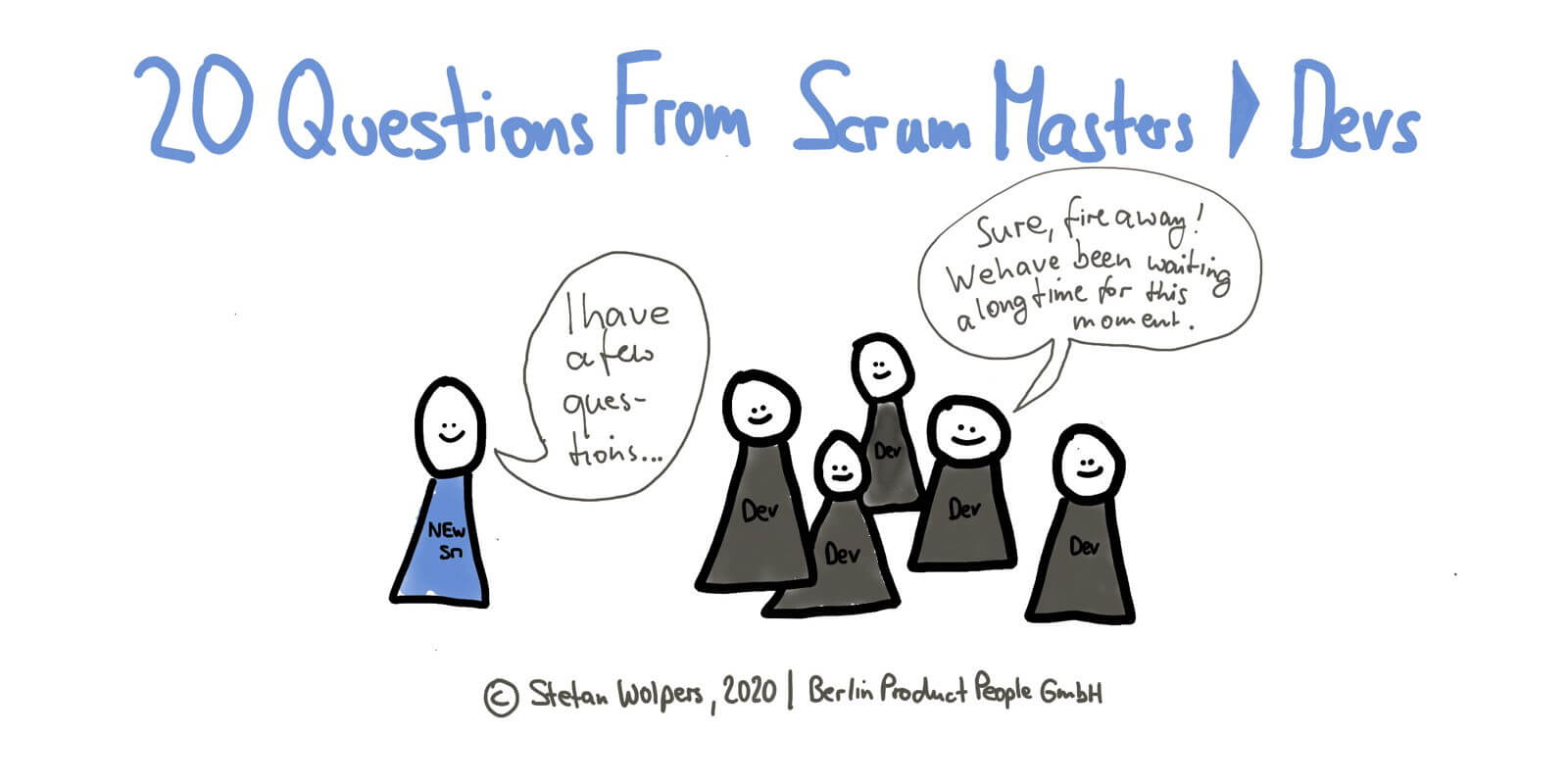
TL; DR: 20 Questions from New Scrum Master to the Development Team
From Scrum Master to Development Team members, this set of questions addresses the foundations of a Scrum Team capability to build valuable products: technical excellence and what it takes to achieve this proficiency level. The questions have been modeled after some basic principles that high performing teams have in common—from keeping technical debt at bay to collaboratively creating a Product Backlog.
Download a printable template for your convenience.
Welcome to the 20 Questions from Scrum Master to the Development Team Download Page
From Scrum Master to Development Team members, this set of questions addresses the foundations of a Scrum Team capability to build valuable products: technical excellence and what it takes to achieve this proficiency level. The questions have been modeled after some basic principles that high performing teams have in common. Download a printable template for your convenience.
TL; DR: Popular Component Teams, Team Morale in WFH Times — Food for Agile Thought #266
Welcome to the 266th edition of the Food for Agile Thought newsletter, shared with 27,841 peers. This week, we attempt to understand the why and how of popular component teams; we choose new practices to build team morale remotely, and we confront our anxiety of having to deal with emotional reactions at work.
We then mourn the passing of product roadmaps (just kidding, they’re alive and well); we have a look at Spotify’s new platform supporting product discovery, and we gain a better understanding of how to determine the pricing of a SaaS product.
Lastly, we enjoy reading another free chapter of “The Art of Agile Development, Second Edition.”
Welcome to the Cargo Cult Agile Checklist Download Page
You want to know the state of agility in your organization? Here we go: Download the checklist, distribute it generously among your colleagues, and run a quick poll. It will only take 5 minutes of their time–and then analyze their feedback. If the average number of checkboxes marked is higher than nine, then you are probably practicing cargo cult agile in one form or another.
If running the cargo cult agile survey is the ‘inspection,’ then consider adapting your approach to being agile by kicking-off a discussion among the stakeholders of your organization’s endeavor.
TL; DR: The Cargo Cult Agile Checklist for Download
Do you want to know the state of agility in your organization? Here we go: Download the checklist, distribute it generously among your colleagues, and run a quick poll. It will only take 5 minutes of their time–and then analyze their feedback. If the average number of checkboxes marked is higher than nine, then you are probably practicing cargo cult agile in one form or another.
If running the cargo cult agile survey is the ‘inspection,’ then consider adapting your approach to being agile by kicking-off a discussion among the stakeholders of your organization’s endeavor.
TL; DR: Predictability, Team Alignment — Food for Agile Thought #265
Welcome to the 265th edition of the Food for Agile Thought newsletter, shared with 27,728 peers. This week, we delve into why large organizations undertake agile transitions; it’s predictability, stupid! We also embrace the importance of team alignment, and we apply the concept of critical core components to self-organization.
We then come back to (strategic) planning with two helpful tools: the Futures Wheel and the ‘alternative futures analysis.’ Also, we support the idea that our main objective should be solving problems instead of focusing on adhering to previously defined processes if those distract from the solutions.
Lastly, we applaud Dolly Chugh for pointing at 15 ways to make our virtual meetings better and more inclusive.