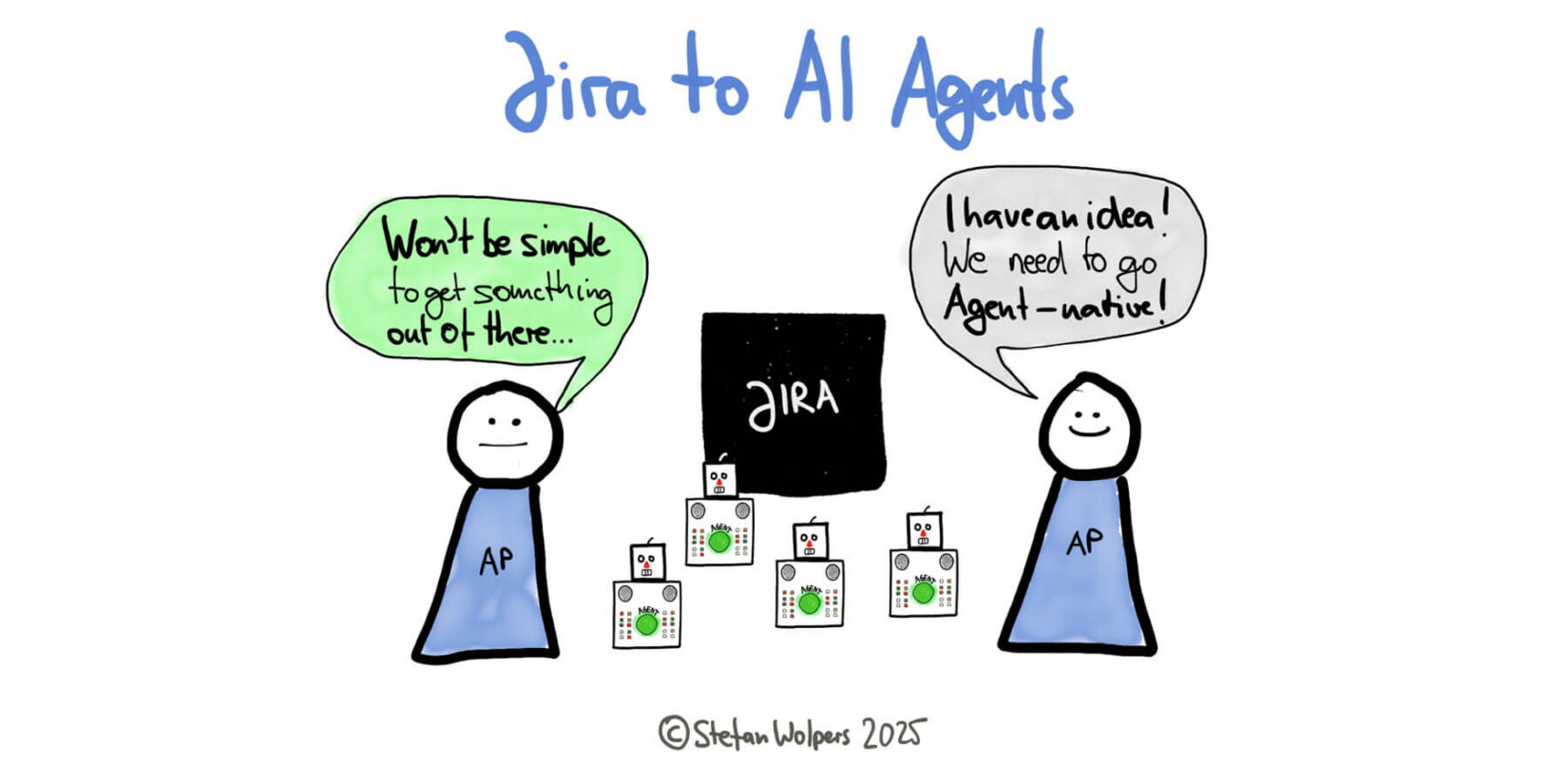
Jira was named after Godzilla and built to track bugs. It became the default agile tool because it satisfied a deeply human desire: controlling work by putting it in boxes with statuses, assignees, and due dates. That system works for humans scanning dashboards. It does not work for autonomous agents that need to reason about patterns across iterations, detect recurring problems, and forecast what is likely to break next. This article argues that the tool on which 62% of agile teams rely is about to be demoted from knowledge authority to execution interface. We need to move from Jira to AI Agents.
TL; DR: POM Starter Pack — Food for Agile Thought #536
Welcome to the 536th edition of the Food for Agile Thought newsletter, shared with 35,661 peers. This week, Anthropic’s 81,000-person study reveals that hope and alarm about AI coexist within the same individual. Alberto Romero channels that tension into eight practical strategies for AI career anxiety, while Allan Kelly warns that today’s AI hype mirrors the 1990s BPR failures. On the product side, Teresa Torres walks teams through measuring real customer impact rather than shipping features, Janna Bastow proposes that fixing bugs and technical debt is the strategy, and the Dotwork team provides a POM starter pack to operationalize Marty Cagan’s Product Operating Model.
Next, David Pereira suggests that product leadership means creating space for product managers to thrive, not being the smartest person in the room. Steve Blank warns that startups older than 2 years are likely running obsolete playbooks in a world reshaped by AI agents and vibe coding. Also, Ruben Dominguez highlights Claude’s 14x revenue jump and proposes that the real productivity gap lies in learning to co-work with AI. Cedric Chin recommends ignoring AI predictions and studying actual field reports instead, while Dave Snowden reminds us that Boyd’s OODA loop was never meant to be a safe iteration cycle.
Then, Jeff Gothelf proposes that storytelling is now the product manager’s key competitive advantage as AI commoditizes standard PM artifacts. Tristan Kromer addresses the lack of memory in AI agents. He proposes building a RAG-based experiment knowledge base to compound learning rather than repeat it. Martin Eriksson adds that AI agents need the same strategic clarity as human teams or organizations will scale confusion at machine speed. Finally, Sharyph explains how Claude Code Skills 2.0 turns Claude into a personalized, testable workflow system, while Deloitte’s 2026 State of AI report finds that only 34% of organizations truly reimagine their business with AI despite rising access.
TL; DR: AI Thinking Skills for Agile Practitioners
Most agile practitioners use AI to produce outputs more quickly. Few use it to think better. This free download gives you three AI thinking skills (Socratic Explorer, Brutal Critic, Pre-Mortem) that turn Claude into a partner for diagnosing problems, stress-testing plans, and anticipating failures before they happen.
Welcome to the Download Page of the ‘Claude Skills Pack’
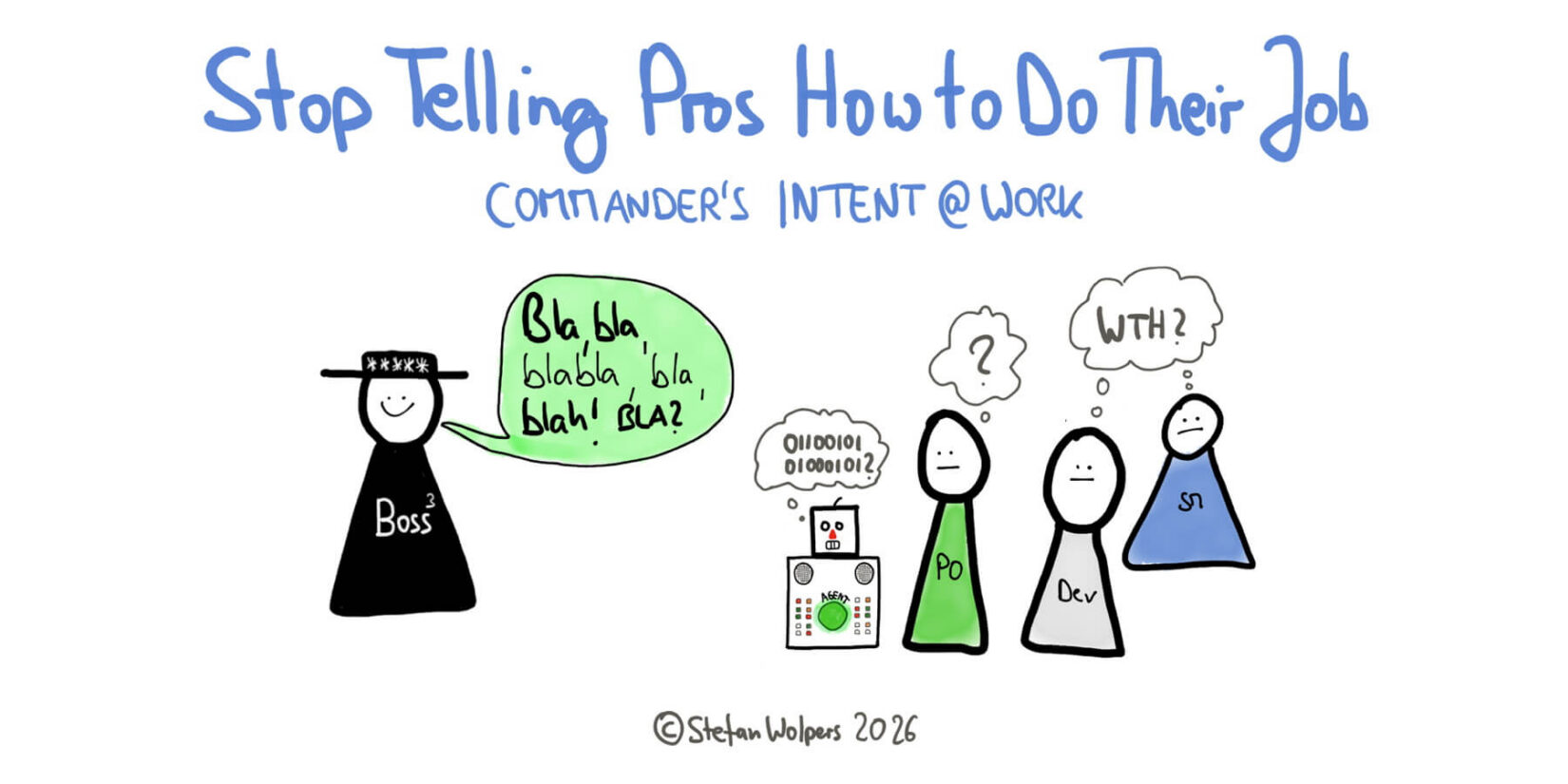
Most agile practitioners use AI to produce outputs more quickly. Few use it to think better. This free download gives you four Claude Skills (Socratic Explorer, Brutal Critic, Pre-Mortem, and Commander’s Intent) that turn AI into a structured thinking partner for diagnosing problems, stress-testing plans, and anticipating failures before they happen.
TL; DR: AI’s Labor Market Impact — Food for Agile Thought #535
Welcome to the 535th edition of the Food for Agile Thought newsletter, shared with 35,669 peers. This week, Ethan Mollick explores AI’s shift from co-intelligence to managing autonomous agents, urging organizations to experiment now. Jing Hu counters the “AI is bigger than Covid” panic by exposing the gap between theoretical and actual AI adoption, while Massenkoff and McCrory back this up with data on AI’s labor market impact showing no systematic rise in unemployment yet. Teresa Torres and Petra Wille warn that mediocre product success traps teams, Johanna Rothman offers team-based approaches to shaping unclear backlogs, and Joost Minnaar shows why removing hierarchy fails without investing in human capability.
Next, Aatir Abdul Rauf identifies seven headwinds AI product teams face after shipping, from margin erosion to trust gaps. At the same time, Sasha Rogelberg reports on BCG’s “AI brain fry” study, which shows that piling on AI tools hurts productivity and drives turnover. On a practical note, Ruben Hassid walks you through setting up Claude as your primary AI tool. Itamar Gilad traces product discovery failures to “must-have” features that bypass validation and to weak goals, and Tim Harford warns that quantified metrics quietly strip away context, autonomy, and genuine judgment.
Then, Olivia Moore tracks the intensifying race for the “default AI” in her sixth edition of the top 100 gen AI consumer apps. Jeff Gothelf proposes that customer relationships, not features, are the last defensible advantage, and Chris Walker identifies “context engineering” as a durable bottleneck preserving a role for local domain expertise. Justin Jackson examines how AI coding tools blur the roles of engineers, PMs, and designers, and suggests pair programming as a remedy. Lastly, David Burkus wraps things up with practical advice on leading difficult conversations with curiosity rather than accusation.
Your anxiety about AI is a signal, not a verdict. Here is why AI for Agile Practitioners matters and how:
What transfers: Organizational change expertise, empirical process control, and cross-functional translation. The hard parts of AI adoption are the parts you have been practicing for years.
What does not: Framework expertise as a standalone value proposition, process facilitation without outcome ownership, and tool-agnosticism as a point of pride.
What to do this week: Run one small experiment that integrates AI into your actual work. Before you prompt, categorize the task: Assist, Automate, or Avoid.
What would remain of your professional value if you removed every framework name and certification from your resume? Whatever that is: Invest there.