TL; DR: The Minimum Viable Library for Scrum Masters
The Minimum Viable Library is available! Explore a series of carefully curated collections of essential books, newsletters, podcasts, and tools to elevate your agile expertise.
Read on and learn how the recommendations for Scrum Masters cover a wide range of topics, including Scrum, servant leadership, customer value creation, coaching teams, improving team dynamics through Retrospectives, and navigating agile enterprise transformations.
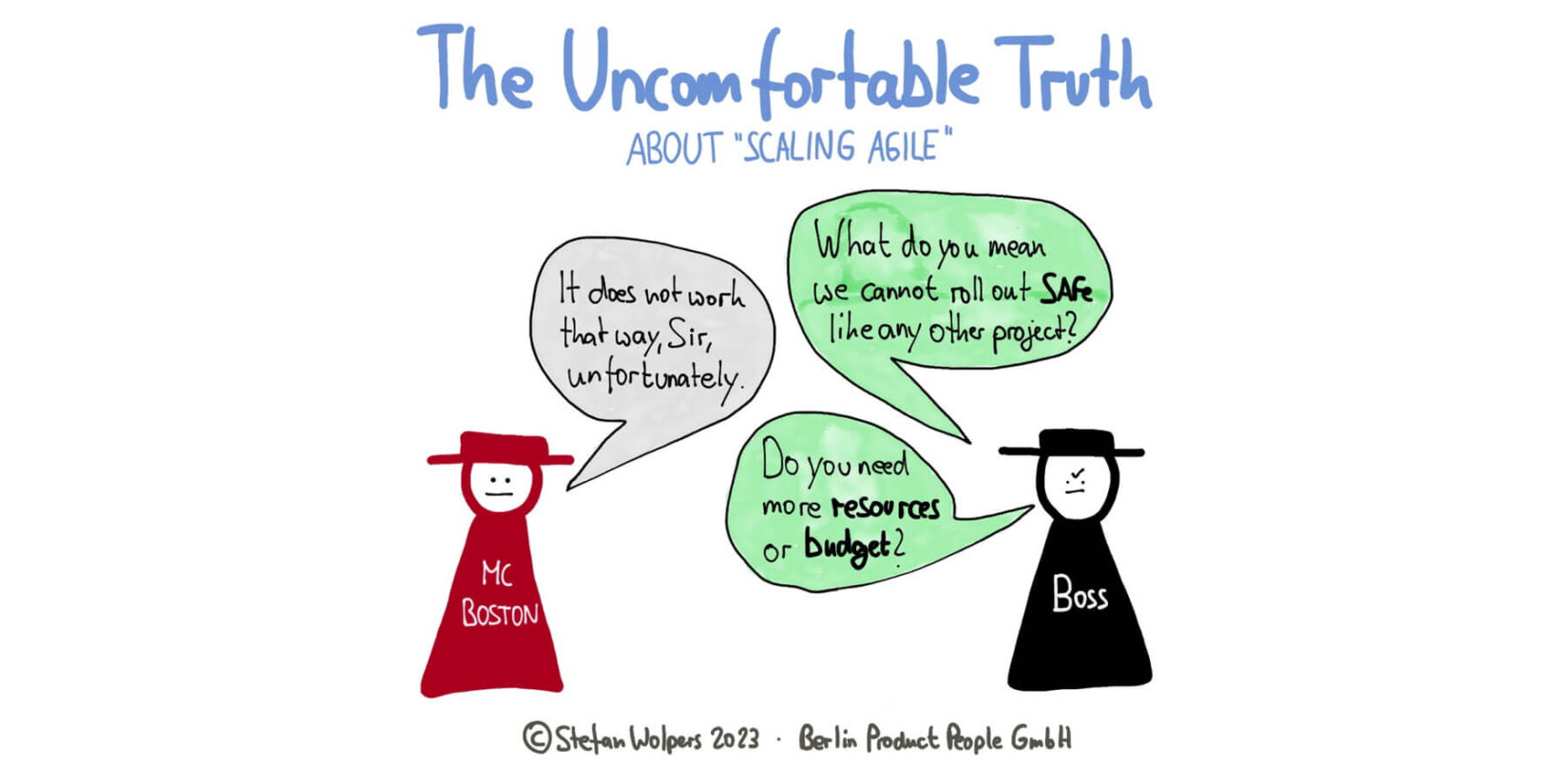
Agile transformations, scaling Agile from a team level to the whole organization, are more than implementing frameworks like SAFe®. They require a radical shift from rigid, top-down management to flexible, people-centric operations rooted in simplified structures, autonomous teams, and frequent, sustainable value delivery rather than promising quicker, cheaper results.
TL; DR: Agile Transformation with ChatGPT or McBoston?
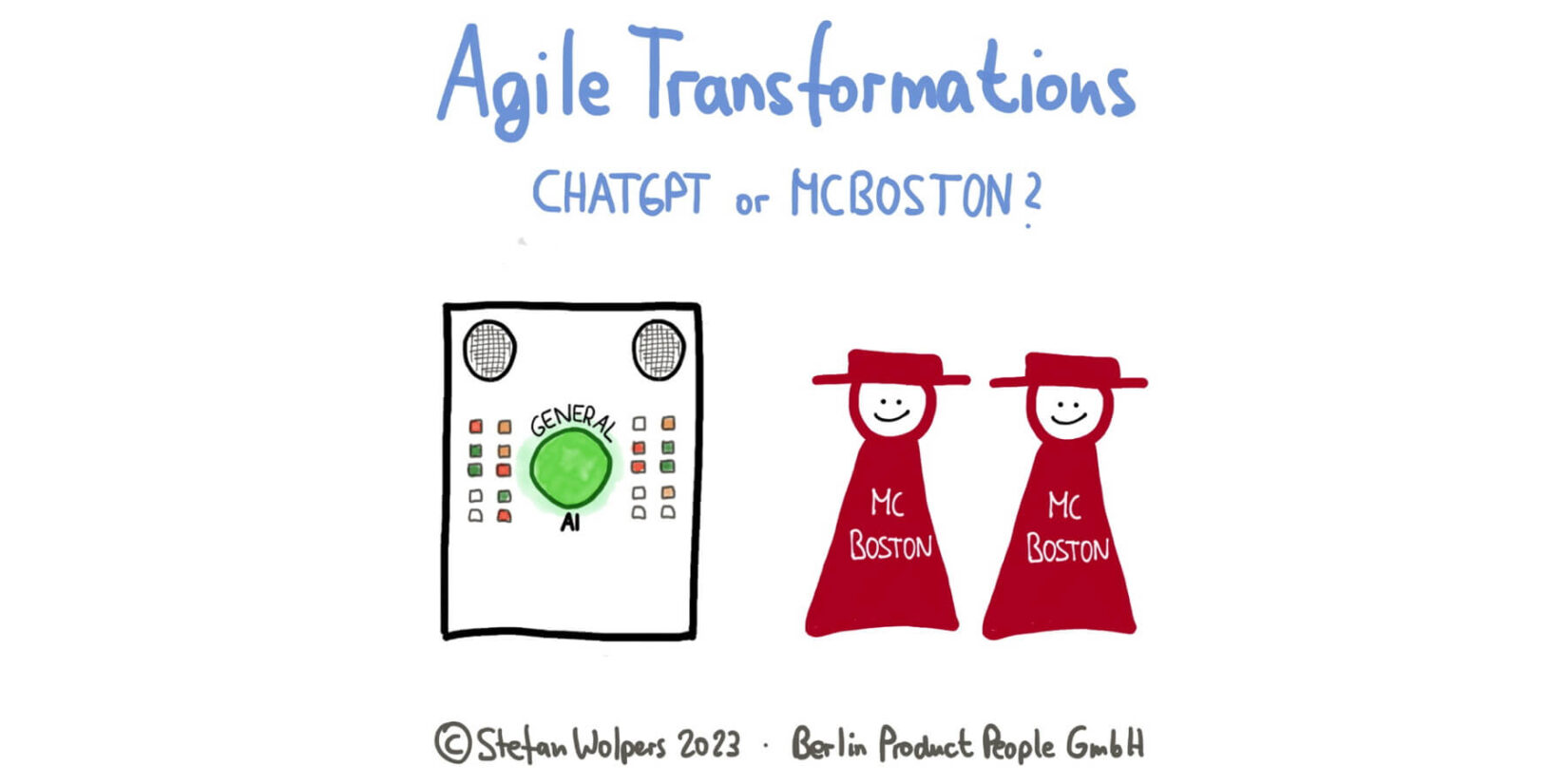
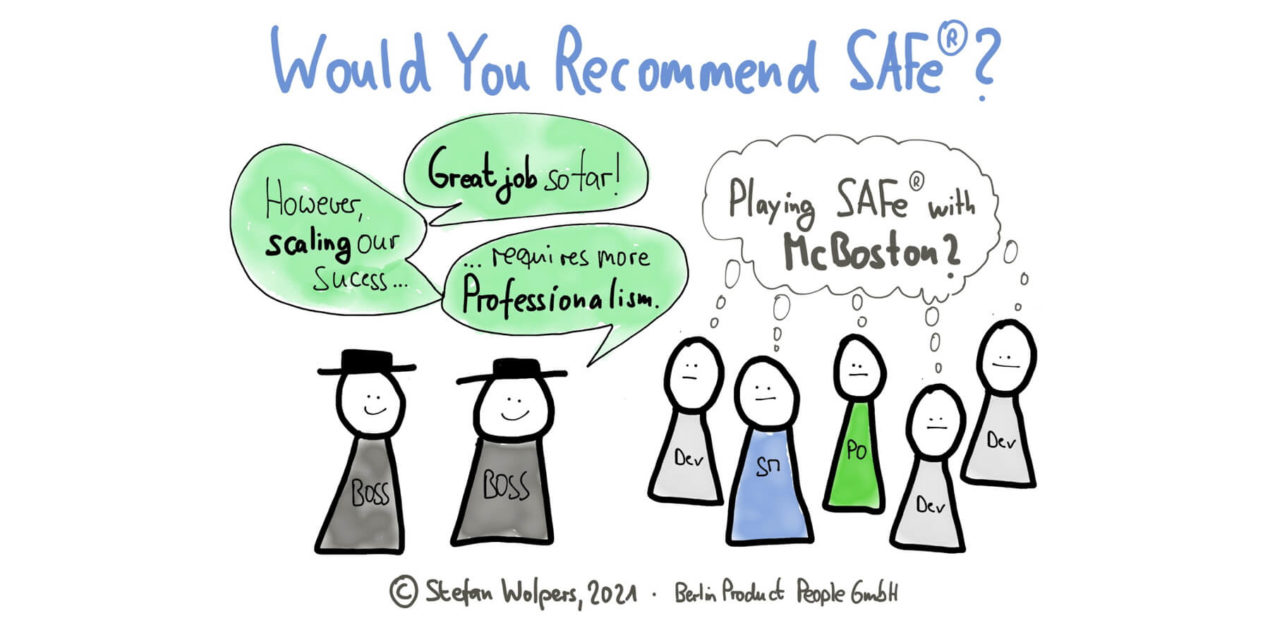
This article is another excursion into this nascent yet fascinating new technology of generative AI and LLMs and the future of knowledge work. I was interested in learning more about a typical daily challenge many agile practitioners face: How shall we successfully pursue an agile transformation? Shall we outsource the effort to one of the big consultancies — McBoston? Or shall we embark on an agile transformation with ChatGPT providing some guidance?
If technology can pass a Wharton MBA exam, maybe, it deserves some attention. We thought that AI might initially come after simple office jobs. I am no longer sure about that. Maybe, ChatGPT’s successor will start at the top of the food chain.
TL; DR: Business Agility, Scrum and Generative AI’s Take on Getting There
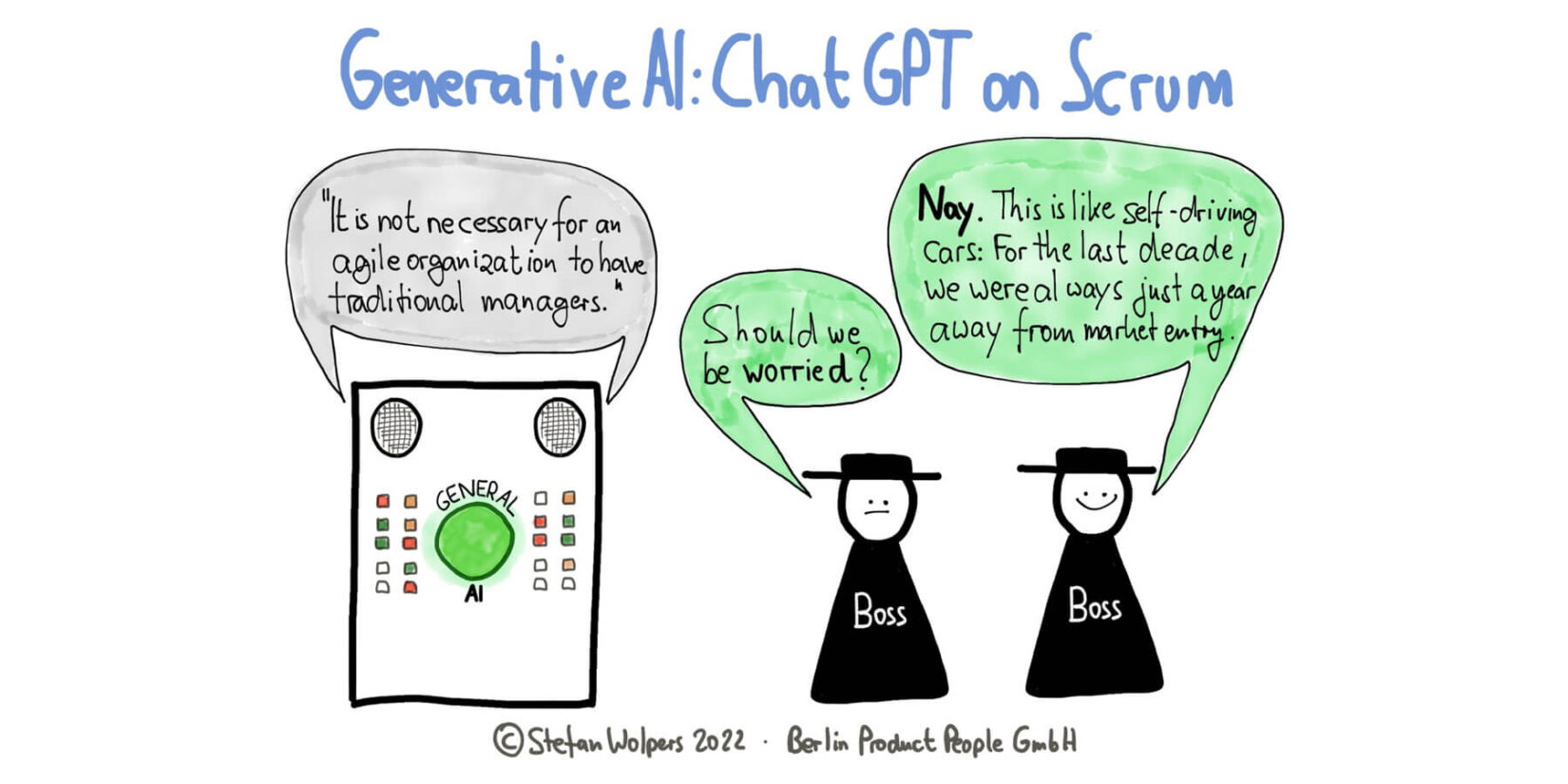
There has been a lot of talking about generative AI recently, mainly fueled by excellent work results in the text and graphics area. A few days ago, OpenAI made a new model available that “interacts in a conversational way. The dialogue format makes it possible for ChatGPT to answer follow-up questions, admit its mistakes, challenge incorrect premises, and reject inappropriate requests.” (Source.)
I thought it might be fun to ask ChatGPT a few questions about business agility in general and Scrum in particular.
TL; DR: The SAFe ® NPS ® Score as a Scaling Framework Is -56
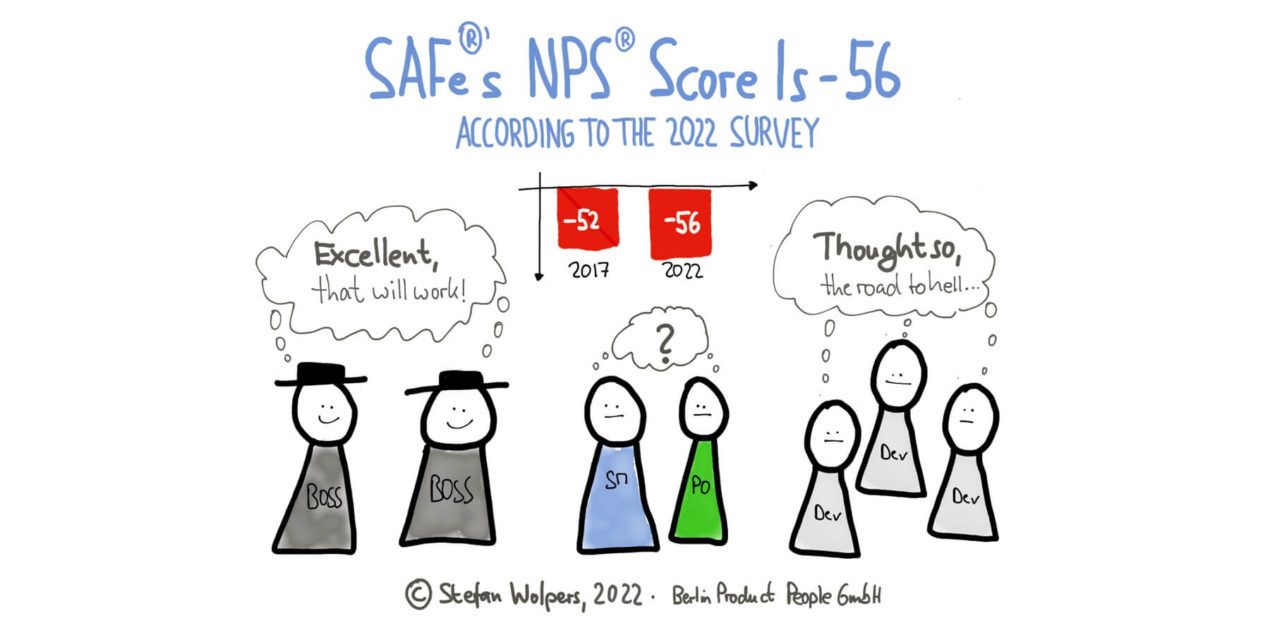
SAFe® has always been a controversial topic within the agile community. Therefore, back in 2017, I ran a first survey on the Net Promoter Score® of the Scaled Agile Framework SAFe®. The result back then was -52. Four and a half years later, I reran the poll: SAFe® has been through several iterations, and many more agile practitioners have experienced working with it. However, the question still is: Would you recommend SAFe ®?
Executive Summary: SAFe®’s NPS® score based on the 2022 sample equals -56. (For details, see the data below.)
SAFe® has always been a controversial topic within the agile community. Therefore, back in 2017, I ran a survey on the Net Promoter Score® of the Scaled Agile Framework SAFe®. The result back then was -52. Four and a half years later, I believe it is time to rerun the poll: SAFe® has been through several iterations, and many more agile practitioners have experienced working with it. Moreover, the question still is: Would you recommend SAFe ®?
If you can spare five minutes of your time, please join the community effort and participate in the 2022 SAFe® survey.