While the current Agile job crisis is apparent, there is also hope for practitioners willing to refine their skills, share knowledge, and network with peers.
This article outlines actionable strategies for thriving in challenging times, emphasizing that growth and success are achievable by leveraging community strength and readily accessible resources. Check out also how I can support you on your journey below.
TL; DR: Agility Creates Valuable Firms — Food for Agile Thought #432
Welcome to the 432nd edition of the Food for Agile Thought newsletter, shared with 42,247 peers. This week, Steve Denning reveals how agility creates valuable firms by focusing on customer value and empowerment. Matt Van Itallie and Cassidy Williams discuss the importance of addressing tech debt for improved outcomes. Also, Tom Kerwin and John Cutler present strategies for leaders in complexity, advocating for innovation through embracing uncertainty. Stephanie Ockerman critiques productivity culture’s impact on agility, suggesting a shift towards outcome-focused approaches.
Then, Richard Mironov emphasizes the importance of product leaders providing support for product managers to focus by using strategic refusals. David Pereira explains the necessity of balancing customer lifetime value and acquisition costs for sustainable growth and profitability. Moreover, Lea Hickman and Marty Cagan critique the “theater” in product management and leadership that blocks true transformation, while Itamar Gilad critiques the “hype economy” in tech, arguing for an evidence-guided approach over salesmanship for smarter product decisions and a healthier organizational culture.
Lastly, Tanmay Vora addresses the pitfalls of misapplying metrics in line with Goodhart’s Law, advocating for a balanced approach of qualitative and quantitative measures to ensure desired behaviors. Douglas Squirrel introduces the “Elephant Carpaccio” concept from his talk, and Wes Kao champions the practice of Super Specific Feedback (SSF) on work outputs, underlining the importance of precise, actionable advice for elevating team performance and decision-making skills.
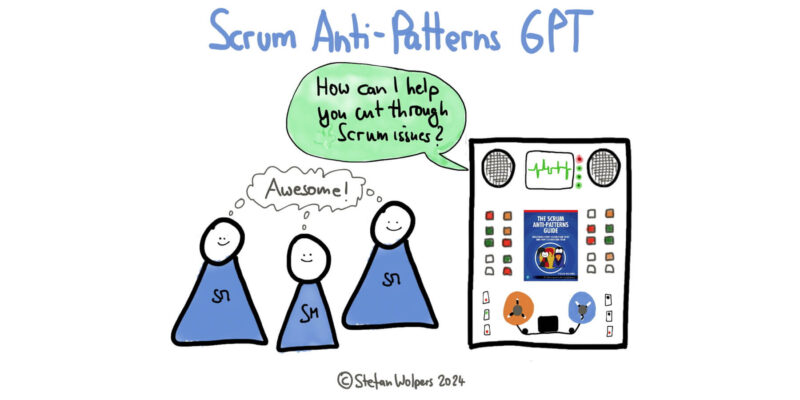
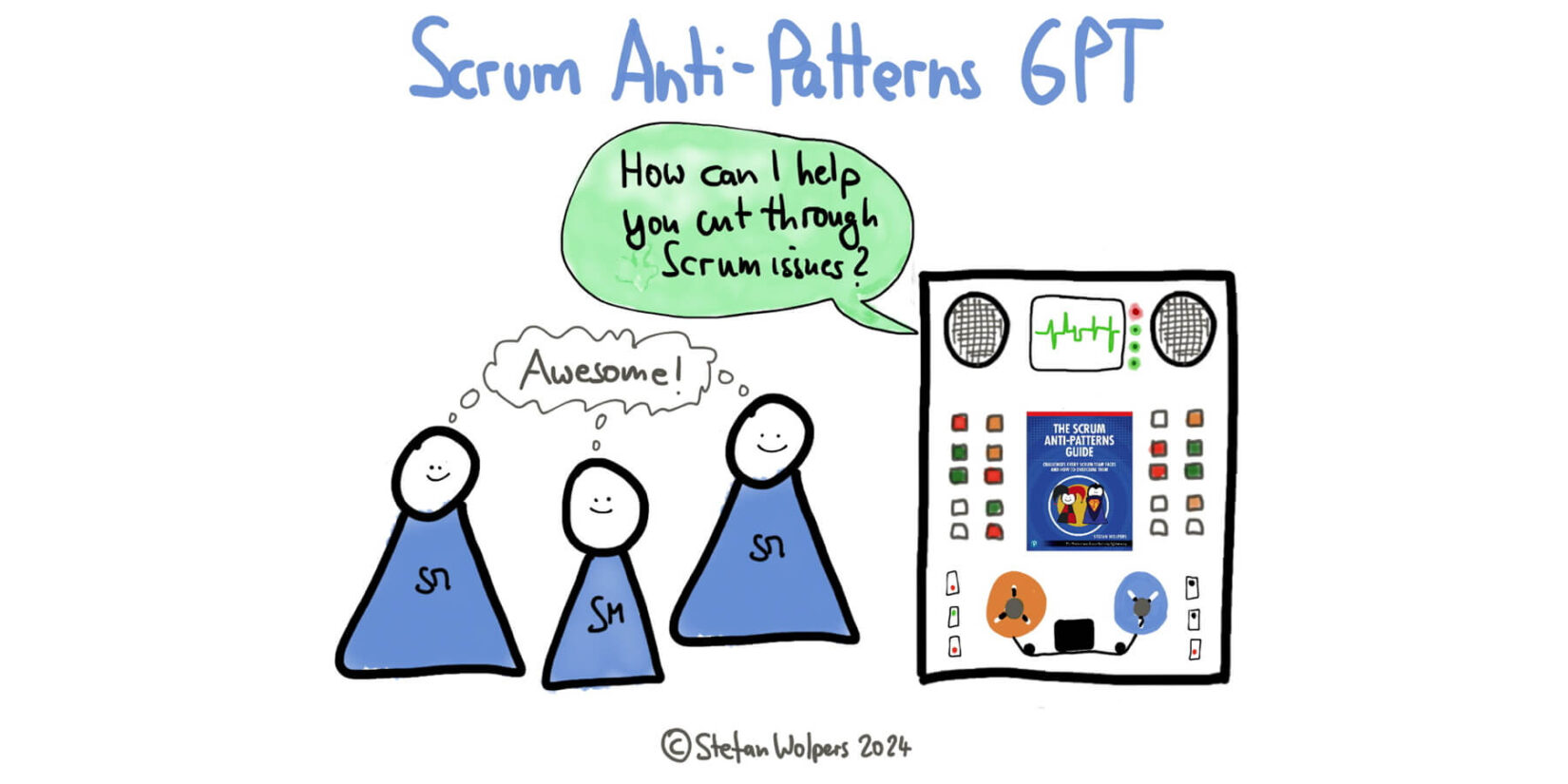
Can a Custom Scrum Anti-Patterns GPT align teams with Scrum principles? Dive into how leveraging custom GPTs might offer a novel path through Scrum’s common hurdles, focusing on creating actual customer value in the face of organizational and team-level challenges.
Welcome to the 431st edition of the Food for Agile Thought newsletter, shared with 42,216 peers. This week, Lenny Rachitsky explores how custom GPTs revolutionize workplace productivity with 20 innovative applications. The Agile Uprising Podcast with Chris Murman, Jay Hrcsko, and Andrew Leff tackles the theme of gluttony within Agile, stressing the importance of balance and self-awareness. Jorn van der Schaaf shares insights into Ivy Global’s growth without traditional managerial roles, advocating for self-organization and collective decision-making, and Bryan Finster focuses on engineering solutions to enhance software delivery and job satisfaction. Additionally, the Scrum Master Salary Report 2024 offers valuable data from 1,114 participants globally, revealing an average salary of $87,800.
Then, Janna Bastow analyzes strategies for transforming potential users into devoted customers, and Leah Tharin guides on evolving product and growth team structures for enhanced agility. Moreover, Teresa Torres advises leveraging customer feedback for product evolution. At the same time, Ant Murphy explores adaptive pricing models in product-led growth, challenging conventional wisdom and encouraging innovative strategies for monetization and user acquisition.
Lastly, Noah Cantor advises tech teams on achieving flow and quality by focusing on essentials, removing dependencies, and breaking down silos for smoother operations. Also, Todd Lankford challenges the productivity myth of deadlines, revealing their demotivating impact and proposing a healthier, deadline-free approach to product development. Finally, Cheryl Strauss Einhorn explores handling professional disagreements gracefully, offering a tool for making and executing decisions with empathy to enhance team dynamics and resilience.
TL; DR: The Scrum Master Salary Report 2024 — How Do You Compare?
The Scrum Master Salary Report 2024 is the fifth edition of the industry survey after 2017, 2019, 2022, and 2023. This free report is based on the answers of 1,114 participants globally. If you are considering a career decision this year, maybe whether you should join the industry as a junior Scrum Master, move to a new organization, or go independent, you will find the report’s information beneficial.
By the way, the average salary of the participants in the survey is $87,800, with a standard deviation of about $46,400. In the complete report, you will find more detailed information; see for yourself by downloading your copy of the Scrum Master Salary Report 2024 below.
TL; DR: Bureaucracy & Agile — Food for Agile Thought #430
Welcome to the 430th edition of the Food for Agile Thought newsletter, shared with 42,191 peers. This week, Kevin Meadows critiques bureaucracy & Agile, advocating for a return to its core values. Andy Cleff, in conversation with Tanner Wortham, draws parallels between agile leadership and military strategies, emphasizing adaptability and the “Power of Three.” Bob Galen highlights a dialogue with David Pereira on the importance of clear, courageous communication and acknowledging privilege in thought leadership. Also, Emily Webber offers solutions to break down silos and enhance collaboration in multidisciplinary teams, and Christina Wodtke addresses the psychological barriers to decision-making, proposing strategies to focus and maximize productivity in the workplace. Additionally, Michael Lloyd introduces Dysfunction Mapping in a recording from the last Hands-on Agile Meetup.
Then, Martin Eriksson challenges the one-size-fits-all strategy, stressing the need for focus and tough decision-making for success. Beck Novaes champions the Lean Startup approach, advocating for prioritizing impactful development through minimal viable products and user feedback, while Dave Hora discusses the significance of aligning research with both external and internal organizational cycles across different scales to foster progress and influence. Moreover, Marty Cagan reflects on the responses to his Product Management Theater article, underscoring the importance of skill development and the pivotal role of product leaders in steering teams and organizational change toward a product-centric model.
Lastly, Ant Murphy shares practical techniques for enhancing user interviews, highlighting the importance of structured sessions and insightful questioning. Yonatan Zunger introduces the POMKRA method, transforming OKRs into powerful tools for clear goal-setting and organizational productivity, and Joshua Seiden discusses the nuances of setting numerical targets with OKRs, advocating for a blend of conversation, data, and conjecture in goal-setting. Lastly, Peter Merel champions AI-Driven Development (AIDD), underlining the synergy between AI efficiency and Agile team oversight for aligning technology with business objectives, demonstrating the critical balance between technological advancement and human expertise.