
Food for Agile Thought #455: Creative Destruction Canvas, Identifying Digital Products, Descaling for Fun and Profit, Perfectionism

TL; DR: Identifying Digital Product — Food for Agile Thought #455

Welcome to the 455th edition of the Food for Agile Thought newsletter, shared with 42,701 peers. This week, Jeff Patton explores how identifying digital products is crucial for adopting a product operating model, while Esther Derby, Diana Larsen, and David Horowitz discuss updates in their second edition of Agile Retrospectives. Barry Overeem addresses Agile Coach burnout and the importance of creating supportive environments, and Henry E. Pozzetta examines the impact of cognitive biases on Agile, offering strategies to mitigate them. Also, Shane Gibson and Murray Robinson interview Arnold Stroobach about the Buurtzorg model, showcasing the success of small, self-managed teams in delivering high-quality, cost-effective care.

Next, Janna Bastow and Leah Tharin discuss the evolving role of product managers in the age of AI, stressing that AI should enhance rather than replace human judgment. Todd Lankford offers a three-step guide to building effective product teams by fostering ownership and adaptability, and Alexandre Serrurier shares his experiences at ManoMano, highlighting the critical role of ProductOps in optimizing product environments with strong leadership and structured initiatives. Moreover, Marty Cagan clarifies that adopting a product model doesn’t require reorganization; organizational design should align with business strategy and product vision.

Lastly, Philipp Pelka and Johannes Schartau introduce the Creative Destruction Canvas, a tool to help teams trim bloated products by removing unnecessary features. Aakash Gupta delivers a comprehensive analysis of the product analytics market, emphasizing its importance in product management, and Gregor Ojstersek and Jordan Cutler discuss the detrimental effects of perfectionism on engineering productivity, advocating for progress over perfection. Then, dynomight7 explores why advice often fails, offering strategies to enhance its effectiveness through simplicity and practicality, and, finally, Pavel Samsonov examines Nike’s costly reliance on easily gathered data, stressing the importance of qualitative insights in product strategy.

Food for Agile Thought #455: Creative Destruction Canvas, Identifying Digital Products, Descaling for Fun and Profit, Perfectionism — Age-of-Product.com
Continue reading Food for Agile Thought #455: Creative Destruction Canvas, Identifying Digital Products, Descaling for Fun and Profit, Perfectionism

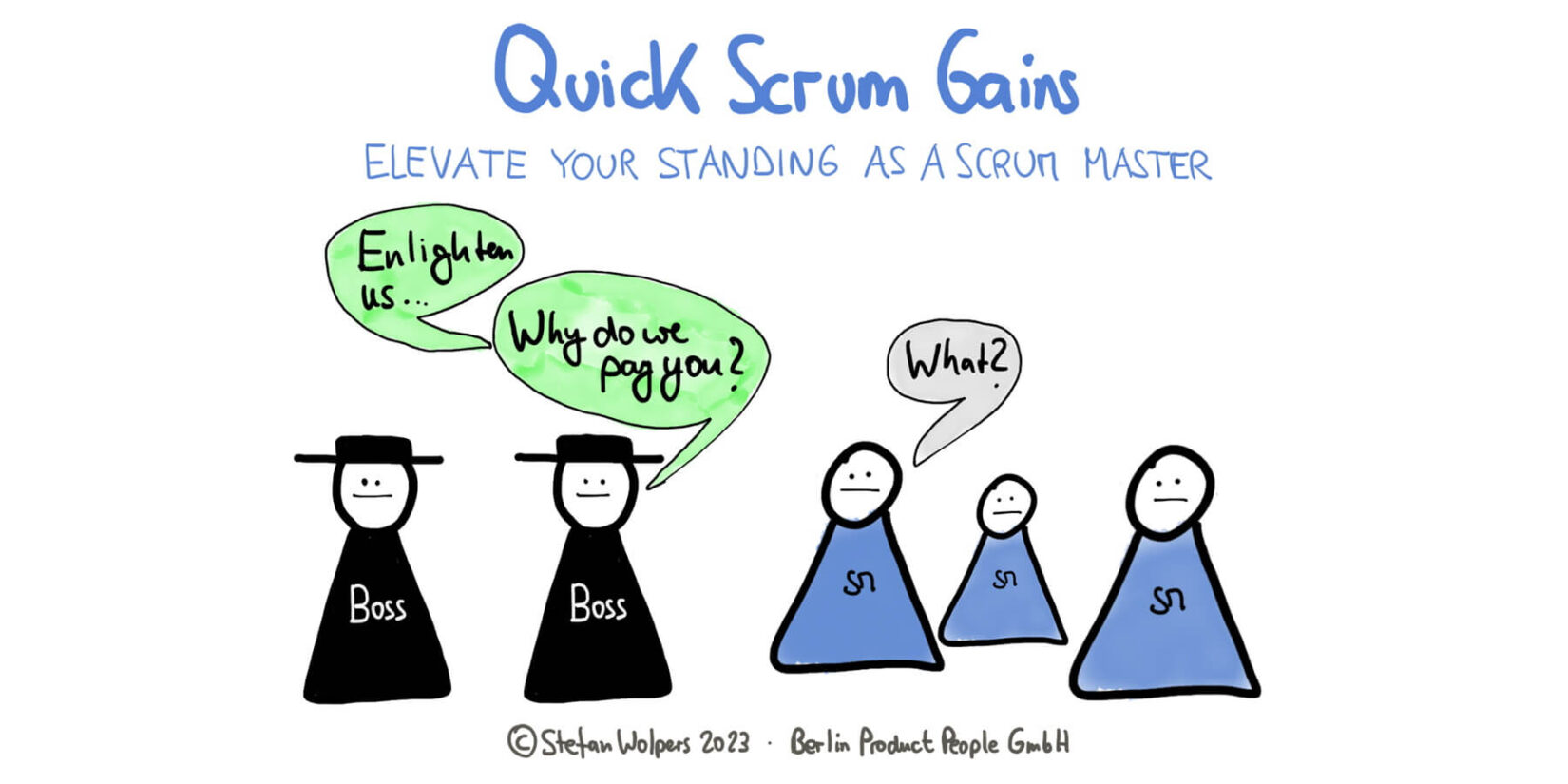
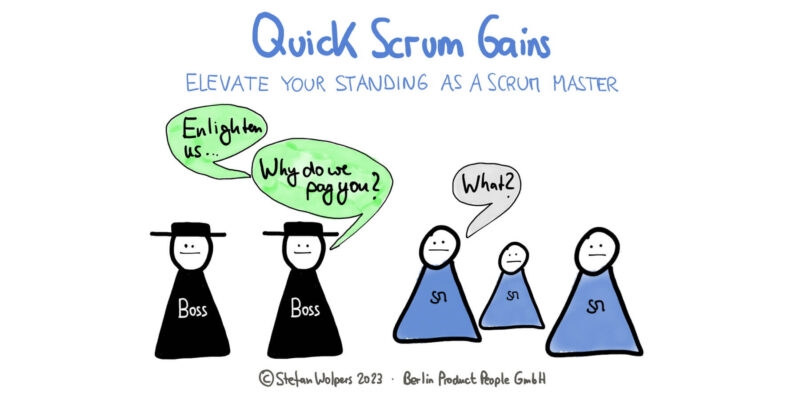
Quick Scrum Gains to Elevate Your Standing as a Scrum Master or Agile Coach

TL; DR: Quick Scrum Gains

Suppose you are a Scrum Master or Agile Coach. Have you recently been asked to explain your contribution to the organization’s value creation? In other words, does management want to know whether you are pulling your weight or if your salary is an expendable expenditure? This article points to ten quick Scrum gains you can pull off without asking for permission or budget to prove your contribution to your organization’s survival in these challenging times.

Quick Scrum Gains to Elevate Your Role as a Scrum Master or Agile Coach Tomorrow — no budget or approval needed! Age-of-Product.com
Continue reading Quick Scrum Gains to Elevate Your Standing as a Scrum Master or Agile Coach

Food for Agile Thought #454: Product Type Canvas, AI Tools for Product Managers, High-Stakes Collaboration, Disrupting Large Organizations

TL; DR: Product Type Canvas — Food for Agile Thought #454

Welcome to the 454th edition of the Food for Agile Thought newsletter, shared with 42,673 peers. This week, Jeff Patton introduces his Product Type Canvas, aiding teams in understanding users and measuring product value. Cady Coleman shares lessons from her NASA career on risk assessment and cross-cultural communication, and Alex Ewerlöf discusses how organizational structure affects service reliability and the importance of consumer journeys. Moreover, Woody Zuill delves into mob programming with Murray Robinson and Shane Gibson, highlighting its impact on team effectiveness and skill development, and we ask: Are there regulated industries that are agile?

Then, Marty Cagan discusses his book Transformed, focusing on a product operating model that prioritizes outcomes, empowered teams, and continuous deployment, emphasizing engineers’ role in innovation. Steve Blank explores why large organizations struggle with disruption, highlighting legacy systems and leadership inaction. In an interview with Lenny Rachitsky, Roger Martin outlines five essential questions for effective strategy development, emphasizing clear aspirations, market focus, competitive advantage, necessary capabilities, and supportive management systems. Also, Andrew Chen examines the failure of high-growth, high-churn products, emphasizing the importance of retention and the challenges of sustaining growth in a dopamine-driven market.

Lastly, Marc Abraham highlights AI tools transforming product management and aiding PMs in understanding customer problems. We also examine competitive analysis, its importance, and practical templates for SaaS companies, while Matt O’Connell discusses handling overwhelming Opportunity Solution Trees (OSTs) with five archetypes and strategies to prioritize opportunities. Christoph Steinlehner introduces Reverse Impact Mapping to shift from feature requests to outcomes, focusing on business impact. Finally, Bandan Jot Singh explains software estimate inaccuracies and offers five modern roadmap methods prioritizing value-driven metrics over strict timelines.

Food for Agile Thought #454: Product Type Canvas, AI Tools for Product Managers, High-Stakes Collaboration, Disrupting Large Organizations – Age-of-Product.com
Continue reading Food for Agile Thought #454: Product Type Canvas, AI Tools for Product Managers, High-Stakes Collaboration, Disrupting Large Organizations

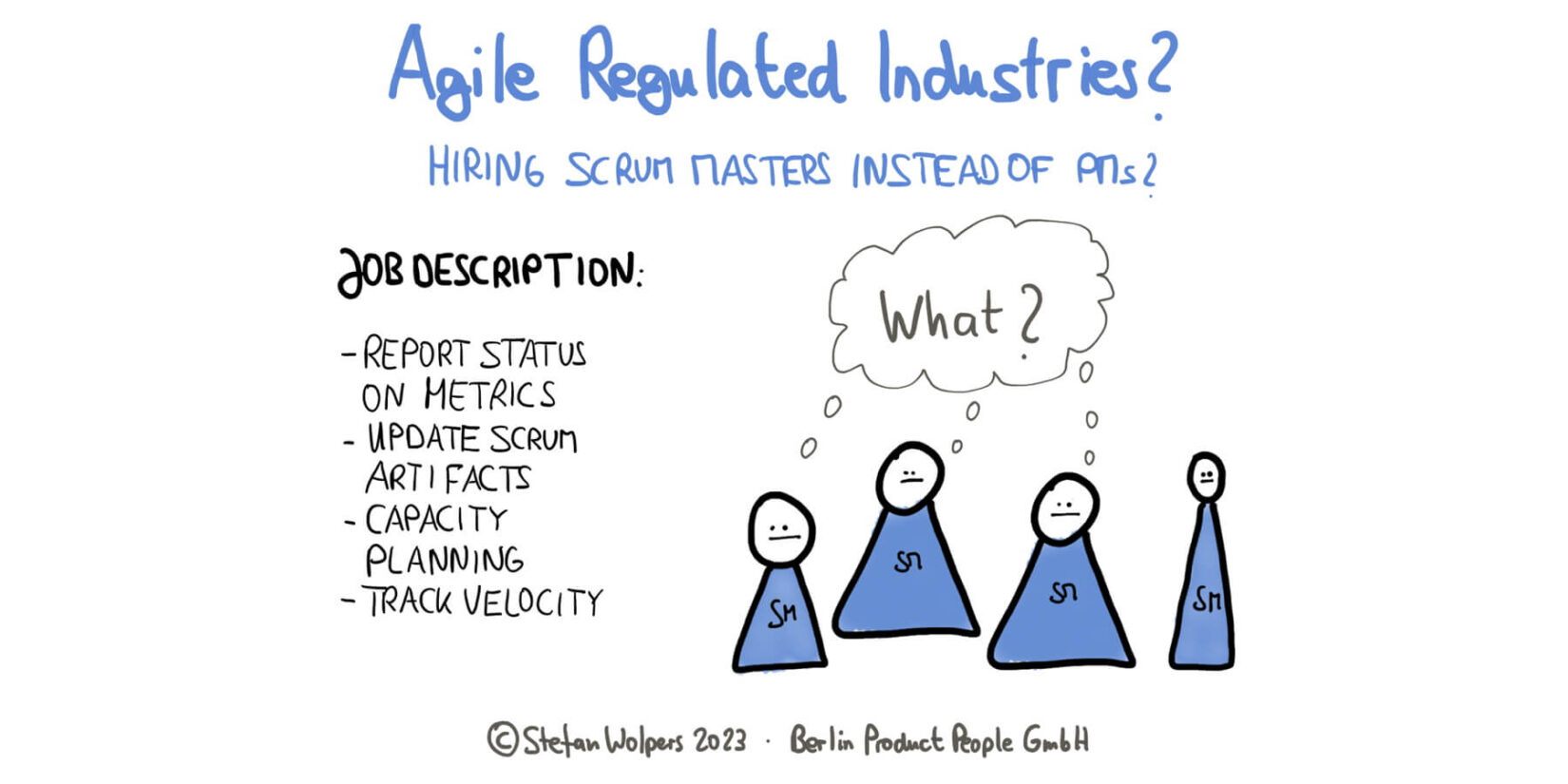
Agile Regulated Industries: Hiring Scrum Masters Instead of Project Managers?

TL; DR: Agile Regulated Industries

Are there agile regulated industries, or is that an oxymoron?

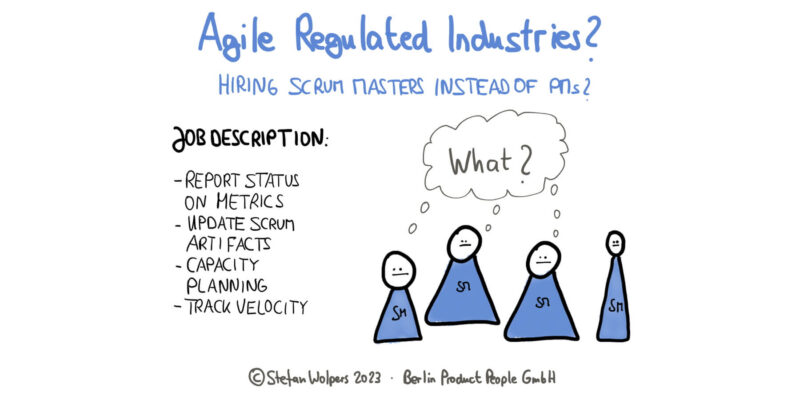
Recently, I received a project alert from an organization looking for a Scrum Master with “at least two years knowledge of information systems for rail and public transport travelers.”

Now, if you go through the job description, they do not seem to look for a Scrum Master but a project manager and glorified Jira clerk. If that is the case, why don’t they say so but pretend there is such a thing as agile regulated industries?

Agile Regulated Industries: Hiring Scrum Masters Instead of Project Managers? Age-of-Product.com
Continue reading Agile Regulated Industries: Hiring Scrum Masters Instead of Project Managers?

Food for Agile Thought #453: Product Management Organizations, Improving ProductOps, New Feature Revenue Estimations, Quo Vadis Agile?

TL; DR: Product Management Organizations — Food for Agile Thought #453

Welcome to the 453rd edition of the Food for Agile Thought newsletter, shared with 42,652 peers. This week, we feature insights from Melissa Perri, who provides a framework for robust product management organizations focusing on alignment, efficiency, and continuous improvement. Stefan Lindegaard warns about Organizational Debt Syndrome and the need for proactive leadership to maintain agility, and Jennifer Riggins reveals a study highlighting developers’ lost productivity due to management inefficiencies, stressing better communication. Also, Evan Leybourn discusses the future of Agile, shifting from anecdotes to data-driven insights. At the same time, Terry Danylak shares strategies to move from firefighting to proactive management, enhancing productivity and workplace health.

Then, Itamar Gilad critiques the “user-needs-first” approach, advocating for a flexible strategy that aligns ideas with company goals for high-impact products. John Cutler suggests that percentage allocations obscure priorities and advocates prioritizing based on value and urgency, and Jon Odo provides five tips for trimming Product Backlogs, emphasizing removing outdated and unclear items to boost team efficiency. Moreover, Zach Dunn highlights the pitfalls of overestimating revenue from sales feedback and offers strategies to avoid these mistakes when prioritizing features.

Lastly, Johanna Rothman advocates for continual planning over quarterly planning to help agile teams adapt and deliver maximum value. Jenny Wanger introduces a product operations tool using process maps to diagnose inefficiencies and improve workflows, and Chris Matts explains Karl Weick’s Sensemaking framework for better organizational dynamics and collaboration. Jurgen Appelo presents 32 key concepts from systems thinking and complexity theory, highlighting their importance in Lean and Agile approaches. Finally, Rory Sutherland discusses marketing and behavioral science with Lenny Rachitsky, focusing on the role of psychology, product success paradoxes, and the pitfalls of metrics-driven workplaces.

Food for Agile Thought #453: Product Management Organizations, Improving ProductOps, New Feature Revenue Estimations, Quo Vadis Agile? Age-of-Product.com
Continue reading Food for Agile Thought #453: Product Management Organizations, Improving ProductOps, New Feature Revenue Estimations, Quo Vadis Agile?

Gaming Velocity

TL; DR: Gaming Velocity

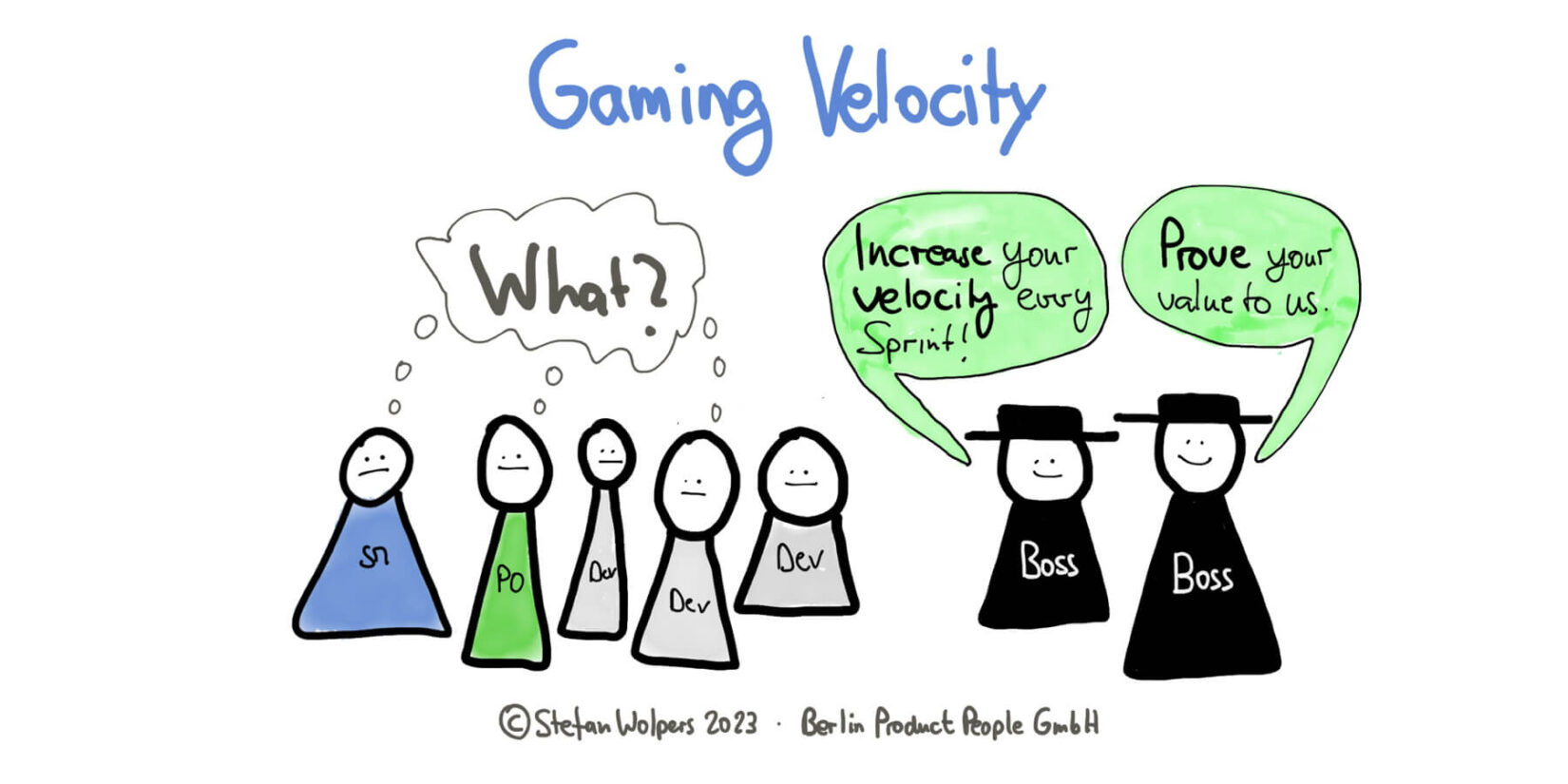
Imagine your team’s line manager insists that a successful team improves velocity regularly. How could you, as a team, satisfy this strange, unsuitable demand without working more? How can you make gaming velocity a reality?

I run this exercise with my students of entry-level Scrum Master and Product Owner classes to help them reflect on the tricky nature of measuring success, metrics, and, of course, Goodhart’s Law: “When a measure becomes a target, it ceases to be a good measure.”

For the following article, I aggregated suggestions from more than 50 classes on how to “best” game velocity.

Gaming Velocity – Age-of-Product.com
Continue reading Gaming Velocity