Food for Agile Thought #458: Engineers in Customer Support, Product & Tech Debt, Product Launch Mistakes, Cynics Rarely Succeed

TL; DR: Engineers in Customer Support — Food for Agile Thought #458

Welcome to the 458th edition of the Food for Agile Thought newsletter, shared with 42,762 peers. This week, Ian Vanagas advocates involving engineers in customer support to boost product quality through faster feedback and ownership. Maarten Dalmijn identifies six common pitfalls in using spikes in Agile, and Jamil Zaki warns that workplace cynicism diminishes success, while Joost Minnaar attributes Enterprise’s success to decentralization and a customer-centric approach. Lastly, Andy Cleff emphasizes the importance of leadership virtues—courage, resilience, alliances, gratitude, and vulnerability—in driving continuous improvement and change.

Next, Gregor Ojstersek and Robert Ta provide engineers with strategies to convince Product Managers to prioritize technical debt by aligning it with business goals. Aakash Gupta and Jason Knight shed light on the complexities of B2B product management, stressing the need for PMs to balance revenue-driven features and broader strategic influence, and Aatir Abdul Rauf identifies 15 crucial mistakes to avoid during product launches. Moreover, Yuri Berchenko offers guidance on optimizing subscription product pricing through regular adjustments and customer segmentation.

Lastly, Domenic Edwards presents a detailed list of essential Product Manager tasks, adaptable to any organization’s needs. Dirk Lässig offers strategies for managing “evil dependencies” in software development, focusing on minimization, mitigation, and coordination, and Gustavo Razzetti explains how teams can rapidly build trust by fostering transparency and clarity. Also, Mario Caropreso stresses the need to balance operational excellence with project delivery. Finally, Michael H. Goitein advocates shifting from a “waiter” mindset to a “doctor” approach in product development, emphasizing user-focused continuous discovery.
Food for Agile Thought #458: Engineers in Customer Support, Product & Tech Debt, Product Launch Mistakes, Cynics Rarely Succeed - Age-of-Product.com
Continue reading Food for Agile Thought #458: Engineers in Customer Support, Product & Tech Debt, Product Launch Mistakes, Cynics Rarely Succeed

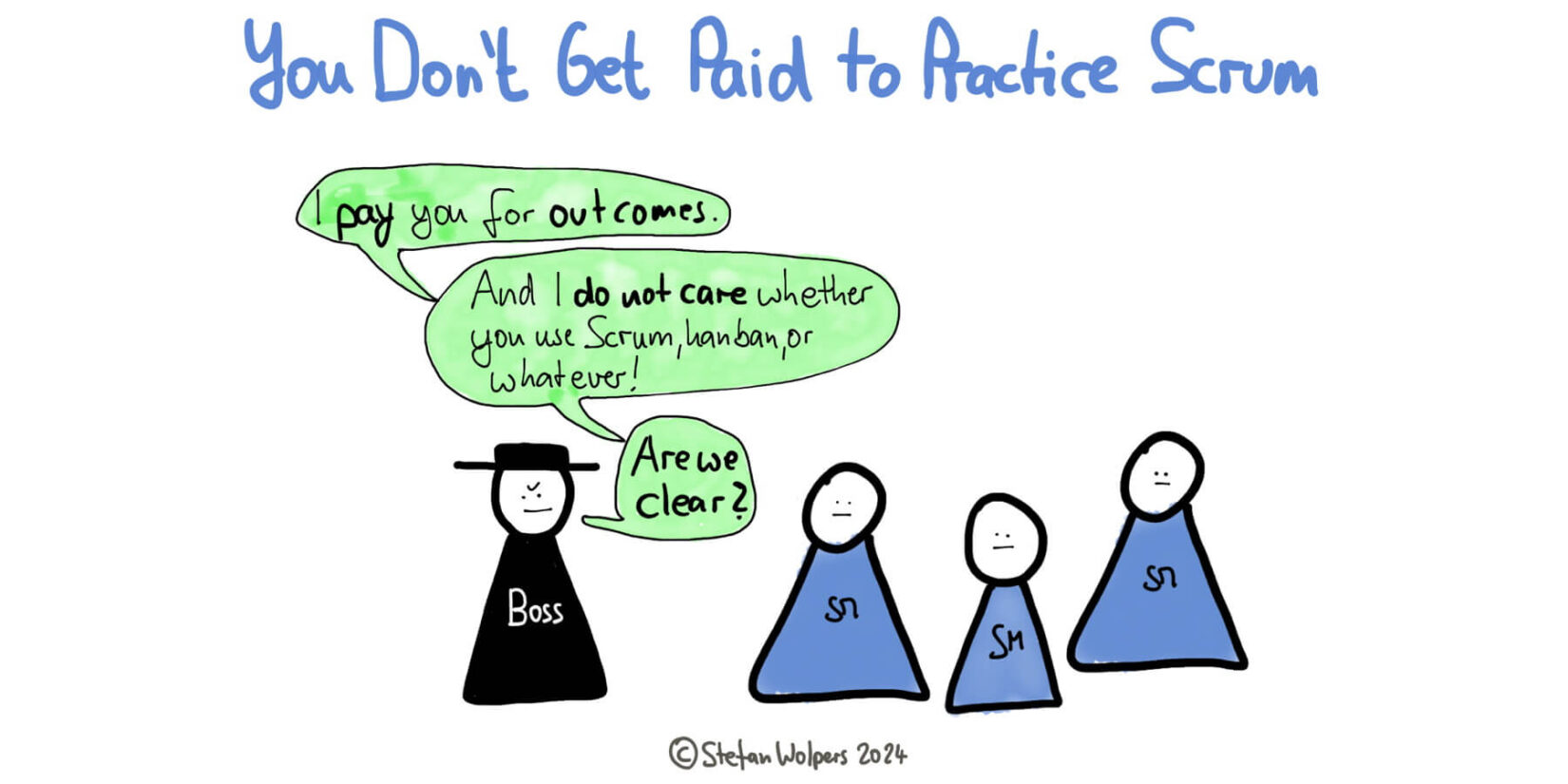
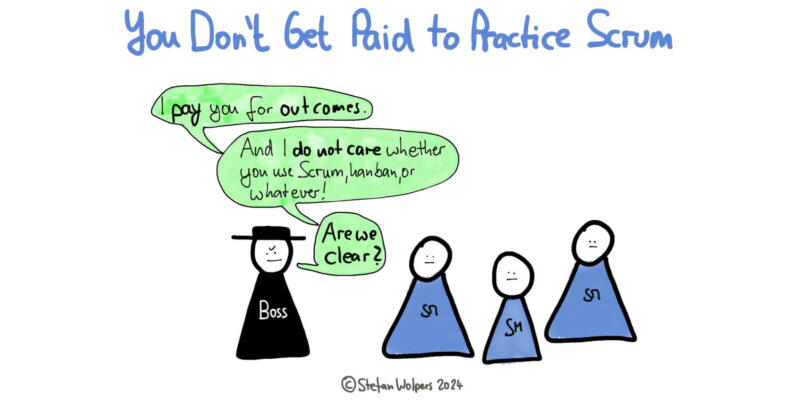
You Don’t Get Paid to Practice Scrum

TL; DR: Why Solving Customer Problems Instead Matters

Scrum is just a tool; your job is to solve real customer problems and deliver value. Stop focusing on perfecting frameworks and start prioritizing outcomes that matter. It’s time to reassess what truly drives your success, particularly given the challenging business environment.

You Don’t Get Paid to Practice Scrum but Solving Customer Problems within the Given Constraints — Age-of-Product.com
Continue reading You Don’t Get Paid to Practice Scrum

Food for Agile Thought #457: Blaming Agile for Lacking Innovation, Structuring Product Organizations, Cost of Delay, Unhealthy Team Tension

TL; DR: Blaming Agile — Food for Agile Thought #457

Welcome to the 457th edition of the Food for Agile Thought newsletter, shared with 42,744 peers. This week, Rupert Goodwins critiques Moxie Marlinspike’s view of blaming Agile, emphasizing innovation’s evolution and the need for fresh thinking, while Jim Highsmith urges a shift from productivity metrics to value creation. Dave Rooney highlights simple defect management, using an analog tool, and Jeff Gothelf advocates for trust-based leadership. Following up, Ant Murphy stresses the importance of healthy team tension and collaboration over fear for creativity and the effectiveness of teams.

Next, John Cutler and Leah Tharin emphasize the need for a well-defined operating model in product organizations, focusing on team structure and accountability during growth. David Pereira stresses aligning strategy, discovery, and delivery for value creation in product management, and Melissa Suzuno highlights Ramsey Solutions’ engineer rotation in product trios for balanced skill development. Also, Richard Mironov explains how a company’s price point shapes its organizational behavior, especially in B2C versus B2B environments.

Lastly, Johanna Rothman discusses using the Cost of Delay to prioritize work, emphasizing determining if the work is still valuable first. Chris Stone introduces the Lean Experiment Canvas, a tool for teams to design and test hypotheses in Retrospectives. Then, Jenny Wanger provides a checklist for influencing product managers, focusing on understanding their challenges and simplifying changes, and Rolf Mistelbacher highlights how generative AI helps creators rapidly prototype by bridging skill gaps. Finally, Shane Gibson, Murray Robinson, and Gene Kim discuss the importance of organizational wiring, including leadership and communication, in fostering high-performing DevOps and agile teams.

Food for Agile Thought #457: Blaming Agile for Lacking Innovation, Structuring Product Organizations, Cost of Delay, Unhealthy Team Tension — Age-of-Product.com
Continue reading Food for Agile Thought #457: Blaming Agile for Lacking Innovation, Structuring Product Organizations, Cost of Delay, Unhealthy Team Tension

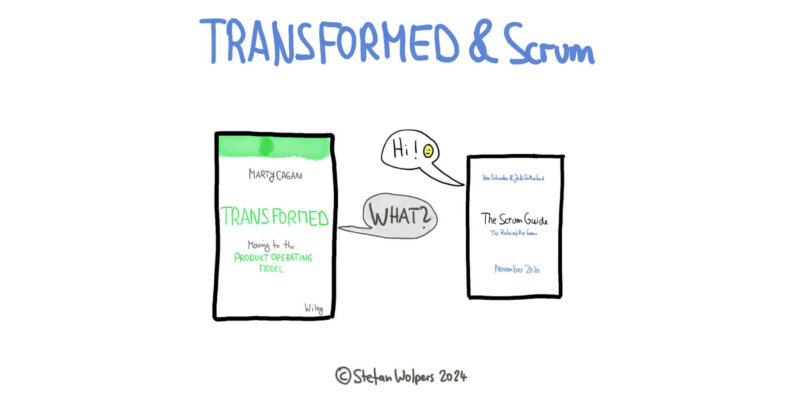
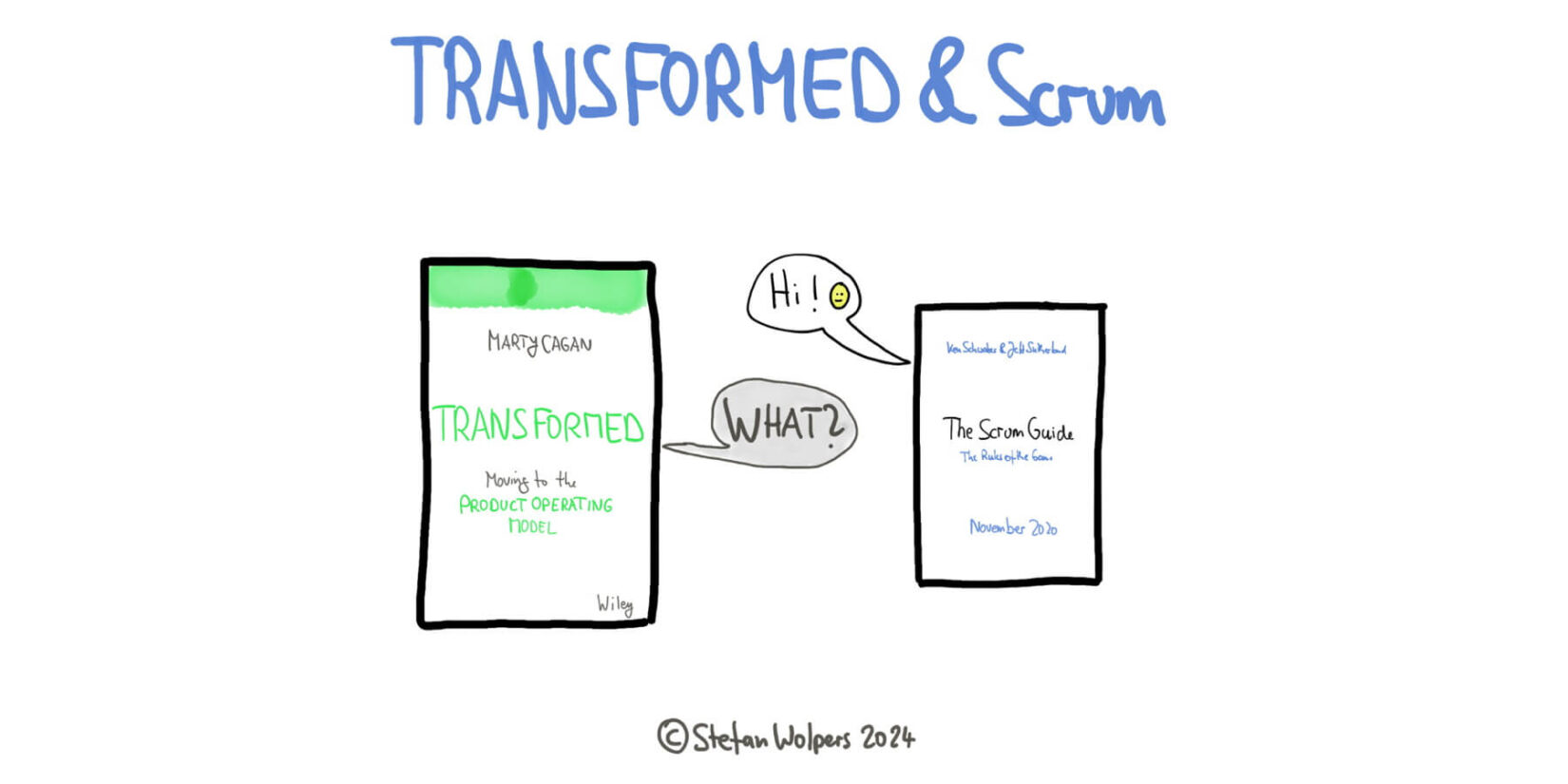
Transformed Meets the Scrum Guide

TL; DR: Transformed & Scrum

Despite criticism from the product community regarding Scrum as a framework for effective product creation, namely Marty Cagan himself, I believe that it is worthwhile to compare the principles that help form successful product teams with those of Scrum. Let’s delve into an analysis of “Transformed” and how its principles align with Scrum’s.

Let’s delve into how Scrum matches the five key product principles identified by Paweł Huryn in Transformed — Age-of-Product.com.
Continue reading Transformed Meets the Scrum Guide

Food for Agile Thought #456: Strategy Creation, Product Model & Outsourcing, Agile Transformation Pitfalls, Derisking Daily Work

TL; DR: Strategy Creation — Food for Agile Thought #456

Welcome to the 456th edition of the Food for Agile Thought newsletter, shared with 42,728 peers. This week, Rob Lambert offers a detailed guide to effective strategy creation, while Reddit user henbitcookies1 questions the value of Scrum, seeking ways to reduce its burdens. Willem-Jan Ageling identifies common pitfalls in Agile transformations, and Tobias Berggren Jensen and Elisabeth Naima Mikkelsen explore the challenges of radically decentralized self-managing organizations. Also, Todd Lankford advocates for abandoning upfront commitments in favor of continuous learning to achieve better product development outcomes.

Next, Marty Cagan and Josh Kerievsky discuss how outsourcing agencies can adopt the product model to enhance collaboration and client outcomes. Richard Mironov argues for retiring the term “prioritization” in favor of more precise communication between stakeholders and product teams. Additionally, UserPilot outlines strategies for identifying and solving customer problems, emphasizing continuous research and effective onboarding, and Roman Pichler explores the benefits and challenges of involving stakeholders in product teams, stressing strategic involvement and the role of coaching in improving collaboration and decision-making.

Lastly, on the personal side, Wes Kao shares strategies to mitigate risks at work by asking critical questions and preempting issues, and Lenny Rachitsky offers ten time management techniques to enhance productivity and reduce stress. Paweł Huryn introduces the Assumption Prioritization Canvas, refining traditional methods for prioritizing assumptions in Continuous Product Discovery, while Martijn Oost critiques the “Team Topologies” framework, advocating for context-specific strategies rooted in foundational principles like Conway’s Law. Finally, Gustavo Razzetti emphasizes the power of team culture over company culture, highlighting its role in driving change and fostering collaboration.

Food for Agile Thought #456: Strategy Creation, Product Model & Outsourcing, Agile Transformation Pitfalls, Derisking Daily Work — Age-of-Product.com
Continue reading Food for Agile Thought #456: Strategy Creation, Product Model & Outsourcing, Agile Transformation Pitfalls, Derisking Daily Work

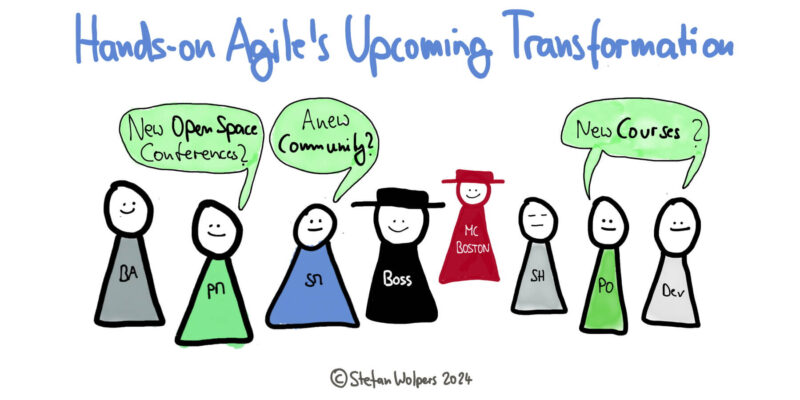
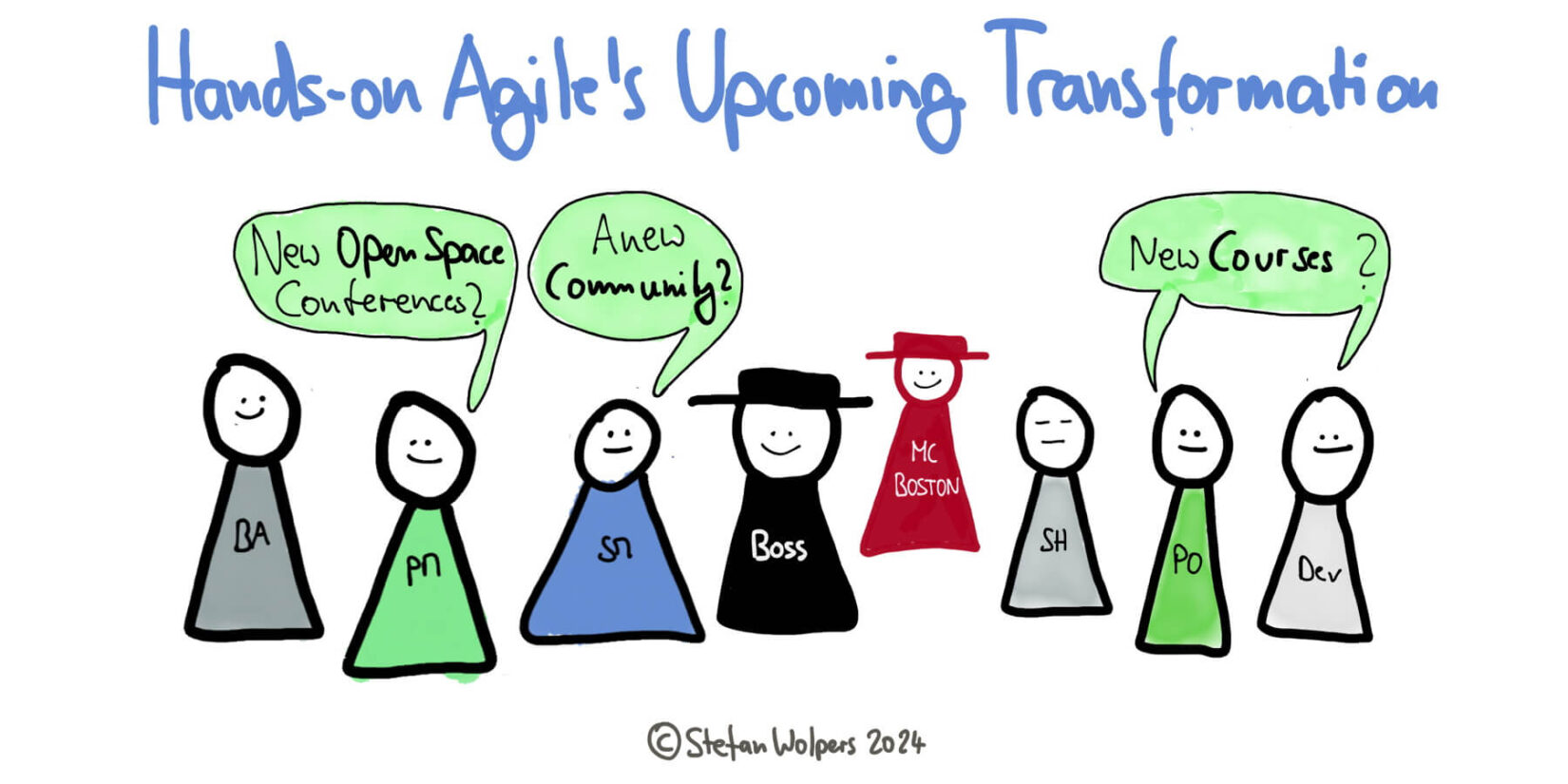
Hands-on Agile’s Upcoming Transformation

TL; DR: Reinventing Hands-on Agile

For years, I have supported the Agile community with a wealth of free resources and opportunities for growth. From the Food for Agile Thought newsletter to the Scrum Master Salary Report to tools like the Scrum Master Job GPT, and from ebooks like the Scrum Master Interview Questions Guide to the Hands-on Agile Slack and Meetup groups, I’ve consistently provided value without asking for anything in return than your support and participation. As for all communities, there is a simple rule: the more, the merrier; the benefit of being a member increases with the size of the community and those who contribute themselves. Giving back to the community is a win-win proposition.

However, the landscape is changing. The recent economic downturn and a noticeable backlash against Scrum have presented new challenges. As a result, the business model that has sustained these efforts—financing by subsidies through my Professional Scrum classes—has become increasingly unsustainable. Consequently, my approach to continuing to support this incredible community will need to evolve, too.

The Upcoming Transformation of Hands-on Agile: Embracing change by creating a new community and relaunching BarCamps — Age-of-Product.com
Continue reading Hands-on Agile’s Upcoming Transformation