TL; DR: How Your Advantage Becomes Your Achilles Heel
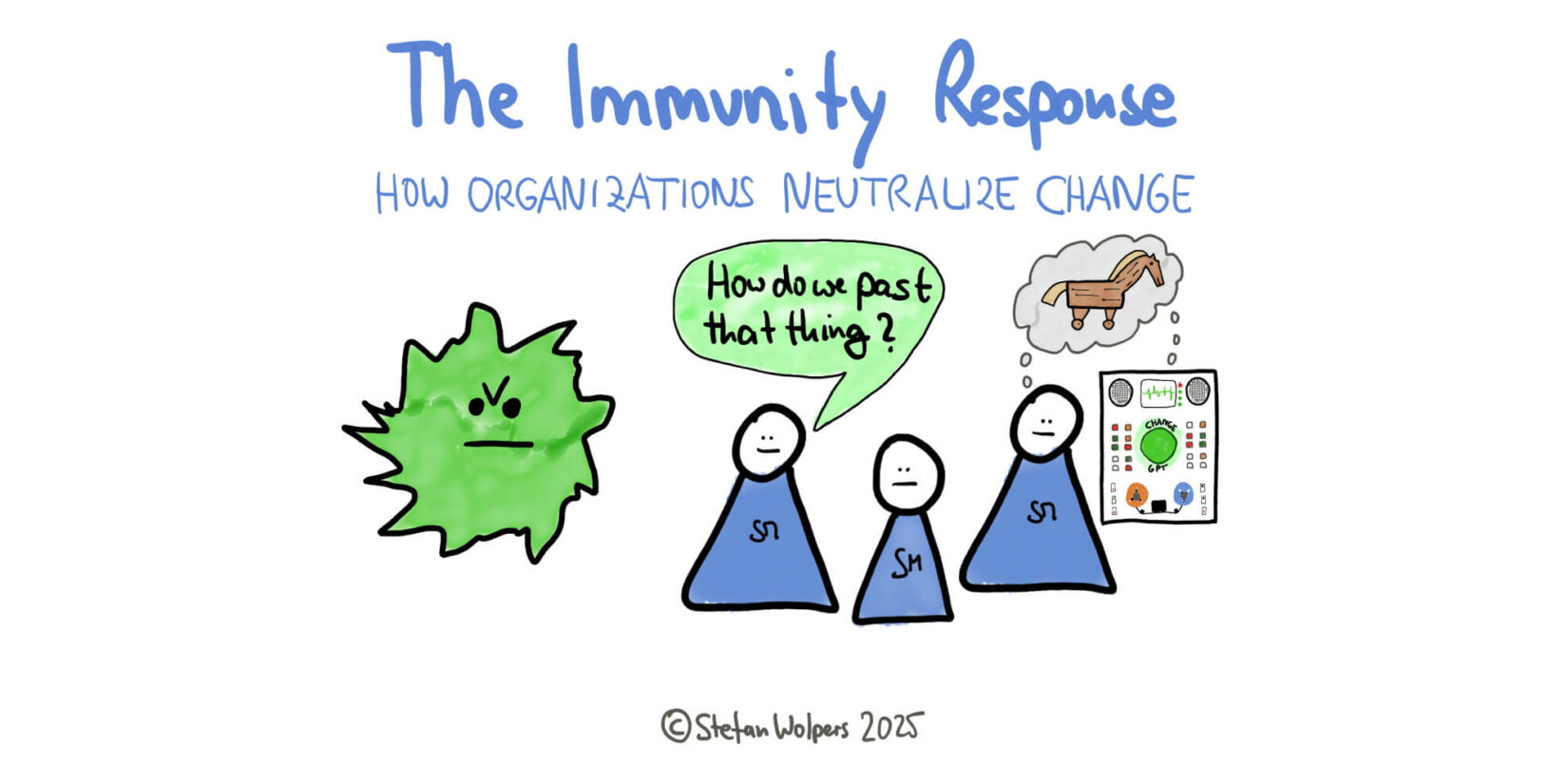
AI can silently erode your product operating model by replacing empirical validation with pattern-matching shortcuts and algorithmic decision-making. This article on product development AI risks, along with its corresponding video, identifies three consolidated risk categories and practical boundaries to maintain customer-centric judgment while leveraging AI effectively.
TL; DR: AI Boom-or-Bust Situation — Food for Agile Thought #517
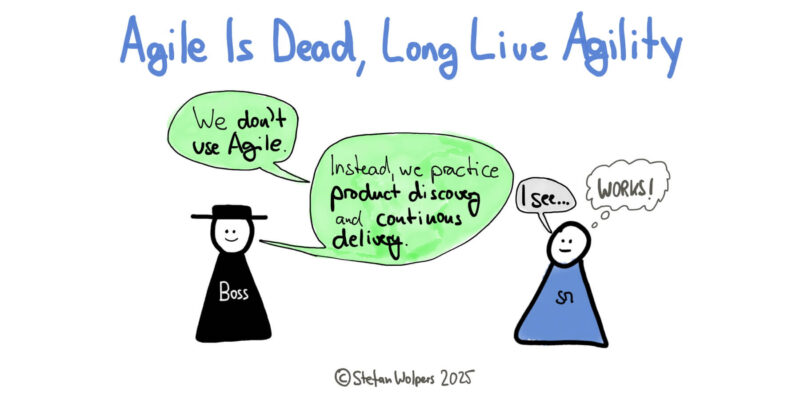
Welcome to the 517th edition of the Food for Agile Thought newsletter, shared with 40,352 peers. This week, Grant Harvey dissects the AI boom-or-bust situation, warning of inflated valuations built on shaky economics. Petra Wille urges teams to switch deliberately between product and project thinking, guided by feedback loops, and John Cutler skewers empty calls for simplification that mask vague agendas and stalled change. Len Greski declares the “Agile” brand broken but defends its principles, while David Pereira’s chat with David J. Bland highlights lessons learned and why systems thinking now takes center stage.
Next, Maarten Dalmijn highlights how delaying decisions can preserve options and reduce regret. Raghav Sethi critiques AI bloat in products, eroding trust. Richard Mironov warns of inflated AI valuations and urges sharper judgment. At the same time, Eli Pariser reports from a private AI summit where hype meets unease. Also, Johanna Rothman reminds us that truth-telling requires cultural permission and consistent leadership.
Lastly, Jeremy Korst, Stefano Puntoni, and Sonny Tambe show that generative AI delivers ROI at scale, though skills still lag. Teresa Torres explains how Claude Code lets non-technical users build reusable AI workflows, and Maik Seyfert exposes the illusion of team autonomy rooted in structural control. Also, Mark Levison targets bloated backlogs with story maps. Finally, Nadzeya Stalbouskaya urges leaders to treat architectural debt as a strategic risk rather than hide it under the label of technical debt.
TL; DR: What AI 4 Agile Topics Shall I Cover in Version 2?
Version 1 of the AI for Agile Practitioners Online Course just closed its first two weeks with 250 new students. The feedback has been direct and useful: Practitioners value the realistic MegaBrain.io scenario work, the quiz design that tests judgment rather than memorization, and the focus on ethics and responsible AI alongside practical application. So far, that’s good, but AI 4 Agile v2 seriously needs your input: What topics shall I cover?
👉 Hence, please join the AI 4 Agile v2 Survey; it won’t take more than 3 minutes.
TL; DR: Sabotaging AI — Food for Agile Thought #516
Welcome to the 516th edition of the Food for Agile Thought newsletter, shared with 40,359 peers. This week, Jenn Spykerman addresses unknowingly sabotaging AI according to a 1944 manual, masquerading endless committees, perfectionism, and cautious delays as good governance. Leah Tharin challenges claims that LLMs can stand in for real customer insight, warning that dashboards can fuel strategy theater, while John Cutler connects prioritization to strategic leverage and power dynamics. Jing Hu reframes AI failure stats as early-stage noise, and Duncan Brown warns that AI favors the visible over the messy, human glue that makes effective teams work.
Next, Chetan Kapoor shows how eBay uses feature flags as discovery tools to validate demand early and surface usability issues. Kyle Poyar critiques popular SaaS pricing models and shares fixes that avoid complete overhauls. Ethan Mollick maps the current AI landscape with practical guidance on tools, tiers, and tactics. At the same time, Zvi Mowshowitz highlights key takeaways from Karpathy’s AGI views, and James Shore reframes engineering accountability through product bets instead of features and deadlines.
Lastly, Anthropic’s Claude receives “skills” as modular guides for specialized tasks, now open-sourced on GitHub. One author explores how great teams grow through targeted support and bold delegation, and Jeff Sauro and Jim Lewis dissect NPS claims, separating useful signals from misleading noise. Charlie Guo calls out the creeping signs of AI-generated content and its cost to authenticity. Finally, Karen Dahut presents Google Skills, a vast new learning platform for AI and tech upskilling.
TL; DR: Dangerous Middle and the Future of Scrum Masters and Agile Coaches
Peter Yang, a renowned product leader, argues that AI will split product roles into two groups: Generalists who can prototype end-to-end with AI, and specialists in the top 5% of their fields. Everyone else in the dangerous middle risks being squeezed.
How does this apply to agile practitioners: Scrum Masters, Product Owners, Agile Coaches, and transformation leads? It does, with important nuances.
TL; DR: Poor Decisions by Managers — Food for Agile Thought #515
Welcome to the 515th edition of the Food for Agile Thought newsletter, shared with 40,381 peers. This week, Henrik Mårtensson explores six decision-making traps managers fall into and how to overcome poor decisions with candor and deliberate practice. Janna Bastow highlights how skipping feasibility checks sabotages product delivery, offering lightweight tactics for trust and clarity in the AI era. Also, Teresa Torres and Petra Wille explore how product leaders shape their legacy through their impact, values, and reflection. Meanwhile, Jacob Poushter and team find AI anxiety outweighs optimism, and Maarten Dalmijn warns how process bloat kills team ownership.
Next, Melissa Suzuno outlines how product operating models shift focus from outputs to outcomes, scaling through pilot teams and leadership support. Roger Snyder addresses the tension between PM and PO, emphasizing the importance of alignment on purpose, ownership, and cadence, while Charlie Guo examines LLM performance drift, providing mitigation strategies. Barry O’Reilly lists 21 signs your AI project might be undead, and Martin Eriksson warns that empowerment fails without a strategic context and a deliberate shift in leadership stance.
Lastly, Pawel Brodzinski warns that autonomous AI agents lack the trust needed for broad adoption without transparency and alignment. Jens Meyer critiques veto-heavy cultures and calls for genuine accountability, where saying yes means accepting the outcome. Also, Emily Webber shares tips on selecting meaningful icebreakers that promote safety and connection, and Steve Blank defends science as the engine of innovation. Finally, Matt Kamelman stresses that smart AI starts with context, not just more data.