Food for Agile Thought’s issue #159—shared with 19,054 peers—covers the agile industrial complex and its fake-agile distortion field, according to Daniel Mezick, we kick-off new Scrum teams, and we advocate to manage the flow of work, not people.
We also appreciate another success story from the continuous product discovery field, supported by a proven & tested reference idea funnel, and ask: is Design Thinking merely preserving the status quo?
Lastly, we address agile sensemaking—a visualization of working and learning in a state of perpetual beta.
Food for Agile Thought’s issue #158—shared with 18,935 peers—visits the poster child of self-managed organizations—Semco—, we deal with building trust in teams, and we learn why agile companies no longer require plans.
We appreciate Roman Pichler’s sprint planning tips & tricks for product owners, we dive into the commandments of outstanding products, and we understand how falling in love with a solution can wreck a whole organization.
Lastly, we come back to product discovery and learn a new approach how to reinvent a strategy to figure out what’s worth building.
Food for Agile Thought’s issue #157—shared with 18,862 peers—applauds Martin Fowler for his Agile Australia keynote on Agile 2018, we learn about the road to mediocrity, and we ask: Is the Peter Principle not a satire but reality?
We also address the issue of hidden (technical) costs of being ‘agile,’ as well the how to solve the conflict between prioritizing business needs as well as maintaining the health of the code base.
Lastly, we deal with the challenges of planning poker in a short and entertaining video.
Food for Agile Thought’s issue #156—shared with 18,778 peers—focuses on servant leadership, why change cannot be rushed, and how one road to enterprise business agility may look like.
We also have a look at mental models for product managers/owner; we learn how free time from our schedules to run user interviews regularly, and how to avoid failure when reaching for product/market fit.
Lastly, we like to thank Bartosz for compiling a great list of resources to help us to apply servant leadership in the trenches. 🙏
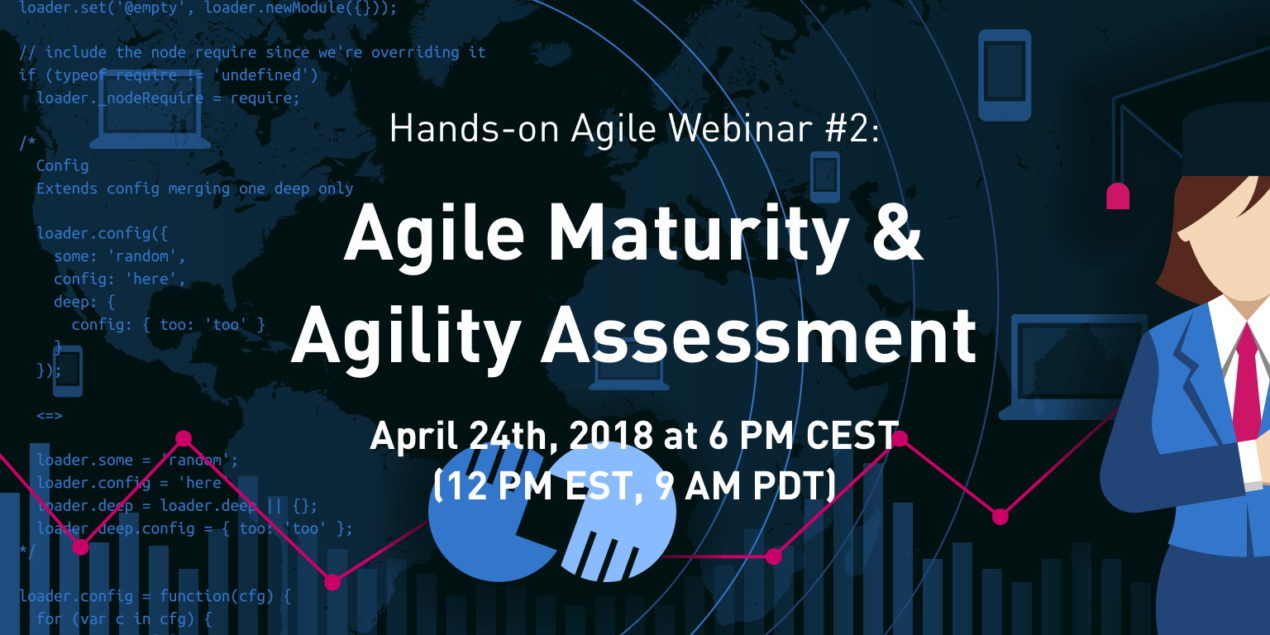
TL;DR: Webinar Agile Maturity and Agility Assessment
Is agile maturity a fad or a trend? How can an organization make an informed decision on what level of agility might become achievable before starting a transition?
Our second webinar addressed the question of agile maturity and detailed the survey results on what indicates an agile organization. Moreover, we introduced the ‘Agility Assessment Framework’ open source project which aims to provide agile practitioners with the tools needed to answer these questions.
Food for Agile Thought’s issue #155—shared with 18,683 peers—focuses on effective team building, how agile data can support your storytelling during an agile transition, and why the change agent needs to be ahead of the game at any time.
We also have a look at the silent estimation technique and why it may replace planning poker, and why professional product backlogs have the shape of an iceberg.
Lastly, we ask ourselves: is ‘lean startups’ probably nothing more than a failed ideology, a useless tool if your organization is looking to improve its innovation game?