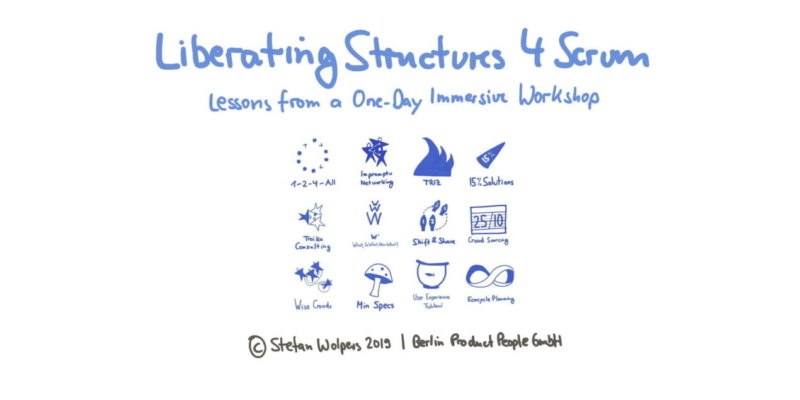
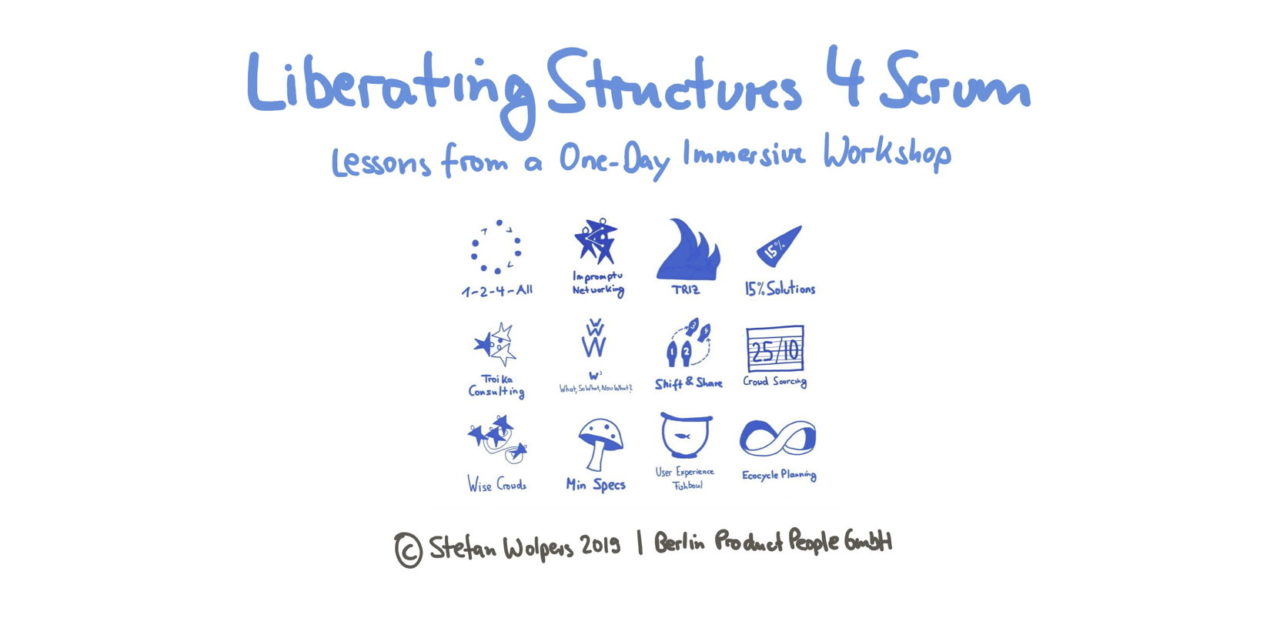
Join us for another exciting LS Scrum workshop on September 7th, 2019, in Berlin. Following up on our first workshop, We will continue exploring LS microstructures, weave them into strings and apply those to Scrum’s soft underbelly — the product side, or figuring out what is worth building. Please note that participants should already understand Scrum as well as product management in general. Furthermore, first experiences with Liberating Structures, e.g. from a Meetup, would be desirable. The workshop language is English.
The LS Scrum training class will take place at the Alte Kantine Wedding on Saturday, September 7th, 2019, from 9:00 am to 5:30 pm.
Food for Agile Thought’s issue #200—shared with 22,519 peers—delves into fixed agile, we learn about how large organizations assess a Scrum Master’s qualification, and why ‘agile transformation’ is not ideal as a story to tell.
We also ask whether all of your organization’s members can answer the “what is your product” question consistently, we gain a better understanding how uncertainty will influence product discovery and delivery, respectively, and brush up our understanding of effective Product Backlog refinement techniques.
Lastly, we like to thank Basecamp for providing another free webbook on software project management Basecamp-style. (#NoAgile, #NoScrum, #NoWaterfall, #NoPostits, #NoSprints, #NoStandups — just saying.)
TL; DR: The Liberating Structures Immersive Workshop for Scrum
Why running a Liberating Structures immersive workshop? Since the beginning of 2019, the Hands-on Agile meetup in Berlin has been exploring how to apply Liberating Structures to Scrum. Beyond the basics, we have addressed the Sprint Retrospective, the Sprint Planning, the Product Backlog as well as the Daily Scrum.
While the initial meetups went smoothly, the last two meetups felt rushed given that we usually have about two hours. Also, the changing composition of the meetup attendees has become more challenging; less than 10 percent of the approximately 150 participants so far have attended meetups.
So, I thought it might be a worthwhile experiment to aggregate the previous meetups into a one-day immersive workshop on Liberating Structures for Scrum, built around climate change and MegaBrain.io, a struggling startup with little runway left and in desperate need of two successful Sprints. We ran that workshop last week, and this is what we learned.
Food for Agile Thought’s issue #199—shared with 22,476 peers—analyzes the Boeing 737 MAX debacle from a software quality perspective; we delve into fixing Scrum by starting with proper working agreements, and we listen to a software architect who believes that his role is compatible with the Manifesto.
We also reflect on the “go wide, narrow, go wide, narrow” rhythm of Design Thinking, we build apps without coding, and we ask: should prioritization and the product roadmap be a job of the product team?
Lastly, we finish with a more technical, yet fascinating topic: mob programming patterns!
Food for Agile Thought’s issue #198—shared with 22,473 peers—learns about the silent meeting manifesto, we appreciate a visualization of why a linear process is ill-suited to progress agile transitions, and we pick up some tricks on how to handle support issues during a Sprint without compromising the Sprint Goal.
We also broaden our understanding of the nature of the MVP, we understand the different challenges product leaders are facing, and we enjoy a new lean experiment template.
Lastly, we reflect on many managers’ bias for action even though self-organizing teams will likely solve most issues on their own.
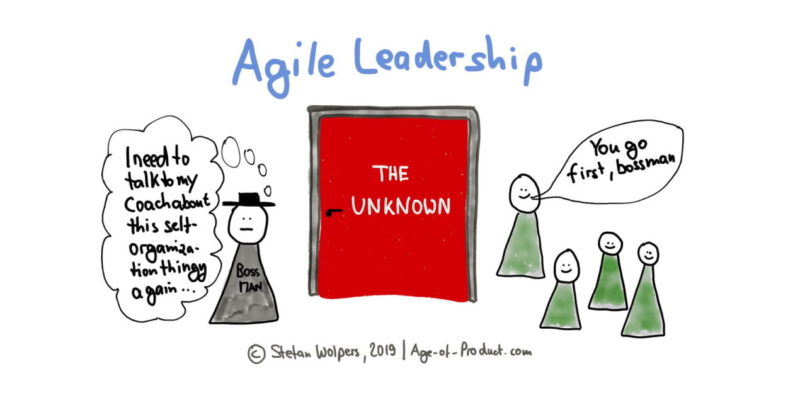
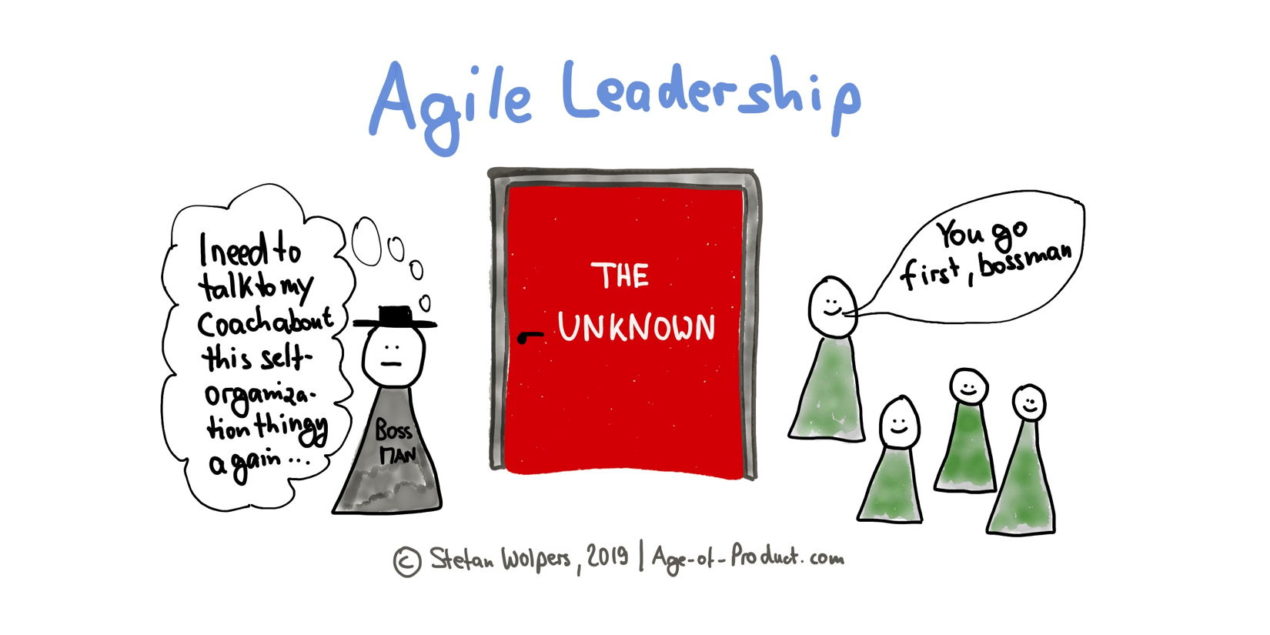
I recently started aggregating my notes, links, and references related to agile leadership to understand better what it — in the context of an agile transition — may look like. In the end, becoming agile is not the goal of a transition; surviving as an organization is. Hence I appreciate whatever appeals to business leaders and their motivation to delve into agile ideas, frameworks, or practices.
Let’s examine some favorite ideas and concepts around agile leadership. (Please bear with me that the following text is rather bullet-point heavy to concentrate its information.)