Do you need an emergency fund as a change agent—whether you are acting as Scrum Master, Product Owner, or agile coach—because conflict is inevitable, but change is not? Speaking truth to power probably comes at a price.
In my experience, speaking truth to power, pointing at the emperor’s new clothes and the reality in the trenches, is necessary a trait for every change agent — including Scrum Masters and agile coaches — in organizations that lack strong leadership.
Learn more, how this form of professional honesty can backfire when the incumbents, privileged by the existing system, strike back.
TL; DR: JTBD Guide, Good Retrospectives — Food for Agile Thought #250
Welcome to the 250th edition of the Food for Agile Thought newsletter, shared with 26,776 peers. This week, we appreciate a comprehensive JTBD guide with templates; we learn how to figure out whether a team is capable of having meaningful Retrospectives, and we reconsider our inclination to favor feature teams over component teams.
We then delve into opportunity mapping to improve our product work; we embrace the idea that we are probably not charging enough and that we should run some pricing experiments, and we explore the timing and the dynamic of innovation.
Lastly, we learn more about OKR throughout the different stages of product development work.
TL; DR: Ruinous Scrum, Losing Out to SAFe — Food for Agile Thought #249
Welcome to the 249th edition of the Food for Agile Thought newsletter, shared with 26,763 peers. This week, we analyze the ruinous Scrum claim of some developers; we empathize with a failed attempt to avoid SAFe, and we learn about the success of an ambitious change project with Scrum.
We then delve into the journey of Sarah Cooper and her approach to product discovery as a comedian; we reassure our belief that lying to customers is unacceptable, and we analyze five critical success criteria of Design Thinking.
Lastly, we thank Bob Sutton for an interview on change and identifying pockets of excellence.
TL; DR: Results of a Test of Using Unhangout to Host Virtual Barcamps
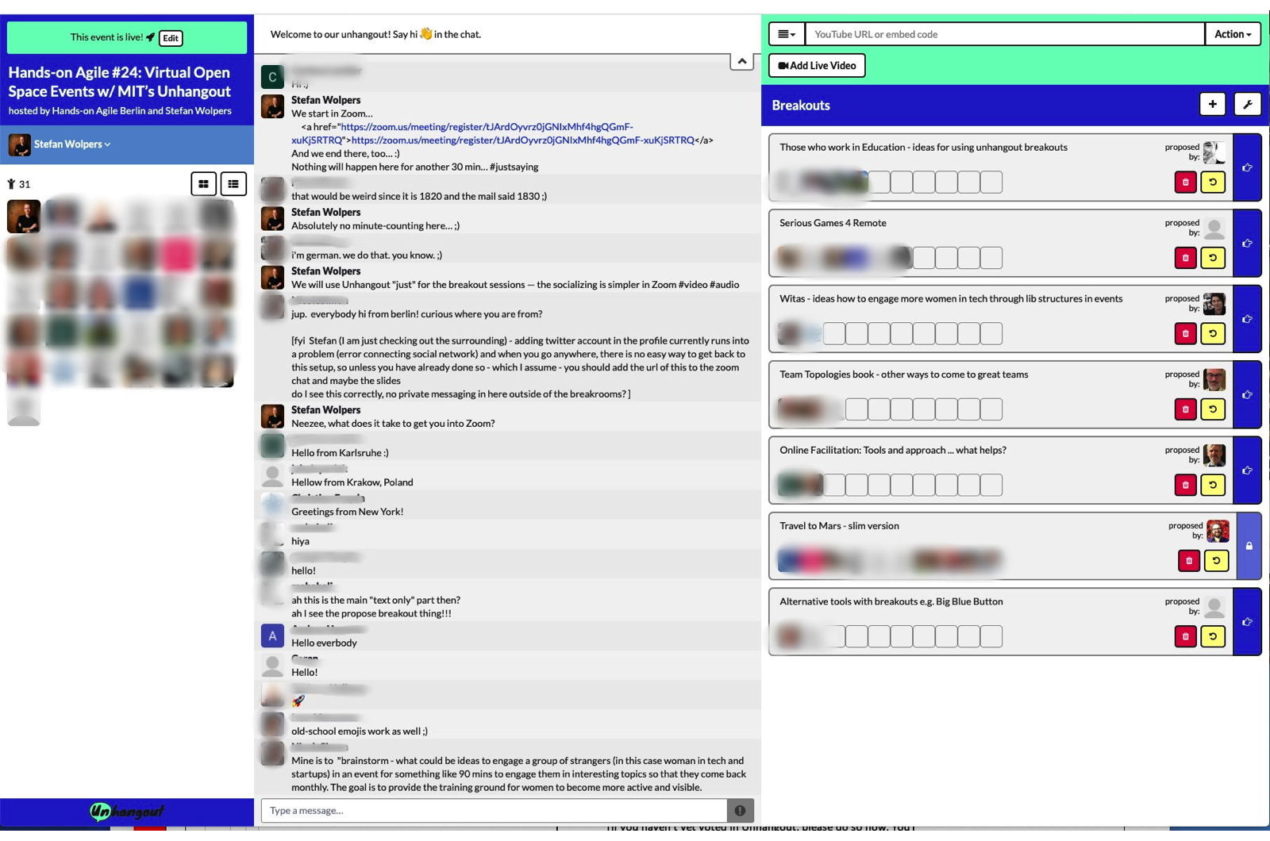
Last week, 30-plus attendees of the 24th Hands-on Agile meetup ran a virtual Barcamp experiment w/ MIT’s Unhangout, an open-source platform for organizing attendee-driven virtual open space events.
Read on and learn whether Unhangout is a suitable solution to remote collaboration challenges.
TL; DR: Large Scale Agility, Silos & Politics — Food for Agile Thought #248
Welcome to the 248th edition of the Food for Agile Thought newsletter, shared with 26,751 peers. This week, we learn to assess agile coaches regarding their competence for large scale agility; we integrate chaos into the organization, and we have a look at 32 Jira competitors.
We then come back to product work beyond the product-market fit threshold; we learn how to use cohort analysis to forecast revenue, and we listen to the maestro of innovation: Is it an art form or a craft?
Lastly, we are grateful for Ryan Dawson and Laura Edwards shedding some light on an unpleasant topic: silos, local optimization, and politics.
TL; DR: The Agile Movers & Shakers Interview w/ Ryan Ripley
Today’s guest is Ryan Ripley. Ryan is a Professional Scrum Trainer (PST) with Scrum.org. He hosts the Agile for Humans podcast and most recently co-wrote Fixing Your Scrum: Practical Solutions for Common Scrum Problems with Todd Miller for PragProg.